How Do You Choose Between Heirloom and Hybrid Seeds for a Sustainable Garden?
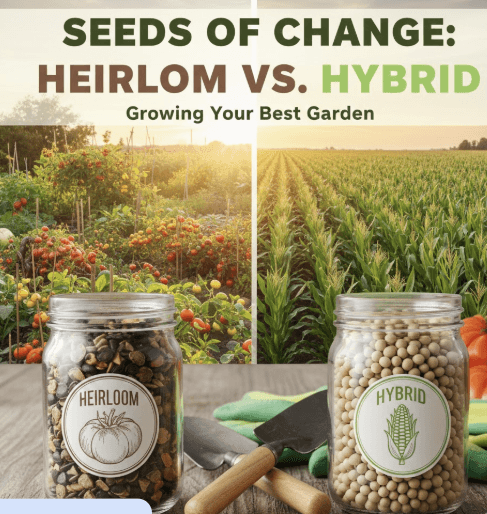
How Do You Choose Between Heirloom and Hybrid Seeds for a Sustainable Garden?
The Seed Selection Crossroads
The choice between heirloom and hybrid seeds is one of the most fundamental decisions a gardener makes. It is a decision that extends far beyond simple aesthetics or planting preferences; it influences the biological resilience of your garden, the genetic diversity of our food system, and your level of self-sufficiency. In the modern gardening landscape, seed catalogs are filled with hundreds of varieties, each promising outstanding flavor, massive yields, or disease resistance. Navigating these options requires a deep understanding of the botanical and genetic differences between these two seed categories.
Historically, seed selection was a localized, community-driven process. For thousands of years, farmers saved seeds from their best-performing plants, naturally selecting for traits that allowed the crops to thrive in their specific soils and microclimates. This process created a vast reservoir of genetic diversity. However, the rise of industrial agriculture in the twentieth century shifted the focus toward uniformity, shipability, and synthetic chemical compatibility. This shift popularized hybrid seeds and led to a dramatic bottleneck in agricultural biodiversity, with thousands of traditional varieties disappearing from cultivation.
For the modern sustainable gardener, both heirlooms and hybrids have a place in a well-designed system. To choose effectively, one must move past emotional arguments and evaluate both options based on scientific principles, historical context, and practical performance. This guide presents a comparative analysis of heirloom and hybrid seeds, details the genetics behind them, and provides a framework for integrating both into your home garden or market farm.
Botanical Taxonomy and the Garden Layout
To organize a sustainable garden and make informed seed choices, one must understand botanical taxonomy. Plants are categorized using a standardized hierarchy, with the most relevant levels for growers being the Family, Genus, and Species. For example, the common tomato is classified as *Solanum lycopersicum*—where *Solanum* represents the genus (which also includes eggplants and potatoes) and *lycopersicum* represents the specific species. This scientific naming is highly practical: plants within the same genus and species can cross-pollinate with each other, whereas plants in different genera almost never do.
Understanding these classifications is essential for crop rotation and disease management. For instance, the Solanaceae family (nightshades) includes tomatoes, peppers, eggplants, and potatoes. These crops all share similar nutrient needs and are susceptible to the same soil-borne pathogens. Rotating crops by family—moving Solanaceae beds to areas previously occupied by Fabaceae (legumes) or Brassicaceae (brassicas)—prevents pest cycles from establishing. It also guides your seed saving: growing two varieties of the same species in close proximity requires isolation to prevent cross-pollination, which would ruin the genetic purity of your saved heirloom seed.
Standardizing layout names based on taxonomy helps gardeners keep track of rotation schedules. For example, the botanical family Fabaceae (beans and peas) contains nitrogen-fixing bacteria in their root nodules, which enrich the soil for the next crop. Conversely, heavy feeders like the Brassicaceae family (cabbage, kale) exhaust nitrogen reserves. Knowing these relationships allows you to design a crop rotation sequence where Fabaceae are followed by nitrogen-hungry brassicas or nightshades, maintaining natural fertility without chemical inputs.
Heirloom Seeds: History, Open Pollination, and Seed Saving
To understand heirloom seeds, one must first understand open-pollination. Open-pollinated (OP) plants are those that are fertilized by natural mechanisms—insects, birds, wind, or human hands—within a single, genetically stable variety. The defining characteristic of open-pollinated plants is that they breed true to type. This means that if you isolate the flowers of an open-pollinated plant to prevent cross-pollination with other varieties, the seeds saved from the resulting fruit will produce offspring that are genetically identical to the parent plant. This predictability is the foundation of seed saving.
Heirloom seeds are a subset of open-pollinated varieties. While there is some debate among botanists, the widely accepted standard is that a variety must have a documented history of being preserved and passed down through generations (often within a family, community, or region) for at least 50 years to be classified as an heirloom. Some define heirlooms as varieties introduced before 1951, which marks the era when hybrid seeds began to dominate commercial markets. Heirloom seeds are living history, representing cultural traditions and historical adaptation.
The primary benefit of heirloom seeds is their flavor. Because they were bred for home kitchens and local markets rather than industrial transport, selecters prioritized taste, tenderness, and aroma above all else. Famous heirlooms like the 'Cherokee Purple' tomato, 'Brandywine' tomato, and 'Georgia Southern' collards are legendary for their complex flavor profiles that commercial supermarket varieties cannot match. Additionally, heirlooms represent a massive genetic archive, carrying traits for drought tolerance, pest resistance, and nutritional density that are vital for future crop resilience.
The Science of F1 Hybrids: Heterosis and Disease Resistance
Hybrid seeds, specifically F1 (First Filial) hybrids, are created through a highly controlled breeding process. To produce an F1 hybrid, plant breeders take two distinct, highly inbred parent lines that have been self-pollinated for generations to stabilize specific traits. Breeders hand-pollinate the female flowers of one parent line with pollen from the male flowers of the other parent line. The resulting seeds are F1 hybrids. This process is entirely natural and has been occurring in nature for millions of years; it should not be confused with Genetically Modified Organisms (GMOs), which involve laboratory gene-splicing across species lines.
The biological driving force behind F1 hybrids is heterosis, commonly known as hybrid vigor. When two inbred parent lines with different genetic backgrounds are crossed, their offspring often exhibit physical traits that are superior to both parents. F1 hybrids typically grow faster, produce larger root systems, and yield more abundantly than open-pollinated varieties. Furthermore, breeders use hybridization to package specific traits—such as resistance to Verticillium wilt (V), Fusarium wilt (F), and root-knot nematodes (N)—into a single plant. This engineered resistance is a massive advantage for growers in challenging climates or disease-prone soils.
However, the main drawback of F1 hybrids is their genetic instability in subsequent generations. If you save seeds from an F1 hybrid plant and sow them the following year, the resulting "F2" generation will undergo genetic segregation. The plants will exhibit a wild mix of traits, reverting to the characteristics of the inbred parents, and will lack the uniformity and vigor of the F1 generation. Many will produce poor-quality fruit or remain completely sterile. Therefore, growers who choose hybrids must purchase new seed from breeders every year, creating a dependency that limits long-term self-sufficiency.
From a biological perspective, F1 hybrids are created by crossing homozygous inbred parent lines. homozygous parent lines are genetically identical and uniform, meaning their offspring (the F1 generation) will also be genetically identical and express the desired hybrid vigor. However, the F2 generation undergoes genetic recombination, breaking apart the heterozygous gene combinations and resulting in offspring that display a wide, unpredictable array of physical traits. Some F2 plants will resemble one parent line, some the other, and very few will display the hybrid characteristics of the F1 parent.
Open-Pollination and Cross-Pollination Dynamics
For the gardener committed to saving seeds, understanding how plants reproduce is essential. Flowers contain male reproductive structures (anthers, which produce pollen) and female structures (pistils, which receive pollen). Plants reproduce through either self-pollination or cross-pollination, and this dictates how you must manage your seed crops.
Self-pollinating crops—such as peas, beans, lettuce, and tomatoes—contain "perfect" flowers that possess both male and female parts. In these crops, pollination occurs within the closed flower bud before it even opens, making self-pollination highly reliable. The risk of insects carrying pollen from a different variety is extremely low, meaning you can grow different varieties of beans side by side and still save true-to-type seeds with minimal isolation. You simply allow the pods to dry on the vine and collect the seeds.
Cross-pollinating crops—such as squash, melons, corn, and brassicas—rely on wind or insects to transfer pollen between plants. Many cross-pollinators contain "imperfect" flowers, meaning a single flower is either strictly male or strictly female (common in squash). If bees visit a bed containing both 'Crookneck' squash and 'Zucchini' (both are *Cucurbita pepo*), they will cross-pollinate the flowers. The squash harvested that season will look normal, but the seeds inside will grow into a bizarre, fibrous hybrid the following year. Preventing this requires isolation distances (often up to half a mile for wind-pollinated corn) or physical isolation, such as bagging individual flower buds and hand-pollinating them with a small brush.
Hand-pollination is a vital technique for saving seeds from insect-pollinated cross-pollinators in close quarters. For squash, identify male and female buds the evening before they open (female buds have a small miniature squash at the base). Tape the petals shut using masking tape to prevent bees from entering. The following morning, pluck the male flower, remove the petals to expose the pollen-dusted anther, remove the tape from the female flower, and gently rub the pollen onto the female stigma. Re-tape the female flower shut and tie a piece of colored string around the stem to identify the hand-pollinated fruit. Once harvested, the seeds inside are guaranteed to be true-to-type.
Landrace Gardening: The Path to Dynamic Resilience
For gardeners seeking the ultimate form of localized resilience, landrace gardening offers a powerful alternative to both single-variety heirlooms and F1 hybrids. A landrace is not a single, uniform variety; rather, it is a highly diverse, genetically flexible population of a crop species that has been grown and selected in a specific region for years. Unlike uniform heirlooms, which can struggle to adapt to rapid climate shifts, a landrace population contains wide genetic variation. When you plant a landrace crop, the individual plants possess different traits for pest resistance, drought tolerance, and cold hardiness.
To start a landrace project, you select 10 to 15 different open-pollinated and heirloom varieties of a crop (such as squash, melons, or corn) and plant them close together, allowing them to cross-pollinate freely. In the first few generations, the population will look highly variable, and some plants will perform poorly or die due to local pests, diseases, or weather extremes. However, you only save seeds from the plants that thrive, produce well, and survive the natural pressures of your microclimate without chemical intervention. Over four to five generations, this selective pressure creates a highly adapted, genetically diverse landrace population that is practically immune to local crop failures and adapts dynamically to changing environmental conditions year after year.
Seed Preservation: Viability, Moisture, and Storage Science
Once you have successfully harvested and cleaned seeds from your open-pollinated heirloom or landrace crops, you must store them under conditions that preserve their viability. The primary enemies of seed longevity are heat, moisture, and oxygen. When seeds are exposed to warmth and high humidity, they continue to respire, consuming their stored carbohydrate reserves. Once these reserves are exhausted, the embryo inside dies, and the seed loses its ability to germinate. High moisture levels also invite mold pathogens and stimulate premature germination, destroying the seed stock.
To optimize seed storage, follow the "Rule of 100" used by professional seed banks: the sum of the storage temperature in degrees Fahrenheit and the relative humidity percentage should be less than 100, and ideally below 80. For example, if your storage room is 60°F, the relative humidity must be below 40% (60 + 40 = 100). The ideal storage container is an airtight glass jar (such as a mason jar) placed in a cool, dark, temperature-stable environment like a basement or refrigerator. Including a small packet of food-grade silica gel at the bottom of the jar absorbs any ambient moisture, keeping the seeds dry and preserving their viability for multiple years.
Before sowing your saved seed in the spring, perform a simple germination test to verify viability, especially for seeds stored for more than two years. Place 10 seeds on a damp paper towel, fold it over, and slide it inside a clear, zip-top plastic bag labeled with the variety and date. Place the bag in a warm, well-lit area (such as on top of a refrigerator) and inspect it daily. After 7 to 10 days, count how many seeds have sprouted. If 8 out of 10 seeds have germinated, your germination rate is 80%, which is excellent. If the germination rate drops below 50%, you can still use the seed, but you must sow twice as thickly to achieve a full stand in the garden.
Comparative Quality Metrics
When deciding whether to plant heirlooms or hybrids, you must evaluate them across three primary performance metrics: flavor, yield, and genetic sustainability.
1. Flavor and Culinary Quality
Heirlooms are the undisputed winners in the culinary arena. Commercial hybrids are bred primarily for traits that suit industrial supply chains: uniform size, synchronous ripening (so an entire field can be harvested mechanically in a single day), and thick skins to prevent bruising during shipping. In this breeding process, the genes responsible for complex sugar-to-acid ratios and aromatic esters are often lost. Heirloom varieties like the 'San Marzano' plum tomato or 'Black Beauty' eggplant are packed with flavor because they were selected solely for culinary excellence.
2. Yield, Vigor, and Uniformity
For market gardeners and farmers, F1 hybrids offer logistical advantages. Hybrids are highly uniform, meaning every plant grows to the same height, ripens at the same time, and produces identical fruit. This uniformity simplifies harvesting and packing. The hybrid vigor also translates into consistent, heavy yields. In a commercial setting where crop failure can mean financial ruin, hybrids like the 'Celebrity' tomato or 'Goliath' pepper provide an insurance policy against common pathogens and variable weather conditions.
3. Genetic Conservation and Resilience
From an ecological standpoint, heirlooms are vital. Planting heirlooms preserves genetic diversity, preventing the genetic bottlenecking that makes our food system vulnerable to widespread crop failures (similar to the Irish Potato Famine). Heirloom seeds are also open-pollinated, allowing gardeners to build localized seed security. Over years of saving seeds from your own heirloom plants, the variety adapts to your specific soil, rainfall patterns, and pest populations, creating a hyper-local variety that performs better in your microclimate than any commercial seed.
The Heirloom Preservation Movement
The conservation of heirloom seeds has become a vital grassroots movement over the past half-century. As large seed conglomerates consolidated and patented hybrid and GMO lines, public access to traditional seed varieties declined. Organizations like the Seed Savers Exchange and the Southern Exposure Seed Exchange were founded by dedicated horticulturists to locate, document, and preserve rare heirloom varieties. These seed banks maintain thousands of traditional lines, ensuring they remain in the public domain as a shared heritage. These seed banks act as custodians of history, guarding our food supply against systemic monoculture vulnerabilities.
Seed libraries have also emerged in local communities, allowing home gardeners to "borrow" seeds in the spring, grow the plants, and "return" saved seeds in the fall. Furthermore, movements like the Open Source Seed Initiative (OSSI) work to keep seed genomes open-source. OSSI-pledged seeds carry a commitment that they cannot be patented, restricted, or genetically engineered, protecting the rights of future breeders and gardeners to save, select, and breeding new varieties freely.
Detailed Profiles of Famous Heirloom and Hybrid Varieties
To help guide your selection, let us compare the performance profiles of several well-known heirloom and hybrid varieties across different vegetable families.
Tomatoes: 'Brandywine' vs. 'Early Girl' vs. 'Sun Gold'
The 'Brandywine' is a legendary potato-leafed heirloom tomato dating back to the late nineteenth century. It produces large, pinkish-red beefsteaks that are widely considered the benchmark for rich, sweet tomato flavor. However, it is susceptible to Verticillium and Fusarium wilt, and yields can be low and inconsistent in cool or excessively wet years. By contrast, 'Early Girl' is a famous F1 hybrid bred for early maturity and disease resistance. It produces reliable, uniform red globes weeks before 'Brandywine' starts flowering, offering the gardener a dependable, steady supply of slicers despite soil-borne pathogens. 'Sun Gold' is a cherry tomato F1 hybrid prized for its extremely high sugar content, intense tropical flavor, and heavy resistance to cracking, outperforming most heirloom cherry tomatoes in vigor and split resistance.
Squash: 'Costata Romanesco' vs. 'Spineless Beauty'
'Costata Romanesco' is an Italian heirloom zucchini prized for its deep ribbing, nutty flavor, and firm texture, which remains superior when cooked compared to modern smooth varieties. However, it produces substantial vegetative growth and relatively low yields of zucchini compared to its male flowers. 'Spineless Beauty' is an F1 hybrid designed for high-density production. The plant lacks the sharp, irritating spines found on heirloom zucchini stems, preventing damage to the fruit during harvest and reducing skin irritation for the grower, while producing double the yield of standard heirlooms.
Brassicas: 'Lacinato' (Dino) Kale vs. F1 Hybrid Cabbage
'Lacinato' kale, also known as dinosaur or Tuscan kale, is an Italian heirloom dating back to the eighteenth century. It features dark blue-green, heavily blistered leaves and is highly cold-hardy, with flavor that sweetens significantly after frost. Its loose-leaf growth habit allows for continuous, leaf-by-leaf harvesting over many months. By contrast, F1 Hybrid cabbage varieties like 'Stonehead' are bred to form tight, dense, rock-solid heads that ripen at the exact same time, preventing splitting and ensuring a single, high-weight harvest, which is ideal for commercial scale but less suited for the home gardener who prefers a staggered harvest.
Conclusion
Choosing between heirloom and hybrid seeds is not a matter of picking a "good" or "bad" option. It is a strategic decision that depends on your gardening goals, soil health, and climate constraints. Heirlooms offer historic flavor, genetic preservation, and the path to ultimate self-reliance through seed saving. Hybrids provide engineered disease resistance, uniform maturity, and high yields that secure your harvest in challenging conditions. By combining both in a thoughtful, balanced garden layout, you create a productive, resilient, and biologically diverse ecosystem that is prepared for whatever the season brings.
Expert Insights & FAQs
What is an heirloom seed?
Heirloom seeds come from open-pollinated plants passed down through generations, typically at least 50 years old. They grow "true to type," meaning saved seeds produce identical plants.
What are the main benefits of heirloom seeds?
Heirlooms offer superior flavor, contribute to genetic diversity, and allow gardeners to save their own seeds for self-sufficiency.
How are hybrid seeds (F1) created?
F1 hybrid seeds are the result of controlled cross-pollination between two different parent plant varieties, combining their best traits like disease resistance or high yield.
Are hybrid seeds the same as GMOs?
No. Hybrid seeds are created through traditional, controlled pollination methods, whereas GMOs involve laboratory-level gene splicing.
Why might a gardener choose hybrid seeds?
Gardeners often choose hybrids for their specific benefits such as disease resistance, higher yields due to "hybrid vigor," and uniformity in ripening and size.
Johnnie McCormick
Zone 7b/8a - North Central Alabama
Johnnie McCormick is a gardening hobbyist and the founder of My Garden Spot. Raised in north-central Alabama, his passion for gardening began in his youth. In 2008, he established a large market garden, teaching himself high-yield growing methods. In the years since, he has operated seasonal seedling sales for transplants, specializing in heirloom tomatoes, peppers, eggplants, decorative ground covers like Ajuga (Bugleweed), marigolds, nasturtiums, and fresh kitchen-window herb arrangements (basil, cilantro). Today, he gardens in the hills between Birmingham and Jasper, Alabama (Zone 7b/8a), sharing practical, community-focused gardening resources.
Verified Authoritative Citations & References
In alignment with our strict E-E-A-T research and verification guidelines, this guide cross-references data from the United States Department of Agriculture (USDA) and Cooperative Extension Service programs.
- Cornell Cooperative Extension: Home Vegetable Gardening Guide and vegetable variety recommendations. gardening.cals.cornell.edu
- Penn State Extension: Master Gardener Manual and companion planting matrices. extension.psu.edu
- Alabama Cooperative Extension System (ACES): Raised bed construction plans and regional seed planting calendars. aces.edu
- USDA NRCS: Cover crops and biological soil health guidelines. nrcs.usda.gov
Please log in to view comments.