Hydroponics: A Beginner's Guide to Drip Systems for Leafy Greens

Hydroponics: A Beginner's Guide to Drip Systems for Leafy Greens
When it comes to growing those wonderful spring greens, one overlooked method, that is also one of the most superior is that of hydroponics. While many might think right away that setting up a hydroponic system is too technical, or requires too much maintaince and care, nothing could be farther from the truth.
In this post we are going to examine one of the most user friendly hydroponic set ups available. Specifically, we are going to master the hydroponic drip system for leafy greens.
While hydroponics often conjures images of massive, sterile, multimillion-dollar vertical farms bathed in purple LED lights, it is actually one of the most accessible, beginner-friendly projects you can build at home. And when it comes to growing delicate, fast-maturing crops like lettuce, arugula, kale, and Swiss chard, a drip system is the undisputed heavyweight champion of explosive growth.
In this exhaustive, expert-level guide, we are going to break down the fluid dynamics, the nutrient chemistry, and the exact plumbing architecture you need to build your own system. We will strip away the intimidating jargon, build a foolproof watering schedule, and teach you how to grow a continuous, massive harvest of pristine salad greens without ever pulling a single weed. Let’s get our hands wet.
The "Dirtless" Revolution: Why a Drip System?
Before we start cutting PVC pipe, we have to understand what we are actually building. Hydroponics is simply the science of growing plants in a nutrient-rich water solution rather than in traditional soil.
There are many different types of hydroponic systems. There is Deep Water Culture (DWC), where the roots just dangle directly into a bubbling vat of water. There is the Nutrient Film Technique (NFT), where a thin stream of water constantly rushes past the roots in a plastic gutter.
But for a beginner looking for reliability, resilience, and massive yields, the top-feed drip system is the ultimate starting point.
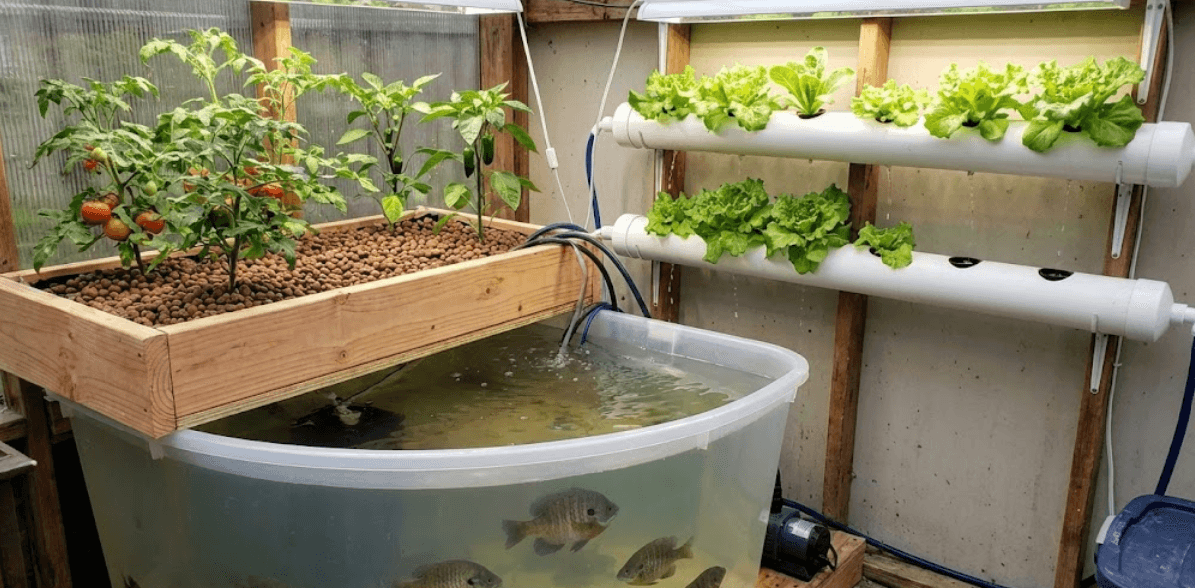
In a drip system, your leafy greens are planted in individual pots or buckets filled with an inert, soil-less growing medium (like coco coir or expanded clay pebbles). A submersible pump sits in a reservoir of nutrient water. On a set schedule, the pump turns on, pushing the water through a manifold of tiny tubes. The water gently drips directly onto the base of each plant, percolates down through the roots, and then drains back into the main reservoir to be reused.
Why is this the best choice for beginners? Because it is incredibly forgiving. In a DWC or NFT system, if your power goes out or your water pump fails, your plant roots will dry out and die within hours. In a drip system, the growing medium holds onto moisture and nutrients like a sponge. If your pump fails while you are at work, the plants won't even notice. They have a buffer. It is a highly resilient, stress-free way to dip your toes into soil-free agriculture.
The Zone Guide: Timing Your Hydroponic Harvest
Wait a minute, you might be thinking. Isn't hydroponics an indoor activity? Why do USDA Hardiness Zones matter?
While you absolutely can run a hydroponic drip system in a spare bedroom under LED grow lights year-round, one of the greatest joys of spring is moving these systems out to a sunny patio, a covered porch, or an unheated greenhouse to take advantage of free, natural solar energy. Because we are right in the middle of the spring season, your strategy depends on where you live.
The Primary Sweet Spot: USDA Zones 4 through 8
If you live in this massive, temperate middle swath of the country, right now is the absolute perfect time to move your hydroponic drip system out to an unheated greenhouse or a bright, south-facing covered patio. The days are hitting the 60s and 70s, which leafy greens absolutely love. Because your plants' roots are elevated in buckets and not sitting in the freezing, wet spring ground, they will grow twice as fast as the lettuce planted in your outdoor raised beds.
Adjusting for the Frozen North: Zones 1 through 3
If you live in the far north, your outdoor nights are likely still plunging near or below freezing. Hydroponic systems do not have the thermal mass of the earth to protect them; if the water in your drip lines freezes, your pipes will shatter and your pump will burn out. Keep your system indoors under full-spectrum LED grow lights for another month. Once the danger of a hard freeze is entirely gone, you can safely slide the system out onto the deck to soak up the intense, brief northern summer sun.
Adjusting for the Deep South: Zones 9 through 11
Down south, you are facing the exact opposite problem. The spring is rapidly vanishing, and you are staring down the barrel of a blistering summer. Leafy greens bolt (go to seed) and turn incredibly bitter when air temperatures consistently top 80°F. Even worse, if your hydroponic reservoir water gets too hot, it loses its ability to hold dissolved oxygen, which will suffocate and rot your plants' roots. If you live in these hot zones, spring is your cue to bring your drip system indoors to the comfort of your air conditioning so you can continue growing crisp, cool lettuce all summer long.
System Architecture: Anatomy of a Drip Build
Building a recirculating drip system is like putting together a very practical, water-flowing Lego set. You don't need a degree in fluid dynamics, but you do need to understand the four primary components of the architecture.
1. The Reservoir (The Belly of the Beast)
This is the tank that holds your water and your nutrients. For a home system growing 10 to 15 heads of lettuce, a heavy-duty 10-gallon to 20-gallon opaque plastic tote is perfect. The Golden Rule: The reservoir must be 100% opaque. Light cannot penetrate the plastic. If sunlight hits your nutrient-rich water, you will instantly grow a massive, thick layer of green algae that will clog your pump and steal nutrients from your plants. Black or dark blue plastic totes are mandatory.
2. The Pump and Timer (The Heart and Brain)
You will need a small, submersible aquarium or fountain pump. A pump rated for 200 to 300 Gallons Per Hour (GPH) is more than enough for a beginner leafy green setup. The pump plugs into a digital timer. You do not want a cheap mechanical timer with the little plastic pull-tabs; they are not precise enough. You need a digital, programmable timer that allows you to set the pump to turn on for incredibly specific intervals—down to the minute.
3. The Manifold and Drip Lines (The Arteries)
The pump connects to a main, 1/2-inch thick black poly tubing line that runs the length of your system. From this main line, you will punch small holes and attach 1/4-inch micro-tubing. These tiny spaghetti tubes run directly to the base of each plant.
4. The Emitters (The Faucets)
At the end of each 1/4-inch micro-tube, you attach a drip emitter. For beginners, I highly recommend "Pressure Compensating" (PC) emitters. Water is lazy; it wants to take the path of least resistance. If you don't use PC emitters, the plants closest to the pump will get flooded, and the plants at the far end of the line will stay dry. PC emitters ensure that every single plant gets the exact same amount of water, regardless of how far down the line they are. A 1/2 Gallon Per Hour (0.5 GPH) emitter is standard for leafy greens.
The Growing Medium: Why We Don't Use Dirt
If we aren't using topsoil, what exactly are the plants growing in?
In hydroponics, we use "inert" media. This means the material provides zero nutritional value; it is completely blank. Its only job is to physically hold the plant upright, provide a dark place for the roots to anchor, and retain the perfect ratio of water and oxygen.
Because we are top-feeding our plants with a drip system, we need a medium that drains incredibly well but stays damp between watering cycles.
Coco Coir and Perlite (The Beginner's Best Friend)
Coco coir is made from the shredded, ground-up husks of coconuts. It looks and feels exactly like peat moss or light soil, but it is entirely inert and highly sustainable. It holds moisture beautifully. However, on its own, it can hold too much water, suffocating the roots. To fix this, we mix it with perlite. Perlite is that white, popcorn-like material you see in potting soils. It is actually volcanic glass that has been popped in a furnace. It holds absolutely no water; its only job is to create microscopic air pockets in the medium. A 50/50 mix of coco coir and perlite is the absolute holy grail for a beginner drip system. It is forgiving, retains nutrients flawlessly, and gives the roots plenty of oxygen.
Expanded Clay Pebbles (Hydroton)
These look like Cocoa Puffs made of brick. They are incredibly porous, lightweight clay balls. They drain instantly and provide massive amounts of oxygen to the roots. However, because they hold almost no water, if you use 100% clay pebbles in a drip system, you will have to run your pump almost constantly. They are better used as a 1-inch drainage layer at the absolute bottom of your pots to prevent the coco coir from washing out the drainage holes.
Nutrient Soup: Feeding the Greens
If the growing medium is blank, where do the plants get their food? They get it from the highly engineered, water-soluble nutrients you add to the reservoir.
Do not try to use standard, organic soil fertilizers (like fish emulsion or bone meal) in a hydroponic drip system. They rely on soil microbes to break them down, and they will rapidly rot, stink up your reservoir, and clog your drip emitters within a week. You must buy specifically formulated, water-soluble hydroponic nutrients.
The N-P-K Ratio for Greens
Plants need three primary macronutrients: Nitrogen (N), Phosphorus (P), and Potassium (K).
When you grow tomatoes, the plant requires massive amounts of Phosphorus and Potassium to produce flowers and fruit. But we are growing leafy greens. A head of lettuce has zero interest in flowering (in fact, if it flowers, our harvest is ruined). Lettuce, spinach, and kale only care about one thing: explosive, massive, dark green vegetative leaf growth.
Nitrogen is the undisputed king of leaf growth. Therefore, you should look for a hydroponic nutrient blend that is heavy on the "N" and lighter on the "P" and "K." A high-nitrogen vegetative growth formula will keep your greens incredibly crisp and growing at warp speed.
The Chemistry Lab: Mastering pH and EC
This is the part of hydroponics that scares people away. You hear words like "Electrical Conductivity" and "pH balancing" and it sounds like high school chemistry class all over again. I promise you, it is incredibly simple. You only need two digital pens (meters) to become a master.
Electrical Conductivity (EC): Measuring the Food
How do you know if you put enough liquid fertilizer into your 10-gallon reservoir? You can't just guess by the color of the water. You measure the Electrical Conductivity (EC).
Pure, distilled water does not conduct electricity. But fertilizer is essentially composed of mineral salts. The more fertilizer salts you add to the water, the more electricity the water can conduct. An EC meter measures this conductivity and tells you exactly how "strong" your nutrient soup is.
- If the EC is too low, your lettuce is starving and will turn pale yellow.
- If the EC is too high, the water is too salty, and it will physically pull water out of the plant's roots, burning the tips of the leaves and killing the plant.
For delicate leafy greens like lettuce and spinach, they prefer a relatively mild soup. An EC target of 1.0 to 1.5 is perfect. (Your nutrient bottle will have a chart to guide you).
Potential Hydrogen (pH): The Lock on the Door
You can have a reservoir full of the most expensive, perfectly mixed fertilizer in the world, and your plants will still starve to death if your pH is wrong.
Think of pH as a locked door on the plant's roots. If the water is too acidic or too alkaline, the door locks, and the plant cannot physically absorb the nutrients (this is called "nutrient lockout").
In traditional soil, a pH of 6.5 to 7.0 is great. In hydroponics, the magic number is lower. You must maintain your reservoir water at a pH between 5.5 and 6.0. At this specific, slightly acidic range, all the required macronutrients and micronutrients easily slip through the unlocked door into the root system.
You will need a bottle of "pH Down" (a mild acid) and "pH Up" (a mild base) to adjust your water after you mix your nutrients. Always check the pH after you add the fertilizer, as the fertilizer itself will change the acidity of the water.
The Drip Schedule: Dialing in the Timer
How often should the pump turn on? This is the most common question beginners ask, and the answer depends entirely on your growing medium and your environment.
If you are using the recommended 50/50 mix of coco coir and perlite, you do not want the pump running 24/7. Plant roots need water, but they also desperately need oxygen. If they are constantly soaking wet, they will drown and rot.
You want to achieve a "dry down" period. You water the medium until it is fully saturated, and then you turn the pump off and let the medium dry out slightly. As the water drains away, it acts like a piston, physically pulling fresh oxygen down from the surface into the root zone.
The Baseline Spring Schedule: Start by programming your digital timer to turn the pump on for 15 minutes, three times a day during the daylight hours (e.g., 8:00 AM, 12:00 PM, and 4:00 PM). Do not run the pump at night; the plants are resting and not actively transpiring water.
Watch your plants closely. If the coco coir feels bone dry an hour before the next watering, add a fourth cycle. If the medium feels like a soggy swamp all day long, reduce the watering times to 10 minutes. Gardening is a conversation; listen to what the medium is telling you.
Water Temperature and The Root Rot Threat
In hydroponics, water temperature is arguably more important than air temperature.
Water has a fascinating physical property: cold water can hold a massive amount of dissolved oxygen, while warm water holds almost none.
If you put your reservoir on a sunny spring patio and the water inside heats up past 75°F (24°C), the dissolved oxygen drops to near zero. Without oxygen, the roots begin to suffocate. This creates the absolute perfect environment for a devastating water mold called Pythium, universally known in the hobby as "Root Rot."
Root rot will turn your beautiful, crisp, white plant roots into a brown, slimy, foul-smelling mush in 48 hours, instantly killing the crop.
The Defense Strategy:
- Keep your reservoir shaded. If it is outside, put it under a table or wrap it in reflective insulation.
- Aim to keep your reservoir water consistently between 65°F and 68°F (18°C - 20°C).
- Add an inexpensive aquarium air pump and an airstone to your reservoir. This constantly bubbles the water, preventing it from stagnating and keeping it hyper-oxygenated, which actively fights off anaerobic rot.
Lighting the Way: Photons for Foliage
If you are growing outside on a spring patio, the sun will do the heavy lifting for you. Leafy greens prefer about 6 to 8 hours of direct, gentle spring sunlight.
However, if you are growing indoors, or if your patio is heavily shaded, you must provide artificial light. Leafy greens are not overly demanding compared to fruiting crops like tomatoes, but they still require a solid blast of photons to grow thick and crisp.
A high-quality, full-spectrum LED grow light is essential. Keep the lights about 12 to 18 inches above the canopy of the plants. For indoor lettuce and spinach, run the lights for 14 to 16 hours a day. Ensure the plants get at least 8 hours of total darkness to rest and execute their nocturnal biological processes.
Pest Management in a Soil-Free World
A common misconception is that because there is no soil, there are no bugs. Sadly, this is false. A lush, vibrant canopy of hydroponic kale is an all-you-can-eat buffet for the local insect population.
The Fungus Gnat Menace
If you use coco coir, you might encounter tiny, annoying black flies buzzing around the base of your plants. These are fungus gnats. They lay their eggs in the top layer of damp medium, and their tiny larvae chew on your plant's delicate root hairs.
- The Fix: Fungus gnats require a constantly wet surface to breed. By dialing in your drip timer so that the very top layer of the coco coir dries out completely between watering cycles, you break their breeding cycle and eliminate them without chemical sprays.
Aphids and Whiteflies
These sap-sucking insects will find your leafy greens, whether they are in dirt or a high-tech drip system. They congregate on the undersides of the leaves.
- The Fix: Because you are growing food you intend to eat raw, avoid harsh pesticides. A sharp blast of water from a spray bottle will knock early aphid colonies off the leaves. For heavier infestations, a light spray of organic, cold-pressed Neem oil or a mild insecticidal soap applied in the evening (never in direct sunlight) will suffocate the pests without harming the plant.
The Harvest: The Cut-and-Come-Again Method
After about 4 to 5 weeks in a highly optimized drip system, your little seedlings will have exploded into massive, lush rosettes of greens. It is time to harvest.
Do not pull the whole plant out of the bucket! Leafy greens like loose-leaf lettuce, spinach, and Swiss chard are incredibly resilient.
Use a clean, sharp pair of scissors to cut the outer, largest leaves, leaving the small, tightly clustered leaves in the absolute center of the plant (the apical meristem) completely intact. The plant will not miss a beat. It will immediately redirect its energy to that central growth point, and within 7 to 10 days, you will have another massive flush of leaves to harvest.
In a perfectly balanced hydroponic drip system, you can continually harvest from the exact same lettuce or kale plant for two or three months before the main stem eventually elongates and the plant signals that it is ready to retire.
Conclusion: Mastering the Flow
Transitioning from traditional soil gardening to a hydroponic drip system requires a slight shift in mindset. You are no longer managing the dirt; you are managing the fluid dynamics and the chemistry. You are stepping into the role of a biological engineer.
By building a light-proof reservoir, keeping your water cool and highly oxygenated, locking your pH into the 5.5 to 6.0 sweet spot, and letting your coco coir breathe between drip cycles, you will unlock a level of explosive, pristine growth that traditional dirt gardening simply cannot match.
This spring, give your knees a break from the mud. Set up a drip system on the patio, mix up your nutrient soup, and prepare to harvest the cleanest, most vibrant salads you have ever eaten. Happy growing!
Expert Insights & FAQs
What happens if the power goes out while I am at work?
This is the beauty of a top-feed drip system utilizing coco coir! Because the coco coir/perlite mix holds moisture so effectively, your plants will be perfectly fine for 24 to 48 hours without the pump running. The medium acts as a life-saving buffer.
My reservoir water has turned cloudy and smells bad. What do I do?
Stop the pump immediately. Cloudy, smelly water means you have an aggressive anaerobic bacterial infection (likely root rot). You must completely dump the reservoir, scrub the tank with a bleach or hydrogen peroxide solution, rinse it thoroughly, and mix fresh nutrients. Ensure your water temperature is below 72°F and add an airstone to increase oxygen.
Is it safe to use PVC pipe to build my hydroponic system?
Yes, standard white PVC pipe is generally considered safe for hydroponics and potable water. However, avoid using any dark, unrated rubber hoses or industrial pipes that are not food-safe, as they can leach heavy metals and harmful plasticizers into your nutrient water, which your plants will absorb.
Can I grow tomatoes or peppers in a leafy green drip system?
Technically yes, but it is highly discouraged for beginners. Tomatoes and peppers require a completely different, much stronger nutrient profile (heavy in Phosphorus and Potassium) than leafy greens. If you run the same nutrient soup for both, the lettuce will burn, or the tomatoes will refuse to fruit. Keep vegetative plants and fruiting plants on separate, dedicated reservoirs.
Do I need to clean the drip lines?
Yes. Over a few months, organic material and nutrient salts can build up inside the tiny 1/4-inch micro-tubing and clog the emitters. At the end of your growing season (or between major crops), you should flush the entire system by running a mild solution of hydrogen peroxide and water through the lines for an hour to dissolve clogs and sterilize the tubing.
Why are the edges of my lettuce leaves turning brown and crispy?
This is a physiological disorder known as "Tip Burn." It is caused by a severe lack of calcium in the rapidly growing leaf tissue. It is usually not caused by a lack of calcium in your reservoir, but rather by poor airflow. Ensure you have a small oscillating fan gently blowing across your indoor plants to encourage transpiration, which pulls the calcium up through the roots to the tips of the leaves.
How often do I need to completely change the water in my reservoir?
In a recirculating drip system, the plants drink water faster than they consume nutrients, so the nutrient concentration (EC) can slowly rise over time as water evaporates. You should "top off" the reservoir with fresh, pH-balanced water every few days. However, every 14 to 21 days, you must completely drain the reservoir, discard the old nutrient soup, and mix a brand new, fresh batch to prevent toxic salt buildups.
Can I use regular tap water to fill my hydroponic reservoir?
Yes, for the most part. Most municipal tap water is perfectly fine for growing leafy greens. However, tap water contains chlorine or chloramine, which is used to kill bacteria. While it won't kill your plants, it is best practice to fill a bucket with tap water and let it sit uncovered for 24 hours before adding your nutrients. This allows the chlorine to evaporate (off-gas) naturally.
Johnnie McCormick
Zone 7b/8a - North Central Alabama
Johnnie McCormick is a gardening hobbyist and the founder of My Garden Spot. Raised in north-central Alabama, his passion for gardening began in his youth. In 2008, he established a large market garden, teaching himself high-yield growing methods. In the years since, he has operated seasonal seedling sales for transplants, specializing in heirloom tomatoes, peppers, eggplants, decorative ground covers like Ajuga (Bugleweed), marigolds, nasturtiums, and fresh kitchen-window herb arrangements (basil, cilantro). Today, he gardens in the hills between Birmingham and Jasper, Alabama (Zone 7b/8a), sharing practical, community-focused gardening resources.
Verified Authoritative Citations & References
In alignment with our strict E-E-A-T research and verification guidelines, this guide cross-references data from the United States Department of Agriculture (USDA) and Cooperative Extension Service programs.
- Cornell CEA (Controlled Environment Agriculture): Hydroponic lettuce and crop nutrient solution recipes. cea.cals.cornell.edu
- University of Arizona CEAC: Controlled Environment Agriculture Center technical guides. ceac.arizona.edu
- USDA National Agricultural Library: Aquaponics and closed-loop recirculating aquaculture guidelines. nal.usda.gov
- Alabama Cooperative Extension System (ACES): Small-scale aquaponic systems and water chemistry guides. aces.edu

Please log in to view comments.