
Companion Planting Carrots: Maximizing Root Growth
Carrots are notoriously one of the most frustrating crops to grow in a commercial market garden.
The seed is microscopic, requiring absolute precision when sowing. It exhibits an excruciatingly slow germination rate, often taking up to twenty-one days to sprout. During those three weeks, the soil surface must remain perfectly, constantly moist; if the soil dries out and crusts over for even a single afternoon, the delicate carrot sprout will be permanently trapped underground and die.
Furthermore, because they germinate so slowly, they are immediately outpaced by fast-growing broadleaf weeds. If you do not meticulously weed a carrot bed in the first four weeks, the crop will be entirely choked out.
To solve these compounding agronomic challenges, experienced organic growers rely heavily on the science of Companion Planting (polyculture). By strategically planting specific crops in the same bed as your carrots, you can naturally suppress weeds, trap soil moisture, and biologically mask the crop from devastating insect pests.

Olfactory Camouflage: Defeating the Carrot Rust Fly
The single greatest threat to a carrot crop is the Carrot Rust Fly (Psila rosae).
This tiny, metallic-black fly possesses an incredibly acute sense of smell. It flies low over the garden, tracking the distinct, sweet scent of carrot foliage. When it finds the crop, it lands at the base of the stem and lays its eggs in the soil. When the eggs hatch, the tiny maggots burrow downward and chew deep, rusty-brown, tunneling scars into the side of the carrot root.
The damage is entirely underground. You will not realize your crop has been ruined until you pull the carrots out of the earth for the market, only to find them riddled with maggot tunnels and completely unsellable.
Because organic farmers cannot drench their soil in synthetic neurotoxins to kill the maggots, they use companion planting to achieve olfactory camouflage.
The strategy is to interplant the carrots heavily with members of the Allium family—specifically scallions, onions, or chives. Alliums release powerful, volatile sulfur compounds into the air. When you plant a row of scallions right next to a row of carrots, the overwhelming sulfur scent of the onions completely masks the sweet scent of the carrots. The rust fly simply flies right over the bed, completely unaware that her host plant is growing directly below her.
The "Living Mulch" and Moisture Retention
As mentioned, carrot seeds must stay perfectly moist for up to three weeks to germinate. This usually requires a farmer to run overhead irrigation twice a day, which is a massive waste of water and labor.
You can drastically reduce this evaporation by utilizing a companion planted Living Mulch.
The architecture of a carrot plant is very specific: it shoots a deep, vertical taproot down into the soil, and produces a very thin, wispy, fern-like canopy of leaves above ground. Because the carrot leaves are so thin, they do not shade the soil. The sun beats down directly on the dirt, baking the moisture out of it.
To solve this, you companion plant a crop that has the exact opposite architecture: a shallow, horizontal root system, and a massive, wide, spreading canopy of leaves.
Crisphead or Butterhead Lettuce is the perfect candidate.
If you plant a row of lettuce down the center of a 30-inch bed, and plant a row of carrots on either side, the lettuce will rapidly grow outward. The massive, crinkled lettuce leaves will act as a physical umbrella, shading the soil directly over the carrot roots. This dense shade drops the soil temperature by several degrees, entirely traps the evaporation, and physically prevents weed seeds from receiving the sunlight they need to germinate.
For advanced research on organic polyculture and living mulch systems, the Rodale Institute provides decades of peer-reviewed data on regenerative intercropping.

The Radish Marker Strategy
Because carrots take three weeks to germinate, and weeds take three days, you will have a massive weed problem before you can even see where the carrot rows are located. If you try to run a stirrup hoe through the bed to kill the weeds, you will likely accidentally hoe up the invisible, germinating carrot seeds.
To solve this, you use the Radish Marker strategy.
When you load your precision seeder with carrot seed, you mix in a tiny pinch of French Breakfast radish seed (roughly one radish seed for every twenty carrot seeds).
Radishes are incredibly aggressive; they germinate in exactly three days. Within a week, the bright green radish seedlings will clearly mark the exact, mathematically perfect line of the carrot row. You can now aggressively hoe the weeds between the rows with absolute confidence, knowing exactly where the invisible carrots are sleeping.
Furthermore, as the radish seed germinates and swells, it acts as a tiny biological plow, physically breaking the hard crust of the soil surface. Three weeks later, when the delicate, weak carrot sprout finally emerges, it can easily push through the loosened soil left behind by the radish. You harvest the radishes on day 28, perfectly thinning the row just as the carrots need the physical space to expand.
Insectary Companions: Dill and the Predatory Wasp
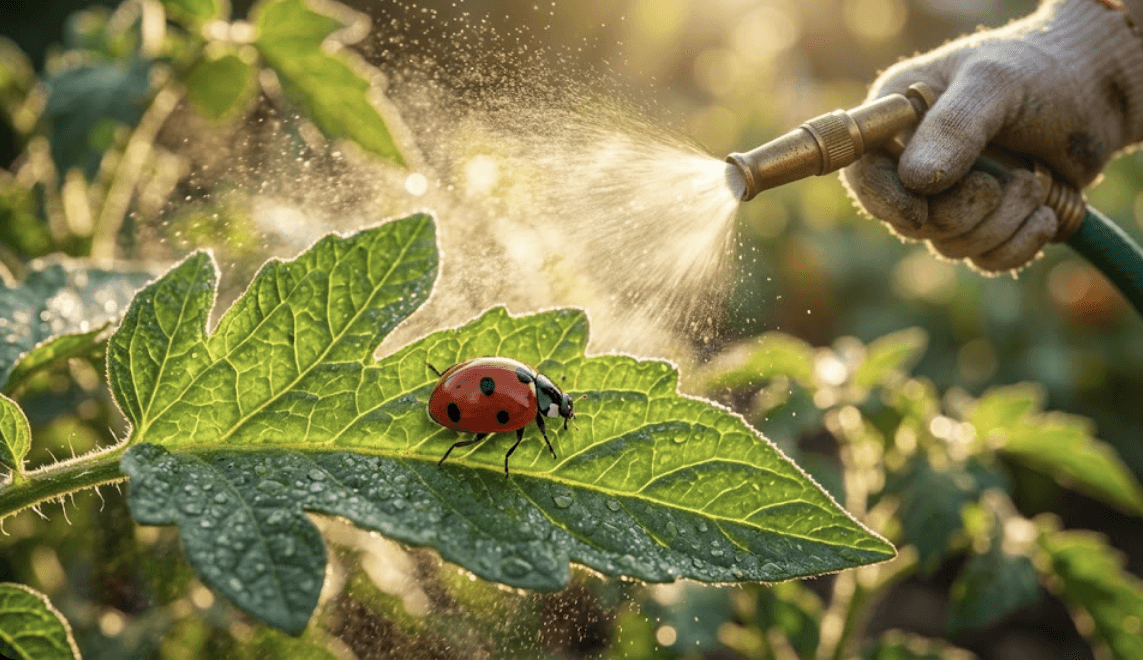
While the rust fly attacks the root, the carrot foliage is often attacked by massive colonies of aphids. Aphids suck the sap out of the leaves, stunting the plant and covering the foliage in a sticky residue that promotes black sooty mold.
To combat aphids, you must attract their natural predators to the carrot bed.
Dill and Cilantro are exceptional companion plants for carrots. If you let these herbs flower, they produce massive umbels of tiny, shallow, nectar-rich flowers. These specific flowers act as a powerful magnet for tiny, non-stinging parasitic wasps (like the Aphidius wasp).
The adult wasp drinks the nectar from the dill flower for energy, then flies down into the carrot foliage. When it finds an aphid, it lays a single egg inside the aphid's body. The wasp larva hatches and eats the aphid from the inside out. By providing a habitat (the dill flower) for the predator, you create a self-regulating ecosystem that completely eliminates the need for organic pesticide sprays.
A critical warning: Carrots and dill are closely related (both are in the Apiaceae family). If you plan to leave your carrots in the ground over the winter to produce seed the following year, you must remove the dill before it flowers, as they can cross-pollinate and ruin the genetic purity of the carrot seed.
Conclusion
Growing carrots is a masterclass in patience.
If you attempt to grow them as an isolated monoculture, you will fight a constant, exhausting battle against soil crusting, relentless weeds, and devastating root flies. But by embracing the biological synergy of companion planting—using radishes to break the soil, lettuce to trap the moisture, onions to mask the scent, and dill to attract the cavalry—you force the ecosystem to do the heavy lifting for you.
Expert Insights & FAQs
How should I store my carrots after the harvest?
Always cut the green tops off immediately, as the greens will continue to draw moisture out of the root, causing it to go limp. Store the roots in a cool, dark, highly humid environment, like a root cellar or a refrigerator crisper drawer. Never store carrots near ripening apples, as the ethylene gas from the apples will turn the carrots bitter.
How close to the tomatoes should I plant the carrots?
You can plant them surprisingly close—within 12 to 18 inches of the base of the tomato plant. Because tomatoes develop fibrous roots in the upper soil horizons and carrots drive a single taproot straight down, they occupy different soil strata and do not compete aggressively for physical space.
Do carrots actually help peas grow?
Yes! They have a mutually beneficial relationship. Carrots exude a specific compound from their roots into the soil that actively stimulates the growth and vigor of nearby pea plants. Planting alternating rows of spring peas and carrots is an excellent traditional companion planting strategy.
Why do my carrots fork and split into multiple legs?
Forking is caused by physical obstructions in the soil or improper watering. If the delicate carrot taproot hits a rock, a hard clod of clay, or an undecomposed piece of wood mulch, it will split and grow around it. Always prepare a deep, finely sifted seedbed. Additionally, shallow, frequent watering encourages surface root branching rather than deep taproot growth.
What vegetables should never be planted near carrots?
Dill is the primary enemy of the carrot. Carrots have a pronounced, severe dislike for dill, and its presence will stunt their root development. You should also avoid planting carrots near fennel or anise, as these umbelliferous herbs often cross-pollinate or inhibit growth.
How do I protect my carrots from the carrot fly without chemicals?
You must mask the scent of the carrot foliage. The carrot fly hunts by smell. Surround your carrot beds with highly aromatic alliums (onions, leeks, chives) or pungent herbs like rosemary, sage, and wormwood. Mixing parsley seed in with your carrot seed is also highly effective at confusing the flies.
Why are my carrots growing hairy and bitter?
Hairy, bitter carrots are almost always the result of heat stress and excessive nitrogen. If your soil contains too much raw manure or synthetic nitrogen fertilizer, the carrots will prioritize top growth and lateral root growth over taproot development. Hot soil temperatures compound this issue, concentrating the bitter essential oils in the root.
Can I plant carrots with determinate (bush) tomatoes?
Yes, but the micro-climate effect will be less pronounced. Determinate tomatoes stay short and bushy, meaning they will not cast the long, deep afternoon shadows that indeterminate (vining) tomatoes do. If you use bush tomatoes, plant the carrots much closer to the base of the tomato plants to ensure they receive adequate shade.
Johnnie McCormick
Zone 7b/8a - North Central Alabama
Johnnie McCormick is a gardening hobbyist and the founder of My Garden Spot. Raised in north-central Alabama, his passion for gardening began in his youth. In 2008, he established a large market garden, teaching himself high-yield growing methods. In the years since, he has operated seasonal seedling sales for transplants, specializing in heirloom tomatoes, peppers, eggplants, decorative ground covers like Ajuga (Bugleweed), marigolds, nasturtiums, and fresh kitchen-window herb arrangements (basil, cilantro). Today, he gardens in the hills between Birmingham and Jasper, Alabama (Zone 7b/8a), sharing practical, community-focused gardening resources.
Verified Authoritative Citations & References
In alignment with our strict E-E-A-T research and verification guidelines, this guide cross-references data from the United States Department of Agriculture (USDA) and Cooperative Extension Service programs.
- Cornell Cooperative Extension: Home Vegetable Gardening Guide and vegetable variety recommendations. gardening.cals.cornell.edu
- Penn State Extension: Master Gardener Manual and companion planting matrices. extension.psu.edu
- Alabama Cooperative Extension System (ACES): Raised bed construction plans and regional seed planting calendars. aces.edu
- USDA NRCS: Cover crops and biological soil health guidelines. nrcs.usda.gov

Please log in to view comments.