
How Do You Establish a High-Yield First-Year Strawberry Patch?
When you are planning your garden layout, there is on group of plants that all gardeners should take into consideration. Perennials are plants that go dormant, and then each year they cycle through the growth stages, and with proper care, provide their bounty for seasons to come. And if there is one perennial crop that captures the absolute joy of homegrown food, it is the strawberry.
Let us be brutally honest for a moment. The strawberries you buy at the supermarket in the middle of winter are an agricultural tragedy. They are bred for thick skins, long-haul truck transport, and visual uniformity. They are often picked completely white and gassed with ethylene to turn them red, resulting in a fruit that tastes exactly like crunchy, slightly tart water.
A sun-warmed, fully ripe, homegrown strawberry plucked straight from the patch is a completely different organism. It is a fragile, sticky, fragrant flavor-bomb that melts in your mouth and stains your fingers.
However, establishing a highly productive, disease-free strawberry patch is not a weekend project. Strawberries are perennials, meaning they come back year after year. When you plant them this spring, you are not planting for a quick summer snack; you are building an agricultural infrastructure that will produce heavy yields for the next three to five years. Year One is all about playing the long game.
In this exhaustive, master-level guide, we are going to dive deep into the fascinating biology of the strawberry plant. We will demystify the difference between June-bearing and day-neutral varieties, explain the absolute critical nature of "crown depth," discuss the psychological agony of pinching first-year blossoms, and teach you how to build a strawberry patch that will be the envy of your neighborhood. Let’s get our hands dirty.
The Zone Guide: Timing Your Strawberry Patch
Because we are currently navigating the vibrant, unpredictable weather of mid-to-late spring, your strategy for establishing a new strawberry patch depends entirely on your local climate.
The Primary Sweet Spot: USDA Zones 4 through 8
If you live in this massive, temperate middle swath of the country, right now is your absolute prime time. The danger of a pipe-bursting deep freeze has passed until next winter, the soil has warmed up enough to be workable, but the oppressive heat of summer is still a couple of months away. You should be getting your dormant bare-root strawberries or young green plugs into the ground right now. The cool, damp spring weather gives their shallow root systems time to establish before the stress of July arrives.
Adjusting for the Frozen North: Zones 1 through 3
If you live in the far north, your ground might have just recently thawed, and the nights can still get dangerously cold. While dormant bare-root strawberries can handle a freeze, active green growth cannot. Wait until your soil temperature consistently registers above 50 degrees Fahrenheit. You will likely be planting your patch a few weeks from now. In your short season, you will want to focus heavily on protecting your plants with thick straw mulch as soon as the autumn cold sets in to ensure they survive your brutal winters.
Adjusting for the Deep South: Zones 9 and 10
Down south, the traditional spring planting window is completely inverted. If you plant a delicate strawberry crown in your soil right now, the impending, blistering heat of early summer will likely scorch it to death. In extreme warm zones, strawberries are often treated as an annual winter crop. You will want to order your plants for a late fall (October or November) planting. They will grow happily through your mild winter and produce a massive, early spring harvest before the summer heat melts them down.
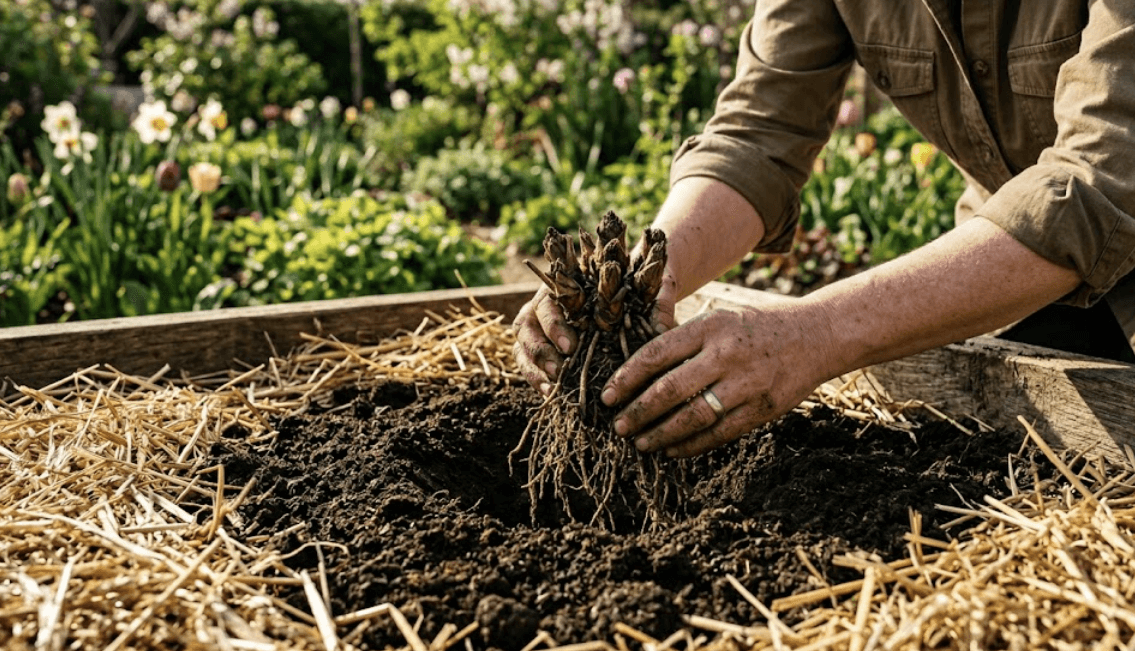
Understanding Strawberry Botany: The Crown and the Runner
To grow strawberries like a professional horticulturist, you have to understand how the plant functions. A strawberry is not a bush, and it is not a tree. It is a highly specialized herbaceous perennial with a unique, somewhat bizarre anatomy.
The Crown
The absolute heart and brain of the strawberry plant is the "crown." This is the thick, woody, shortened stem that sits right at the surface of the soil. Everything the plant does originates from this crown. The shallow, fibrous roots grow downward from the bottom of the crown, and the leaves, flowers, and fruit grow upward from the apical meristem (the growing tip) at the top of the crown. If the crown dies, the plant dies. If the crown is buried in mud, it rots. If the crown is exposed to hot, dry air, it desiccates. Managing the crown is the secret to strawberry success.
The Stolons (Runners)
Strawberries have a fantastic, aggressive method of asexual reproduction. In the mid-summer, after the plant has finished flowering, the crown will shoot out long, leafless stems called stolons (commonly known as runners). These runners crawl across the surface of the soil. After creeping a few inches or a foot away from the mother plant, the runner will drop a tiny new root system into the dirt and form a brand new, genetically identical "daughter" crown. This daughter plant will then shoot out its own runner to create a "granddaughter" plant. If left unchecked, a single strawberry plant will turn into a dense, tangled, impenetrable mat of clones. Managing these runners is a critical part of your Year One strategy.
Choosing Your Players: June-Bearing vs. Day-Neutral
Before you buy a bundle of plants, you must make a foundational decision about how you want to harvest your fruit. There are three main types of strawberries, and they behave entirely differently.
1. June-Bearing (The Heavyweight Champions)
June-bearing strawberries are highly sensitive to photoperiods (day length). They initiate their flower buds in the short days of autumn, hold those buds dormant through the freezing winter, and then explode into bloom the following spring.
- The Harvest: They produce one absolutely massive, concentrated flush of giant berries over a period of about three to four weeks (typically in June, hence the name).
- The Use Case: If your goal is to make huge batches of strawberry jam, freeze gallons of fruit for winter smoothies, or bake endless pies, June-bearers are your best friend. You get a massive volume of fruit all at once.
- Popular Varieties: 'Honeoye', 'Earliglow', 'Jewel'.
2. Everbearing / Day-Neutral (The Steady Trickle)
These varieties are relatively insensitive to day length. As long as the temperatures remain moderate (between 40°F and 85°F), they will continuously produce flowers and fruit.
- The Harvest: They do not produce a massive flush. Instead, they produce a steady, manageable trickle of smaller berries from late spring all the way through the first autumn frost.
- The Use Case: If you simply want to walk out to your garden every morning and pick a handful of fresh strawberries to slice over your cereal or snack on with your kids, day-neutrals are perfect.
- Popular Varieties: 'Seascape', 'Albion', 'Ozark Beauty'.
3. Alpine Strawberries (The Gourmet Anomaly)
Alpine strawberries are wild, woodland plants. They do not produce runners, they stay in neat little clumps, and their berries are the size of a fingernail.
- The Harvest: Very low yield of tiny fruit throughout the summer.
- The Use Case: They possess an intense, wild, almost floral bubblegum flavor that chefs go crazy for. They are wonderful tucked into the shady edges of a flower bed, but they will not fill your freezer.
For the sake of this guide, we will focus on establishing a classic, high-yield patch of June-bearing or Day-Neutral varieties.
Bare-Root vs. Plugs: Waking the Dead
When you order strawberry plants, they generally arrive in one of two forms: green plugs or dormant bare-roots.
Green Plugs are small, actively growing plants in little plastic nursery pots with soil. They are easy to plant, but they are expensive and expensive to ship.
Bare-Root Bundles are the professional standard. When you open a package of bare-root strawberries in the spring, you will likely be horrified. They look like a bundle of dead, dry, brown spider legs held together with a rubber band. They have no leaves, no soil, and absolutely no signs of life. Do not panic. They are simply in deep, cold-storage dormancy.
The Rehydration Protocol
To wake these dormant crowns up and prepare them for the garden, you must execute a strict rehydration protocol.
- Untie the bundle and separate the individual plants.
- Fill a bowl or bucket with room-temperature (never hot!) water.
- Submerge the stringy, brown roots into the water, but keep the thick crowns above the waterline.
- Let the roots soak for 20 to 30 minutes right before you plant them. This plumps up the dehydrated cellular tissue and signals to the plant that the spring rains have arrived.
- Do not leave them soaking for hours or overnight, or the roots will suffocate and drown.
Site Selection and Soil Architecture
Strawberries are incredibly demanding when it comes to real estate. If you plant them in a soggy, shaded corner of your yard, they will reward you with a pathetic harvest of gray, moldy mush.
Sunlight Requirements
Strawberries require an absolute minimum of 8 hours of direct, unobstructed sunlight per day. Ten to twelve hours is even better. The sun drives the photosynthesis that creates the heavy sugars in the fruit. Shady strawberries are sour strawberries.
Soil Drainage and The Raised Bed Advantage
Strawberries absolutely hate "wet feet." Their shallow roots are highly susceptible to an aggressive fungal disease called Red Stele root rot. If they sit in heavy, compacted, waterlogged clay, they will die.
They demand rich, loamy, perfectly draining soil. Because of this, the absolute best way to grow strawberries is in a raised garden bed or a deeply mounded row (hilled up about 8 to 10 inches above the surrounding grade). Elevated soil drains faster and warms up earlier in the spring, giving your plants a massive biological head start.
Soil Chemistry and Weeds
Strawberries prefer slightly acidic soil, thriving in a pH range between 5.5 and 6.5. Before planting, aggressively amend your bed with high-quality, mature compost. Because strawberries have shallow roots, they are terrible competitors. If they have to fight deep-rooted perennial weeds (like dandelions, bindweed, or creeping charlie) for water and nutrients, the strawberries will lose. Your bed must be ruthlessly weeded before a single crown touches the dirt.
The Planting Masterclass: The "Goldilocks" Crown
We have finally arrived at the most critical moment in the life of your strawberry patch. The physical act of putting the plant into the soil is where 80% of beginners fail.
As we discussed, the crown is the heart of the plant. The depth at which you bury the crown determines the success or failure of the entire operation. It is a "Goldilocks" scenario; it must be exactly right.
- Too Deep: If you bury the crown entirely under the soil, the wet dirt will suffocate the apical meristem. The central growing tip will succumb to bacterial soft rot, and the plant will simply turn into black sludge and disappear.
- Too Shallow: If you plant the strawberry too high, leaving the top half of the stringy roots exposed to the open air, the roots will rapidly dry out, the crown will desiccate, and the plant will shrivel into a crisp brown husk.
- Just Right: The exact midpoint of the crown must rest perfectly level with the surface of the soil. The roots should be completely buried, pointing straight down (not J-hooked or bent horizontally), and the top half of the thick crown should be visible above the dirt, ready to sprout leaves into the sunshine.
The Technique: Dig a hole deep enough to accommodate the full length of the roots. Build a small cone of soil in the center of the hole. Place the base of the crown on top of the cone, and drape the roots down the sides of the cone. Backfill the soil carefully, firming it gently to remove air pockets, ensuring the crown remains at that perfect halfway mark. Water immediately and deeply to settle the soil.
Year One Strategy: The Painful Sacrifice
Here is where we separate the casual gardeners from the master horticulturists.
If you bought bare-root June-bearing strawberries and planted them perfectly this spring, within a few weeks, they are going to push out beautiful, vibrant green leaves. Shortly after that, they are going to produce clusters of delicate white flowers.
Your instinct will be to celebrate. You will envision those flowers turning into juicy red berries by June.
You must pinch those flowers off. I know it is emotionally painful. You waited all winter for fresh fruit, and now an expert is telling you to destroy your harvest. But you must ruthlessly pinch off every single blossom that appears on your June-bearing plants during Year One.
The Agronomic Reasoning
When a newly planted, tiny bare-root strawberry tries to produce fruit, it diverts 100% of its biological energy into ripening those seeds. It completely stops growing its root system, and it stops producing the leaves necessary to build a massive, durable crown. If you let a first-year plant fruit, you will get a tiny handful of mediocre berries, and the plant will remain stunted and weak for the rest of its life.
By pinching off the flowers, you alter the plant's hormonal signaling. You force it to redirect all of that explosive spring energy back downward into building a massive, sprawling, deep root system, and outward into producing vigorous runners (daughter plants).
You are sacrificing a tiny harvest in Year One to guarantee a monstrous, overwhelming, patch-filling harvest in Year Two, Year Three, and Year Four. (Note: If you are growing Day-Neutral varieties, the rule is slightly softer. Pinch off all flowers for the first 6 weeks after planting to establish the roots, then allow them to fruit for a late summer harvest).
System Architecture: Managing the Runners
As summer arrives and your flower-pinched plants begin to thrive, they are going to start shooting out those aggressive, crawling runners. How you manage these runners dictates the architecture of your patch. There are two primary professional systems.
1. The Matted Row System (Best for June-Bearers)
If you planted June-bearing varieties, you want them to produce as many clones as possible to fill your garden bed. You plant your original "mother" plants about 18 to 24 inches apart in a row. As the runners shoot out, you gently guide them into the empty spaces between the mother plants and press their tiny new roots into the dirt. Over the course of Year One, the mother plants and their daughter clones will weave together into a dense, solid, 2-foot-wide "matted row" of foliage. Any runners that try to escape out into your pathways should be ruthlessly cut off with shears. By Year Two, this matted row will be an impenetrable fortress of leaves that produces an astronomical volume of fruit.
2. The Hill System (Best for Day-Neutrals)
If you planted Day-Neutral varieties, allowing them to runner aggressively is a mistake. Day-neutrals do not have the energy to constantly produce fruit and support an army of clones. In the Hill System, you plant your mother plants much closer together (about 12 inches apart) on a raised mound. Whenever a runner appears, you immediately snip it off with scissors. You do not allow the plant to clone itself. By constantly cutting the runners, you force the mother plant to keep its energy centralized, resulting in a massive, bushy, highly productive single plant.
Watering, Feeding, and The Mulch Mandate
Strawberries have a high metabolism and very shallow root systems. The top three inches of soil dictate their health.
Consistent Hydration
If the top two inches of your soil dry out completely during a hot spring week, your strawberry plants will suffer severe drought stress. The leaves will turn crispy on the edges, and runner production will halt. You must maintain even, consistent moisture. The soil should feel like a wrung-out sponge at all times. Drip irrigation or soaker hoses snaked through the patch are highly recommended, as overhead watering splashes dirt onto the leaves and invites fungal diseases.
The Straw in the Berry
There is a reason they are called strawberries. The absolute best practice for a healthy patch is to heavily mulch the bare soil between the plants with clean, weed-free wheat straw or pine needles. Mulch serves three critical functions:
- It drastically reduces surface evaporation, keeping the shallow roots cool and hydrated.
- It blocks sunlight from hitting the soil, suppressing the perennial weeds that would otherwise choke out the plants.
- Most importantly, it creates a clean, dry physical barrier between the dirt and the fruit. If a ripening strawberry rests directly on damp topsoil, it will rot and turn into a moldy gray mess within 48 hours. The straw keeps the fruit elevated, clean, and dry.
Nutritional Top-Ups
If you pre-loaded your bed with high-quality compost, your Year One plants have plenty of slow-release nutrition. Avoid hitting them with heavy doses of synthetic liquid nitrogen. Too much nitrogen causes the plants to grow massive, soft, lush leaves that are highly susceptible to aphids and fungal infections, and actually reduces runner production. Let the compost do its job.
Pests and Pathogens: Defending the Patch
A lush, sprawling bed of strawberry foliage is a highly attractive target for local wildlife and microscopic pathogens. You must remain vigilant.
The Aerial and Terrestrial Thieves
Once Year Two arrives and your berries begin to turn a glorious red, you will quickly discover that birds love strawberries just as much as you do. A robin will take one single bite out of the side of your most perfect, massive berry and leave the rest to rot. The only foolproof defense is physical exclusion. Drape a lightweight bird netting over your raised beds, suspended by small hoops so the netting does not tangle in the leaves.
On the ground, slugs and snails are your worst enemy. They hide in the damp mulch during the day and come out at night to chew ragged holes in the fruit. Avoid toxic slug baits; instead, sink shallow dishes of cheap beer into the soil so the rim is level with the dirt. The slugs are intensely attracted to the yeast, fall into the dish, and drown.
Botrytis Cinerea (Gray Mold)
If you live in a humid climate with wet spring weather, Botrytis is the grim reaper of the strawberry patch. It presents as a fuzzy, gray, dusty mold that completely engulfs the ripening fruit and flowers, turning them to mush. Fungal spores require stagnant, humid air to germinate. You prevent Gray Mold through strict architectural hygiene. Do not plant your crowns too closely together. Ensure your bed is weeded to allow the wind to blow freely through the canopy, physically drying the leaves and fruit after a morning dew or a rainstorm. Always water at the base of the plant via drip lines, never with overhead sprinklers.
Winterization: Putting the Patch to Bed
While this guide focuses on the vibrant spring establishment of your patch, we must briefly touch on how you will end Year One.
As the late autumn frosts arrive and the days grow short, your strawberry plants will slowly turn a beautiful deep red and purple, signaling that they are entering winter dormancy.
If you live in Zones 4 through 6, the freezing and thawing cycles of winter soil can physically heave the shallow strawberry crowns right out of the dirt, exposing their roots to the deadly, dry winter wind.
Once the ground has frozen solid (usually in late November or December), you must put the patch to bed. Take several bales of clean wheat straw and cover the entire bed—plants and all—with a thick, 4 to 6-inch blanket of straw. This is not to keep the plants warm; it is to keep the ground reliably frozen and insulated against the destructive freeze-thaw cycle.
When the following spring arrives, and the snow melts, you will gently rake that thick straw blanket back off the crowns, leaving it in the pathways to act as your summer mulch. The plants will wake up, shake off the cold, and reward your meticulous Year One patience with a staggering, massive harvest of the most spectacular fruit you have ever tasted.
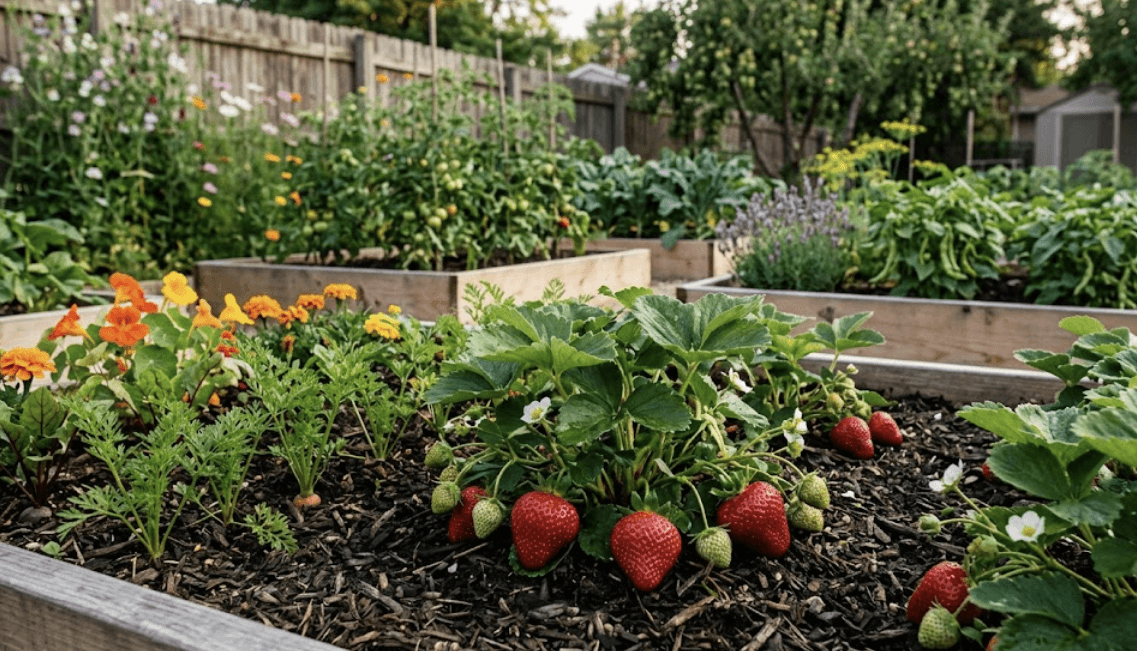
Conclusion: The Long Game
Establishing a first-year strawberry patch is a profound exercise in horticultural delayed gratification. It requires you to carefully navigate the temperamental spring weather, painstakingly measure the depth of a dormant crown, and ruthlessly destroy the very flowers you worked so hard to cultivate.
But a garden is not a sprint; it is an evolving, perennial ecosystem. By investing your time, sweat, and discipline into building a flawless foundation this spring, you are securing a legacy. When Year Two arrives, and you are kneeling in the warm summer straw, surrounded by the sweet, overpowering aroma of a hundred sun-ripened, crimson berries, you will realize that every moment of Year One patience was entirely worth it. Happy planting.
Expert Insights & FAQs
My bare-root plants look completely dead and dry. Will they survive?
If you bought them from a reputable nursery, yes! Dormant bare-root crowns are incredibly tough and are designed to look like lifeless, stringy brown husks. As long as you execute the 30-minute rehydration soak in room-temperature water before planting, and bury the crown at the precise "Goldilocks" depth, they will push out bright green leaves within 10 to 14 days of hitting the warm spring soil.
Should I fertilize my strawberry patch in the spring?
If you are establishing a Year One patch, the compost you amended the bed with is usually sufficient. For established patches (Year Two and beyond) of June-bearers, **do not fertilize heavily in the spring.** Spring nitrogen forces massive leaf growth at the expense of fruit production, and creates a dense, mold-prone canopy. Fertilize June-bearers in the late summer *after* the harvest is finished to help them build energy for next year's buds.
Can I use grass clippings as mulch instead of straw?
You can use untreated grass clippings, but they are not ideal for strawberries. Fresh grass clippings are high in nitrogen and mat down tightly, generating heat and holding excess moisture, which can invite fungal rot right up against the delicate fruit. Clean, hollow wheat straw or pine needles are far superior because they allow maximum airflow and keep the berries dry.
Why are the leaves on my new strawberry plants turning yellow with green veins?
This is a classic symptom of Iron Chlorosis, which is almost always caused by a soil pH that is too high (too alkaline). When the pH rises above 7.0, iron becomes chemically locked in the soil and unavailable to the roots. You can lower the pH by adding elemental sulfur or acidic organic matter (like pine needles) to the bed over time.
What are the tiny black spots on the outside of the strawberry?
Those are actually the true botanical fruits of the plant, called "achenes," and each one contains a tiny seed! The red, fleshy, sweet part of the strawberry that we love to eat is technically just an enlarged "receptacle" that holds the achenes. Strawberries are the only fruit that wears its seeds on the outside.
I didn't pinch the flowers off my first-year plants. Are they ruined?
They are not completely ruined, but their potential has been severely stunted. They expended massive amounts of energy producing a few tiny berries instead of building a deep root system. To help them recover, ensure you keep them exceptionally well-watered, mulched, and carefully snip off any late-season runners they try to produce so they can centralize their remaining energy.
How many years will my strawberry patch keep producing?
A well-maintained strawberry patch typically remains highly productive for 3 to 5 years. After that, the original mother plants become woody, exhausted, and susceptible to viral diseases, and the overall yield drops significantly. Expert gardeners usually rip out the entire patch after year 4 and start fresh with new, certified disease-free bare-root plants in a different garden bed to rotate crops.
Can I grow strawberries in containers or hanging baskets?
Yes, absolutely. Day-Neutral and Alpine varieties do wonderfully in large containers or hanging baskets because they don't produce massive amounts of runners. However, containers dry out exceptionally fast and offer very little winter insulation. You will need to water them almost daily in the summer and move the pots into an unheated garage to survive the deep winter freezes.
Johnnie McCormick
Zone 7b/8a - North Central Alabama
Johnnie McCormick is a gardening hobbyist and the founder of My Garden Spot. Raised in north-central Alabama, his passion for gardening began in his youth. In 2008, he established a large market garden, teaching himself high-yield growing methods. In the years since, he has operated seasonal seedling sales for transplants, specializing in heirloom tomatoes, peppers, eggplants, decorative ground covers like Ajuga (Bugleweed), marigolds, nasturtiums, and fresh kitchen-window herb arrangements (basil, cilantro). Today, he gardens in the hills between Birmingham and Jasper, Alabama (Zone 7b/8a), sharing practical, community-focused gardening resources.
Verified Authoritative Citations & References
In alignment with our strict E-E-A-T research and verification guidelines, this guide cross-references data from the United States Department of Agriculture (USDA) and Cooperative Extension Service programs.
- University of California Fruit & Nut Research Center: Backyard orchard culture and tree spacing guidelines. homeorchard.ucanr.edu
- Cornell Cooperative Extension (Pomology): High-density planting, rootstock selection, and summer pruning manuals. ecommons.cornell.edu
- Oregon State University Extension Service: Training and pruning backyard fruit trees guide. catalog.extension.oregonstate.edu
- Penn State Extension: Small-scale fruit production and pest monitoring guides. extension.psu.edu


Please log in to view comments.