
Growing Cool-Weather Brassicas: The Complete Season Guide
When the crushing heat of August finally breaks, most gardeners pack up their tools. They pull the spent tomato vines, drain the hoses, and call it a year. But in a high-yield, regenerative system, the first frost isn't the end. It's the beginning of the most productive—and profitable—season of the year.
The Brassica genus contains the heavyweights of the cool-season garden: broccoli, cabbage, cauliflower, kale, and Brussels sprouts. Unlike summer crops that shut down when nights dip into the 40s, brassicas actively prefer cold dirt. In fact, many varieties don't just tolerate a hard freeze—they require it to reach peak flavor. We rely on these crops to extend our growing season deep into December, keeping our community fed and our market stands full long after the competition has closed up shop.

The Wild Ancestry of the Cole Crops
Every cabbage, kohlrabi, and broccoli head you harvest traces its lineage back to a single, rugged plant: Brassica oleracea. This wild sea cabbage evolved clinging to the harsh, wind-battered limestone cliffs of Western Europe. Over centuries, farmers selectively saved seeds from plants with specific mutations.
They isolated the swollen stems to give us kohlrabi. They bred for massive, tightly packed terminal leaf buds to create cabbage. They encouraged dense, immature flower clusters to produce broccoli and cauliflower. Because they all share this exact same genetic foundation, they share the same biological demands. If you learn how to master soil prep for kale, you automatically know how to feed cauliflower.
Regenerative Soil Preparation for Heavy Feeders
Brassicas are notoriously heavy feeders. A dense head of late-season cabbage extracts an enormous volume of nitrogen, calcium, and sulfur from the soil. Traditional agriculture replaces these elements by dumping synthetic fertilizers into the dirt, temporarily forcing growth while permanently burning up the soil organic matter.
We don't do that.
In a regenerative no-till system, we build the soil biology before we ever drop a seed. Two weeks before transplanting, we aerate the beds deeply using a broadfork. This breaks up subsoil compaction without destroying the fragile mycorrhizal networks. Next, we top-dress the bed with a massive two-inch layer of finely sifted vermicompost.
The Boron Bottleneck
Here is a frequent, frustrating problem for new growers. You cut into a beautiful, heavy head of broccoli, only to find the central stem is completely hollow and rotting from the inside out.
This is a classic boron deficiency. Brassicas demand trace amounts of boron for proper cell wall formation. As thoroughly documented by resources like the Cornell Cooperative Extension, in soils with high pH or low organic matter, boron gets locked up. The fastest, most effective fix is a highly diluted foliar application of borax (sodium tetraborate) sprayed directly onto the leaves four weeks after transplanting.

Strategic Succession Planting
You cannot direct-seed brassicas into hot, mid-summer soil and expect high germination rates. The soil temperature in late July often exceeds 90°F, triggering thermal dormancy in the seeds.
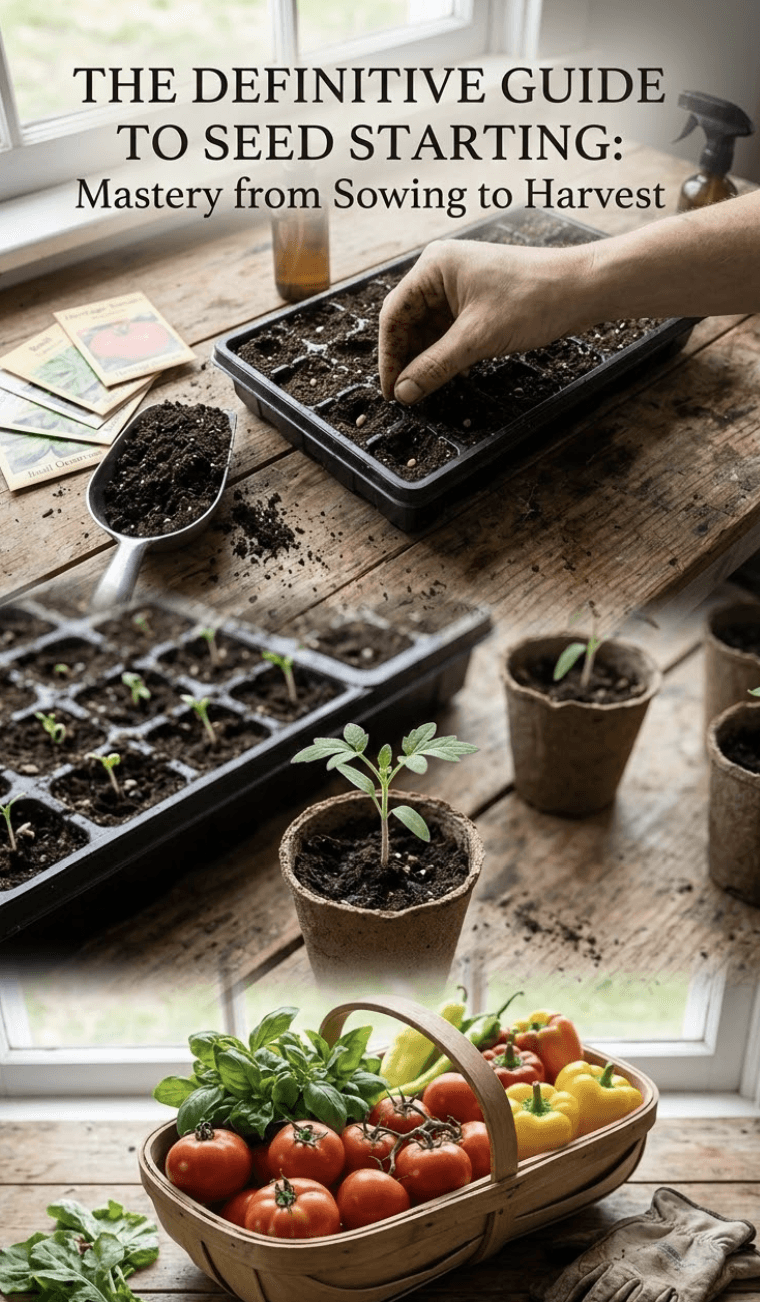
To bypass this, we start all our fall brassicas indoors in 72-cell trays under climate-controlled LED lights. We seed our broccoli and cabbage in early July. By mid-August, when the early succession of bush beans finishes, we terminate the beans, broadfork the bed, and immediately drop the 5-week-old brassica transplants into the ground.
This tight succession saves us five weeks of field time. It guarantees a closed canopy by late September, completely suppressing autumn weed germination.
Non-Toxic Pest Management: Beating the Cabbage Moth
If you plant a brassica, the imported cabbage worm (Pieris rapae) will find it. The delicate, white butterflies hovering over your garden in late summer look peaceful. They are not. They are dropping hundreds of eggs on the undersides of your leaves. When those eggs hatch, the green caterpillars will skeletonize a mature kale plant in under 48 hours.
Chemical pesticides wipe out the caterpillars, but they also kill the parasitic wasps and ground beetles that naturally hunt them.
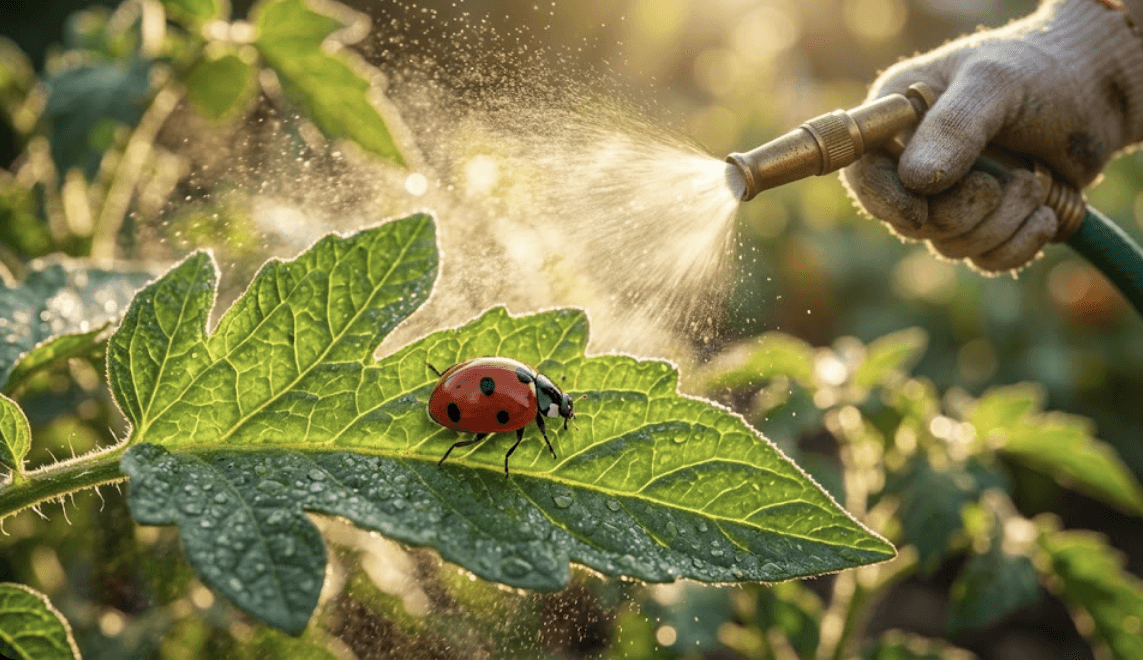
The only foolproof, organic defense is mechanical exclusion. The exact minute you transplant your brassicas into the field, you must drape the entire bed in a lightweight, spun-bonded row cover (Agribon AG-15). Bury the edges firmly in the soil. The plants will grow perfectly happily beneath the fabric, completely shielded from the adult butterflies. If a few caterpillars do manage to slip in, a targeted application of Bacillus thuringiensis (Bt)—a naturally occurring soil bacterium—will safely eliminate them without harming your beneficial insect populations.
The Frost Sweetening Phenomenon
Most new gardeners panic when the first hard frost hits the forecast. For a brassica grower, the first frost is exactly what we want.
When temperatures drop below 32°F, the water inside the plant's cells begins to freeze. To prevent the cell walls from rupturing, the plant rapidly converts its stored starches into soluble sugars. These sugars act as a natural, biological antifreeze, lowering the freezing point of the cellular water.
The culinary result of this survival mechanism is spectacular. A leaf of Lacinato kale harvested in August tastes bitter and tough. That exact same leaf harvested in November, after three hard frosts, is tender, sweet, and complex. This is why we intentionally delay harvesting our Brussels sprouts and carrots until well after the ground has frozen solid.

Overwintering: The Early Spring Cash Crop
For market gardeners, April is the "hungry gap." The root cellar is empty, and the spring crops haven't sized up yet. Cash flow grinds to a halt.
We bridge this gap by overwintering specific brassica varieties. Cultivars like 'Purple Sprouting Broccoli' and 'Winter Keeper' cabbage are seeded late in the fall. They establish a strong root system but stay small through the winter, entering a state of suspended animation under heavy row covers or in unheated cold frames.
The moment the days begin to lengthen in late February, these plants explode into growth. We harvest massive yields of tender, sweet purple broccoli shoots a full eight weeks before spring-seeded crops are ready. Being the only farm at the early April market with fresh, vibrant greens commands absolute premium pricing.
Harvest Mechanics and Cold Chain Logistics
A perfect harvest can be ruined in two hours if you ignore the cold chain.
When you cut a head of cauliflower from its basal stem, the plant loses its water source. If the field temperature is above 60°F, the massive surface area of the florets will begin transpiring water rapidly, leading to limp, unmarketable produce.
Always harvest brassicas strictly before 8:00 AM, while they are engorged with water. Use a razor-sharp field knife to make a clean cut above the lowest leaves. Immediately plunge the harvested heads into a sanitized basin of ice water. This hydro-cooling drops the core temperature instantly, halting respiration. After a quick drain, pack the produce in waxed boxes and move it immediately into a walk-in cooler held at 34°F with 95% humidity. Under these conditions, the crop will hold its field-fresh crispness for weeks.
Expert Insights & FAQs
What are Cole crops and why are they grown in cool weather?
Cole crops (brassicas) are cool-weather vegetables that grow best in the mild days and cool nights of spring and autumn. They are descended from a wild coastal cabbage and have developed natural starches that convert to sugars in cold temperatures, acting as a natural antifreeze and sweetening their flavor.
What is the difference between direct sowing and transplanting brassicas?
Direct sowing involves planting seeds directly in the garden bed. Transplanting involves starting seeds indoors under grow lights and moving the seedlings outside once they are strong. Transplanting is preferred for long-season crops like broccoli and cabbage to protect young seedlings from pests and early cold stress.
What causes broccoli and cauliflower plants to bolt or flower early?
Premature flowering (bolting) is triggered by stress, particularly exposure to cold temperatures (under 50°F) when the seedlings are young (stem thicker than a pencil) followed by sudden heat. Protect transplants with row covers to prevent bolting.
What is buttoning in cauliflower and how can I prevent it?
Buttoning is a disorder where cauliflower forms tiny, button-sized curds prematurely. It is caused by early stresses like transplant shock, cold damage, drought, or nitrogen deficiency. Prevent by watering consistently and fertilizing regularly.
Why are nitrogen and calcium important for growing kale and cabbage?
Nitrogen is essential for leaf and stem development, which is critical for leafy greens like kale. Calcium builds strong plant cell walls; a lack of calcium causes tipburn in cabbage and kohlrabi. Add organic fertilizers and gypsum to balance the soil.
How do I protect my brassica crops from cabbage worms organically?
Cover beds with floating row covers or insect netting immediately after planting to prevent butterflies from laying eggs. If caterpillars appear, spray the leaves with *Bacillus thuringiensis* (Bt), a natural soil bacterium that is toxic only to caterpillars.
What is the best way to store harvested cabbage for winter use?
Harvest cabbage when the heads are solid and firm. Store them at 32°F to 36°F with 95% relative humidity (such as in a damp root cellar or a walk-in cooler). Under these conditions, storage cabbages can remain fresh for 3 to 6 months.
How can I save seeds from my heirloom broccoli plants?
Brassicas are biennials, requiring two years to flower and set seed. Because they cross-pollinate easily with other members of the same species, isolate your seed plants by at least 1/2 mile or grow them inside netting cages to prevent cross-pollination. Let the seed pods dry on the plant before harvesting.
Johnnie McCormick
Zone 7b/8a - North Central Alabama
Johnnie McCormick is a gardening hobbyist and the founder of My Garden Spot. Raised in north-central Alabama, his passion for gardening began in his youth. In 2008, he established a large market garden, teaching himself high-yield growing methods. In the years since, he has operated seasonal seedling sales for transplants, specializing in heirloom tomatoes, peppers, eggplants, decorative ground covers like Ajuga (Bugleweed), marigolds, nasturtiums, and fresh kitchen-window herb arrangements (basil, cilantro). Today, he gardens in the hills between Birmingham and Jasper, Alabama (Zone 7b/8a), sharing practical, community-focused gardening resources.
Verified Authoritative Citations & References
In alignment with our strict E-E-A-T research and verification guidelines, this guide cross-references data from the United States Department of Agriculture (USDA) and Cooperative Extension Service programs.
- Cornell Cooperative Extension: Home Vegetable Gardening Guide and vegetable variety recommendations. gardening.cals.cornell.edu
- Penn State Extension: Master Gardener Manual and companion planting matrices. extension.psu.edu
- Alabama Cooperative Extension System (ACES): Raised bed construction plans and regional seed planting calendars. aces.edu
- USDA NRCS: Cover crops and biological soil health guidelines. nrcs.usda.gov

Please log in to view comments.