Mastering Heirloom Tomatoes: From Seed to Summer Harvest
1. Introduction: The History, Genetics, and Culinary Value of Heirloom Tomatoes
There is no vegetable—or botanically, fruit—that captures the essence of summer gardening quite like the tomato. For generations, gardeners have cultivated heirloom tomatoes, preserving their genetic diversity, historical lineage, and legendary flavor. An heirloom tomato is defined as an open-pollinated variety that has been passed down for at least 50 years, or introduced prior to 1951, often with a rich history of local adaptation. Unlike modern commercial hybrid cultivars, which are bred primarily for uniform shape, thick skins, and long shelf-life, heirloom tomatoes prioritize taste and texture. They feature thin, delicate skins and a complex balance of sugars, acids, and volatile organic compounds that produce a rich, traditional flavor.
1.1 The Genetics of Open Pollination vs. Hybridization
Understanding the genetic difference between heirloom and hybrid tomatoes is essential for any grower. Heirloom tomatoes are open-pollinated, meaning they are pollinated by natural mechanisms—such as wind, bees, or other insects—and their seeds will breed "true-to-type." If you save seeds from an open-pollinated heirloom tomato, the resulting plants will look and taste identical to the parent plant. Modern hybrid tomatoes, or F1 hybrids, are created by cross-pollinating two distinct, inbred parent lines to select for specific traits like disease resistance or yield. If you save seeds from an F1 hybrid, the F2 generation will show high genetic variability, reverting to the traits of the parent lines. Growing heirlooms allows us to preserve genetic heritage and save seeds year after year.
From an evolutionary perspective, open-pollinated heirlooms carry a diverse genetic pool that allows them to adapt over time to specific microclimates and soil conditions. This is known as local adaptation. When a grower saves seeds from the healthiest, most productive plants on their property for several consecutive seasons, they are performing selective breeding. Over time, that specific heirloom strain becomes more resilient to local pests, drought conditions, and temperature fluctuations. In contrast, F1 hybrids are genetically identical clones bred in controlled laboratory environments. While they exhibit "hybrid vigor" (rapid early growth), they lack the evolutionary flexibility of open-pollinated varieties, making them dependent on high inputs of synthetic fertilizers and pesticides to achieve their targeted yields.
1.2 The Culinary Value and Market Demand for Specialty Varieties
Heirloom tomatoes are highly sought after by chefs and home cooks for their unique colors, textures, and flavors. From the rich, smoky sweetness of Cherokee Purple to the complex, tropical acidity of Brandywine, heirlooms offer a culinary experience that commercial tomatoes cannot match. This culinary quality makes them highly profitable for market gardeners. While commercial tomatoes sell for low wholesale prices, organic heirloom tomatoes command premium prices at farmers' markets and local restaurants. By selecting a diverse mix of colors, shapes, and sizes, a grower can create a beautiful harvest display that attracts customers and drives high-value sales.
The volatile chemistry of an heirloom tomato is incredibly complex. Flavor is not just a function of sugars (fructose and glucose) and acids (citric and malic acid); it is heavily influenced by volatile aromatic compounds. These compounds are released when the tomato cells are damaged by biting or cutting. Modern hybrids often lack these volatile compounds because breeders focused on shelf-life, which select against the enzymes that produce these aromatics. Furthermore, heirlooms have a thinner epidermis (skin) and a softer pericarp (flesh), creating a melt-in-your-mouth texture. This delicate structure means they must be handled with care, but the culinary reward makes the extra effort worthwhile.
1.3 The Preservation of Agricultural Heritage
When you plant an heirloom seed, you are preserving a piece of agricultural history. Many heirloom varieties have fascinating histories, passed down through families or communities for generations. For example, the Mortgage Lifter tomato was bred in the 1930s by Marshall Cletis Byles, who sold the plants to pay off his home mortgage. The Brandywine tomato has roots in Amish communities in the late 19th century. Preserving these varieties keeps genetic diversity alive in our food supply, ensuring we have a wide pool of traits to draw from as we face challenges like climate change, new diseases, and changing pest pressures.
This genetic diversity is our best defense against agricultural disaster. The Irish Potato Famine of the 1840s is a classic example of the dangers of monoculture, where a single clone was grown across an entire nation, leaving it vulnerable to a single water mold pathogen. By cultivating dozens of different heirloom varieties in our gardens, we ensure that even if a disease strikes one variety, others will survive. This agricultural resilience is critical for small-scale growers who rely on their harvest for food security or market income. By acting as custodians of these living antiques, we ensure that future generations can enjoy the flavors and histories of our ancestors.
 (An array of colorful harvested heirloom tomatoes, showcasing their unique shapes, sizes, and deep, rich colors)
2. Seed Starting and Varietal Selection
Starting your heirloom tomatoes from seed allows you to access hundreds of unique varieties that are never sold as transplants in nurseries. To succeed, you must start seeds at the right time and manage the early growing conditions carefully.
2.1 Indeterminate vs. Determinate Growth Habits
- Indeterminate Tomatoes: Often referred to as "vining" tomatoes, these varieties continue to grow, branch, and produce flowers and fruit indefinitely until they are killed by frost. They require strong vertical support (trellises, cages, or stakes) and regular pruning. Their harvest window is spread out over several months, making them ideal for home gardeners who want a continuous supply of fresh tomatoes. Most classic heirlooms are indeterminate.
- Determinate Tomatoes: Also known as "bush" tomatoes, these cultivars grow to a genetically determined height (usually 3 to 4 feet), produce a terminal flower cluster, and set all their fruit within a short, concentrated window of 2 to 3 weeks. They require minimal support and pruning. Determinate tomatoes are best for canning, saucing, or gardeners with limited space (like raised beds or containers).
Physiologically, the growth habit is determined by the gene Self-Pruning ($sp$). In determinate varieties, the $sp$ mutation causes the plant to produce a terminal flower cluster at the end of each stem, stopping further vegetative elongation. In indeterminate varieties, the dominant $SP$ gene allows the apical meristem (the growing tip) to continue growing indefinitely, alternating between producing three leaf nodes and one flower cluster. This continuous vegetative growth requires the grower to actively manage the plant's architecture through trellising and pruning to prevent it from collapsing under its own weight and succumbing to disease.
2.2 Heirloom Varietal Profiles
- Cherokee Purple: A dark, dusky-purple beefsteak tomato with deep green shoulders. Originating from the Cherokee Nation in Tennessee, it is celebrated for its rich, sweet, and smoky flavor. It shows moderate resistance to drought and heat.
- Brandywine: The classic pink heirloom beefsteak tomato, featuring potato-like leaves. Originating in the late 19th century, it is famous for its large size (up to 2 pounds) and exceptionally rich, sweet, and classic tomato flavor. It requires a long, warm season to mature.
- San Marzano: An Italian plum tomato with thick walls, low seed count, and mild acidity. It is the premier sauce tomato, originating from the volcanic soils near Mount Vesuvius.
- Aunt Ruby's German Green: A large, green-when-ripe beefsteak tomato with a yellow-pink blush. It has a sweet, spicy, and complex flavor that ranks highly in taste tests.
- Paul Robeson: A Russian heirloom named after the famous American actor and singer. It produces dark brick-red fruit with dark green shoulders and is prized for its complex, sweet, and smoky flavor.
When choosing varieties, consider your local growing season length. Brandywine and Paul Robeson require 85 to 90 days from transplanting to reach maturity, making them difficult to grow in far northern climates. If you have a short growing season, select early-maturing heirlooms like Stupice or Black Prince, which mature in 55 to 65 days. By matching the variety's maturity timeline to your local frost-free window, you ensure a successful and abundant harvest.
2.3 Propagation and Nursery Management
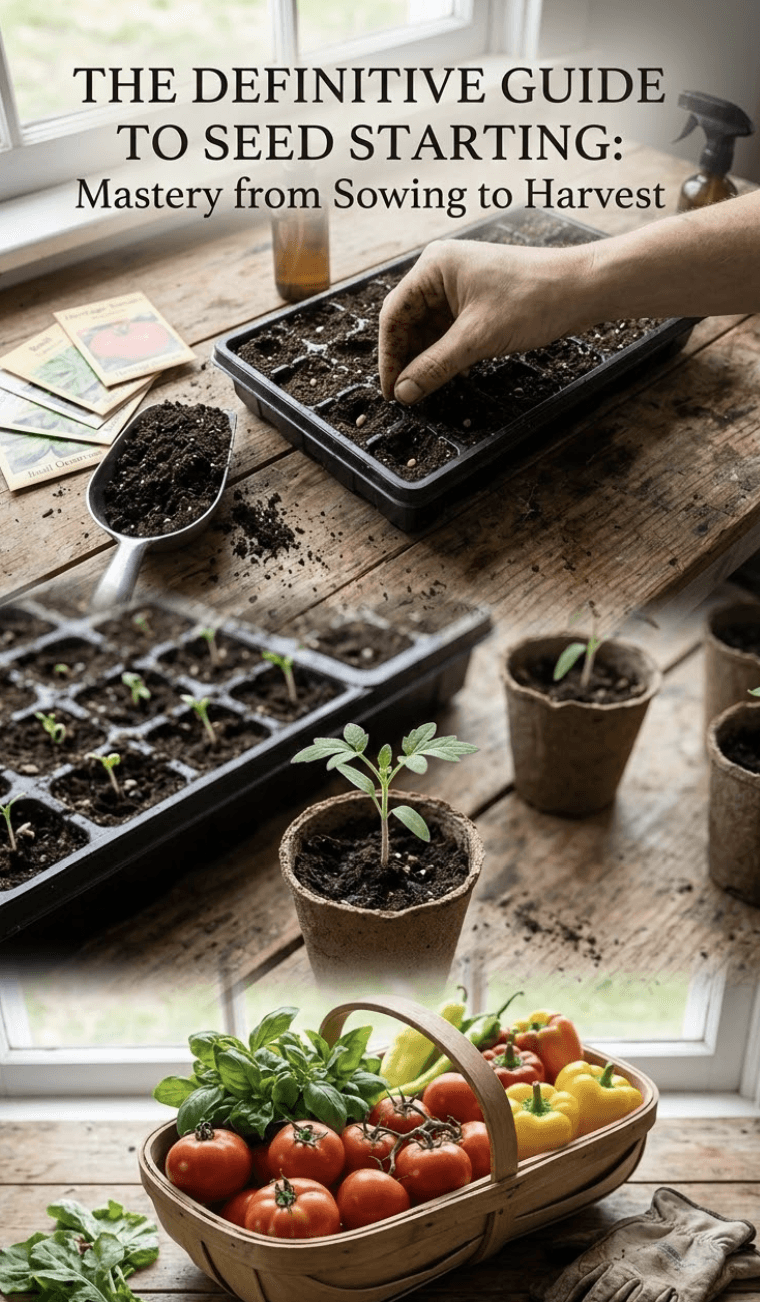
Start tomato seeds indoors 6 to 8 weeks before your last spring frost date. Sow seeds 1/4 inch deep in sterile, moist seed-starting mix. Place trays on a heating mat set to 75°F to 80°F (24°C to 27°C) to speed up germination. Once seedlings emerge, remove the trays from the heating mat and place them under bright grow lights. Keep the lights 2 to 4 inches above the plant tops to prevent the seedlings from growing leggy. Run an oscillating fan nearby to strengthen the stems, preparing them for transplanting.
As the seedlings grow, they will require potting up into larger containers (usually 4-inch pots) once they develop their first set of true leaves. This prevents the root systems from becoming root-bound in the small seed trays. When potting up, use a high-quality potting mix enriched with organic compost and a light dose of mycorrhizal inoculant. This early root inoculation encourages a symbiotic relationship with beneficial soil fungi, improving nutrient and water uptake once the plants are moved to the garden beds.
3. Planting Mechanics and Root Zone Optimization
How you plant your tomato seedlings in the spring determines their growth and productivity throughout the summer.
3.1 The Physiology of Deep Planting
Tomatoes have the unique physiological ability to grow roots along their stems. When transplanting tomato seedlings, you should plant them deeply, burying up to two-thirds of the stem. You can do this by digging a deep hole or laying the seedling sideways in a shallow trench. Before burying, pinch off the lower leaves, leaving only the top cluster of foliage.
The buried stem will quickly grow adventitious roots along its entire length. This deep root system increases the plant's surface area for water and nutrient absorption, improves stability against wind, and makes the plant more drought-tolerant during hot summer months. Deep roots also allow the plant to draw nutrients from lower soil layers, reducing the need for synthetic fertilizer inputs.
Adventitious roots develop from dormant root primordial cells present in the stem tissue. When these cells are buried in moist, warm soil, they receive chemical signals from the plant to start growing roots. Within a week, the buried stem becomes a dense root zone, dramatically increasing the plant's ability to absorb water and essential minerals. This deep root structure also anchors the plant securely in the soil, preventing it from leaning or blowing over during severe summer storms.
3.2 Transplant Shock Prevention
To prevent transplant shock, harden off your seedlings before planting them in the garden. Hardening off is the process of gradually acclimating plants to outdoor conditions. Move the seedlings outdoors into a sheltered, shady spot for a few hours on the first day. Slowly increase their exposure to direct sunlight, wind, and cool night temperatures over 7 to 10 days. Water the seedlings thoroughly before transplanting them, and plant them on a cloudy day or in the late afternoon to reduce water stress.
When transplanting, handle the root balls gently to avoid tearing the delicate root hairs. Root hairs are the primary site of water and nutrient absorption; if they are damaged, the plant will struggle to establish itself, leading to wilted leaves and stunted early growth. Applying a diluted solution of organic kelp meal or willow-bark water during transplanting can help stimulate new root development and reduce transplant shock, ensuring a quick transition into the garden bed.
 (Transplanting a tomato seedling deeply in a trench, encouraging adventitious roots along the buried stem)
4. Soil Fertility, Calcium Management, and Blossom End Rot Prevention
Tomatoes are heavy feeders that require rich, well-draining soil with a pH of 6.2 to 6.8.
4.1 The Role of Calcium in Cell Development
Calcium is essential for cell wall development in growing fruit. A lack of calcium causes blossom end rot (BER), a physiological disorder where the bottom of the tomato turns black and leathery. To prevent BER, add agricultural lime, gypsum, or crushed eggshells to the soil before planting. Avoid dry soil conditions, as water is the medium that carries calcium into the plant. If the soil dries out, the plant cannot draw up calcium, leading to BER even if there is plenty of calcium in the soil.
From a physiological standpoint, calcium ($Ca^{2+}$) is transported through the plant via the xylem, driven by transpiration. Transpiration is the evaporation of water from leaf surfaces, which pulls water and dissolved minerals up from the roots. Since fruit has very few stomata compared to leaves, it transpires very little water. Consequently, calcium is naturally drawn toward the leaves rather than the developing fruit. If water availability drops or humidity is too high (slowing transpiration), the fruit will experience a calcium deficiency, leading to cell wall collapse at the blossom end. Maintaining consistent soil moisture with drip irrigation and mulch is the most effective way to prevent BER.
4.2 Nitrogen Control and Vegetative Balance
Avoid excessive nitrogen fertilizers in early spring. Too much nitrogen stimulates lush, dark-green vegetative growth and leafy branches, but delays flowering and fruit set. This unbalanced growth also attracts pests like aphids and hornworms, which feed on the tender, nitrogen-rich leaves. Focus early applications on phosphorus and potassium to encourage strong root and flower development, adding nitrogen slowly as the plant begins to set fruit.
When a plant receives too much nitrogen, it prioritizes the synthesis of amino acids and proteins for vegetative growth, utilizing its photosynthetic energy to build leaves and stems. This suppresses the hormones (like ethylene and brassinosteroids) that trigger flower development and fruit ripening. To maintain a healthy balance, use balanced organic fertilizers like alfalfa meal or fish-and-kelp emulsions, applying them only when the plant shows signs of slow growth or light green leaves.
4.3 Compost, Mulch, and Mycorrhizal Inoculation
Mix high-quality compost into your soil during planting to build soil organic matter and feed beneficial soil microbes. Inoculating your tomato roots with mycorrhizal fungi during transplanting helps the plants absorb water and phosphorus. After planting, apply a 2-to-3-inch layer of organic mulch (like straw or shredded leaves) around the base of the plants. Mulch keeps the soil moist, prevents soil-borne fungal diseases from splashing onto the leaves, and stabilizes soil temperatures.
Mycorrhizal fungi establish a symbiotic relationship with tomato roots, extending their hyphae deep into the soil matrix. These hyphae are much thinner than plant roots, allowing them to penetrate tiny pore spaces to access locked-up phosphorus and micro-nutrients. The fungi deliver these minerals to the plant roots in exchange for carbon sugars. This biological association improves the plant's drought tolerance and disease resistance, helping it produce high yields in variable summer conditions.
5. Support Architectures: Florida Weave, Cattle Panels, and Lower & Lean Systems
To keep plants healthy and maximize yields, indeterminate tomatoes must be vertically supported and systematically pruned.
5.1 The Florida Weave System
The Florida Weave is an excellent trellising method for field rows. Drive strong wooden T-posts between every 3 to 4 plants. Tie a horizontal line of garden twine from post to post, weaving it back and forth to support the tomato stems like a sandwich. Add a new row of twine every 8 inches as the plants grow. This method is fast, cheap, and keeps the plants upright and organized, making harvesting easy.
When setting up a Florida Weave, select high-tensile, UV-treated polypropylene twine to prevent the lines from stretching or breaking under the weight of the mature vines. Tie the twine tightly, securing it to the end posts with a clove hitch knot. As the plants grow, tuck the stems behind the twine to keep them from leaning outward. This clean, linear layout maximizes sunlight penetration and makes it easy to spray organic treatments or harvest fruit.
5.2 Cattle Panel Arches
Standard 16-foot galvanized cattle panels are bent into an arch and secured with T-posts between two raised beds. Vining tomatoes climb the arch, keeping the fruit clean, suspended, and easy to harvest. This layout is visually appealing and maximizes vertical space, allowing you to grow shade-tolerant crops like spinach or radishes underneath the arch.
Cattle panel arches are highly durable, lasting for years without maintenance. As the tomato vines climb the arch, secure them using soft plant ties or garden twine to prevent wind damage. The hanging fruit is suspended in the air, receiving excellent airflow and direct sunlight, which reduces rot and speeds up ripening. This vertical design is perfect for small-scale backyard gardens where space is limited.
5.3 The Lower and Lean System
Used in commercial greenhouses and high tunnels, this method supports the plant on a single overhead string hook. As the plant grows, it is wound around the string, and the lower leaves are pruned. When the plant reaches the top wire, the string hook is unwound, lowering the vine and leaning it along the row. This keeps the active harvesting zone at chest height, making it highly efficient for long-season commercial production.
Lower and lean systems require strong overhead support structures capable of holding the weight of dozens of mature plants. Each plant is suspended from a specialized metal hook (roller hook or tommy hook) wound with twine. Once a week, unwrap a turn of twine, slide the hook along the support wire, and lower the plant vine. The pruned, bare stem rests on the ground or on support hangers, keeping the active leaves and fruit at a convenient height for maintenance.
 (Tomatoes supported by a single-leader overhead string trellis, a method common in high-tunnel production)
6. Pruning and Suckering Indeterminate Varieties
Pruning is essential for indeterminate heirlooms. It improves airflow, increases fruit size, and reduces disease pressure.
6.1 The Biology of Suckers
Suckers are the new vegetative shoots that grow in the crotch (axil) between the main stem and the leaf branches. If left unpruned, each sucker will grow into a new main stem, creating a wild, bushy plant with small fruit and poor air circulation. By removing suckers, you focus the plant's energy on a single main stem, producing larger, high-quality fruit.
Physiologically, sucker development is regulated by the hormone auxin. Auxin is produced in the apical meristem (the growing tip) and moves downward through the stem, suppressing the growth of lateral buds in the leaf axils. This is known as apical dominance. When a grower prunes off the apical meristem, or if the plant is damaged, the supply of auxin drops, allowing lateral buds to grow. By selectively pruning suckers when they are small, we maintain apical dominance, directing the plant's photosynthetic energy toward fruit development rather than building excess foliage.
6.2 Pruning Strategy: The Single-Leader Method
For indeterminate heirlooms, prune all suckers below the first flower cluster, keeping the plant to one or two main stems. Use sharp, sterilized pruning shears or pinch the suckers off when they are small (under 2 inches) using your fingers. Avoid pruning when the foliage is wet, as this can spread fungal and bacterial diseases through the fresh cuts.
When pruning, make clean cuts close to the main stem without damaging the stem tissue. Sterilize your pruning tools between plants using a 70% isopropyl alcohol solution to prevent the transmission of viral pathogens (like Tobacco Mosaic Virus). Inspect the plants weekly, removing new suckers before they grow too large and consume the plant's energy.
6.3 Lower Canopy Airflow Optimization
As the tomato plant grows, prune off any foliage touching the ground. The lower leaves are the oldest and are most susceptible to soil-borne fungal diseases. Removing them improves airflow around the base of the plant, keeps the leaves dry, and prevents soil-borne spores from splashing onto the foliage during rain or watering, keeping the plant healthy.
As the lower fruit clusters are harvested, continue to prune off the leaves below the next active cluster. This upward pruning removes older, yellowing leaves that are no longer performing photosynthesis efficiently. It also opens up the lower canopy, allowing cool air to circulate and reducing the risk of fungal outbreaks like early blight or powdery mildew.
7. Integrated Pest Management (IPM) and Disease Prevention
Tomatoes are susceptible to several pests and diseases. Integrated Pest Management (IPM) is key to prevention.
7.1 Common Fungal Diseases
- Early Blight (Alternaria solani): Appears as concentric bullseye-shaped brown spots on older leaves, slowly working its way up the plant. Prevent by mulching, pruning lower leaves, and applying copper fungicide.
- Septoria Leaf Spot: Small, circular grey spots with dark borders. It defoliates the plant from the bottom up. Prevent with drip irrigation to avoid foliar moisture.
- Late Blight (Phytophthora infestans): A devastating water mold that turns leaves and stems oily-black, killing the plant in days during cool, wet weather. Destroy infected plants immediately.
To prevent these fungal infections, apply a biological fungicide containing Bacillus subtilis to the soil and leaves. This beneficial bacterium colonizes the plant surfaces, out-competing fungal spores for space and nutrients. Avoid overhead watering; always water at the base of the plant using drip irrigation or soaker hoses to keep the leaves dry, as fungal spores require moisture to germinate and infect plant tissues.
7.2 Insect Pests and Biological Controls
- Tomato Hornworm (Manduca quinquemaculata): A large, bright green caterpillar that can defoliate a tomato plant overnight. Hand-pick them (they glow under UV light at night) or use Bacillus thuringiensis (Bt).
- Flea Beetles: Tiny black beetles that chew pinholes in young leaves. Protect seedlings with row covers or use trap crops like radishes or nasturtiums to draw them away from the tomatoes.
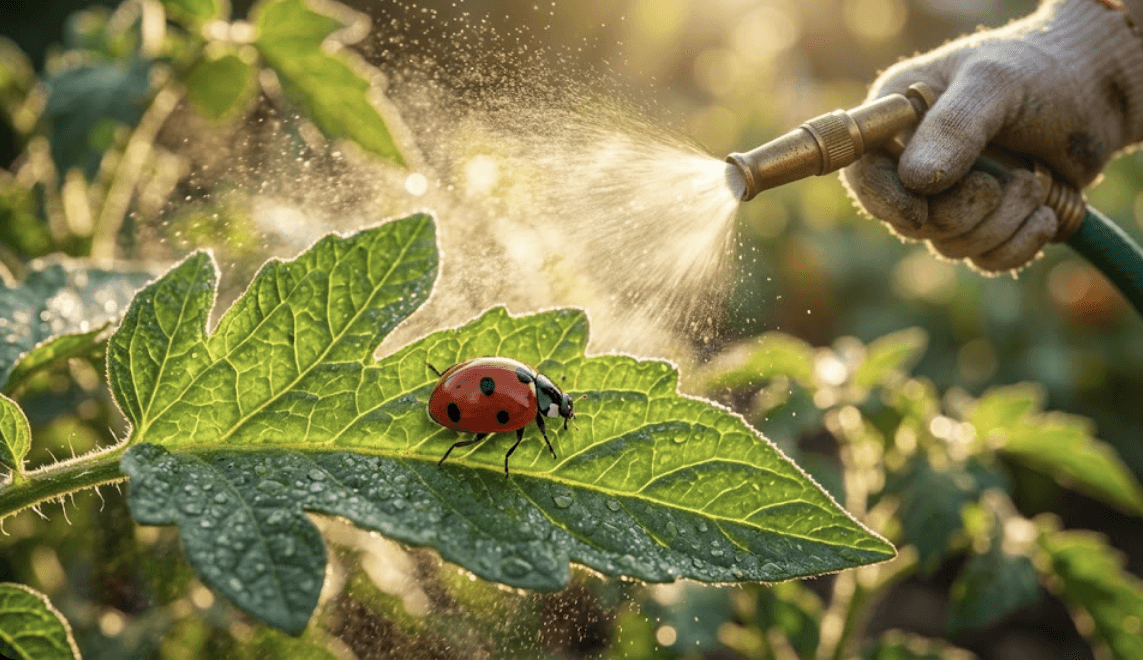
- Aphids: Small, sap-sucking insects that stunt growth and spread viruses. Control aphids by attracting natural predators like ladybugs, lacewings, and parasitic wasps, or spraying them with insecticidal soap.
Encourage beneficial insects by planting flowers like dill, alyssum, and yarrow around the borders of your tomato beds. These flowers provide nectar and pollen for beneficial predators, keeping pest populations under control without the need for chemical insecticides.
7.3 Viral and Physiological Disorders
Tomatoes are vulnerable to viral diseases like Tobacco Mosaic Virus (TMV) and Tomato Spotted Wilt Virus (TSWV). TMV causes mottled, crinkled leaves and stunted growth; TSWV causes dark spots on leaves and fruit. There are no cures for viral diseases; infected plants must be removed and destroyed immediately. Prevent TMV by washing your hands with soap before handling plants, especially if you use tobacco products, as the virus can be carried on your fingers. Prevent TSWV by controlling thrips, the tiny insects that transmit the virus from plant to plant.
 (A large tomato hornworm feeding on tomato foliage, illustrating the need for regular pest scouting)
8. Harvesting Chemistry, Post-Harvest Handling, and Seed Saving
Harvesting heirloom tomatoes at the correct stage preserves their delicate texture and flavor.
8.1 The Breaker Stage
Tomatoes are botanically ripe once they reach the "breaker stage"—the point when they show 10% color change (e.g., pink or yellow streaks). At this point, the plant forms an abscission layer on the stem, stopping nutrient transfer. You can harvest the tomato and let it finish ripening on an indoor counter. This protects the fruit from birds, insects, and cracking due to rain, while preserving its flavor and texture.
Ripening is driven by the production of ethylene gas. Once the breaker stage is reached, the tomato begins to release ethylene, which triggers the breakdown of chlorophyll (the green pigment) and the synthesis of carotenoids like lycopene (the red pigment). Harvesting at the breaker stage does not affect the final flavor or sweetness of the tomato, as all sugars are already locked inside the fruit. It is a highly effective way to reduce harvest losses from weather and wildlife.
8.2 Ripening Temperature and Storage Chemistry
Lycopene (the red pigment) and carotene production slows down below 55°F (13°C) and stops above 85°F (29°C). Store heirlooms at room temperature (60–70°F) with the shoulders down to prevent bruising. Never refrigerate fresh tomatoes, as cold temperatures destroy the volatile organic compounds that give them flavor, turning the flesh mealy and tasteless.
Cold storage (below 50°F/10°C) triggers chemical changes in the tomato that permanently shut down the genes responsible for producing volatile flavor compounds. It also damages the cell membranes, causing water loss and a mealy texture. Keep your tomatoes on a kitchen counter out of direct sunlight, and consume them within a few days of ripening to enjoy their peak flavor and quality.
8.3 Saving Heirloom Seeds
To save seeds from your heirloom tomatoes, choose healthy, fully ripe fruit from your best-performing plants. Cut the tomato and squeeze the seeds and gel into a jar. Add a small amount of water and let the jar sit at room temperature for 2 to 3 days. A layer of mold will form on the surface; this fermentation process breaks down the gelatinous coating (sarcotesta) around the seeds and kills seed-borne diseases. Rinse the seeds in a fine strainer and spread them on a paper plate to dry for 2 weeks. Store the dry seeds in a cool, dark place.
The sarcotesta gel sheath contains natural germination inhibitors that prevent the seed from sprouting inside the wet tomato fruit. In nature, when a tomato falls to the ground and rots, soil microbes ferment the gel, allowing the seed to germinate the following spring. By mimicking this fermentation process in a jar, we remove the inhibitors and sterilize the seed coat. Label your seed packets with the variety name and year, and they will remain viable for 4 to 6 years when stored in a cool, dry location.
Expert Insights & FAQs
What is the difference between indeterminate and determinate tomatoes?
Indeterminate varieties grow and fruit continuously until frost, requiring trellising and pruning. Determinate varieties grow to a fixed height, set all their fruit within 2 to 3 weeks, and require minimal support or pruning.
Why should I bury tomato seedlings deep when planting?
Tomatoes can grow adventitious roots along their stems. Burying them deep increases the root system's size, improving nutrient uptake, water access, and wind stability.
What causes blossom end rot and how can I prevent it?
Blossom end rot is caused by a lack of calcium in the developing fruit. Prevent it by adding lime or gypsum to the soil, maintaining consistent soil moisture, and avoiding dry conditions that limit calcium uptake.
How do I prune indeterminate tomatoes to maximize yields?
Remove all suckers (shoots growing in the leaf axils) below the first flower cluster, keeping the plant to 1 or 2 main stems. Prune off any lower foliage touching the soil to prevent fungal infections.
What is the "Lower and Lean" trellising method?
A vertical trellising technique where plants are grown on a single overhead string hook. As the lower stem is pruned of leaves, the string hook is unwound, lowering the vine and leaning it along the row to keep the active harvest zone within reach.
How do I get rid of tomato hornworms naturally?
Hand-pick the caterpillars (use a UV blacklight at night to spot them easily). Encourage beneficial insects like parasitic braconid wasps, or apply organic *Bacillus thuringiensis* (Bt) spray.
Can I save seeds from hybrid tomato plants?
No. F1 hybrid seeds will not breed true-to-type, and the resulting plants will revert to the traits of the parent lines. Save seeds only from open-pollinated or heirloom varieties.
What is the best way to store harvested heirloom tomatoes?
Store them at room temperature (65-70°F) out of direct sunlight, placed stem-side down to prevent bruising. Do not refrigerate them, as cold temperatures break down flavor-producing enzymes.
Johnnie McCormick
Zone 7b/8a - North Central Alabama
Johnnie McCormick is a gardening hobbyist and the founder of My Garden Spot. Raised in north-central Alabama, his passion for gardening began in his youth. In 2008, he established a large market garden, teaching himself high-yield growing methods. In the years since, he has operated seasonal seedling sales for transplants, specializing in heirloom tomatoes, peppers, eggplants, decorative ground covers like Ajuga (Bugleweed), marigolds, nasturtiums, and fresh kitchen-window herb arrangements (basil, cilantro). Today, he gardens in the hills between Birmingham and Jasper, Alabama (Zone 7b/8a), sharing practical, community-focused gardening resources.
Verified Authoritative Citations & References
In alignment with our strict E-E-A-T research and verification guidelines, this guide cross-references data from the United States Department of Agriculture (USDA) and Cooperative Extension Service programs.
- Cornell Cooperative Extension: Home Vegetable Gardening Guide and vegetable variety recommendations. gardening.cals.cornell.edu
- Penn State Extension: Master Gardener Manual and companion planting matrices. extension.psu.edu
- Alabama Cooperative Extension System (ACES): Raised bed construction plans and regional seed planting calendars. aces.edu
- USDA NRCS: Cover crops and biological soil health guidelines. nrcs.usda.gov

Please log in to view comments.