Regenerative Agriculture for Small Farms and Gardens: No-Till, Deep Mulch, and Bed Prep

How Do You Start a No-Till Regenerative Garden on a Small Farm?
The Soil Ecology Paradigm: Biological vs. Mechanical Cultivation
For decades, conventional agriculture has treated the soil as a sterile, physical medium whose primary purpose is to anchor plants and hold synthetic chemical inputs. Under this chemical-mechanical paradigm, tillage is viewed as a necessary annual practice to loosen compacted earth, incorporate crop residues, and destroy weed growth. However, modern soil ecology reveals that tillage is a highly destructive practice that compromises long-term soil structure, degrades organic matter, and collapses the soil food web. When soil is tilled, the sudden infusion of oxygen triggers a massive spike in bacterial activity. These bacteria rapidly metabolize the stored carbon in the soil, converting it into carbon dioxide gas, which escapes into the atmosphere. This process, known as carbon oxidation, continuously depletes the soil organic matter (SOM) that is vital for nutrient retention and water infiltration.
Furthermore, mechanical tillage physically pulverizes the structural units of the soil, known as soil aggregates. Healthy soil aggregates are bound together by organic glues, humic substances, and glomalin—a glycoprotein produced by mycorrhizal fungi. When these aggregates are crushed by a rototiller or plow, the soil particles (sand, silt, and clay) disperse. Upon contact with rain, these dispersed particles form a sealed surface crust that prevents water and air from entering the soil. Below the depth of tillage, the weight of the machinery creates a highly compacted layer known as a plow pan or hardpan. This layer acts as a physical barrier to plant roots and restricts drainage, leading to waterlogged soil and root rot. By contrast, a no-till system preserves the natural vertical channels created by earthworms and decomposing roots, allowing for optimal air circulation and water movement deep into the soil profile.
In addition to physical degradation, tillage systematically destroys the biological components of the soil. The soil food web is a complex ecosystem consisting of bacteria, fungi, protozoa, nematodes, microarthropods, and earthworms. Mycorrhizal fungi are particularly sensitive to tillage. These fungi form extensive networks of fine threads called hyphae that link plant roots to the surrounding soil, exchanging nutrients like phosphorus for plant-produced sugars. Tillage breaks these hyphal networks apart, forcing the fungi to continuously restart their growth and reducing the plant's ability to absorb nutrients. Tillage also favors bacteria over fungi, altering the soil's fungal-to-bacterial (F:B) ratio. While simple weeds and brassicas thrive in bacterial-dominated soils, high-value vegetable crops, perennial berries, and fruit trees require a fungal-dominated soil ecosystem to achieve optimal health, nutrient density, and disease resistance.
Soil Chemistry, Structure, and Nutrient Cycling
Understanding soil chemistry is essential for optimizing a no-till regenerative garden. One of the key chemical properties of soil is its Cation Exchange Capacity (CEC), which measures the soil's ability to hold onto positively charged nutrients, or cations, such as calcium, magnesium, potassium, sodium, and ammonium. Clay particles and humified organic matter possess negative charges on their surfaces, which attract and hold these cations, preventing them from leaching away when it rains. Sandy soils have very low CEC, meaning they struggle to retain nutrients, whereas clay soils and soils rich in organic matter have high CEC. In a regenerative system, adding large amounts of compost and organic mulch continuously builds the humus layer, dramatically increasing the soil's CEC and creating a natural nutrient reservoir that plants can access as needed.
Beyond CEC, the balance of minerals in the soil is crucial for soil structure and plant health. The Albrecht model of soil balance suggests that the ideal soil saturation should consist of approximately 65% to 75% calcium, 10% to 15% magnesium, 3% to 5% potassium, and smaller percentages of sodium and other trace minerals. Calcium is a large ion that flocculates the soil, pushing clay particles apart to create space for air and water. Magnesium is a smaller ion that binds clay particles together, tightening the soil. If a soil has too much magnesium and not enough calcium, it becomes tight, sticky, and poorly aerated. By applying targeted mineral amendments like gypsum (calcium sulfate) or agricultural lime (calcium carbonate) based on detailed soil tests, growers can adjust these saturation ratios to naturally improve soil structure without mechanical intervention.
Nutrient cycling in a no-till system relies on biological processes rather than synthetic fertilizer inputs. In a healthy soil food web, nutrients are immobilized within the bodies of soil microbes. When protozoa, nematodes, and microarthropods consume these microbes, they excrete excess nutrients in a plant-available form, particularly ammonium and nitrate. This biological cycling occurs in the rhizosphere—the narrow zone of soil immediately surrounding plant roots. Plants actively release up to 40% of their photosynthetic sugars, amino acids, and organic acids through their roots as exudates. These exudates serve as food sources to attract specific bacteria and fungi to the rhizosphere. In exchange for this food, the microbes deliver essential minerals directly to the plant roots, creating a self-regulating, localized nutrient loop that minimizes nutrient runoff and waste.
Establishing No-Till Beds: Site Selection, Occultation, and Sheet Mulching
Site selection and analysis are the first steps in designing a regenerative garden. The ideal site should have access to full sun, a reliable source of clean water, and flat or gently sloping topography. Growers must analyze water flows across the landscape to prevent pooling during heavy rains. On sloped land, beds should be oriented along the contour of the slope to slow water down and allow it to sink into the soil, rather than running off and causing erosion. Existing vegetation also provides clues about soil conditions; for example, the presence of horsetail or buttercups often indicates wet, poorly drained soil, while dandelions and plantains suggest compaction.
To convert pasture, weeds, or lawn into productive beds without tilling, growers use occultation. Occultation is the process of covering the soil with a thick, black, UV-resistant silage tarp (usually 6 mil thick) to exclude light. The tarp is weighed down with sandbags around the perimeter to prevent wind from lifting it and to seal in moisture. Under the dark tarp, the soil remains warm and moist, which stimulates weed seeds to germinate. Once they sprout, the lack of sunlight prevents photosynthesis, and the seedlings die. Occultation also creates a highly favorable environment for earthworms and soil microbes, which consume the dying surface vegetation and incorporate it into the soil. Depending on the weather and the weed species present, occultation takes between 4 and 8 weeks, leaving behind a clean, weed-free seedbed ready for direct planting or composting.
Sheet mulching, or lasagna gardening, is another popular method for establishing beds, especially on a smaller scale. The process begins by laying down a thick layer of plain, non-glossy cardboard or several layers of newspaper directly over the existing weeds and grass, overlapping the edges by at least 6 inches to prevent weeds from crawling through the seams. The cardboard acts as a physical barrier that smothers the vegetation below. Over the cardboard, the grower adds alternating layers of nitrogen-rich materials ("greens" like fresh grass clippings, kitchen waste, or manure) and carbon-rich materials ("browns" like shredded leaves, straw, or wood chips). The pile is topped with a 2-to-3-inch layer of finished compost. Within a few months, soil organisms decompose the cardboard and organic layers, transforming them into rich, biologically active topsoil that is ready for deep-rooted crops.
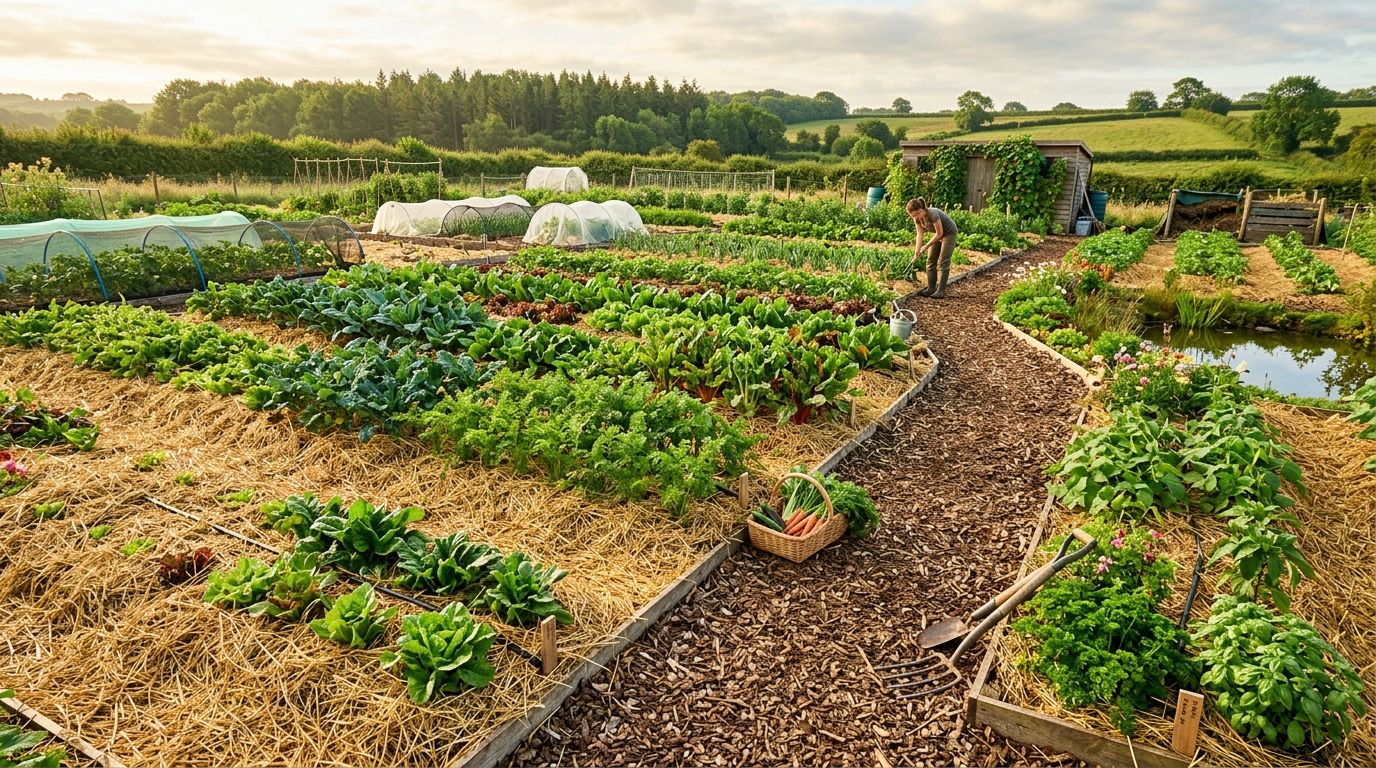
When laying out the garden, standardizing bed geometry is critical for management efficiency. The industry standard for human-scale market gardens is to build permanent raised beds that are 30 inches wide, separated by 18-inch pathways. This layout allows the grower to comfortably walk down the pathways and reach the center of the bed from either side without stepping on the soil, preventing compaction. Standardizing bed lengths to 50 or 100 feet simplifies crop planning, irrigation design, and the calculation of soil amendments and seed requirements. It also ensures compatibility with specialized hand tools, such as row covers, seeding equipment, and harvesting tools, streamlining daily farm operations.
The Deep Compost Mulch System
The Deep Compost Mulch System, popularized by organic growers like Charles Dowding, is a highly effective no-till methodology. Instead of mixing compost into the soil, finished compost is applied as a thick surface mulch. For the initial establishment of new beds over killed sod, a 4-to-6-inch layer of compost is laid down. For annual maintenance of established beds, a 1-to-2-inch application is spread over the surface each winter or spring. This mulch layer serves multiple functions: it smothers emerging weed seeds, buffers soil temperatures against extreme heat and cold, reduces evaporation to conserve water, and provides a continuous, slow-release source of nutrients for soil organisms and plant roots.
The quality and maturity of the compost used are critical to the success of this system. Spreading immature compost can harm crops, as it may contain weed seeds, plant pathogens, and organic acids that inhibit seed germination. Composting must undergo a thermophilic phase, where the pile reaches temperatures between 131°F and 160°F for at least 15 consecutive days, and is turned multiple times. This heat kills pathogens and weed seeds while driving the decomposition of complex organic materials. After the thermophilic phase, the compost must cure for several months to allow beneficial fungi and actinobacteria to colonize the material. Cured compost should have an earthy smell, a dark brown color, and a crumbly texture, with a balanced Carbon-to-Nitrogen (C:N) ratio of approximately 15:1 to 20:1. Growers can verify compost maturity using a Solvita test or by performing a simple cress seed germination test at home.
Direct sowing and transplanting into deep compost require specific techniques. Because cured compost is loose and well-aerated, it provides an excellent medium for root development. For direct sowing of small seeds like carrots, radishes, and salad greens, the surface of the compost must be raked flat and lightly firmed to ensure good seed-to-soil contact. Overhead irrigation must be applied gently to prevent washing the seeds away. For transplanting, the grower uses a dibber or hand trowel to create a planting hole directly in the compost, inserts the transplant root ball, and presses the compost firmly around the stem. The roots quickly grow down through the compost layer and into the undisturbed native soil below, accessing deep water and mineral reserves.
Cover Cropping in No-Till Systems: Species, Schedules, and Termination
Cover cropping is the practice of planting non-harvested crops to protect and enrich the soil. In a no-till system, cover crops are used to maintain living roots in the soil year-round, capture solar energy, prevent nutrient leaching, and suppress weeds. Cover crop species are grouped into four functional categories: grasses, legumes, brassicas, and broadleaf crops. Grasses like winter rye, oats, and sorghum-sudangrass produce massive amounts of biomass above ground and dense, fibrous root systems below ground. These roots create channels that improve soil structure and water penetration, while the high-carbon biomass provides long-lasting surface residue when terminated. Legumes like hairy vetch, crimson clover, and field peas form symbiotic relationships with Rhizobium bacteria, which capture atmospheric nitrogen and convert it into a plant-available form. When legumes are terminated, this nitrogen is released into the soil, reducing the need for imported fertilizers.
Brassicas, such as the tillage radish or daikon radish, are used for biological drilling. The thick taproot of the tillage radish can penetrate compacted subsoil layers up to 6 feet deep, creating large aeration channels. When the radish dies in the winter, the root decomposes, leaving open holes that allow air, water, and subsequent crop roots to easily access the subsoil. Broadleaf crops like buckwheat grow rapidly during summer gaps, producing dense canopies that shade out weeds. Buckwheat also accumulates phosphorus from the soil chemistry and releases it in a highly soluble form when decomposed, making it available for the next crop. A successful cover crop strategy often involves planting diverse mixes that combine species from these different categories, maximizing the biological benefits to the soil.
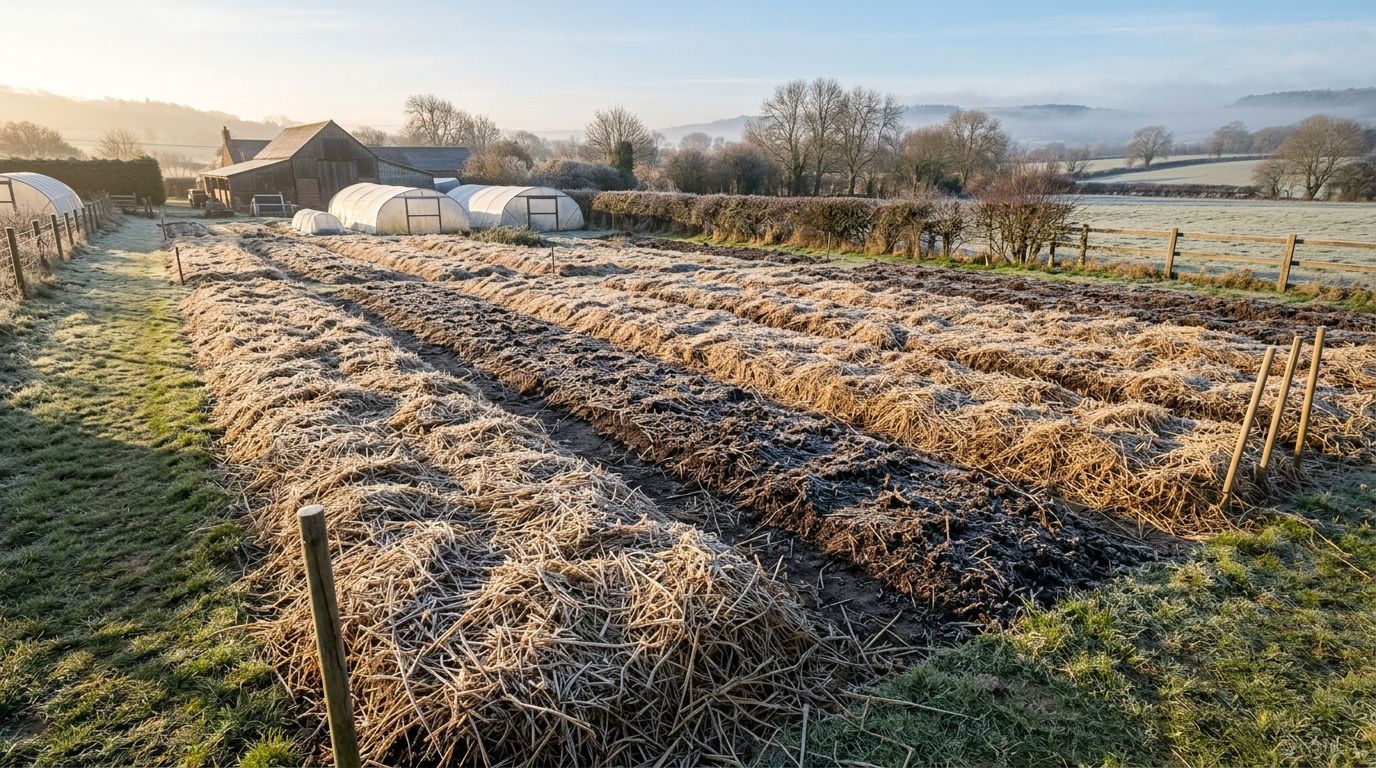
Terminating cover crops without tillage requires careful planning and timing. One common method is roller-crimping. A roller-crimper is a heavy steel drum with curved blades that is rolled over the cover crop when it reaches the flowering stage. The blades crimp the plant stems, breaking the vascular tissue without cutting the plants, which stops sap flow and kills the crop. The terminated cover crop falls flat onto the soil surface, forming a thick, weed-suppressing mulch that cash crops can be transplanted directly into. Other termination methods include using [silage tarps](/articles/silage-tarps-and-occultation-no-till) to smother the cover crop, flail mowing the crop close to the ground, or utilizing winter-kill. Winter-kill relies on freezing temperatures to kill tender cover crops like oats and field peas, leaving behind a dead, pre-mulched bed that is ready for spring planting with minimal preparation.
Bio-inoculants and Advanced Soil Biological Management
To maximize the health and productivity of a no-till system, advanced growers use bio-inoculants to actively manage soil biology. The most common bio-inoculant is mycorrhizal fungi. There are two main types of mycorrhizae: endomycorrhizae, which penetrate the cortical cells of herbaceous plant roots, and ectomycorrhizae, which wrap around the roots of woody trees and shrubs. Applying mycorrhizal spores during transplanting ensures that the root system forms this beneficial association immediately. The fungal hyphae act as an extension of the plant's roots, seeking out water and nutrients like phosphorus in tight soil pores that root hairs cannot reach, while protecting the plant from soil-borne pathogens by physically coating the root surface.
Active Aerated Compost Tea (AACT) is another powerful bio-inoculant. Unlike compost extracts, which simply wash soluble nutrients and microbes out of compost, AACT is produced by brewing compost in water under constant aeration for 24 to 36 hours. The high oxygen levels prevent anaerobic bacteria from multiplying while encouraging the rapid reproduction of beneficial aerobic bacteria, fungi, protozoa, and nematodes. Microbial foods, such as liquid kelp, humic acids, and fish hydrolysate, are added to the brewer to feed the growing populations. When applied as a foliar spray, the beneficial microbes coat the leaves, preventing pathogens like powdery mildew from establishing. When applied as a soil drench, the tea replenishes the microbial populations in the rhizosphere, accelerating organic matter decomposition and nutrient cycling.
Growers also utilize Korean Natural Farming (KNF) inputs and Indigenous Microorganisms (IMO). KNF focuses on cultivating local, wild microbes that are adapted to the specific climate and soil conditions of the farm. IMO is collected by placing a box of cooked rice in a local, undisturbed forest. Wild forest fungi and bacteria colonize the rice, which is then preserved with brown sugar to create IMO-1. This culture is expanded through fermentation with wheat bran or agricultural soil to create solid inoculants (IMO-2, IMO-3, and IMO-4) that are spread over garden beds. Other KNF inputs include Fermented Plant Juice (FPJ)—made from fermenting fast-growing plant tips with sugar to extract plant hormones and enzymes—and Oriental Herbal Nutrient (OHN), a fermented extract of garlic, ginger, and cinnamon used to boost plant immune systems and deter insect pests naturally.
Tools for the Modern No-Till Market Garden
No-till market gardening replaces heavy tractors and rototillers with specialized, hand-scale tools designed to maximize efficiency and minimize soil disturbance. The primary tool for soil aeration is the broadfork. A broadfork consists of 5 to 7 thick steel tines, typically 10 to 14 inches long, mounted on a strong steel crossbar with two upright wooden or steel handles. The grower steps onto the crossbar, using their body weight to drive the tines into the soil, and then pulls the handles back gently to crack and lift the soil. The tool is then slid backward 12 inches, and the process is repeated. Unlike a rototiller, which pulverizes soil and leaves a compacted plow pan, the broadfork creates deep fractures that allow air and water to enter, without flipping the soil layers or bringing weed seeds to the surface.
For precision seeding of direct-sown crops, growers use walk-behind seeders like the Jang JP-1. The Jang seeder uses interchangeable rollers with dimples sized for specific seeds, allowing for precise singulation and spacing of crops like carrots, radishes, and salad greens. The seeder opens a narrow furrow, drops the seed, covers it with soil, and rolls the surface flat to ensure good seed-to-soil contact, all in a single pass. This precision minimizes the need for labor-intensive hand-thinning later in the season. For weeding, no-till growers rely on shallow cultivation tools that only disturb the top half-inch of soil. These include collinear hoes and stirrup (loop) hoes, which slice weed seedlings at the soil surface, and wire weeders, which pull up tiny, germinating weeds without bringing deeper seeds to the light. Propane flame weeders are also used for pre-emergence weeding, killing weed seedlings on the bed surface just before cash crop seeds sprout.
Economic and Financial Viability of No-Till Market Gardens
The financial viability of a no-till market garden is driven by reduced operating expenses (OpEx) and increased crop yields per square foot. In conventional systems, a significant portion of the budget is spent on tractor fuel, equipment maintenance, and labor for weed control. In a no-till system, once the initial capital expenditure (CapEx) for compost, silage tarps, and specialized hand tools is completed, ongoing costs drop dramatically. Weeding labor, which is often the largest expense for organic vegetable farms, is reduced by up to 90% over three years as the weed seed bank in the topsoil is systematically depleted. Irrigation costs are also lower, as no-till soils rich in organic matter act like a sponge, retaining moisture far longer than bare, tilled soils.
Furthermore, because permanent beds are never walked on, crops can be planted closer together using biointensive spacing. This staggered, hexagonal planting layout maximizes the yield per square foot. Standardizing bed lengths and crop configurations allows for fast, efficient harvesting and crop transitions, enabling small-scale growers to produce a high volume of vegetables on a fraction of an acre, ensuring the financial viability of the farm.
In addition, no-till beds allow for rapid crop turnaround. In tilled systems, preparing a bed for a new crop after harvest requires pulling up old crops, rototilling, reforming the bed, and amending the soil—a process that can take days. In a no-till system, the grower simply cuts the old crop at the soil surface, skims the bed with a collinear hoe, adds a light dusting of compost, and replants the new crop immediately, often within the same hour. This speed allows growers to squeeze multiple successions of quick-growing crops like radishes, salad mix, and spinach into a single growing season, significantly increasing the gross revenue per bed and ensuring the financial viability of the small farm.
Conclusion
Regenerative, no-till agriculture represents a major shift in how we approach soil management and food production. By moving away from mechanical tillage and prioritizing the biological health of the soil food web, growers can create highly resilient, productive systems that build topsoil rather than deplete it. Through site analysis, occultation, deep compost mulching, cover cropping, and the use of specialized hand tools, small-scale market gardens and homesteads can achieve high yields of nutrient-dense food with reduced labor, water, and external inputs. The financial viability of no-till systems is proven by their high productivity per square foot and low operating costs. Ultimately, no-till regenerative farming is a sustainable path forward that restores biological balance to agricultural landscapes, capturing carbon and securing food production for generations to come.
Related Guides & Agronomic References
- To explore connected soil and crop strategies, see our deep-dive on silage tarps.
- For complete infrastructure setup and management, consult our guide on broadfork aeration.
- To maintain season-long health and pest suppression, explore our analysis of thermal composting.
Step-by-Step Instructions
Establishing Permanent Beds
Mark out 30-inch beds and 18-inch pathways that are never walked on.
The Occultation Method
Use silage tarps for 4-6 weeks to kill existing weeds and grass.
Applying Deep Mulch
Add a thick layer of compost or straw to suppress weeds and retain moisture.
Broadforking for Aeration
Use a broadfork to aerate the subsoil without destroying the soil web. In conclusion, by mastering these techniques, you will significantly improve your results with regenerative ag. Remember that consistency and observation are your best tools for long-term success.
Expert Insights & FAQs
Why is no-till better?
It preserves soil structure, retains moisture, and protects beneficial microbes.
How do I control weeds without tilling?
Use deep mulch, occultation (tarps), and frequent shallow cultivation (wire weeders).
Can I do no-till on heavy clay?
Yes, but it requires heavy initial compost applications and broadforking.
What is the chop-and-drop method?
Cutting cover crops at the base and leaving the residue as mulch.
Johnnie McCormick
Zone 7b/8a - North Central Alabama
Johnnie McCormick is a gardening hobbyist and the founder of My Garden Spot. Raised in north-central Alabama, his passion for gardening began in his youth. In 2008, he established a large market garden, teaching himself high-yield growing methods. In the years since, he has operated seasonal seedling sales for transplants, specializing in heirloom tomatoes, peppers, eggplants, decorative ground covers like Ajuga (Bugleweed), marigolds, nasturtiums, and fresh kitchen-window herb arrangements (basil, cilantro). Today, he gardens in the hills between Birmingham and Jasper, Alabama (Zone 7b/8a), sharing practical, community-focused gardening resources.
Verified Authoritative Citations & References
In alignment with our strict E-E-A-T research and verification guidelines, this guide cross-references data from the United States Department of Agriculture (USDA) and Cooperative Extension Service programs.
- USDA Natural Resources Conservation Service (NRCS): Soil Quality and Cation Exchange Capacity technical references. nrcs.usda.gov
- Cornell Cooperative Extension: Soil Health Manual and organic composting guidelines. soilhealth.cals.cornell.edu
- Penn State Extension: Soil Buffering Ratios, acidity management, and soil testing procedures. extension.psu.edu
- Alabama Cooperative Extension System (ACES): Soil testing procedures and compost formulation standards. aces.edu


Please log in to view comments.