How Do You Inoculate Soil with Mycorrhizal Fungi in No-Till Systems?

How Do You Inoculate Soil with Mycorrhizal Fungi in No-Till Systems?
In conventional industrial agriculture, soil is treated as an inert, dead physical anchor. It is treated as a sponge designed merely to hold synthetic nitrogen, phosphorus, and potassium granules poured from plastic sacks.
When you transition to regenerative no-till growing, that worldview changes completely.
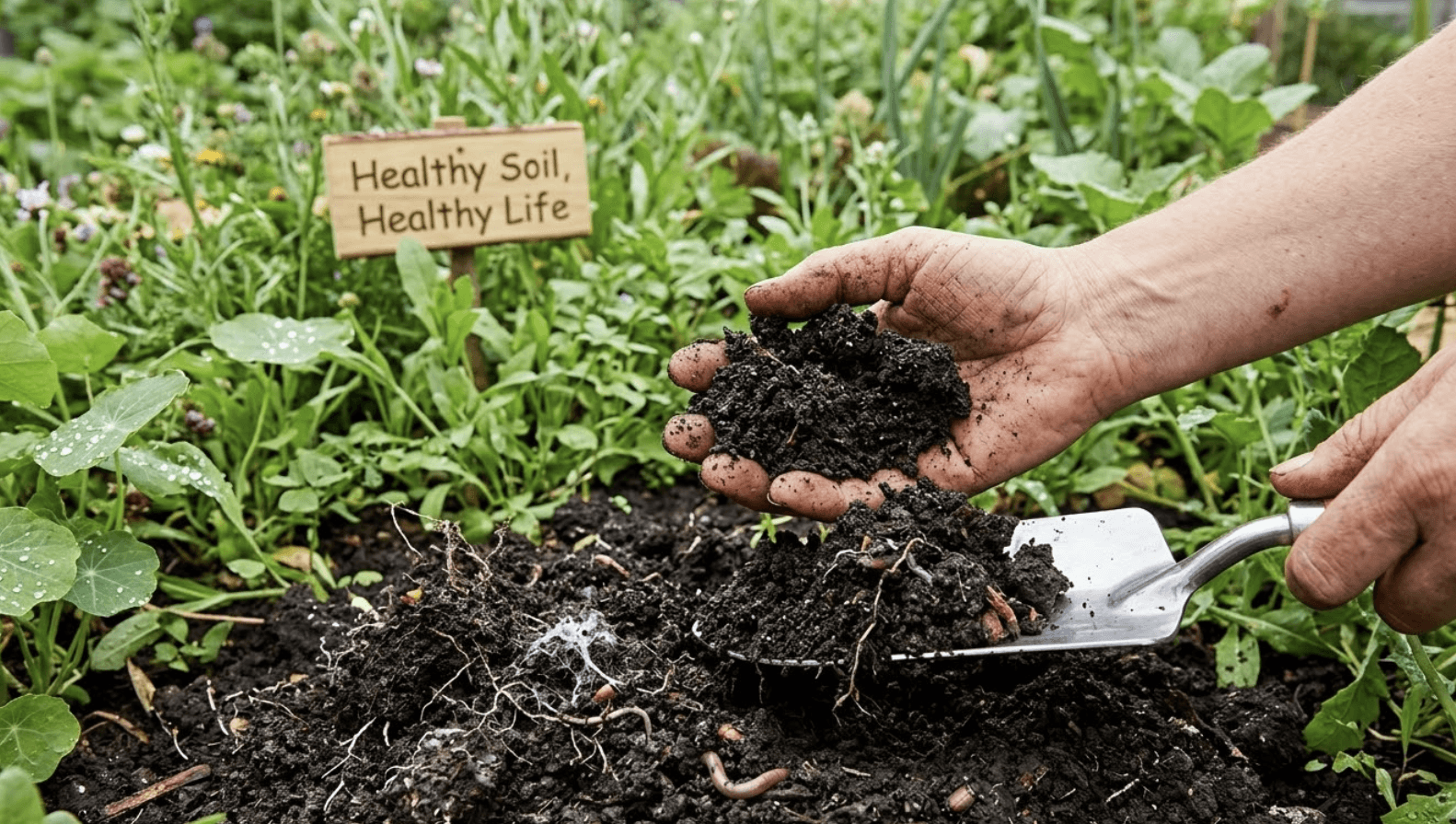
Soil is not an inert medium. Healthy garden soil is a living biological universe. A single tablespoon of undisturbed topsoil contains more living microorganisms—bacteria, actinomycetes, protozoa, nematodes, and fungal hyphae—than there are human beings on Earth.
At the center of this underground biological web stands an ancient class of organisms: mycorrhizal fungi.
For market gardeners and small-scale growers, learning how to properly inoculate and preserve mycorrhizal fungi is one of the most effective agronomic breakthroughs you can make.
These microscopic fungi do not simply live in the dirt. They physically bond with plant root systems, forming an extensive underground transport network that extends the effective surface area of plant roots by up to seven hundred percent.
They unlock stubborn, mineral-bound phosphorus, scavenge deep water reserves during summer droughts, defend plant crowns against parasitic nematodes, and produce the biological glue that builds rich, crumbly soil structure.
However, buying a bag of commercial mycorrhizal powder and scattering it over your garden beds like fertilizer is a complete waste of hard-earned money.
Mycorrhizal fungi are living, obligate biological organisms with strict physiological rules. If you do not apply them directly to living roots, if you plant them with non-compatible crops, or if you rip through your beds with a mechanical rototiller, the fungi will die before they ever colonize your soil.
1. The Evolutionary Partnership: The 450-Million-Year Trade
The term mycorrhiza originates from the Greek words mykós (fungus) and rhiza (root). It translates literally to "fungus-root."
This relationship is not a recent discovery of sustainable agriculture. It is an ancient partnership that made terrestrial plant life possible.
Over 450 million years ago, during the Ordovician period, primitive aquatic plants began creeping out of ancient seas onto barren, rocky continents.
Those primitive plants possessed no true root systems, no vascular leaves, and no mechanisms to extract minerals from stone.
They survived and colonized the land by forming a partnership with primitive soil fungi belonging to the Glomeromycota phylum. The fungi dissolved rock minerals and channeled water into plant tissues, while the plants shared liquid sugars produced through photosynthesis.
+-------------------------------------------------------------------------------+
|                       THE MYCORRHIZAL BIOLOGICAL EXCHANGE                     |
+-------------------------------------------------------------------------------+
|           ABOVE GROUND: PHOTOSYNTHESIS (The Solar Sugar Factory)              |
|                                     │                                         |
|                 Liquid Carbon Exudates (10% - 30% of Total Sugars)            |
|                                     ▼                                         |
| ┌───────────────────────────────────────────────────────────────────────────┐ |
| │ PLANT ROOT SYSTEM: Primary biological anchor; thick cortex (15-20 microns)│ |
| └─────────────────────────────────────┬─────────────────────────────────────┘ |
|                                       │                                       |
|                Direct Symbiotic Transfer Across Cell Interfaces               |
|                                       ▼                                         |
| ┌───────────────────────────────────────────────────────────────────────────┐ |
| │ MYCORRHIZAL HYPHAL WEB: Microscopic threads (2-5 microns); 700x expansion │ |
| └─────────────────────────────────────┬─────────────────────────────────────┘ |
|                                       │                                       |
|             MINED NUTRIENTS RETURNED DIRECTLY TO PLANT VASCULAR SYSTEM        |
|  * Bioavailable Phosphorus (P)     * Deep Moisture Scavenging (Drought Guard) |
|  * Zinc, Copper, & Manganese       * Glomalin Glycoprotein (Soil Aggregation) |
+-------------------------------------------------------------------------------+
The Liquid Carbon Economy
Fungi are heterotrophs. They lack chlorophyll and cannot produce their own food from sunlight.
Green plants, by contrast, excel at absorbing carbon dioxide from the atmosphere and converting it into simple sugars, carbohydrates, and amino acids.
In a healthy living soil, a plant will pump between ten and thirty percent of all its photosynthetic energy straight down into the root zone as root exudates.
The plant does not leak these sugars accidentally. It deliberately feeds the fungi living on its roots.
The fungus acts as a massive secondary root system for the host.
Plant root hairs are thick and cumbersome in biological terms—typically fifteen to twenty microns in diameter.
Fungal threads, called hyphae, are microscopic filaments measuring only two to five microns in diameter.
Because hyphae are so thin, they penetrate tiny soil micropores, rock fissures, and clay particles that plant root hairs cannot physically enter.
+-------------------------------------------------------------------------------+
|                       ROOT HAIR VS. FUNGAL HYPHAE GEOMETRY                    |
+-------------------+-----------------------+-----------------------------------+
| Structural Trait  | Plant Root Hair       | Mycorrhizal Fungal Hyphae         |
+-------------------+-----------------------+-----------------------------------+
| Average Diameter  | 15 to 20 Microns      | 2 to 5 Microns (Microscopic)      |
+-------------------+-----------------------+-----------------------------------+
| Penetration Power | Confined to loose,    | Navigates sub-microscopic pores   |
|                   | macroscopic macropores| and cracks inside rock minerals   |
+-------------------+-----------------------+-----------------------------------+
| Soil Exploration  | Limited to 1" - 2" zone| Extends several feet beyond root  |
| Footprint         | immediately around tap| zone; increases surface area 700% |
+-------------------+-----------------------+-----------------------------------+
| Enzyme Chemistry  | Weak organic acids;   | Aggressive phosphatases; unlocks  |
|                   | dependent on solution | bound iron, calcium, & phosphorus |
+-------------------+-----------------------+-----------------------------------+
Through this network, the fungi produce organic acids and enzymes called phosphatases.
These enzymes dissolve chemically locked minerals—particularly phosphorus, zinc, copper, and iron—and shuttle them back through the hyphal tubes into the plant's vascular core.
2. Endomycorrhizae vs. Ectomycorrhizae: Choosing the Correct Species
One of the most expensive errors made by growers is buying a generic "mycorrhizal inoculant" without reading the ingredient label.
Not all mycorrhizal fungi associate with all plants. Applying the wrong fungal species to your garden beds results in zero colonization and wasted money.
Mycorrhizal fungi are divided into two main biological categories based on how their hyphae interact with plant root cells.
+-------------------------------------------------------------------------------+
|                       ENDOMYCORRHIZAE VS. ECTOMYCORRHIZAE                     |
+-------------------+---------------------------+-------------------------------+
| Trait             | Endomycorrhizae (AMF)     | Ectomycorrhizae               |
+-------------------+---------------------------+-------------------------------+
| Cellular Action   | Penetrates root cell wall;| Forms outer mantle; grows     |
|                   | forms internal arbuscules | between cells (Hartig net)    |
+-------------------+---------------------------+-------------------------------+
| Host Plants       | 80% - 85% of land plants: | Woody perennials, conifers,   |
|                   | All garden vegetables,    | oaks, chestnuts, pines,       |
|                   | berries, alliums, flowers | birch, hazelnut trees         |
+-------------------+---------------------------+-------------------------------+
| Primary Fungal    | Rhizophagus irregularis,  | Pisolithus tinctorius,        |
| Genera            | Funneliformis mosseae     | Rhizopogon species            |
+-------------------+---------------------------+-------------------------------+
| Garden Relevance  | ABSOLUTE MANDATORY MATCH  | USELESS FOR ANNUAL VEGETABLES |
|                   | for market garden beds    | (Orchards & forestry only)    |
+-------------------+---------------------------+-------------------------------+
Ectomycorrhizae: The Tree and Forest Fungi
Ecto- means "outside." Ectomycorrhizal fungi wrap around the exterior root tips of woody trees, forming a dense fungal mantle.
Their hyphae weave between the outer cortex cells of the root to form an interconnected web called the Hartig net, but they never penetrate the plant cell walls.
Ectomycorrhizae associate with woody perennials, specific hardwoods, and conifers: oaks, beeches, birches, pines, and firs.
Culinary truffles and chanterelles belong to this family.
If you are planting a fruit orchard, managing a forest woodlot, or establishing conifer windbreaks, ectomycorrhizae are appropriate.
If you dust ectomycorrhizal powder over tomato or pepper beds, the spores cannot colonize the roots and will die.
Endomycorrhizae / Arbuscular Mycorrhizal Fungi (AMF)
Endo- means "inside." Endomycorrhizal fungi physically penetrate through the cell walls of the plant's root cortex.
Once inside the cell, the fungal thread branches repeatedly into a tree-shaped structure called an arbuscule.
The arbuscule sits against the plant's cell membrane without rupturing it, creating a high-surface-area biological junction where liquid carbon and soil minerals pass between plant and fungus.
Because of these unique structures, these fungi are classified as Arbuscular Mycorrhizal Fungi (AMF).
AMF are the organisms you need for vegetable production.
They associate with over eighty to eighty-five percent of all terrestrial plant species, including almost all annual vegetables, culinary herbs, soft fruits, cover crops, and perennial shrubs.
When purchasing a commercial inoculant, inspect the guaranteed analysis. You want species such as:
- Rhizophagus irregularis (formerly known as Glomus intraradices)
- Funneliformis mosseae (formerly Glomus mosseae)
- Claroideoglomus etunicatum (formerly Glomus etunicatum)
+-------------------------------------------------------------------------------+
|                       GARDEN HOST COMPATIBILITY MATRIX                        |
+-------------------------------------------------------------------------------+
| HIGHLY RESPONSIVE AMF HOSTS (Always Inoculate):                               |
| • Solanaceae: Tomatoes, Peppers, Eggplants, Potatoes                          |
| • Cucurbitaceae: Cucumbers, Summer Squash, Winter Squash, Melons              |
| • Fabaceae (Legumes): Green Beans, Field Peas, Cowpeas, Clover, Vetch         |
| • Alliums: Onions, Garlic, Leeks, Scallions, Shallots                         |
| • Rosaceae: Strawberries, Caneberries, Apple/Peach Rootstocks                 |
| • Sweet Corn, Lettuce, Carrots, Celery, Parsnips                              |
+-------------------------------------------------------------------------------+
| NON-HOST PLANT FAMILIES (Zero Fungal Association - NEVER Inoculate):          |
| • Brassicaceae: Cabbage, Broccoli, Cauliflower, Kale, Radishes, Turnips       |
| • Amaranthaceae / Chenopodiaceae: Spinach, Table Beets, Swiss Chard           |
| • Polygonaceae: Buckwheat                                                     |
+-------------------------------------------------------------------------------+
The Non-Host Families: The Critical Exception
You must know which plants refuse to form relationships with mycorrhizal fungi.
Plants in the Brassicaceae family (cabbage, broccoli, kale, cauliflower, radishes, turnips, mustards) and the Amaranthaceae family (spinach, beets, Swiss chard) evolved chemical mechanisms to defend themselves without fungal partners.
Their roots secrete glucosinolates and antifungal exudates that inhibit mycorrhizal spore germination.
If you apply an expensive AMF inoculant to a bed of radishes or broccoli, the fungal spores cannot associate with the roots. They will starve and vanish from the soil.
For growers planning crop successions, avoid following a long-season brassica planting directly with a heavy-feeding mycorrhizal crop like onions without re-inoculating, because the brassica crop will have reduced background fungal spore populations.
3. The Destructive Impact of Tillage: Glomalin and Aggregate Collapse
When transitioning a farm or garden to regenerative practices, understanding the structural fragility of the soil food web is essential.
A common question among growers is: does rototilling destroy mycorrhizal fungi?
The short answer is: yes, completely.
[ MECHANICAL ROTOTILLING (250 RPM) ]
                 │
                 ├──────────────────────────────────────┐
                 ▼                                      ▼
[ PHYSICAL HYPHAL SHEARING ]             [ HYPER-OXYGENATION EXPLOSION ]
* Delicate fungal webs sliced into bits  * Massive oxygen blast hits soil
* Nutrient transport channels severed    * Aerobic bacteria multiply wildly
* Plants cut off from water reservoirs   * Bacteria consume glomalin glue
                 │                                      │
                 └──────────────────┬───────────────────┘
                                    ▼
                 [ STRUCTURAL AGGREGATE COLLAPSE ]
                 * Spongy crumb structure destroyed
                 * Rain creates sealed, crusted mud cap
                 * Soil suffocates and compacts
Shearing the Hyphal Web
Mycorrhizal fungi operate as an unbroken, continuous underground web.
A single cubic inch of healthy, undisturbed no-till soil can hold miles of microscopic fungal hyphae connecting multiple plants together into an integrated network.
When a motorized rototiller, power harrow, or turning plow rips through the ground, its steel tines spin at hundreds of revolutions per minute.
The spinning blades act like a giant blender, mechanically slicing and shredding the delicate hyphal strands into tiny fragments.
The physical link between plant roots and deep mineral deposits is severed instantly.
While mycorrhizae can eventually regrow from resting spores, rebuilding that broken network takes weeks of metabolic energy, leaving your crops vulnerable to drought and nutrient stress during their critical early growth stages.
The Loss of Glomalin: Nature's Soil Glue
The destruction goes deeper than severed fungal threads. AMF are the primary builders of lasting soil structure through their production of glomalin.
Discovered in 1996 by USDA Agricultural Research Service scientist Dr. Sara Wright, glomalin is a durable, sticky glycoprotein secreted by the outer walls of arbuscular mycorrhizal hyphae.
+-------------------------------------------------------------------------------+
|                       GLOMALIN AGGREGATION DYNAMICS                           |
+-------------------+-----------------------------------------------------------+
| Secretion Source  | AMF hyphae secrete glomalin as a protective coating to    |
|                   | seal water inside the fungal tube                         |
+-------------------+-----------------------------------------------------------+
| Soil Mechanics    | Glomalin sloughs off into surrounding soil; binds silt,   |
|                   | sand, clay, and organic matter into stable aggregates     |
+-------------------+-----------------------------------------------------------+
| Carbon Storage    | Highly resistant to decomposition; stores 27% of all      |
|                   | stable soil carbon; persists in soil for 7 to 42 years    |
+-------------------+-----------------------------------------------------------+
| Tillage Impact    | Rototilling oxidizes soil, triggering bacterial spikes that|
|                   | digest glomalin; aggregates collapse into fine dust       |
+-------------------+-----------------------------------------------------------+
Glomalin functions as the biological cement of the earth.
As hyphae grow through the soil, they slough off glomalin, which binds tiny particles of sand, silt, and clay together with organic matter into stable crumbs or aggregates.
This crumbly aggregate structure gives healthy soil its open, spongy feel.
It creates macropores that allow rain to soak in without puddling and enables oxygen to circulate down to root zones.
When you rototill, you inject a massive blast of atmospheric oxygen into the dark, anaerobic subsoil.
This hyper-oxygenation triggers an explosive population boom of aerobic bacteria.
Starving for carbon, these bacteria consume the glomalin coatings, digesting the biological glue holding the soil together.
Within days of tilling, the aggregates dissolve. The soil reverts to fine, unstructured dust that packs down hard after the first heavy rain, forming a dense crust that suffocates roots.
The No-Till Broadfork Solution
To preserve your mycorrhizal networks while relieving physical soil compaction, replace the rototiller with a broadfork.
In our detailed operational guide on how to broadfork soil without inverting biological layers, we illustrate how inserting rigid steel tines and gently rocking the handles creates vertical fracture lines through the soil pan.
This deep aeration breaks up hard ground and improves drainage without turning the soil upside down or shredding the delicate fungal hyphae living between your garden beds.
4. Application Protocols: The Direct Root Contact Imperative
Mycorrhizal inoculants are living biological products containing dormant fungal spores. They must be applied with care to ensure success.
The fundamental rule of mycorrhizal application is simple: The fungal spores must make direct physical contact with actively growing plant roots.
Broadcasting a handful of dry mycorrhizal powder across the top of mulch or spraying it onto bare ground is ineffective.
Mycorrhizal spores are heavy and do not wash downward through thick soil layers.
On top of that, ultraviolet radiation from sunlight quickly degrades exposed spores on the soil surface.
To achieve high rates of colonization, use these four field-tested application methods:
+-------------------------------------------------------------------------------+
|                       FOUR INOCULATION APPLICATION METHODS                    |
+-------------------+-----------------------+-----------------------------------+
| Method            | Ideal Crop Category   | Application Protocol              |
+-------------------+-----------------------+-----------------------------------+
| 1. Seed Coating   | Direct-seeded crops:  | Dampen seeds with sugar-water;    |
|    (Slurry Shake) | Carrots, peas, corn,  | toss with dry spore powder until  |
|                   | beans, alliums        | evenly coated; sow immediately    |
+-------------------+-----------------------+-----------------------------------+
| 2. Plug Dusting   | Nursery cell trays:   | Pop plug from tray; dust exposed  |
|    (Root Surface) | Tomatoes, peppers,    | root faces with 1/4 tsp powder;   |
|                   | eggplants, lettuce    | drop directly into planting hole  |
+-------------------+-----------------------+-----------------------------------+
| 3. Bare-Root Dip  | Perennials & crowns:  | Mix water-soluble powder into     |
|    (Thick Slurry) | Strawberries, trees,  | unchlorinated water; dip bare     |
|                   | asparagus crowns      | roots for 5 seconds; plant wet    |
+-------------------+-----------------------+-----------------------------------+
| 4. Furrow Drench  | Commercial seeding:   | Mix soluble spores in tank; spray |
|    (Liquid Line)  | High-volume direct-sown| into furrow over seeds; remove    |
|                   | market garden beds    | fine 50-mesh nozzle filter screens|
+-------------------+-----------------------+-----------------------------------+
Method 1: The Seed Coating Slurry
For direct-seeded crops like carrots, sweet corn, green beans, or field peas, coating the seed prior to planting is the most efficient and economical approach.
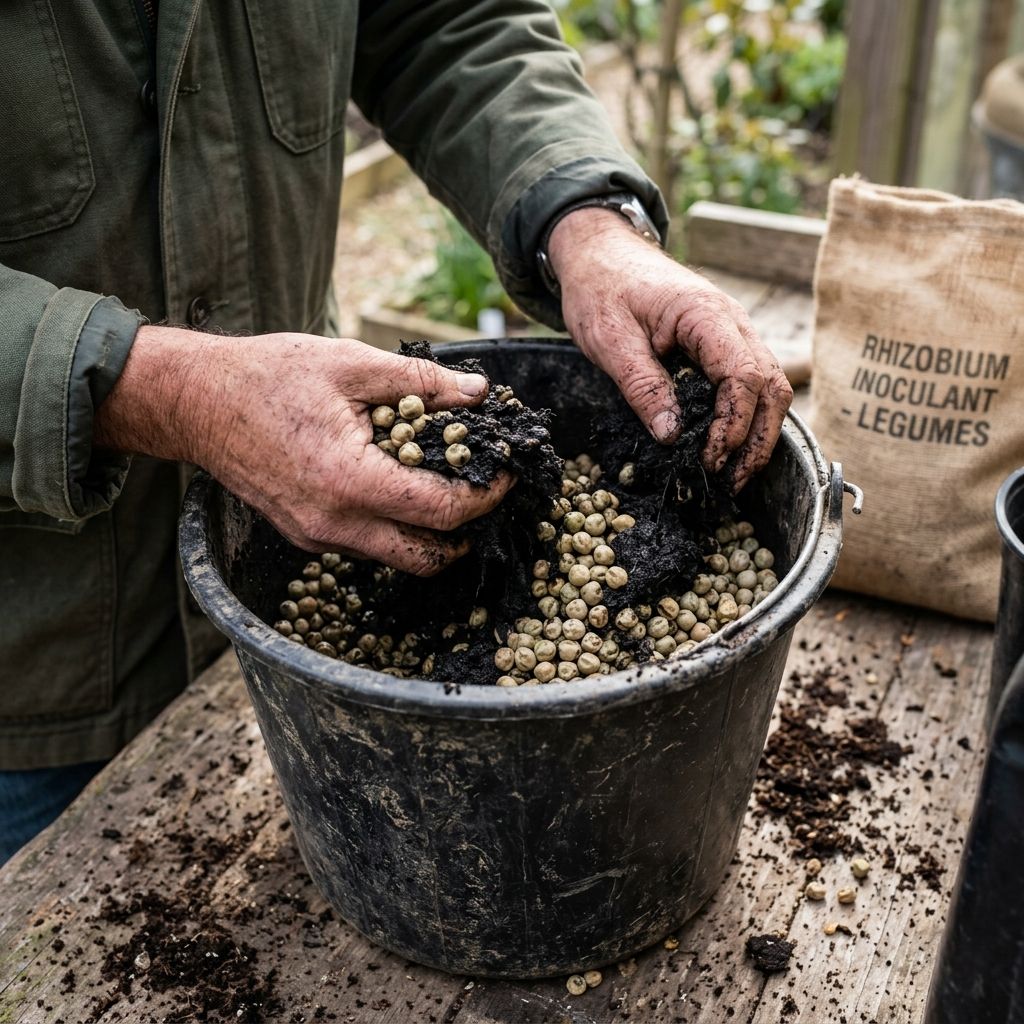
- Place your dry seeds into a clean plastic container or five-gallon bucket.
- Add a light sticking agent: mix one tablespoon of unsulfured blackstrap molasses or pure liquid kelp into a half-cup of warm, unchlorinated water.
- Drizzle just enough liquid over the seeds to coat them lightly (roughly one teaspoon per pound of seed). Stir well until the seed hulls are slightly damp, but not dripping wet.
- Dust the appropriate measure of dry mycorrhizal powder over the seeds.
- Shake the bucket vigorously. The sticky sugars bind the fungal spores directly to each seed hull.
- Sow the coated seeds immediately into moist garden beds.
As the seed absorbs water and germinates, its first tiny root (the radicle) pushes outward, passing straight through the attached fungal spores.
The fungal spore detects the root exudates, germinates, and begins colonizing the seedling within hours of emergence.
Method 2: Dusting Transplant Root Balls
For greenhouse starts grown in 72-cell trays, soil blocks, or 4-inch nursery pots (such as tomatoes, peppers, eggplants, and melons), dust the root ball at transplanting time.
- Pop the transplant gently out of its container to expose the outer root system.
- Use a small shaker jar or soft paintbrush to apply a light dusting of powder (about 1/8 to 1/4 teaspoon) across the exposed white roots.
- Alternatively, sprinkle a pinch of powder directly into the bottom of the transplant hole before setting the seedling into place.
When you backfill and water the plant, the roots sit in direct contact with the spores, establishing rapid colonization.
Method 3: The Bare-Root Slurry Dip
When planting dormant bare-root perennials—such as June-bearing strawberries, asparagus crowns, raspberry canes, or bare-root fruit trees—use a liquid slurry dip.
- In a wide bucket, blend water-soluble mycorrhizal inoculant with unchlorinated water to create a smooth, muddy slurry.
- Add a small measure of powdered kelp meal or humic acid to supply food for the emerging spores.
- Dip the bare root systems into the slurry for five to ten seconds, ensuring the liquid coats every fine rootlet.
- Plant the wet crowns directly into the ground.
Method 4: In-Furrow Liquid Drenching
On larger market gardens equipped with walk-behind tractor seeders or tractor-drawn equipment, mix micronized, water-soluble mycorrhizal powders into your liquid injection tank.
- The liquid is piped directly into the open furrow, spraying the seed as it drops before the rear packing wheel covers it with soil.
- Equipment Precaution: You must remove any fine 50-mesh or 100-mesh line screens and nozzle filters from your sprayer. Fungal spores are physical particles that will clog fine filters, stripping the living biology out of the solution before it reaches the ground.
- Use large nozzles and run pump pressures below forty PSI to avoid damaging the spores through mechanical shearing.
5. Soil Chemistry Pitfalls: The Phosphorus and Fungicide Traps
Even with proper application techniques, specific chemical conditions in the soil can prevent mycorrhizal fungi from establishing.
Understanding two primary chemical traps—excess phosphorus and synthetic fungicides—is essential for protecting your investment.
[ HIGH-PHOSPHORUS SYNTHETIC FERTILIZER (10-52-10) APPLIED ]
                              │
                              ▼
[ Soil Solution Flooded with Soluble Orthophosphate ]
                              │
                              ▼
[ Plant Root Absorbs Phosphorus Easily Without Biological Help ]
                              │
                              ▼
[ Plant Shuts Down Carbon Exudate Flow to Root Zone ]
                              │
                              ▼
[ FUNGAL COLONIZATION BLOCKED: AMF Spores Starve & Perish ]
The Phosphorus Trap
The primary biological service that mycorrhizal fungi offer to plants is mining insoluble phosphorus.
Plants understand this relationship instinctively.
If you apply heavy amounts of water-soluble, high-phosphorus chemical fertilizers (such as triple superphosphate or high-phosphate bloom boosters), the plant's root hairs absorb all the free phosphorus they need directly from the soil solution.
Because it has plenty of phosphorus readily available, the plant decides it does not need a fungal partner.
It shuts down the flow of liquid carbon exudates to the root zone, effectively starving the fungi.
The mycorrhizal spores will germinate, find the plant's cellular defenses closed, and die.
- Maintain soil phosphorus within moderate agronomic ranges.
- Avoid applying concentrated soluble phosphorus fertilizers when inoculating beds.
- Rely on slow-release, biological phosphorus sources—such as bone meal, soft rock phosphate, or mature compost—which require biological activity to break down. This encourages the plant to maintain its partnership with the fungi.
The Fungicide Hazard
Applying broad-spectrum chemical fungicides to control foliar plant diseases can devastate your soil ecology.
Chemical fungicides like chlorothalonil, mancozeb, and propiconazole wash off leaves and soak into the soil, killing beneficial mycorrhizal hyphae along with plant pathogens.
Heavy applications of copper sulfate fungicides can also accumulate in topsoil, creating toxic conditions that inhibit fungal spore germination.
To protect your soil fungi:
- Rely on cultural disease prevention: proper plant spacing, aggressive pruning for airflow, and drip irrigation to keep leaves dry.
- When treating fungal plant diseases, use biological bio-fungicides containing beneficial bacteria like Bacillus amyloliquefaciens or Streptomyces lydicus. These bacteria outcompete foliar pathogens without harming mycorrhizal fungi in the soil.
6. Building Long-Term Fungal Dominance with Living Roots and Cover Crops
Mycorrhizal fungi are obligate biotrophs.
This means they cannot survive or complete their life cycles without a living host plant to feed them carbon.
Saprophytic fungi (such as oyster mushrooms or wood-decay fungi) survive by digesting dead organic matter like wood chips and dry straw.
Mycorrhizal fungi cannot digest dead organic matter; they depend entirely on living plant roots.
+-------------------------------------------------------------------------------+
|                       WINTER LIVING ROOT COMPARISON                           |
+-------------------+-----------------------------------------------------------+
| Soil Treatment    | Biological Impact on Soil Mycorrhizae                     |
+-------------------+-----------------------------------------------------------+
| Bare Fallow Bed   | AMF starve; spores die over winter; population drops 80%  |
| (Covered in Mud)  | Spring cash crops experience delayed early colonization   |
+-------------------+-----------------------------------------------------------+
| Living Cover Crop | Fungal web stays active; hyphae bridge multiple root lines;|
| (Rye + Vetch)     | Spring cash crops plug into established fungal super-grid |
+-------------------+-----------------------------------------------------------+
If you clear your vegetable beds in October and leave the soil bare and exposed over winter, the mycorrhizal hyphae starve.
Over five months of winter rain and cold, the majority of the living fungal network in the bed dies.
When you plant new crops the following spring, your seedlings enter a depleted soil environment and must start the colonization process from scratch.
The Power of Living Cover Crops
To build high levels of fungal biology, keep living roots in the ground as close to twelve months a year as possible.
When a summer cash crop finishes, seed a winter-hardy cover crop into the bed within forty-eight hours.
The ideal cover crop mix for supporting mycorrhizal fungi combines a fibrous-rooted grass with a deep-rooting legume:
- Grasses (Cereal Rye, Oats, Sorghum-Sudangrass): Grasses produce thousands of feet of fine, fibrous roots that provide extensive surface area for mycorrhizal colonization.
- Legumes (Hairy Vetch, Crimson Clover, Field Peas): Legumes work in partnership with both mycorrhizae and nitrogen-fixing Rhizobium bacteria. The fungi supply phosphorus, which powers the high-energy nitrogen fixation process occurring inside root nodules.
+-------------------------------------------------------------------------------+
|                       ELITE COVER CROPS FOR FUNGAL HEALTH                     |
+-------------------+-------------------+---------------------------------------+
| Cover Crop Specie | Plant Family      | Mycorrhizal Association Function      |
+-------------------+-------------------+---------------------------------------+
| Cereal Rye        | Poaceae (Grass)   | Massive fibrous root web; maintains   |
| (Secale cereale)  |                   | active hyphae throughout winter frosts|
+-------------------+-------------------+---------------------------------------+
| Crimson Clover    | Fabaceae (Legume) | High phosphorus demand drives deep    |
| (Trifolium inc.)  |                   | AMF colonization; fixes soil nitrogen |
+-------------------+-------------------+---------------------------------------+
| Oats              | Poaceae (Grass)   | Fast autumn root growth; winter-kills |
| (Avena sativa)    |                   | into protective mulch blanket         |
+-------------------+-------------------+---------------------------------------+
| Hairy Vetch       | Fabaceae (Legume) | Aggressive spring root expansion;     |
| (Vicia villosa)   |                   | heavy glomalin synthesis partner      |
+-------------------+-------------------+---------------------------------------+
No-Till Cover Crop Termination
When spring arrives, terminate the cover crop without tilling the bed.
Using silage tarps for occultation—as detailed in our guide on silage tarps and occultation for no-till weed control—allows you to terminate cover crops using darkness and moisture.
The aboveground foliage breaks down on the surface into a rich organic mulch layer, while the extensive root systems remain undisturbed beneath the ground.
The mycorrhizal network stays intact.
When you transplant your spring tomatoes or squash through the mulch into the bed, their roots encounter an existing, active fungal web, plugging into the biological system from day one.
7. The Colonization Timeline: What to Expect in Days 1 to 90
Understanding the stages of mycorrhizal colonization helps growers manage expectations.
Inoculating your soil is not like applying a synthetic nitrogen fertilizer. It does not produce an immediate, dark-green growth surge in forty-eight hours.
Colonization is a multi-week biological process with distinct developmental phases:
[ Day 0: Spore Placed in Direct Contact with Seed or Transplant Root ]
                              │
                              ▼
[ Days 1 - 7: Spore Senses Exudates; Germinates; Forms Appressorium ]
                              │
                              ▼
[ Days 8 - 21: Hyphae Enter Root Cortex; Internal Arbuscules Branch ]
               (The Colonization Dip: Plant Invests Carbon Energy)
                              │
                              ▼
[ Days 22 - 45: Hyphae Extend into Surrounding Soil; Mineral Surge ]
               (Enhanced Phosphorus Uptake; Visible Drought Guard)
                              │
                              ▼
[ Days 46 - 90+: Massive Glomalin Secretion; Aggregate Soil Formation ]
                 (Peak Fruit Sizing; Restocked Spore Bank for Next Year)
Days 1 to 7: Spore Activation
When moisture and warmth penetrate the planting zone, the dormant fungal spore detects signaling compounds (strigolactones) released by the young root.
The spore germinates, extending a germ tube toward the root hair.
Upon reaching the root surface, the tip of the hypha swells to form an attachment pad called an appressorium, preparing to enter the root tissue.
Days 8 to 21: The Colonization Investment
During the second and third weeks, the fungus penetrates the outer epidermal cell layer and establishes itself inside the root cortex cells, forming its branched arbuscules.
During this initial window, the plant is actively feeding liquid carbon to the fungus before the fungal network is large enough to return significant water and minerals.
In academic literature, this is known as the colonization dip.
The seedling may appear to grow at the same pace as un-inoculated plants, or even slightly slower, as it invests photosynthetic sugars into establishing the partnership.
Days 22 to 45: The Growth Expansion
By the fourth week, the partnership hits full stride.
The internal arbuscules are fully functional, and millions of external hyphae spread outward through the surrounding soil.
At this point, the agronomic advantages become clearly visible in the field:
- Inoculated plants demonstrate reduced midday wilting during hot summer weather, remaining upright while un-inoculated plants droop.
- Foliage takes on a deeper, healthier sheen as increased phosphorus and zinc levels fuel chlorophyll production.
- Flower clusters form more densely, and blossom drop decreases significantly.
Days 46 to 90+: Peak Production and Soil Building
As crops mature, the fungal network reaches its full extent.
Hyphae continue mining trace elements and pumping moisture into expanding fruit.
At the same time, the fungi secrete glomalin into the surrounding soil, binding loose particles into stable, crumbly aggregates that improve soil tilth.
As the crop reaches maturity, the fungi produce thousands of thick-walled resting spores inside the root zone.
These spores remain in the soil over winter, providing an indigenous biological reservoir ready to colonize next season’s plantings.
For ongoing peer-reviewed research on fungal propagation, cover cropping dynamics, and living soil management, the Rodale Institute maintains extensive agronomic archives documenting long-term no-till field trials.
8. Low-Cost On-Farm Inoculant Propagation
While commercial inoculants are convenient for getting started, buying packaged spores for an entire small farm can become costly.
Commercial market gardeners can propagate high volumes of indigenous mycorrhizal fungi on-farm using simple materials:
[ Step 1: Collect Indigenous Soil Inoculum from Undisturbed Field Hedgerows ]
                                │
                                ▼
[ Step 2: Fill Nursery Bags with 4:1 Mix of Coarse Vermiculite & Finished Compost ]
                                │
                                ▼
[ Step 3: Plant Bahia Grass or Sorghum-Sudangrass as Heavy Host Plants ]
                                │
                                ▼
[ Step 4: Grow Outdoors for 90 Days; Water Lightly to Encourage Colonization ]
                                │
                                ▼
[ Step 5: Cut Grass Stems at Soil Line; Withhold Water to Force Fungal Sporulation ]
                                │
                                ▼
[ Step 6: Chop Colonized Root Mass into Medium; Harvest Potent Indigenous Inoculant ]
- Collect Wild Inoculum: Take small soil and root samples from healthy, undisturbed hedgerows or native meadows on your property. These native soils contain wild strains of AMF adapted to your specific climate and soil chemistry.
- Prepare the Media: Mix four parts coarse horticultural vermiculite or perlite with one part fully finished, low-phosphorus organic compost. Fill several five-gallon nursery pots or fabric grow bags with the blend.
- Plant Host Grasses: Blend your collected native soil into the top few inches of the containers. Sow seeds of a vigorous host grass, such as bahiagrass or sorghum-sudangrass.
- Grow the Nursery: Grow the containers in full sun for ninety days. Water moderately, keeping the media slightly lean on nutrients to encourage the grass roots to seek out fungal partners. As the grass grows, the fungi multiply, colonizing the entire root mass.
- Force Sporulation: At the end of the summer, cut the grass down to the soil line and stop watering entirely. As the grass dies and the soil dries out, the fungi receive an environmental signal that the host is dying. They respond by producing thousands of thick-walled resting spores throughout the root ball.
- Harvest the Inoculant: After two weeks of drying, dump the containers onto a clean tarp. Use clean pruners to chop the colonized grass roots into small half-inch pieces. Mix the chopped root fragments, vermiculite, and spore-rich media thoroughly.
Store this homegrown inoculant in cool, breathable bins. A single handful added to seed furrows or transplant holes provides thousands of viable, locally adapted spores.
Expert Insights & FAQs
What is the difference between endomycorrhizae and ectomycorrhizae?
Endomycorrhizae (Arbuscular Mycorrhizal Fungi / AMF) physically enter root cells to form internal exchange structures called arbuscules. They associate with roughly 85% of land plants, including nearly all annual vegetables, berries, and flowers. Ectomycorrhizae grow between outer root cells without entering cell walls, forming a sheath around root tips. They associate almost exclusively with forest trees and woody perennials. For vegetable production, always use endomycorrhizae.
Does rototilling really destroy mycorrhizal fungi in the soil?
Yes. High-speed rototiller blades mechanically slice through the fine fungal threads (hyphae) that link plant roots to soil nutrient reservoirs. Additionally, tilling injects large amounts of oxygen into the ground, sparking a bacterial explosion that consumes glomalin—the sticky glycoprotein produced by fungi that holds soil aggregates together. Once glomalin is digested, soil structure collapses into dusty powder.
Can I inoculate brassica crops like broccoli and cabbage with mycorrhizae?
No. Plants in the Brassicaceae family (broccoli, cabbage, kale, cauliflower, radishes, and turnips) are non-hosts that do not form partnerships with mycorrhizal fungi. Their roots release natural antifungal compounds that inhibit spore germination. Applying mycorrhizal inoculants to brassicas is ineffective because the fungi find no compatible host and die.
Why does high-phosphorus fertilizer reduce mycorrhizal colonization?
The primary service mycorrhizae provide to plants is extracting mineral-bound phosphorus from the soil in exchange for liquid carbon sugars. When a garden bed is flooded with water-soluble phosphorus fertilizers, the plant absorbs all the phosphorus it needs directly. Consequently, it shuts off carbon exudates to the root zone, locking out the fungi and causing the spores to starve.
How do I apply mycorrhizal inoculant to direct-seeded garden crops?
For direct-seeded vegetables like carrots, beans, peas, and corn, the most effective method is a seed coating slurry. Dampen seeds lightly with water mixed with a small amount of unsulfured molasses or liquid kelp to act as a natural sticker. Toss the damp seeds with dry mycorrhizal powder until evenly coated, and sow them immediately into moist soil.
How long does it take for mycorrhizal fungi to establish on plant roots?
Initial colonization takes roughly two to four weeks. During this period, the fungal spore germinates, penetrates the root cortex, and builds internal arbuscules. Because the host plant expends energy feeding the young fungus during this phase, visible crop benefits—such as increased drought resistance, deeper leaf color, and accelerated fruit sizing—typically appear four to six weeks after planting.
Can I use mycorrhizal fungi in raised garden beds and container mixes?
Yes. Mycorrhizal fungi establish readily in raised beds and container mixes as long as living host plants are present and moisture levels remain consistent. Soilless potting mixes (peat moss, coco coir, and perlite) are naturally sterile and devoid of native soil biology, making intentional inoculation especially beneficial for container-grown tomatoes, peppers, and herbs.
How should I store leftover mycorrhizal inoculant powders?
Store unused inoculant in its original airtight packaging in a cool, dry, dark location away from direct sunlight and temperature extremes. A cool basement or refrigerator (between 40°F and 50°F / 4°C to 10°C) is ideal. Never allow inoculant to sit in a hot greenhouse or freezing outdoor shed. Stored properly, dry fungal spores remain viable for twelve to twenty-four months.
Johnnie McCormick
Zone 7b/8a - North Central Alabama
Johnnie McCormick is a gardening hobbyist and the founder of My Garden Spot. Raised in north-central Alabama, his passion for gardening began in his youth. In 2008, he established a large market garden, teaching himself high-yield growing methods. In the years since, he has operated seasonal seedling sales for transplants, specializing in heirloom tomatoes, peppers, eggplants, decorative ground covers like Ajuga (Bugleweed), marigolds, nasturtiums, and fresh kitchen-window herb arrangements (basil, cilantro). Today, he gardens in the hills between Birmingham and Jasper, Alabama (Zone 7b/8a), sharing practical, community-focused gardening resources.
Verified Authoritative Citations & References
In alignment with our strict E-E-A-T research and verification guidelines, this guide cross-references data from the United States Department of Agriculture (USDA) and Cooperative Extension Service programs.
- USDA Natural Resources Conservation Service (NRCS): Soil Quality and Cation Exchange Capacity technical references. nrcs.usda.gov
- Cornell Cooperative Extension: Soil Health Manual and organic composting guidelines. soilhealth.cals.cornell.edu
- Penn State Extension: Soil Buffering Ratios, acidity management, and soil testing procedures. extension.psu.edu
- Alabama Cooperative Extension System (ACES): Soil testing procedures and compost formulation standards. aces.edu


Please log in to view comments.