CSA Member Retention: Crafting the Perfect Weekly Box and Newsletter

How Do You Craft the Perfect CSA Box and Newsletter to Maximize Member Retention?
For many Community Supported Agriculture (CSA) operators, member churn is a silent, margin-eroding crisis. The prevailing wisdom often points towards better marketing or a stronger social media presence, but this diagnosis is fundamentally flawed. If your CSA retention rate languishes below the industry benchmark of 75-80%, you are not facing a marketing problem; you are confronting a product, logistics, and communication problem. The path to a waitlisted, financially resilient CSA is not paved with clever advertisements but with ruthless operational excellence. High retention rates are the direct result of a system engineered to eliminate friction, manage expectations, and consistently deliver tangible value to the member's kitchen.
This guide deconstructs the core operational pillars required to achieve retention rates exceeding 90%. We will move beyond the romantic narrative of farming and into the administrative and mathematical realities of the business. We will analyze the precise economics of member churn, define the psychological triggers that cause members to quit, and provide a replicable framework for box architecture based on strict categorical planning and value metrics. Furthermore, we will detail the exact crop planning formulas, post-harvest handling Standard Operating Procedures (SOPs), and communication strategies that transform a weekly box of vegetables from a potential source of guilt into an indispensable household utility. Mastering these elements is the key to converting first-year members into long-term advocates for your farm.
How does customer acquisition cost make CSA member churn highly unprofitable?
The economics of a CSA program are fundamentally different from those of a retail business. Your primary financial driver is not transactional volume but recurring revenue secured through long-term relationships. This makes understanding the Customer Acquisition Cost (CAC) and Customer Lifetime Value (CLV) absolutely critical.
Breaking Down Customer Acquisition Cost (CAC):
The CAC is the total cost of sales and marketing efforts required to convince a new customer to purchase a share. It's not just ad spend; it's a comprehensive calculation.
- Direct Marketing Costs: Ad spend on social media, print flyers, farmers market signage.
- Labor Costs: Hours spent at farmers markets promoting the CSA, time spent answering emails from prospective members, administrative hours for onboarding and payment processing.
- Software & Tools: Costs for email marketing platforms, CSA management software, and website hosting.
- Promotional Costs: Cost of goods for samples, hosting open houses, or offering sign-up incentives.
A conservative estimate places the CAC for a single CSA member between $45 and $75. For a 100-member CSA with a 30% churn rate (meaning 30 members leave each year), the annual cost just to maintain the current membership level is:
- 30 members * $60/member (average CAC) = $1,800 per year.
This $1,800 is not contributing to growth; it is a direct operational expense incurred simply to tread water. This capital and the dozens of labor hours it represents could have been invested in infrastructure, soil health, or efficiency improvements.
The Power of Customer Lifetime Value (CLV):
CLV represents the total revenue a business can reasonably expect from a single customer account throughout the business relationship. High retention dramatically increases CLV.
- Year 1 Member: Revenue = $600 (share price) - $60 (CAC) = $540 Net
- Year 5 Member: Revenue = ($600 * 5 years) - $60 (initial CAC) = $2,940 Net
Furthermore, long-term members are your most profitable customers for several reasons:
- Increased Spending: They are statistically more likely to purchase add-on shares (eggs, fruit, meat, flowers) and special offerings (bulk tomatoes, holiday boxes).
- Zero-Cost Marketing: They become your most effective referral source, lowering the CAC for new members they bring in.
- Operational Efficiency: They understand the system, require less administrative support, and provide more constructive feedback.
In short, focusing on acquiring new members while ignoring retention is like pouring water into a leaky bucket. The primary business objective must be to plug the leaks by delivering a product and experience that makes leaving unthinkable.
What is the psychological driver behind vegetable guilt and how does it cause churn?
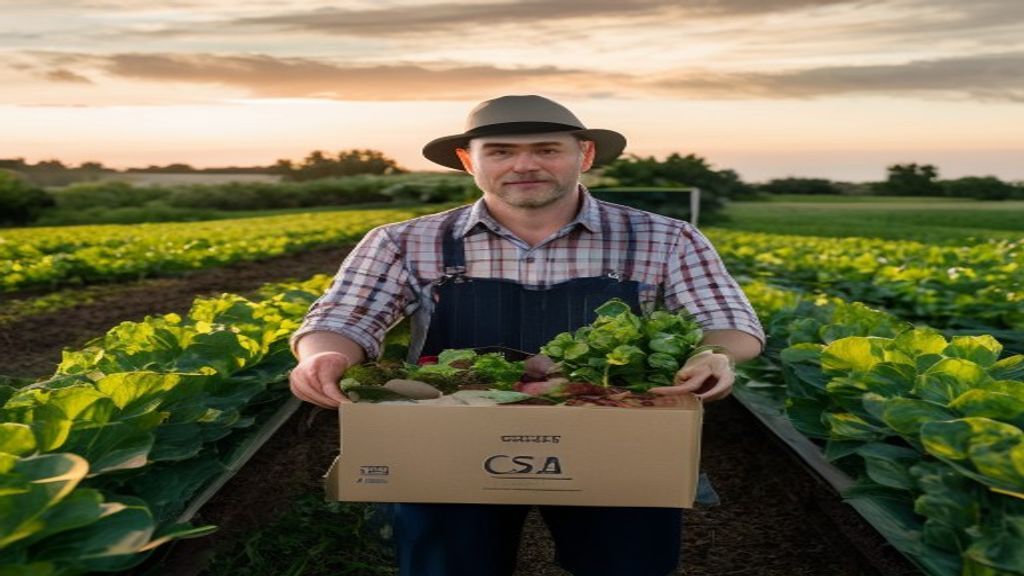
Members do not quit a CSA because they suddenly dislike local food or disagree with the agricultural model. They quit because the weekly box inadvertently becomes a source of stress. This phenomenon, which we call "vegetable guilt," is the single most significant threat to member retention. It is the negative emotional feedback loop created by the weekly confrontation with food waste in their own refrigerator.
The cycle typically unfolds as follows:
- Initial Excitement: The member joins with idealized visions of cooking healthy, farm-fresh meals every night.
- The Overwhelm: Around week 4 or 5, a busy week occurs. The member gets home late, orders takeout, and the previous week's kale and radishes remain untouched.
- The Confrontation: When picking up the new box, they know the old produce is still waiting. The new box adds to the backlog, creating a sense of being behind.
- The Physical Evidence: By the end of the week, they discover slimy spinach or rubbery carrots in the crisper drawer. This is the moment of failure. They are literally throwing their money—and the farmer's hard work—into the compost.
- The Association: The CSA box, once a symbol of health and virtue, becomes associated with guilt, waste, and financial loss. They feel they are not a "good enough" cook or household manager to justify the expense.
When the renewal email arrives, their decision is not based on the quality of the tomatoes in August but on the memory of the guilt they felt over the wilted chard in June. They conclude, "The CSA isn't for us," not because the product was bad, but because the system didn't fit their real-life capacity.
Your entire operational strategy—from crop planning to newsletter writing—must be designed as a direct countermeasure to vegetable guilt. You are not just selling vegetables; you are selling a manageable, successful, and guilt-free home cooking experience.
How do you apply the 115% value rule and the 5-category box structure?
The perfect CSA box is not an arbitrary collection of what is abundant in the field. It is a meticulously engineered unit of culinary inventory, designed for maximum utility and perceived value. This requires two guiding principles: The 115% Value Rule and the 5-Category Box Structure.
The 115% Value Rule
This rule provides a precise financial target for box composition. It dictates that the total retail value of the items in the box (based on your own farmers market prices) should consistently fall between 110% and 115% of the weekly share price. For a $30/week share, the target retail value is $33.00 to $34.50.
- Below 100%: The member feels financially cheated. This is a cardinal sin.
- 100% - 110%: Acceptable, but lacks the feeling of abundance and generosity that builds loyalty.
- 110% - 115%: The sweet spot. It communicates clear value and a generous spirit without being overwhelming.
- Above 120%: This is counterintuitively dangerous. It can trigger vegetable guilt by overwhelming the member with too much produce and can significantly cannibalize your farm's profit margins.
To implement this, you must maintain a master spreadsheet that lists all potential crops, their retail price per unit (e.g., per lb, per bunch, per head), and calculates the total value of each week's proposed box. This is a non-negotiable administrative task.
The 5-Category Box Structure
This structure ensures each box is balanced, usable, and avoids overwhelming members with niche or difficult-to-use items. By planning your shares according to these categories, you create a consistent and intuitive cooking experience. An ideal box contains 7-9 items total.
| Category | % of Box Volume | Rationale & Examples | Member Psychology |
|---|---|---|---|
| 1. Base / Staples | ~30% | Calorie-dense, long shelf-life, universally recognized. Forms the foundation of meals. Examples: Potatoes, Carrots, Onions, Sweet Potatoes, Winter Squash. | Provides a sense of security and substance. These items are easy to store and use, reducing cooking pressure. |
| 2. Salad Greens | ~15% | High-value, high-demand, quick to use. The star of the box for many. Examples: Salanova Lettuce Mix, Head Lettuce, Arugula, Baby Spinach. | Delivers immediate, tangible value and freshness. Easy to incorporate into meals without complex preparation. |
| 3. Cooking Greens | ~15% | Nutrient-dense, versatile, but can be a source of guilt if over-supplied. Examples: Kale, Swiss Chard, Collards, Bok Choy, Spinach. | Crucial Rule: Limit to ONE bunch per week. This prevents the dreaded "crisper drawer backlog" of wilting greens. |
| 4. Seasonal Heavy-Hitters | ~30% | These are the items that define the season and create excitement. Often the bulk of the box weight. Examples: Tomatoes, Cucumbers, Zucchini, Sweet Corn, Broccoli. | Creates the feeling of peak-season abundance. These are the items members brag about to their friends. |
| 5. Flavor / Wildcard | ~10% | Small-quantity items that elevate dishes or provide a unique taste of the farm. Examples: Garlic, Scallions, Basil, Cilantro, Dill, a single pint of ground cherries. | Empowers the member to cook more flavorful food. Adds a touch of culinary adventure without requiring a huge commitment. |
Example Box Breakdown (Late Summer, $30 Share)
- Base: 1.5 lbs Yellow Potatoes ($3.00)
- Salad Greens: 0.5 lb bag Lettuce Mix ($6.00)
- Cooking Greens: 1 bunch Lacinato Kale ($3.50)
- Heavy-Hitter 1: 2 lbs Heirloom Tomatoes ($10.00)
- Heavy-Hitter 2: 1.5 lbs Zucchini ($3.00)
- Flavor 1: 1 head Garlic ($2.50)
- Flavor 2: 1 bunch Basil ($3.50)
- Total Items: 7
- Total Retail Value: $32.00 (107% of share price - a bit low, could add a cucumber)
By adhering to this structure, you can see what comes in a CSA box follows a predictable, user-friendly pattern, which is key to long-term satisfaction. You're not just giving them vegetables; you're giving them the building blocks for a week of successful meals.
What is the exact mathematical crop planning formula for consistent weekly boxes?
Hope is not a strategy for crop planning. Achieving the consistent, balanced box described above requires a rigorous, mathematically-driven approach to your field plan. You must work backward from the desired box composition to the exact number of bed feet you need to plant for each succession.
Here is the universal formula:
Total Bed Feet to Plant per Succession = ((N * A) / Y) * (1 + B)
Where:
- N = Number of CSA members.
- A = Amount of the crop per member, per week (in lbs, bunches, or heads).
- Y = Expected yield per bed foot (a metric you must track and refine for your specific soil and climate).
- B = Buffer percentage (typically 0.25 to 0.30, or 25-30%) to account for germination failure, pest pressure, disease, and weather events.
Let's apply this formula to several key crops for a 100-member CSA.
Scenario: 100-Member CSA
| Crop | Box Goal (A) | Your Farm's Yield/Foot (Y) | Buffer (B) | Calculation | Planting Spec per Succession |
|---|---|---|---|---|---|
| Carrots | 1 bunch (~1.25 lbs) | 1.5 lbs/ft | 25% | ((100 * 1.25) / 1.5) * 1.25 | 104 bed feet |
| Salanova Mix | 0.5 lb bag | 0.75 lbs/ft | 30% | ((100 * 0.5) / 0.75) * 1.30 | 87 bed feet |
| Head Lettuce | 1 head | 1.5 heads/ft | 25% | ((100 * 1) / 1.5) * 1.25 | 83 bed feet |
| Scallions | 1 bunch | 2 bunches/ft | 30% | ((100 * 1) / 2) * 1.30 | 65 bed feet |
Implementing the Plan:
This calculation gives you the amount to plant for a single week's harvest. To ensure a continuous supply, you must plant these successions at regular intervals based on the crop's Days to Maturity (DTM).
- Carrots (75 DTM): To have carrots for 10 weeks, you need to seed 104 bed feet every 7-10 days, starting early in the spring. This meticulous scheduling is where a tool like our
[Planting Calendar](/planting-calendar)becomes indispensable for tracking planting dates. - Salanova Mix (30 DTM): To have lettuce every week, you must seed 87 bed feet every single week without fail.
This level of precision is the foundation of a reliable CSA. For a deep dive into creating these schedules, our guide on [mastering succession planting for CSA harvests](/articles/mastering-succession-planting-csa-harvests) is an essential resource. You can map out your entire season, bed by bed, using our interactive [Garden Planning Tool](/garden-calculator) to visualize the flow of plantings and ensure no gaps in production occur.
Failure to do this math is precisely why many farms end up with a glut of one item and a shortage of another, leading to unbalanced boxes, member dissatisfaction, and ultimately, churn.
How should a weekly CSA newsletter be structured to act as a kitchen manual?
The weekly newsletter is your single most powerful retention tool. Too often, it is treated as a folksy farm diary filled with romantic prose. This is a mistake. Its primary function is not to entertain, but to serve as an operational manual for the member's kitchen, systematically dismantling the drivers of vegetable guilt. Send it 24-48 hours before pickup to allow for meal planning.
The perfect newsletter has four, non-negotiable sections.
Section 1: The Dirt (Max 200 words)
This is your farm update, but it must be brief, direct, and authentic. Avoid overly romantic language. Share the reality of the farm—the challenges and the triumphs. This builds a deep, empathetic connection that generic marketing content cannot replicate.
- Good Example: *"It was a challenging week. The high winds from Monday's storm shredded the plastic on Tunnel 2, and we lost a succession of cucumbers. On the bright side, the heat has pushed the first heirloom tomatoes into overdrive. We're picking hundreds of pounds of Cherokee Purples and they are tasting incredible. Enjoy the first real taste of summer."
- Bad Example: "The golden sun bathed the fields in a warm glow as we lovingly harvested the verdant jewels of the earth for your nourishing box..."
Section 2: The Haul (An Exact List)
List every item in the box with precise quantities. This allows the member to do a mental inventory of their fridge and pantry before they even pick up the box. It transforms an unknown variable into a known quantity.
- 1.5 lbs Nicola Potatoes
- 0.5 lb bag Arugula
- 1 bunch Swiss Chard (approx. 7 stems)
- 2 lbs Roma Tomatoes
- 1 bunch Scallions
- 1 head of Garlic
Section 3: Triage & Storage (The Most Important Section)
This section directly combats food waste and vegetable guilt. You are the expert; tell your members exactly how to manage their inventory for maximum shelf life and minimum stress.
- EAT FIRST (Use within 3 days): Arugula (store in the bag in the crisper), Swiss Chard (store in a bag in the crisper).
- EAT NEXT (Use within 1 week): Roma Tomatoes (IMPORTANT: Store on the counter, NOT in the fridge, to preserve flavor and texture), Scallions (store upright in a jar with an inch of water on the counter).
- PANTRY STAPLES (Will keep 2+ weeks): Nicola Potatoes & Garlic (store in a cool, dark, dry place like a cupboard or pantry).
Section 4: The Formula (A Template Recipe)
Do not provide complex recipes that require ten other ingredients the member doesn't have. Provide a simple, flexible "formula" or "template" that uses 3-4 items from the box plus common pantry staples (olive oil, salt, pepper, vinegar, eggs).
- Example: The 25-Minute Sheet Pan Hash
- The Base: Chop your Potatoes into 1-inch cubes.
- The Veg: Roughly chop the Swiss Chard and slice the Scallions.
- The Process: Toss potatoes with olive oil, salt, and pepper. Roast at 400°F for 15 minutes. Add the chard and scallions to the pan and roast for another 10 minutes until potatoes are tender and chard is crispy. Serve topped with a fried egg.
- Bonus: Halve the Roma Tomatoes and throw them on the pan for the last 10 minutes.
This approach builds cooking confidence and demonstrates how easily the box contents can be combined. For more ideas on how to foster this connection, see our post on [building social capital through newsletters and farm tours](/articles/social-capital-csas-boosting-retention-newsletters-farm-tours).
What post-harvest wash-pack SOPs are required to ensure crop shelf life?
Your responsibility for quality does not end at the harvest knife. The number one physical reason for vegetable guilt is produce that decays prematurely in the member's refrigerator. This is almost always a result of inadequate post-harvest handling. Your wash-pack process must be as clean and methodical as a surgical theater.
The enemy is twofold: field heat and microbial load. Your Standard Operating Procedures (SOPs) must be designed to mitigate both with ruthless efficiency. Building an [efficient wash-pack station for small farms](/articles/efficient-wash-pack-station-small-farms) is a critical infrastructure investment.
SOP: Post-Harvest Handling of Leafy Greens
| Step | Procedure | Technical Specification & Rationale |
|---|---|---|
| 1. Harvest | Harvest all delicate greens before 9:00 AM, ideally before sunrise. | Rationale: At dawn, plant tissues are at their most turgid and their core temperature is at its lowest. Harvesting in the heat of the day dramatically shortens shelf life, even with hydrocooling. |
| 2. Field Heat Removal | Immediately after harvest, move greens to the pack shed. Submerge in a primary dunk tank of 35-38°F (1.5-3.5°C) water. | Rationale: This is the most critical step. Removing field heat halts the respiration process that leads to wilting and decay. The cold water is the single biggest factor in extending shelf life. |
| 3. Sanitize | Transfer greens to a second dunk tank containing 35-38°F water treated with a peroxyacetic acid (PAA) sanitizer. | Specification: Use an OMRI-listed product like SaniDate 5.0 at a concentration of 30-60 ppm (approx. 0.5 fl oz per 10 gallons of water). Rationale: PAA kills bacteria and fungal spores on the leaf surface that cause rot. This step "cleans" the product, preventing the "slimy spinach" phenomenon. |
| 4. Spin Dry | Remove greens and spin in a commercial salad spinner or a modified washing machine on a spin cycle. | Specification: Delicate greens (lettuce mix, arugula) at 800 RPM for 2-3 minutes. Hardy greens (kale, chard) at 1000 RPM for 3 minutes. Rationale: Excess surface moisture is the primary vector for bacterial decay in the bag. The greens should feel cool and dry to the touch, not wet. |
| 5. Package & Refrigerate | Immediately pack dried greens into macro-perforated plastic bags and move to a 34-36°F walk-in cooler. | Specification: Use bags with a vent hole density of at least 4 holes per square inch. Rationale: Greens continue to respire after packaging. The perforations allow ethylene gas and excess moisture to escape, preventing condensation and decay inside the bag. |
By following this clinical process, you can confidently tell your members that their salad greens will last for 10-14 days. This completely changes their relationship with the product, removing the pressure to use everything immediately and eliminating a major source of vegetable guilt.
How do you implement feedback loops to proactively address member dissatisfaction?
Waiting until you receive a cancellation email is a reactive and ineffective way to manage member satisfaction. To achieve high retention, you must build proactive feedback loops into your season that allow you to identify and solve problems before they become reasons for non-renewal.
Your goal is to make members feel heard and to demonstrate that their feedback directly impacts the service. This transforms the relationship from a simple transaction into a collaborative partnership.
1. The Mid-Season Check-In Survey
Around Week 8 or 10 of a 20-week season, send a very short, simple survey. The goal is not to gather exhaustive data, but to take a quick pulse and identify any major issues. Use a free tool like Google Forms.
- Question 1: On a scale of 1-5, how would you rate the value of the weekly box so far? (1 = Poor Value, 5 = Excellent Value)
- Question 2: On a scale of 1-5, how would you rate the variety of items in the box? (1 = Not Enough Variety, 3 = Just Right, 5 = Too Much Variety/Too Many Odd Items)
- Question 3: What is one thing you've loved so far, and one thing you'd like to see improved?
This survey takes two minutes to complete. If you see a trend—for example, many members rate variety as a '2'—you know you need to adjust your box composition for the second half of the season. Publicly address the feedback in the next newsletter: "Thanks to your feedback in our mid-season survey, we're going to ensure we include more familiar staples in the coming weeks!"
2. The End-of-Season Renewal Survey
This is a more comprehensive survey sent with the renewal information for the next season. It should cover all aspects of the experience and directly ask about renewal intent.
- Detailed questions on box value, variety, quality, and quantity.
- Questions about the newsletter, recipes, and communication.
- Questions about pickup logistics and experience.
- The key question: "How likely are you to renew for next season?" with options like "Already renewed!", "Planning to renew", "Undecided", "Not planning to renew".
For anyone who selects "Undecided" or "Not planning to renew," you must ask a follow-up question: "We're sorry to hear that. Could you share the primary reason(s) for your decision?" This data is pure gold for fixing systemic problems.
3. Cultivating an Informal Feedback Channel
End every newsletter with a simple call to action: "Have a question about an item or a great recipe to share? Just reply to this email! We love hearing from you." This creates a low-friction channel for members to ask questions or voice minor concerns. A quick, personal reply from the farmer can solve a small issue before it grows into a larger dissatisfaction.
4. Pickup Site 'Office Hours'
Being present and available at your CSA pickup is crucial. While it can be a busy time, try to engage with members directly. Ask them what they made last week or if they have any questions. This face-to-face interaction builds community and provides invaluable qualitative feedback.

What off-season engagement strategies keep members locked in for the next year?
The period between the last box of the current season and the sign-up deadline for the next is a critical retention window. If you go silent for five months, you allow the relationship to cool and give members time to forget the value they received. A strategic off-season engagement plan keeps your farm top-of-mind and builds anticipation for the coming season.
1. The Early-Bird Renewal Campaign
Launch your renewal campaign within two weeks of the final pickup, while the positive experience is still fresh. The most effective strategy is a tiered early-bird discount.
- Tier 1 (Super Early Bird): Renew within 4 weeks of the season's end and receive a 10% discount.
- Tier 2 (Early Bird): Renew by January 31st and receive a 5% discount.
- Loyalty Bonus: All returning members receive a special gift on the first pickup day (e.g., a bunch of flowers, a jar of farm-made jam).
This creates urgency and rewards loyalty, significantly boosting your early renewal numbers and securing cash flow during the expensive winter months.
2. Strategic Content Marketing
Do not spam your members' inboxes, but do not go completely dark either. Plan to send 2-4 high-value, behind-the-scenes updates during the winter.
- December/January Email - The Seed Order: "Subject: Our 2024 Seed Catalogs Are Here!" Share a picture of your seed catalogs and talk about a few new and exciting varieties you're planning to try. Ask members what they'd be most excited to see in their box.
- February Email - The Greenhouse Is On: "Subject: First Seeds in the Soil!" Share photos of the first trays of onions or leeks being seeded in the propagation house. This is a tangible sign that the season is beginning and builds excitement.
- March Email - The Field Plan: "Subject: A Sneak Peek at the 2024 Field Map." Share a simplified version of your crop plan, showing them where things will be planted. This reinforces the immense amount of planning that goes into their shares.
3. Off-Season Sales and Events
Create opportunities for members to continue supporting and engaging with your farm.
- Holiday Boxes: Offer special Thanksgiving or Christmas boxes with storage crops (potatoes, squash, onions, garlic), plus value-added items from your farm or local partners (honey, maple syrup, pies, wreaths).
- Storage Crop Sales: Offer bulk sales of items like potatoes, carrots, and onions in November for members to stock their pantries.
- Farm Planning Open House: Host an event in late winter where members can visit the farm, see the greenhouse, and hear about the plan for the upcoming season. Offering hot cider and snacks can make this a beloved annual tradition.
These strategies, including offering [winter CSA shares to extend your season and income](/articles/winter-csa-shares-extend-season-year-round-income), transform the CSA from a seasonal transaction into a year-round relationship, making renewal the default and logical choice for your members.
Expert Insights & FAQs
How does customer acquisition cost make CSA member churn highly unprofitable?
High member churn is financially devastating because the Customer Acquisition Cost (CAC)—typically $45-$75 per member—is spent just to replace lost revenue, not to grow. Retaining a member costs virtually nothing and multiplies their lifetime value (LTV) through referrals and add-on sales, making retention far more profitable than acquisition.
What is the psychological driver behind vegetable guilt and how does it cause churn?
"Vegetable guilt" is the psychological distress members feel when they waste produce they've paid for. It stems from a combination of good intentions, time scarcity, and unfamiliarity with certain items. This feeling of failure and financial loss directly erodes the perceived value of the share, becoming a primary driver of non-renewal.
How do you apply the 115% value rule and the 5-category box structure?
To apply the 115% rule, the total retail value of your box contents must consistently be 110-115% of the share price. This is managed using a spreadsheet to track weekly values. The 5-category structure ensures balance by allocating specific volume percentages to staples, salad greens, cooking greens, seasonal items, and flavor enhancers.
What is the exact mathematical crop planning formula for consistent weekly boxes?
A universal crop planning formula is: (Number of Members * Amount per Member) / (Yield per Bed Foot) * (1 + Buffer Percentage) = Total Bed Feet to Plant. This equation ensures you plant enough to meet weekly box requirements, accounting for realistic yields and a 25-30% buffer for potential crop failures.
How should a weekly CSA newsletter be structured to act as a kitchen manual?
A CSA newsletter should be a kitchen manual, not a farm diary. It needs four sections: 1) A brief, authentic farm update ("The Dirt"). 2) An exact list of box contents ("The Haul"). 3) A critical storage and triage guide ("Triage & Storage"). 4) A simple, template-based recipe using box items ("The Formula").
What post-harvest wash-pack SOPs are required to ensure crop shelf life?
To maximize shelf life, all produce must have field heat removed immediately via hydrocooling in 35-38°F water. Greens should be washed in water treated with a PAA sanitizer (e.g., SaniDate 5.0) to reduce microbial load, spun dry to remove excess moisture, and packaged in perforated bags to allow for respiration.
How do you implement feedback loops to proactively address member dissatisfaction?
Implement feedback loops using a short mid-season survey (3 questions), a detailed end-of-season survey, and by fostering a "reply to this email" culture in your newsletter. Actively solicit input on box value, variety, and communication, then demonstrate you're listening by making visible adjustments based on the feedback.
What off-season engagement strategies keep members locked in for the next year?
Lock in members for the next year with off-season engagement. Offer early-bird renewal discounts, send 2-3 high-value winter emails (e.g., crop planning updates, seed orders), and create exclusive offers like holiday boxes or farm-planning open house events. This maintains the relationship and sense of community beyond the last pickup.
Johnnie McCormick
Zone 7b/8a - North Central Alabama
Johnnie McCormick is a gardening hobbyist and the founder of My Garden Spot. Raised in north-central Alabama, his passion for gardening began in his youth. In 2008, he established a large market garden, teaching himself high-yield growing methods. In the years since, he has operated seasonal seedling sales for transplants, specializing in heirloom tomatoes, peppers, eggplants, decorative ground covers like Ajuga (Bugleweed), marigolds, nasturtiums, and fresh kitchen-window herb arrangements (basil, cilantro). Today, he gardens in the hills between Birmingham and Jasper, Alabama (Zone 7b/8a), sharing practical, community-focused gardening resources.
Verified Authoritative Citations & References
In alignment with our strict E-E-A-T research and verification guidelines, this guide cross-references data from the United States Department of Agriculture (USDA) and Cooperative Extension Service programs.
- USDA Agricultural Marketing Service (AMS): Community Supported Agriculture (CSA) standards and local market surveys. ams.usda.gov
- Penn State Extension: Small Farm Economics, financial planning, and crop pricing research documents. extension.psu.edu
- Cornell Cooperative Extension: Market gardening business planning and local sales guidelines. smallfarms.cornell.edu
- Alabama Cooperative Extension System (ACES): Local food regulations, CSA legal permits, and farm safety standards. aces.edu

Please log in to view comments.