What Is Community Supported Agriculture? (The Complete CSA Guide)

What Is Community Supported Agriculture? (The Complete CSA Guide)
The Industrial Food Machine vs. The Localized Model
Walk through the sliding glass doors of any modern American supermarket in mid-January, and you will witness an astounding logistical illusion. Piled high beneath buzzing fluorescent lights are pyramids of glossy red tomatoes, pristine seedless cucumbers, crisp bell peppers, and tender baby spinach. To the casual shopper, this perpetual abundance feels like a triumph of modern civilization.
Step behind the curtain of that grocery display, however, and the picture shifts dramatically. That supermarket tomato was never grown for culinary flavor, human nutrition, or soil vitality. It was bred exclusively for mechanical harvestability, uniform crate packing, and long-distance transport durability. It was picked rock-hard and dead green thousands of miles away in another hemisphere, packed into refrigerated cargo containers, and trucked across whole continents. Upon arrival at regional distribution hubs, workers pumped the shipping containers full of synthetic ethylene gas to force the exterior skin to blush a uniform cosmetic red. When you slice into it at your kitchen counter, you get a mealy, pale, tasteless rind of fibrous cellulose with virtually none of the aromatic terpenes or complex sugars of real food.
Even worse is the ecological toll behind that display. The typical bite of food in the United States travels between 1,500 and 2,500 miles from field to fork. This sprawling industrial supply chain depends on catastrophic inputs of diesel fuel, disposable petrochemical plastics, chemical waxes, and heavy synthetic fungicides just to prevent decay during long journeys. The soil left behind in those distant monoculture fields is frequently dead—mined of biological aggregates, doused with petroleum-derived synthetic fertilizers, and devoid of beneficial fungal networks.
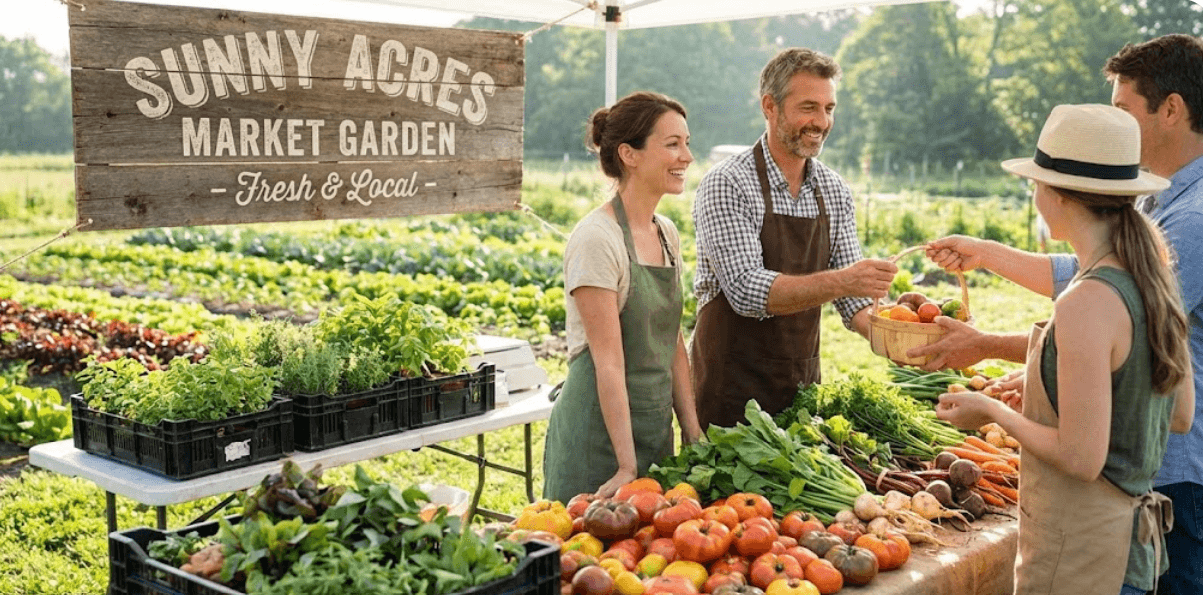
Community Supported Agriculture (CSA) represents a grassroots rejection of that entire broken cycle. It is not merely a trendy vegetable delivery service or a high-end gourmet produce subscription. A CSA is a profound, localized compact between eaters and growers. It reconnects consumers directly to the living soil of their home bioregion, aligning family diets with seasonal biology, natural weather cycles, and the real financial needs of independent family farms.
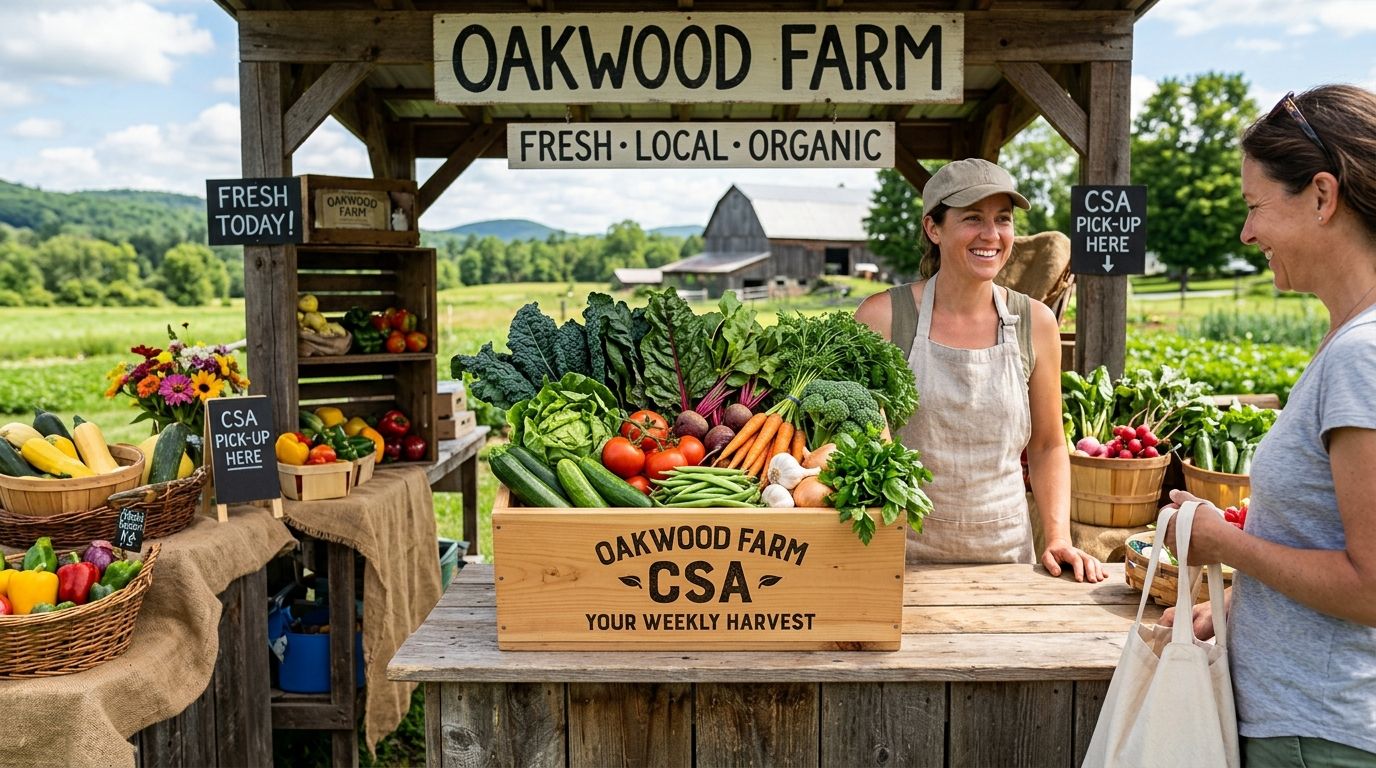
When you purchase a farm share, you step out of the anonymous global food machine. You decide that fresh food should have dirt on its roots, a face behind its harvest, and an honest story behind its production.
1. Historical Origins: From Post-War Japan to North American Fields
Community-supported farming was not invented by modern marketing agencies in the 1990s. The model emerged independently across multiple continents as small family farmers sought survival strategies against the tide of industrial agribusiness consolidation.
The Japanese Teikei Movement
In the 1960s and early 1970s, Japanese agricultural landscapes underwent rapid industrialization. Chemical inputs multiplied, farmland fell to commercial sprawl, and food imports soared. Alarmed by pesticide residues and the disappearance of small family farms, a coalition of concerned Japanese mothers approached nearby organic growers with a revolutionary proposition.
They offered to guarantee the farmers' livelihood by purchasing their harvests directly, provided the growers abandoned synthetic chemicals and farmed organically. This mutual pact was termed Teikei, which translates literally to "cooperation" or "partnership." Philosophically, participants defined Teikei as "food with the farmer's face on it."
The Teikei philosophy recognized that urban consumers could not expect clean, unpoisoned food while abandoning farmers to economic ruin. If consumers wanted clean water, living topsoil, and safe produce, they had to share the financial responsibilities of stewarding the land.
Dr. Booker T. Whatley and Clientele Membership Clubs
Simultaneously in the American South, Dr. Booker T. Whatley, an influential agricultural professor and horticulturist at Tuskegee University in Alabama, was developing direct-market systems to save small Black family farms from foreclosure. During the 1960s and 1970s, Whatley recognized that small-acreage family farms could never survive if they attempted to play the wholesale commodity game against massive, heavily subsidized agribusinesses.
Whatley outlined a systematic plan for small-scale agrarian prosperity. He urged farmers to establish a 25-acre diversified farm growing high-value fruits, berries, and vegetables, supported by what he called a "Clientèle Membership Club." In Whatley’s model, local households paid an upfront annual membership fee in early spring. This fee provided the farmer with vital working capital before planting started. In exchange, club members visited the farm to harvest their own produce at discounted rates, or collected pre-picked boxes directly from the packing shed.
Dr. Whatley's brilliant framework pioneered several core principles of modern CSAs: upfront member capital, diversified high-value crop succession, zero wholesale middlemen, and direct community loyalty.
Indian Line Farm and Temple-Wilton Community Farm
The term "Community Supported Agriculture" was officially introduced to North America in 1986. Two distinct projects on the East Coast catalyzed the movement almost simultaneously: Indian Line Farm in South Egremont, Massachusetts (founded by Swiss biodynamic grower Jan Vander Tuin, local farmer Robyn Van En, and community organizer John Root Jr.), and Temple-Wilton Community Farm in Wilton, New Hampshire (led by Anthony Graham, Lincoln Geiger, and Trauger Groh).
Drawing inspiration from European biodynamic farming and community-shared economics, these pioneers formalized the concept of selling seasonal "shares" of the farm's anticipated harvest. Robyn Van En became a tireless national advocate, writing manuals, hosting workshops, and demonstrating how upfront community funding could protect small growers from crippling bank interest. The Robyn Van En Center at Wilson College remains a vital academic repository documenting this rich history and the ongoing proliferation of community-based farm shares across North America.
2. The Core Philosophy: Shared Risk and Shared Bounty
To truly understand a CSA, one must set aside the transactional mindset of modern retail shopping. In a supermarket, you hand over money for a static widget; if the shelf is empty, you simply complain or buy another brand. In a CSA, you become a stakeholder in a living biological enterprise.
The Debt Cycle of Traditional Agriculture
To appreciate what a CSA accomplishes, consider the financial rhythm of a conventional market grower operating without upfront community support.
Come January and February, long before any crop can be harvested, a commercial vegetable grower faces staggering expenses:
- Bulk seed orders from organic seed houses
- Truckloads of certified organic compost and potting media
- Replacement greenhouse heating fuel and drip irrigation lines
- Greenhouse seed trays, nursery supplies, and row cover fabric
- Equipment maintenance, tractor repairs, and commercial insurance premiums
In a conventional wholesale or retail farmers market model, the grower has zero revenue coming in during these freezing winter months. To buy seeds and pay farmhands, they must take out an operating line of credit from an agricultural bank or rack up steep credit card debt. They carry that interest-bearing debt through March, April, and May, working eighty-hour weeks in the mud while praying that nothing goes wrong.
Then summer arrives. If a severe hailstorm hits in June, if a sudden drought dries up the irrigation pond, or if a late frost wipes out early plantings, the grower absorbs the entire financial catastrophe alone. The crop is lost, yet the bank loans remain due. This brutal reality forces thousands of small family farms out of business every decade.
Flipping the Financial Script
A CSA completely inverts this predatory economic cycle.
In January and February, when the farm’s bank accounts are drained from winter maintenance, loyal community members purchase their seasonal shares. That influx of cash gives the grower debt-free working capital precisely when they need it most. They purchase seeds in bulk, secure high-grade potting soil, service machinery, and retain skilled farm labor without paying thousands of dollars in commercial loan interest.
In return, the community receives an unbroken pipeline of seasonal nutrition harvested at peak botanical maturity from May through October.
Conventional Farming:
[Grower Takes Bank Debt] ➔ [Buys Inputs] ➔ [Bears 100% Weather Risk] ➔ [Sells to Wholesalers at Margin]

CSA Model:
[Community Funds Share Upfront] ➔ [Debt-Free Inputs] ➔ [Shared Ecological Risk] ➔ [100% Food Dollars to Farmer]
The Reality of Shared Risk
Shared risk is not an abstract slogan; it is a practical agrarian truth. When hail batters the high tunnel or a stubborn outbreak of tomato hornworms damages the first wave of heirloom slicers, the grower does not face imminent financial ruin. Members understand that natural fluctuations occur. If the slicing tomatoes struggle for two weeks, the weekly box compensates with mountains of sweet corn, tender green beans, and crisp cucumbers.
The Triumph of Shared Bounty
When growing conditions turn ideal, the equation swings joyfully in the members’ favor. If summer delivers gentle soaking rains and long warm days, the farm overflows with abundance. During bumper weeks, harvest boxes grow heavy with premium heirloom varieties, fragrant sweet melons, sweet peppers, and armloads of fresh culinary herbs that would command astronomical prices at high-end specialty grocery stores.
The grower never worries about commercial oversupply crashing market prices; the bounty goes directly to the families who funded the seed.
3. Economics of the Direct-to-Consumer Supply Chain
The economics of industrial food distribution are designed to extract wealth from rural farming communities and deliver it to corporate intermediaries.
The Collapse of the Middleman
According to historical data from the USDA Economic Research Service, the actual farmer receives roughly 14 to 16 cents of every dollar consumers spend on food in grocery stores. The remaining 84 to 86 cents is swallowed whole by commercial middlemen: brokers, corporate freight lines, cold-storage warehouse operators, packaging processors, marketing firms, and grocery chain markups.
In a CSA, this bloated distribution web evaporates:
- The grower plants the crop.
- The farm crew harvests, washes, and bundles the produce.
- The food is packed into durable, reusable harvest crates.
- The member collects the share directly at the farm gate or neighborhood drop point.
Because intermediate handlers are eliminated, the grower captures nearly 100% of the consumer's food dollar. This margin allows a small market garden operating on just two or three acres of intensive permanent beds to generate a viable livelihood. Conversely, a wholesale grower shipping to industrial distribution hubs often requires hundreds of acres of monoculture just to cover debt service.
Evaluating Dollar-for-Dollar Value
Consumers frequently ask whether a CSA share makes financial sense compared to standard grocery store shopping. The answer depends entirely on what standard you use for comparison.
If you compare a CSA box to mass-market, chemically treated produce imported from overseas and purchased at a discount warehouse, the CSA share carries a higher initial price tag. That warehouse produce, however, was grown in depleted soil, picked prematurely, and stripped of vital phytonutrients through weeks of refrigerated transport.
When compared against equivalent certified organic, locally sourced produce purchased at premium specialty grocers, a CSA share offers remarkable financial savings. By committing capital upfront, members essentially secure wholesale pricing on elite-tier culinary ingredients. To explore exact mathematical breakdowns of retail replacement value versus farm share costs, read our thorough analysis in CSA vs. Grocery Store: Is a Farm Share Worth the Cost?.
4. Ecological Impact: How Farm Shares Restore Living Soil
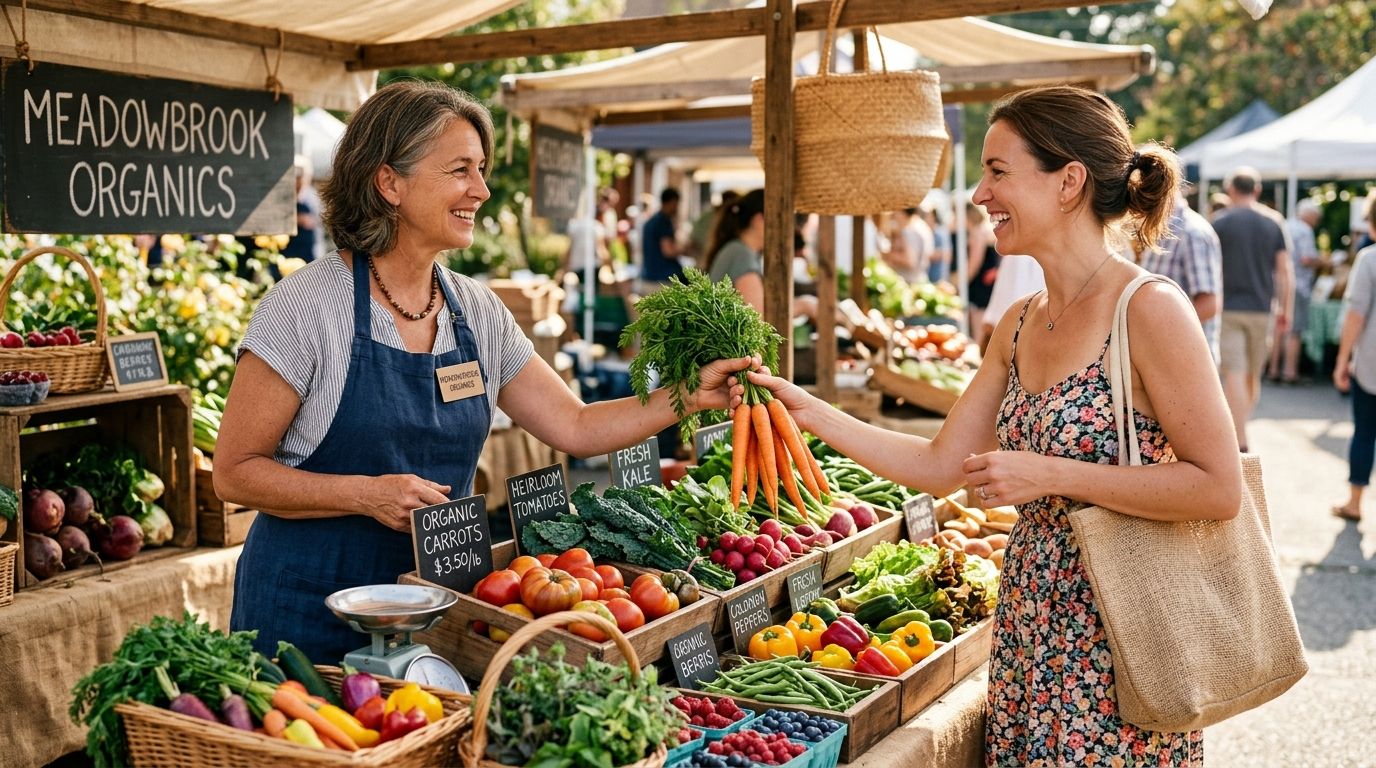
When you write a check to a local CSA farm, you are not merely purchasing dinner; you are directly financing ecological regeneration within your local watershed.
Polyculture vs. Industrial Monoculture
Industrial agriculture operates on monoculture—vast expanses of a single genetic crop stretched over hundreds of contiguous acres. In biological terms, a monoculture is an ecological wound. It strips the soil profile of specific micronutrients while serving as an open invitation for specialized insect pests. Because natural predators have nowhere to live in a barren field of single-crop corn or soybeans, pest populations explode, requiring relentless applications of synthetic insecticides and chemical herbicides.
A productive small-scale CSA farm is the exact antithesis of a monoculture. To supply members with diverse weekly boxes across a twenty-week season, a market grower must cultivate between 40 and 60 distinct plant varieties within a compact footprint.
On a single acre, you will find:
- Deep-rooted taproots (parsnips, carrots, daikon radishes) breaking open compacted subsoil
- Shallow, heavy feeders (lettuces, scallions, brassicas) cycling topsoil fertility
- Nitrogen-fixing legumes (snap peas, pole beans) hosting symbiotic mycorrhizal colonies
- Flowering insectary borders (sweet alyssum, dill, fennel, borage) feeding beneficial parasitic wasps
This incredible botanical diversity creates a stable, self-regulating biological system. Pests encounter natural physical barriers and confusing scent trails, while predatory ground beetles and lacewings find year-round nesting habitats.
Investing in the Soil Food Web
Wholesale growers operating on razor-thin margins frequently treat soil like inert dirt—a physical medium used simply to prop up roots while synthetic chemical fertilizers are pumped into the irrigation lines.
CSA growers, by contrast, depend on long-term biological vitality. They know that exceptional flavor, crisp texture, and pest resistance stem directly from an active soil microbiome. Rather than relying on chemical drenches, regenerative growers apply generous top-dressings of thermal compost, mineral-rich worm castings, and organic mulches.
When summer crops finish their productive runs, growers immediately sow Quick-Kill Winter Cover Crops to blanket bare ground, suppress opportunistic weed seed banks, and build active root channels deep into the earth. Through continuous organic additions and low-till management, CSA acreage functions as a net carbon sink, drawing atmospheric carbon down into dark, sponge-like humus that retains critical rainfall and prevents agricultural runoff into local rivers.
5. The Member Experience: Cultivating Culinary Flexibility
Joining a CSA requires a fundamental, refreshing shift in how your household approaches home cooking. It forces you to abandon the sterile predictability of industrial shopping and embrace the spontaneous rhythms of living soil.
The Art of Cooking Backward
Most modern home cooks practice "forward cooking." They browse a glossy cooking website on Sunday morning, pick an intricate recipe calling for asparagus and fresh basil in the middle of a freezing November gale, make a rigid grocery list, and drive to the supermarket to buy those ingredients regardless of seasonality or environmental cost.
CSA members quickly master the joyful art of "cooking backward." You open your weekly harvest crate on Tuesday afternoon, empty the fragrant contents onto your kitchen counter, and let the soil dictate your weekly menu.
Industrial Kitchen Pattern:
[Find Recipe Online] ➔ [Demand Specific Out-of-Season Items] ➔ [Purchase Mealy Imported Produce]

Regenerative CSA Pattern:
[Unpack Farm Crate] ➔ [Assess Fresh Ingredients] ➔ [Select Basic Technique: Roast, Sauté, Braise]
You might find yourself unpacking vegetables you have never encountered in a grocery aisle:
- Tender purple kohlrabi with crisp, sweet turnip-like flesh
- Curled garlic scapes packed with delicate, pungent flavor
- Golden Chioggia beets with candy-striped interiors
- Frilly mizuna greens carrying a spicy, peppery kick
Cooking backward teaches you foundational culinary methods rather than rigid recipes. You discover that virtually any tender green—whether it is Swiss chard, tatsoi, or beet greens—can be gently wilted in extra-virgin olive oil with minced garlic and a pinch of sea salt. You learn that any assortment of root vegetables can be tossed in melted butter, seasoned with fresh thyme, and roasted on a sheet pan at 400°F until caramelized and tender. For home cooks stepping into this agrarian journey for the first time, our practical First-Time CSA Member Guide provides essential pantry survival strategies.
The Flow of Seasonal Boxes
If you follow what comes in a CSA box month-by-month, you will notice that the physical density and composition of your crate mirrors regional weather transitions.
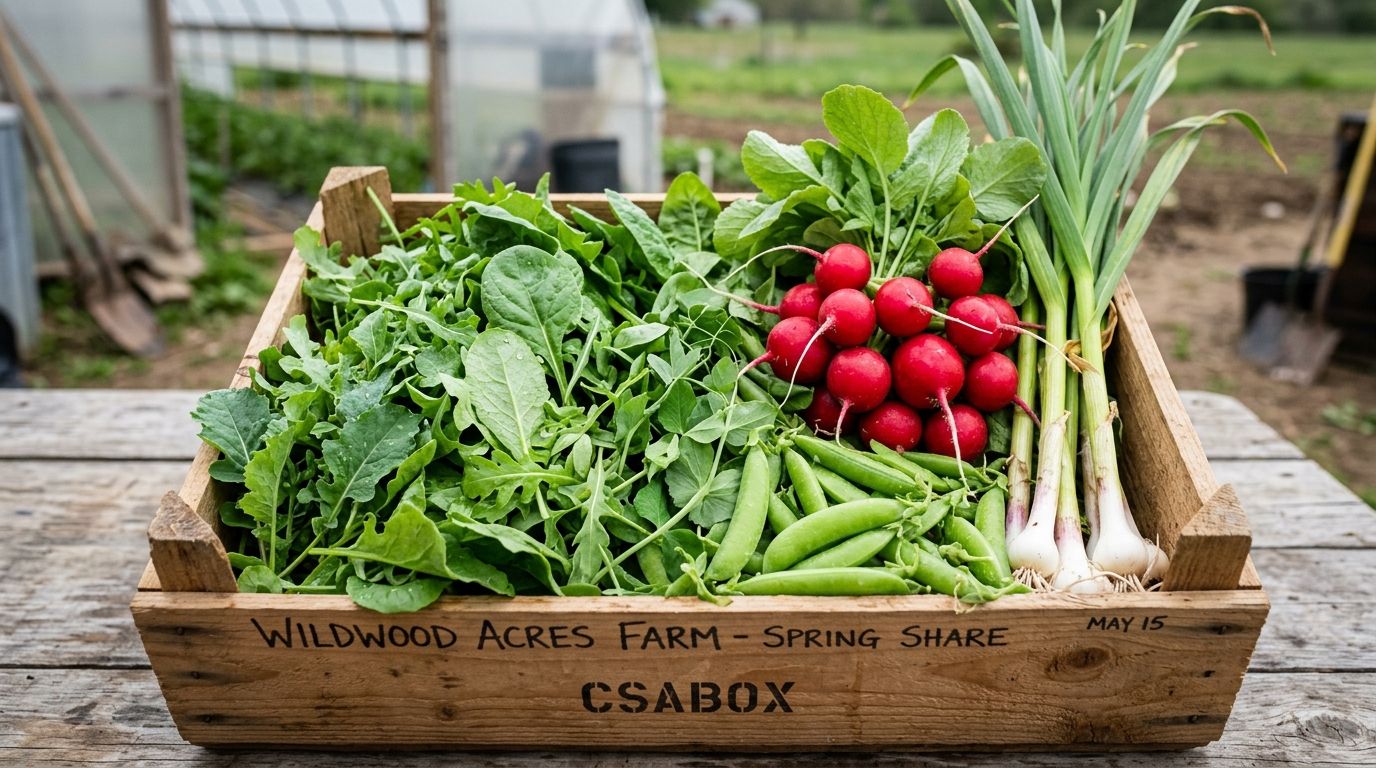
- Spring (May through June): Crate weights are light and delicate. Contents center on crisp salad greens, peppery radishes, tender scallions, baby carrots, and sweet sugar snap peas. These crisp greens cleanse the palate after heavy winter meals.
- Summer (July through August): Crates become bursting, water-dense, and heavy. The kitchen fills with sweet corn, slicing cucumbers, tender summer squash, aromatic sweet peppers, and mountains of multicolored heirloom tomatoes ripening on the windowsill.
- Fall (September through October): Crates transform into dense storage staples. Harvests shift toward sweet sweet potatoes, butternut squash, hearty storage onions, crisp fall brassicas, and frost-kissed kale sweetened by dropping night temperatures.
6. Structural Variations: Exploring Diverse CSA Models
As community-supported agriculture expanded over four decades, growers developed diverse operating models to suit different community demographics and farming styles.
1. The Traditional Pre-Boxed Share
This is the historic baseline model. Farm crews harvest crops on Monday, wash and pack them on Tuesday morning into uniform waxed cardboard crates, and deliver them to designated neighborhood depots. Members show up within a specific time window, grab their assigned box, and transfer the contents into reusable cloth bags.
- Pros: Highly streamlined for farm labor; allows growers to calculate harvest quotas down to the single bunch.
- Cons: Offers zero customization for members. If someone in your household dislikes radishes or turnips, those items remain in your box unless you trade with another member at the pickup site.
2. Market-Style (Free Choice) Share
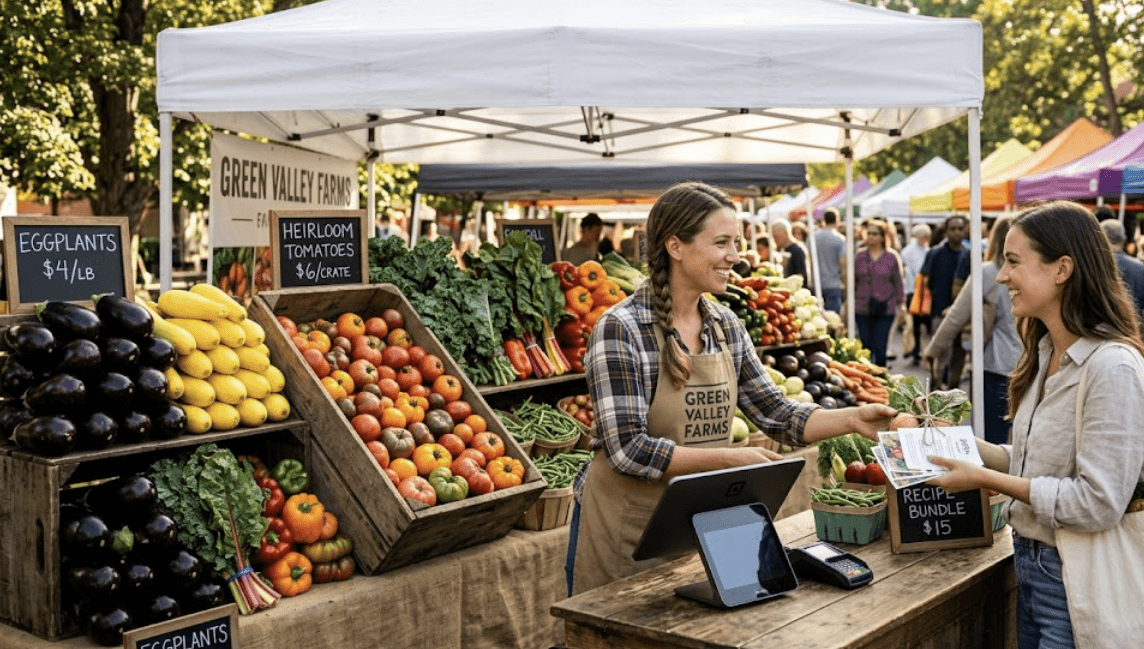
To solve member pickiness and reduce domestic food waste, many progressive market gardens offer "Market-Style" distribution. Instead of pre-packing boxes, the farm sets up long display tables laden with bulk harvest baskets, resembling a private farmers market stall.
A chalkboard sets weekly allotments based on household share size:
- Take 1 bag of greens (choice of spinach, arugula, or spicy mix)
- Take 3 root bunches (choice of carrots, beets, or radishes)
- Take 4 summer items (mix and match zucchini, cucumbers, or eggplants)
Members pick precisely what their families enjoy eating, leaving unwanted items behind for others. This format drastically increases season-long member retention, though it requires additional staffing and space at pickup depots.
3. The Working Share
Historically popular on cooperative and educational farms, working shares offer deep discounts (or fully free shares) to members who contribute physical labor to the farm each week. A member might commit to four hours of hand-weeding carrot beds or washing greens on harvest mornings.
Grower Advisory: Commercial growers implementing working shares must maintain strict legal boundaries under federal and state employment laws. Uncompensated volunteer labor on for-profit agricultural enterprises can trigger severe regulatory penalties. Read our comprehensive guide on CSA Legal and Permitting Considerations to maintain complete legal compliance.
4. Multi-Farm Cooperatives
In agricultural regions where land access is limited or growers specialize heavily in specific enterprises, multiple farms frequently join forces. A vegetable market gardener, a heritage orchardist, an artisan sourdough baker, and a pastured egg producer form an aggregated cooperative CSA.
Members receive unparalleled dietary variety in a single weekly pickup, while individual producers focus on their core agrarian strengths without having to manage livestock, orchards, and market garden beds simultaneously. Discover how growers structure these partnerships in our guide to Multi-Farm CSAs.
7. Behind the Scenes: Enterprise Planning and Succession Math
Running a successful CSA is an immense logistical feat that demands razor-sharp horticultural planning. To supply 75 families with a dozen diverse items every week for twenty weeks without interruption, a market grower cannot simply plant a garden and hope for the best.
The Bed-Foot Metric
Professional market growers plan their acreage using the "bed-foot" metric. A standard biointensive market bed measures 30 inches wide by 50 or 100 feet long.
For every crop, the grower calculates:
- Target yield per linear bed-foot (e.g., 0.5 pounds of baby salad mix per bed-foot per cut).
- Number of portions required per week (e.g., 75 bags of salad mix for 75 members).
- Total bed-feet needed to generate that yield (75 bags × 0.5 lbs = 37.5 lbs ÷ 0.5 lbs/ft = 75 linear bed-feet).
- Buffer factor (adding 20% to 30% additional bed-feet to absorb insect pressure, weather events, or deer browsing).
Unbroken Succession Sowing
If a grower direct-sows an entire 100-foot bed of French Breakfast radishes in early April, those radishes will all reach peak maturity across a narrow four-day window in early May. If the farm has 50 members, the grower will harvest 300 radishes, give each member six radishes, and watch the remaining 200 radishes turn woody, pithy, and bitter in the ground. Worse yet, the farm will have zero radishes for the next three weeks.
To prevent harvest gluts and shortages, CSA growers utilize tight succession planting schedules:
Radish Succession Schedule:
Bed 1A: Sown April 5   ➔ Harvest May 3-7
Bed 1B: Sown April 15  ➔ Harvest May 13-17
Bed 1C: Sown April 25  ➔ Harvest May 23-27
Bed 1D: Sown May 5     ➔ Harvest June 2-6
By sowing smaller batches every 10 to 14 days, the grower creates a continuous harvest stream. This disciplined scheduling applies across all quick-turn crops, including lettuces, cilantro, scallions, sweet corn, and bush beans.
8. Making the Decision: Is a CSA Right for Your Household?
While community-supported agriculture is an inspiring model, it is not the ideal choice for every household. An honest self-assessment before writing a check protects both your family's budget and the grower's member retention rate.
A CSA Is Ideal For:
- Dedicated Home Cooks: Households that prepare fresh meals from scratch four to six nights per week and enjoy experimenting with varied produce.
- Adventurous Eaters: Families eager to try unfamiliar heirloom crops and willing to adjust weekly dinners to match garden availability.
- Values-Driven Eaters: Consumers who place high value on local food sovereignty, organic soil stewardship, zero pesticides, and humane farm compensation.
- Preserving Enthusiasts: Gardeners and cooks who love home canning, lacto-fermentation, freezing, and dehydrating summer bumper crops.
A CSA May Challenge You If:
- You Dine Out Frequently: If your household eats at restaurants four nights a week, your weekly farm box will inevitably wilt in the crisper drawer, generating guilt and wasted money.
- You Demand Complete Menu Control: If your household insists on eating precise, unchanging recipes every week regardless of regional season, the natural variety of a farm box will cause frustration.
- You Travel Extensively: If family members take multiple multi-week summer vacations, you will struggle to collect and process shares unless generous neighbors step in to take your pickup.
Pro-Tip for Beginners: The Split Share
If you want to experience the magic of locally grown produce but worry about handling 10 pounds of fresh vegetables every seven days, find a coworker, friend, or neighbor to split a full share with you.
One family takes the box on odd weeks; the other takes it on even weeks. Or better yet, unpack the crate together every Tuesday evening over a glass of iced tea and divide the harvest down the middle. Splitting lowers your upfront cost, halves your kitchen preparation volume, and builds community right around your kitchen table.
Conclusion: A Radical Act of Local Food Sovereignty
In an era defined by anonymous corporate conglomerates, fragile global logistics, and heavily processed food products, joining a Community Supported Agriculture program is an affirmative, radical act.
When you hand a check to a market grower in the freezing quiet of February, you cast a powerful vote for the future of your bioregion. You decide that prime farmland should stay open and productive rather than be bulldozed for suburban asphalt. You decide that topsoil should be enriched with living biology rather than sterilized with synthetic chemicals. You decide that the farmer who bends their back in the summer sun deserves an honest, dignified livelihood.
There will be weeks when the dirt on your leeks takes extra time to scrub, and there will be evenings in late July when you stare down five pounds of green zucchini with mild culinary panic. But when you bite into an intensely fragrant, sun-warmed Cherokee Purple tomato that was harvested only four hours earlier, you will know the difference. You will taste the living soil, the clean water, and the genuine care that went into every bite. You will understand that real food does not come from a supply chain—it comes from a community.
Expert Insights & FAQs
What happens if I go on vacation and miss my CSA pickup?
Most farms encourage members to have a friend, coworker, or neighbor collect the share on their behalf. If a box is left unclaimed after the designated pickup window, growers typically donate the produce to local food banks or community kitchens to ensure zero harvest waste. Due to perishable harvest planning, farms generally do not issue refunds or double-pack subsequent boxes.
Do CSAs only offer vegetables, or can members get add-ons?
While diversified vegetables form the backbone of most farm shares, many growers partner with neighboring producers to offer optional add-on shares. Popular options include pastured eggs, artisanal sourdough bread, raw local honey, heritage orchard fruit, cut flower bouquets, and ethically raised pastured meats.
What is the difference between a half-share and a full-share?
A full share is designed to supply vegetable needs for a household of three to four individuals, or two enthusiastic vegetable-focused home cooks, providing roughly 8 to 12 items weekly. A half share is calibrated for one to two adults, providing 5 to 7 seasonal items. Beginners are usually advised to start with a half share to prevent kitchen overwhelm.
Can I customize or swap vegetables in my weekly box?
In traditional pre-boxed CSAs, contents are fixed based on what fields yield that week. However, market-style CSAs permit members to choose preferred items from display bins up to weekly point limits, and many farms provide a community 'swap box' at drop sites for trading unwanted varieties.
Is CSA produce always certified organic?
Not all CSA operations hold third-party USDA Organic certification due to annual audit costs and bureaucratic administrative burdens for small acreages. However, the vast majority utilize strict biological, chemical-free, regenerative standards that meet or exceed certified organic criteria. Asking your grower directly about their soil and spray practices is always welcomed.
How does the shared risk concept work if extreme weather ruins a crop?
When catastrophic weather events like late frosts or severe hailstorms strike, members absorb part of the ecological reality through reduced volume of specific affected crops. Diversified growers mitigate this by planting dozens of cultivars, ensuring resilient crops like greens or root vegetables balance out temporary setbacks.
What is the typical weekly cost breakdown of a farm share?
Most vegetable CSA shares average between $25 and $40 per week over an 18 to 24-week season, translating to an upfront investment between $500 and $900. When compared pound-for-pound against equivalent locally grown organic produce at specialty grocers, members generally realize a 20% to 30% savings.
How long does a standard seasonal CSA membership run?
A standard primary season CSA typically runs for 18 to 22 weeks, spanning late spring through mid-autumn (typically May through October in temperate zones). Many farms also offer dedicated winter greens or storage crop shares extending into November and December.
Johnnie McCormick
Zone 7b/8a - North Central Alabama
Johnnie McCormick is a gardening hobbyist and the founder of My Garden Spot. Raised in north-central Alabama, his passion for gardening began in his youth. In 2008, he established a large market garden, teaching himself high-yield growing methods. In the years since, he has operated seasonal seedling sales for transplants, specializing in heirloom tomatoes, peppers, eggplants, decorative ground covers like Ajuga (Bugleweed), marigolds, nasturtiums, and fresh kitchen-window herb arrangements (basil, cilantro). Today, he gardens in the hills between Birmingham and Jasper, Alabama (Zone 7b/8a), sharing practical, community-focused gardening resources.
Verified Authoritative Citations & References
In alignment with our strict E-E-A-T research and verification guidelines, this guide cross-references data from the United States Department of Agriculture (USDA) and Cooperative Extension Service programs.
- USDA Agricultural Marketing Service (AMS): Community Supported Agriculture (CSA) standards and local market surveys. ams.usda.gov
- Penn State Extension: Small Farm Economics, financial planning, and crop pricing research documents. extension.psu.edu
- Cornell Cooperative Extension: Market gardening business planning and local sales guidelines. smallfarms.cornell.edu
- Alabama Cooperative Extension System (ACES): Local food regulations, CSA legal permits, and farm safety standards. aces.edu

Please log in to view comments.