Multi-Farm CSAs: Creating Cooperative Supply Chains with Local Growers

How Do You Build a Multi-Farm CSA and Cooperative Supply Chain with Local Growers?
You have pushed your market garden to its physical limit.
Every bed is prepped, every succession planting is timed down to the calendar day, and you are pulling $70,000 to $80,000 in gross sales from a single cultivated acre. Your Community Supported Agriculture (CSA) membership is completely sold out. In fact, you have sixty people on a waiting list, cash in hand, asking when they can get a weekly share of fresh local produce.
The problem? You do not have another square foot of land to give them.
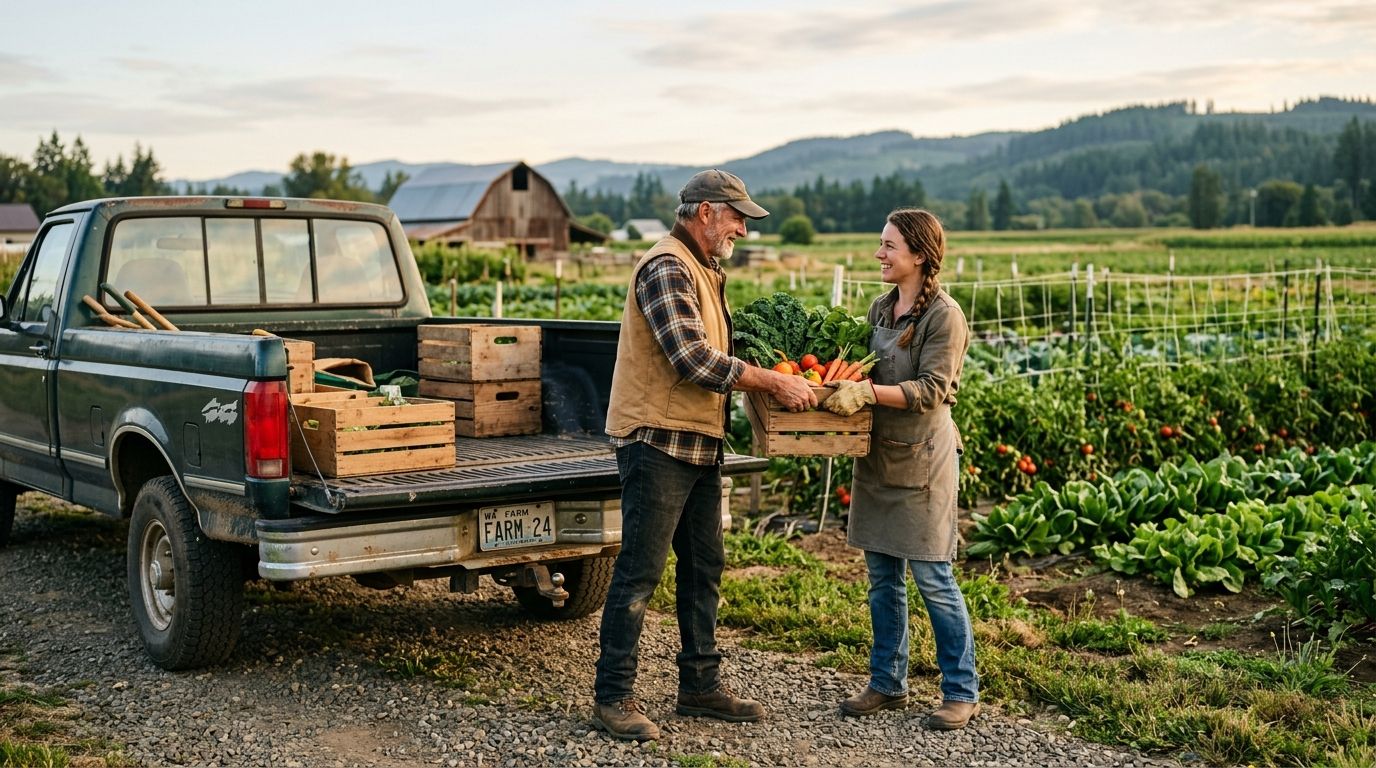
You face a tough choice. You can turn those sixty families away, leaving thousands of dollars on the table and watching potential customers head right back to corporate grocery stores. Or, you can expand your supply chain by teaming up with other growers in your county to build a multi-farm cooperative CSA.
When you operate alone, other nearby farms can feel like competition for the same farmers market customers. But when you look at them as supply chain partners, your business changes completely. Teaming up solves the three biggest headaches in small-scale farming: land ceilings, crop failure vulnerabilities, and limited crop selection.
I learned this the hard way in north-central Alabama. Running a solo market garden since 2008 taught me that trying to grow forty different vegetable varieties simultaneously burns out the grower and strains the farm. When you specialize in the crops your soil grows best and let neighboring growers supply the rest, your entire local food community thrives.
1. The Solo Farmer Ceiling: Why One-Acre Operations Hit a Wall
Every solo market gardener hits an operational wall.
It usually happens in year three or four. You have mastered intensive bed turnover, dialled in your drip lines, and built a loyal customer base. But you run straight into three harsh agronomic and economic constraints:
THE SOLO FARMER BOTTLENECK

  [ 1. Acreage Ceiling ] --------> No physical room to expand crop volume
  [ 2. Crop Complexity ] --------> Trying to master 40 crops leads to slip-ups
  [ 3. Monoculture Diet ] -------> Veggie-only boxes prompt high member churn
The Complexity Trap
Growing high-quality vegetables requires intense focus. Crisp salad greens require hydro-cooling and overhead misting. Ripe heirloom tomatoes demand pruning, trellis stringing, and careful fungal management. Sweet corn takes up huge space and requires tractor cultivation.
When a solo grower tries to supply all of these crops alone, quality drops. The tomatoes get leaf blight while you are busy weeding the carrots. The sweet corn gets decimated by earworms while you are harvesting head lettuce.
By contrast, a network of three or four farms allows each grower to specialize. One grower with sandy bottomland focuses on clean root crops. A grower on a hillside bench focuses on trellised nightshades and melons. A third grower with tractor acreage handles space-heavy crops like winter squash, sweet corn, and sweet potatoes. Specialization drives up crop quality, lowers labor costs, and keeps yields high across the board.
Member Turnover from "Vegetable Fatigue"
The average single-farm vegetable CSA suffers an annual customer turnover rate of 35% to 50%.
Why do members quit? It is rarely about produce quality. It is about practical lifestyle reality. A standard CSA box contains vegetables—and only vegetables.
A family gets home with their wooden crate of kale, kohlrabi, radishes, and turnips. They still have to get in their car and drive to the supermarket to buy apples, eggs, cheese, butter, honey, and meat. After four months of washing sandy greens and feeling guilty about unused radishes rotting in the crisper drawer, they cancel their membership.
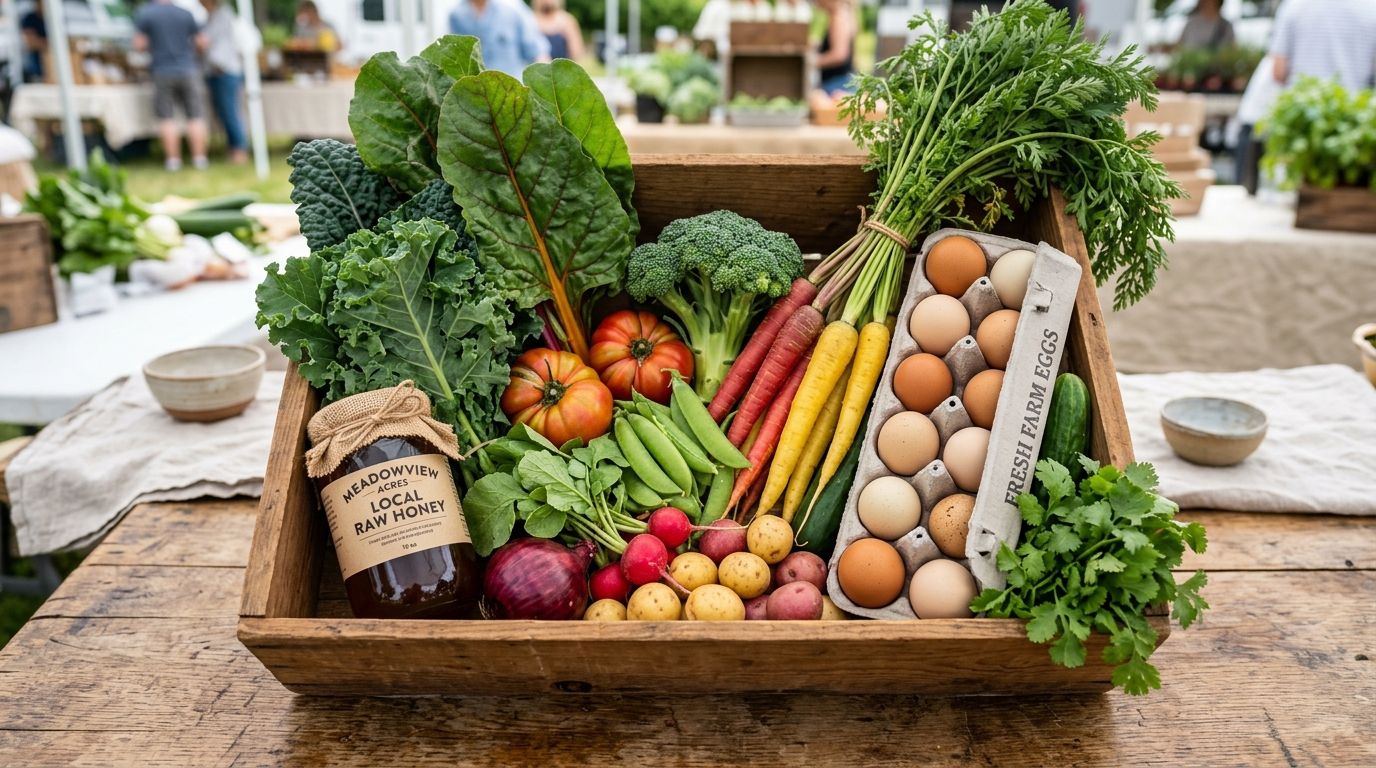
A multi-farm CSA changes the game. By aggregating goods from orchards, pastures, and apiaries, you turn your box from a simple vegetable box into a complete household diet replacement.
2. Choosing Your Structure: Lead Farm vs. Producer Cooperative
Before selling a single multi-farm subscription, you must pick a business structure. The structure determines who holds legal liability, how money moves, and who makes daily executive calls.
+-------------------------------------------------------------------------------------------------------+
|                                  LEAD FARM VERSUS PRODUCER COOPERATIVE                                |
+--------------------------+------------------------------------+---------------------------------------+
| Operational Metric       | The Lead Farm Aggregator Model     | The Formal Producer Cooperative       |
+--------------------------+------------------------------------+---------------------------------------+
| Legal Entity             | Sole Proprietorship or Single LLC  | Agricultural Cooperative Corporation  |
| Brand Identity           | The Lead Farm's name and brand     | A unified co-op brand name            |
| Financial Structure      | Lead Farm buys wholesale & resells | Shared equity; patronage dividends    |
| Grower Payout Rate       | 75% to 80% of retail price         | Net wholesale pool after co-op costs  |
| Administrative Burden    | Shouldered entirely by Lead Farm   | Distributed across board and staff    |
| Legal Liability          | Borne 100% by the Lead Farm owner  | Shielded by cooperative legal entity  |
| Decision-Making Speed    | Instant; decided by Lead Farmer    | Slower; consensus or board voting     |
+--------------------------+------------------------------------+---------------------------------------+
Model A: The Lead Farm Aggregator
In this setup, your farm acts as the primary hub and public face of the business. The customer visits your website, pays through your merchant account, and picks up their box branded with your logo.
Behind the scenes, you act as an aggregator. You contract with neighboring farms to purchase specific crops at set wholesale rates.
- The Cash Flow: The customer pays $35 for their weekly box. You supply $15 worth of your own salad greens and tomatoes. You buy $6 worth of peaches from an orchard, $4 worth of sweet corn from a neighbor, and $3 worth of farm eggs from a pasture operator.
- The Margin: The remaining $7 (20% of retail) stays in your operating account. That margin pays for your cardboard boxes, credit card processing fees, delivery fuel, and packing labor.
- The Advantage: It is fast and flexible. You make business calls on the spot without needing board approval.
- The Risk: You carry the entire legal and financial burden. If a partner farm delivers poor-quality produce or a customer demands a refund, the loss comes directly out of your bank account.
Model B: The Formal Producer Cooperative
A true cooperative is a distinct business entity owned equally by all participating farm members.
Customers buy their seasonal shares from the cooperative itself. The co-op hires an administrative manager to handle marketing, customer emails, software logistics, and packing days.
Profits are returned to the farmers through patronage dividends based on the volume of produce each farm supplied throughout the season.
- The Advantage: Risk is shared equally across all members. If your tomato crop fails completely, the co-op covers the gap with tomatoes from another member farm. You do not face angry customers alone.
- The Challenge: High administrative requirements. You must draft formal bylaws, elect a board of directors, file annual cooperative tax returns, and hold regular meetings. For legal templates and structural guidance, consult the federal guidelines provided by USDA Rural Development Cooperative Services.
3. Crop Failure Insurance: How Aggregation Protects Your Income
Farming is inherently unpredictable. A hail storm in late May can wipe out twenty beds of tender bell peppers in ten minutes. A sudden outbreak of downy mildew can melt an entire stand of cucumbers overnight.
In a single-farm CSA, crop failure is an emergency.
You have to draft an apology email to your subscribers. You pack boxes that look sparse and sad, filled out with extra turnip greens because that is all you have left in the field. Members get frustrated. Some ask for partial refunds, and your seasonal retention rate takes a direct hit.
SINGLE FARM VS. MULTI-FARM FAILURE RESPONSE

SINGLE-FARM CROP FAILURE:
[Hail Destroys Farm A Cucumbers] ---> [Boxes Go Out Half-Empty] ---> [Customers Churn / Lose Trust]

MULTI-FARM AGGREGATION BUFFER:
[Hail Destroys Farm A Cucumbers] ---> [Farm B & C Increase Harvest Quota] ---> [Boxes Stay Full & Value Stays High]
The Portfolio Effect in Agriculture
In a multi-farm cooperative, crop failure is a manageable scheduling hiccup.
Because your member farms are spread across different microclimates and soil types, localized weather events rarely hit everyone at once. If your broccoli gets hit hard by harlequin bugs, your partner farm six miles north—who dodged that pest wave—steps in to supply the broccoli for that week.
This reliability is why aggregated CSAs retain subscribers at significantly higher rates. Customers care about supporting local family farms, but they also care about dependable meals for their families. By pooling farm output, you guarantee full, balanced boxes from opening week through autumn frost. To see how a consistent seasonal harvest box is structured across the year, compare our seasonal breakdown in what comes in a CSA box monthly harvest guide.
4. Building the Full Diet Box: Expanding Beyond Vegetables
If you want to raise your average customer value from $600 a season to $1,800 a season, you must expand beyond salad crops.
A typical household spends between $150 and $250 a week on food. A vegetable-only CSA captures only a tiny slice of that grocery budget (around $25 to $35). The rest of that money goes to eggs, dairy, fruit, bread, and proteins.
Partnering with specialized agricultural producers lets you capture that spending without turning your market garden into a chaotic barnyard.
+----------------------------------------------------------------------------------------------------+
|                                THE MULTI-FARM PRODUCT ECOSYSTEM                                    |
+--------------------------+-----------------------+-------------------------------------------------+
| Partner Enterprise       | Products Supplied     | Integration Format                              |
+--------------------------+-----------------------+-------------------------------------------------+
| Market Garden (Your Farm)| Greens, roots, herbs  | Core weekly produce box foundation              |
| Commercial Tree Orchard  | Peaches, apples, plums| Bi-weekly seasonal fruit share add-on           |
| Pasture Poultry Farm     | Pasture-raised eggs   | Weekly egg subscription add-on                  |
| Local Apiary             | Raw wildflower honey  | Monthly pantry dry-good inclusion               |
| Wood-Fired Bakery        | Sourdough loaves      | Weekly fresh-baked bread add-on                 |
| Grass-Fed Livestock Farm | Ground beef, bacon    | Monthly frozen protein bundle add-on            |
| Farmstead Creamery       | Raw cheeses, yogurt   | Bi-weekly artisan dairy share                   |
+--------------------------+-----------------------+-------------------------------------------------+
Structuring Add-On Subscriptions
Do not try to force every customer into buying a single, expensive $90 box that includes meat and dairy. Many customers are vegetarian, lactose intolerant, or on tight budgets.
Use the Core Box + Modular Add-On model:
- The Core Harvest Box ($30 - $35/week): A balanced mix of seven to ten seasonal vegetables and culinary herbs. Every subscriber buys this baseline share.
- The Fruit Share ($12/week): A three- to four-pound bag of tree fruit, berries, or melons sourced from local orchards.
- The Pasture Egg Share ($7/week): One dozen pasture-raised eggs delivered weekly in protective cardboard cartons.
- The Artisan Bread Share ($8/week): A loaf of fresh sourdough bread baked on packing morning by a local cottage baker.
- The Meat Box ($60/month): A five-pound frozen bundle of ground beef, pork chops, and pastured poultry delivered on the first pickup of each month.
This modular setup lets customers build their ideal weekly share. It increases your average customer spend while creating reliable wholesale revenue streams for your partner producers. For broader business setups on these membership structures, study our deep-dive pillar on the market garden business model.
5. Post-Harvest Logistics, Cold Chains, and Packing Ergonomics
The biggest operational challenge of running a multi-farm CSA is managing post-harvest temperature control and quality standards across multiple properties.
Vegetables do not care about cooperative goodwill. If a partner farm picks warm head lettuce at 2:00 PM in ninety-degree heat, throws the crates in the open bed of a pickup truck, and delivers them uncooled to your hub, those greens will turn to brown mush within thirty-six hours.
You must establish strict post-harvest standard operating procedures (SOPs) before receiving any outside produce.
THE MULTI-FARM POST-HARVEST LOGISTICS PIPELINE

[ FARM A: Harvest at Dawn ] ----> [ Immediate Cold Hydro-Dip: 38°F ]
                                             |
[ FARM B: Morning Pick ] -------> [ Walk-In CoolBot Storage ]
                                             |
                                             v
                         [ REFRIGERATED / COVERED TRANSIT ]
                                             |
                                             v
                           [ CENTRAL AGGREGATION HUB ]
                                             |
                    +------------------------+------------------------+
                    |                                                 |
             [ QUALITY INSP. ]                                 [ COLD PACK LINE ]
        Check temp, bunch weight,                         Fast assembly line:
        cleanliness & field heat                          Pack into waxed boxes
                    |                                                 |
                    +------------------------+------------------------+
                                             |
                                             v
                               [ TEMPERATURE-MONITORED ]
                               [ CUSTOMER PICKUP SITES ]
The Three Cold-Chain Rules
- Remove Field Heat Immediately: Every farm in the network must have the infrastructure to take field heat out of harvested crops within forty-five minutes of cutting. This means having clean cold-water hydro-cooling dunk tanks for leafy greens, or walk-in coolers running at 34°F to 38°F powered by CoolBot systems.
- Covered, Temperature-Controlled Transit: Crops cannot travel in open truck beds exposed to direct sun and highway wind. Partner farms must transport produce in enclosed vans, insulated camper shells, or covered utility trailers equipped with thermal moving blankets and ice packs.
- The Receiving Inspection: The hub manager must inspect every crate delivered to the packing floor. Check produce temperature with an infrared thermometer. Pull random bunches to check for dirt, aphids, or heat wilt. If a delivery fails quality standards, the hub manager must have the contractual authority to reject the shipment. Letting poor-quality produce slip into boxes ruins customer trust for every farm in the network.
Setting Up a Fast Pack Line
When you pack two hundred multi-farm boxes, you cannot afford to have people wandering back and forth across a barn floor.
Set up a straight assembly line on roller conveyors:
- Place empty waxed cardboard boxes or plastic returnable crates at the head of the line.
- Line up heavy, sturdy crops first: root bags, squashes, cabbage heads, and potatoes go in the bottom of the box.
- Place medium-weight items in the middle: peppers, zucchini, bunch carrots, and stone fruits.
- Place delicate items on top: tomatoes, salad greens, strawberries, fresh herbs, and egg cartons.
- Keep the entire packing area chilled below 55°F during packing hours to prevent delicate greens from wilting while workers box up orders.
6. Software Systems: Ditching Spreadsheets for Specialized Tools
Do not try to manage a four-farm aggregation network on an Excel spreadsheet.
Tracking what Farmer Sarah delivers on Tuesday, what Farmer Ben delivers on Wednesday, how many subscribers paused their share for vacation, and who needs gluten-free add-ons will consume your life. A simple formula error in a cell can cost you hundreds of dollars in missing payouts.
Modern aggregation runs on dedicated farm management platforms.
+----------------------------------------------------------------------------------------------------+
|                                    FARM AGGREGATION SOFTWARE PLATFORMS                             |
+--------------------------+-----------------------+-------------------------------------------------+
| Platform                 | Best Operational Fit  | Key Functional Features                         |
+--------------------------+-----------------------+-------------------------------------------------+
| GrownBy                  | Small Co-ops & Hubs   | Farmer-owned cooperative; low fees; simple UI   |
| Local Food Marketplace   | Mid-to-Large Hubs     | Complete inventory, lot-tracking & wholesale    |
| GrazeCart                | Meat & Protein Hubs   | Specialized catch-weight billing & cold shipping|
| Farmigo                  | Traditional CSAs      | Automated route logistics & member management   |
| Barn2Door                | Multi-Channel Farms   | Point-of-sale & online subscription sync        |
+--------------------------+-----------------------+-------------------------------------------------+
How Aggregation Software Works in Practice
- Inventory Commitment Windows: By Sunday evening, every partner farmer logs into the software portal from their phone and enters their harvest projections for the coming week (e.g., Farm A commits 150 bunches of curly kale; Farm B commits 80 pints of cherry tomatoes).
- Automated Order Compilation: The software cross-references inventory against active subscriber lists, automatically generating harvest pick-lists for each farmer by Monday morning.
- Traceability and Packing Lists: On Wednesday packing morning, the system prints custom packing sheets for every box, listing the exact items and add-ons for each subscriber.
- Automated Payout Accounting: When packing finishes, the hub manager checks in the final delivered counts. The software automatically calculates payouts, generates transparent vendor invoices, and routes payments directly to each farmer's bank account via ACH transfer.
7. Pricing Math and Payouts: Protecting Farm Margins
More cooperative farm efforts fall apart over messy accounting than bad weather.
If growers feel underpaid, or if the lead farm ends up working for free because administration costs ate the profit, resentment builds fast. You must settle your numbers before planting season begins.
THE RETAIL BOX BREAKDOWN ($35.00 SHARE)

+-------------------------------------------------------------------+
|  [ 75% FARMER PAYOUT POOL: $26.25 ]                               |
|  - Farm A (Greens & Roots): $12.50                                |
|  - Farm B (Sweet Corn & Squash): $8.25                            |
|  - Farm C (Orchard Fruit): $5.50                                  |
+-------------------------------------------------------------------+
|  [ 25% HUB ADMINISTRATIVE MARGIN: $8.75 ]                         |
|  - Cardboard Box & Packaging: $2.10                               |
|  - Software & Card Processing: $1.25                              |
|  - Hub Packing Labor & Fuel: $3.40                                |
|  - Retained Hub Reserve Fund: $2.00                               |
+-------------------------------------------------------------------+
The Standard 75/25 Margin Rule
The established industry standard for farm aggregation is the 75/25 rule:
- 75% Goes to the Growing Farm: The producer receives 75% of the agreed retail value for their graded, acceptable produce delivered to the hub dock. For example, if a head of organic romaine retails in the box for $3.50, the farmer receives $2.63.
- 25% Stays with the Aggregation Hub: The central hub retains 25% ($0.87 per head of lettuce) to cover operating overhead.
What That 25% Margin Must Cover
Do not assume that 25% margin is free profit for the lead farm. It covers essential operating costs:
- Packaging Materials: Waxed produce boxes, custom liners, and food-grade plastic bags cost between $1.75 and $2.50 per share.
- Credit Card & Software Fees: Payment gateways (Stripe, Square) and aggregation software platforms take 3% to 4% of gross transactions.
- Cold Storage Electricity: Running walk-in coolers constantly during high summer draws significant utility power.
- Hub Packing Labor: Paying two crew members $18 an hour for four hours to assemble boxes.
- Shrinkage Reserve: A 2% buffer to absorb occasional handling loss, dropped crates, or minor inventory mismatches.
If you operate on a razor-thin 10% administrative margin, the hub will lose money on every box it packs. Set realistic margins so the central operation remains financially sustainable year after year.
8. Grower Operating Agreements and Quality Standards
Never build a multi-farm network on a casual handshake.
A handshake will not protect your friendships when sixty pounds of cherry tomatoes arrive split and leaking juice all over your packing tables. You need a written Grower Operating Agreement signed by every participating farm before the season launches.
Critical Clauses Every Agreement Must Include
- Clear Crop Quotas and Timelines: The agreement must state exactly what crop, variety, and volume each farm is expected to deliver, broken down by week.
- Detailed Grade Standards: You must define what "acceptable" means. For carrots, specify bunch size (e.g., 5 to 7 roots per bunch, minimum 6 inches long, washed completely clean of dirt, tops trimmed to 2 inches). For tomatoes, specify ripeness stage (e.g., color stage 4 pink, zero growth cracks, zero blossom end rot).
- The Authority to Reject Produce: The hub manager must have the clear, documented right to reject sub-par produce at the receiving door without argument. If produce is rejected, the supplying farm is not paid for those units, and the farmer must either provide acceptable replacements within four hours or allow the hub to source alternatives from another grower.
- Growing Practices Pledge: While not all partner farms need formal USDA Organic certification, every farm must sign an enforceable pledge stating they do not use synthetic pesticides, herbicides, or non-approved fertilizers on crops destined for the cooperative boxes. For comprehensive legal guidelines on structuring these contracts, study our reference guide on CSA legal and permitting considerations.
9. Customer Transparency and Cooperative Storytelling
Customers love Community Supported Agriculture because it connects them directly with the human beings growing their food.
If your multi-farm box looks like an anonymous crate of grocery store vegetables, you lose that emotional connection. You must weave cooperative storytelling through every part of the member experience.
COOPERATIVE SHARE PROVENANCE SHEET (Sample Insert)

THIS WEEK'S HARVEST PARTNERS:
• Baby Salad Mix & Rainbow Chard: Sun Creek Farm (Johnnie McCormick, Jasper, AL)
• Bi-Color Sweet Corn & Summer Squash: Black Creek Farm (Cullman, AL)
• Freestone Peaches: Mountain View Orchard (Chilton County, AL)
• Farmstead Wildflower Honey: Sweet River Apiary (Walker County, AL)
- Include a Weekly Provenance Sheet: Tuck a small printed slip or newsletter into every box detailing which farm grew each item. When customers bite into a sweet peach, they should know the exact family orchard that picked it two days earlier.
- Host a Joint Farm Tour: Once a year, host an open-house farm tour rotating between your partner farms. Let members walk the fields, meet the pastured hens, and talk directly with the growers.
- Highlight Farmer Stories on Social Media: Feature short video spotlights of your partner farmers on your social feeds and weekly email newsletters. Show the faces behind the harvest. Transparency builds loyalty, keeps retention rates high, and helps customers see the true value when doing a CSA vs grocery store economic comparison.
10. Step-by-Step Roadmap: Launching Your First Multi-Farm Season
Ready to expand your local reach? Do not try to assemble a complex twelve-farm cooperative overnight. Start small, prove the concept, and build momentum systematically.
THE FOUR-PHASE LAUNCH ROADMAP

PHASE 1: THE TRIAD PILOT (Months 1 - 2)
• Partner with 2 trusted local growers specializing in complementary crops
• Run a 10-week pilot program capped at 30 to 40 members
                     |
                     v
PHASE 2: PROTOCOL REFINEMENT (Months 3 - 4)
• Dial in pack times, software pick-lists, and receiving dock grading SOPs
• Conduct formal post-season financial debriefs with all growers
                     |
                     v
PHASE 3: MODULAR EXPANSION (Months 5 - 8)
• Introduce optional fruit, egg, and bakery add-on subscriptions
• Scale marketing to clear waiting lists; expand membership to 80 - 100 shares
                     |
                     v
PHASE 4: FORMAL COOPERATIVE SCALING (Months 9 - 12)
• Evaluate formal co-op legal incorporation under state agricultural statutes
• Invest in dedicated cold-chain aggregation hub equipment & walk-in cooling
- Step 1: Identify Two Complementary Growers (The Triad): Pick two reliable local producers you already trust. Avoid partnering with direct competitors who grow the exact same crops in the same seasonal windows. Pair your vegetable market garden with an orchardist and an egg or root-crop producer.
- Step 2: Run a Small Pilot Season: Cap your first multi-farm effort at thirty to forty subscribers for an eight-to-ten-week run. Use this pilot to work out the kinks in your receiving schedules, bunch sizes, and software workflows.
- Step 3: Hold Post-Harvest Financial Reviews: At the end of the pilot, sit down with your partners and review the numbers openly. Did the 25% administrative margin cover the hub's expenses? Did the growers feel fairly compensated for their labor? Adjust prices and terms based on real-world data before scaling up.
- Step 4: Scale Carefully: Once your logistics run smoothly, open enrollment to your broader waiting list. Add artisan add-ons (bread, honey, cheese) and expand membership to 100 or 150 families. By growing steadily, you build a resilient, profitable, community-rooted food system that feeds your region for decades to come. For extra tips on moving surplus inventory during peak harvests, explore our practical guide on farmers market vendor tips for selling CSA excess.
Expert Insights & FAQs
What happens if one farm in a multi-farm CSA loses its crop?
The financial and product risk is spread across the entire partner network. When one grower loses a crop to extreme weather or localized pest pressure, other participating farms step in by increasing harvest quotas on alternative crops or substituting complementary vegetables. This prevents subscribers from receiving half-empty boxes and shields individual growers from total revenue collapse.
How are farmers paid in a multi-farm cooperative model?
Farmers receive a set wholesale payout (typically 75% to 80% of retail value) for the exact volume of graded produce accepted at the central packing hub. In a Lead Farm aggregator model, payments go out on bi-weekly or monthly ACH schedules. In a formal cooperative, farmers receive baseline wholesale payments followed by end-of-season patronage dividends based on total co-op profits.
Do all farms in the cooperative need to be organically certified?
No, formal USDA Organic certification is not universally required, but shared growing standards are mandatory. Participating farms must sign a legally binding operating agreement committing to agreed-upon growing practices (such as zero synthetic chemical sprays and strict no-till or low-spray regimens). Total transparency with subscribers about each farm's practices is critical.
Who manages customer service in a multi-farm CSA?
Customer service, subscriber communications, payment processing, and vacation hold management are handled centrally by the hub manager or designated cooperative administrator. This centralized structure shields individual farmers from administrative burdens, letting them focus entirely on field production and harvest quality.
How does a multi-farm CSA handle post-harvest logistics?
Participating farms harvest and cool produce on their own properties before transporting it in covered, temperature-controlled vehicles to a central aggregation hub. At the hub, the receiving manager inspects the produce for temperature, grade standards, and cleanliness before moving it into walk-in commercial coolers for packing on conveyor assembly lines.
Can an individual farm sell outside the multi-farm CSA?
Yes. Participating growers maintain their own farm identities, independent wholesale restaurant accounts, and weekly farmers market booths. The operating agreement only contractually commits the grower to fulfill their specific weekly volume quotas for the multi-farm box program.
What software is best for managing a multi-farm CSA?
Specialized agricultural aggregation platforms like Local Food Marketplace, GrownBy, Farmigo, and GrazeCart are standard choices. These platforms let individual farmers enter weekly harvest availability, automatically compile customer packing lists, track inventory lots, and automate wholesale vendor payouts without manual spreadsheets.
What is the ideal margin for an aggregation hub to cover costs?
The industry standard administrative margin is 20% to 25% of the gross retail box price. This margin covers the real operating costs of the central hub: waxed packaging cartons, merchant credit card processing fees, software subscriptions, walk-in cold storage electricity, packing labor, and a small reserve fund to absorb inventory loss.
Johnnie McCormick
Zone 7b/8a - North Central Alabama
Johnnie McCormick is a gardening hobbyist and the founder of My Garden Spot. Raised in north-central Alabama, his passion for gardening began in his youth. In 2008, he established a large market garden, teaching himself high-yield growing methods. In the years since, he has operated seasonal seedling sales for transplants, specializing in heirloom tomatoes, peppers, eggplants, decorative ground covers like Ajuga (Bugleweed), marigolds, nasturtiums, and fresh kitchen-window herb arrangements (basil, cilantro). Today, he gardens in the hills between Birmingham and Jasper, Alabama (Zone 7b/8a), sharing practical, community-focused gardening resources.
Verified Authoritative Citations & References
In alignment with our strict E-E-A-T research and verification guidelines, this guide cross-references data from the United States Department of Agriculture (USDA) and Cooperative Extension Service programs.
- USDA Agricultural Marketing Service (AMS): Community Supported Agriculture (CSA) standards and local market surveys. ams.usda.gov
- Penn State Extension: Small Farm Economics, financial planning, and crop pricing research documents. extension.psu.edu
- Cornell Cooperative Extension: Market gardening business planning and local sales guidelines. smallfarms.cornell.edu
- Alabama Cooperative Extension System (ACES): Local food regulations, CSA legal permits, and farm safety standards. aces.edu

Please log in to view comments.