The Social Capital of CSAs: Boosting Retention Through Newsletters and Farm Tours

The Social Capital of CSAs: Boosting Retention Through Newsletters and Farm Tours
So, you did it. You joined a Community Supported Agriculture (CSA) program. Visions of rustic, sun-kissed vegetables, hand-delivered by a farmer in overalls who probably knows the name of every chicken on the farm, danced in your head. Then the first box arrived. And inside, nestled between some friendly-looking carrots and a bunch of kale, was… something else. A spiky, purple orb that looked like an alien spacecraft. You poked it. It stared back, silently mocking your culinary ignorance. This, my friends, is the kohlrabi moment—a rite of passage for every CSA member. It's the moment you realize a CSA isn't just a grocery delivery service; it's an adventure, and sometimes, a bit of a puzzle.
But here’s the secret farmers know: the kohlrabi isn't the point. The kale isn't even the point. The point is the connection. The real, dirt-under-the-fingernails magic of a CSA lies not just in the food, but in the community built around it. We're talking about 'social capital'—a fancy term for the trust, relationships, and shared sense of purpose that turns a transactional exchange into a resilient, loyal community. In a world where you can get anything delivered to your door in two hours, the one thing you can't get is a genuine connection to where your food comes from. That's the CSA's superpower. This guide is for the farmers ready to harness that power, to move beyond just selling shares and start building a community so strong, no amount of mysterious kohlrabi can scare them away.
What Exactly is "Social Capital" in a CSA?
Social capital, in the context of a CSA, is the web of relationships, shared identity, and mutual trust connecting members to each other and to their farmer. It’s the invisible glue that transforms a group of individual customers into a cohesive community, fostering loyalty and a sense of shared investment in the farm’s success.
Think of your farm as a living organism. The vegetables are the delicious, tangible output, but the soil is the foundation for everything. Social capital is the rich, organic, life-giving soil of your CSA community. It’s not something you can easily measure in pounds or dollars, but you know it when you see it. It’s the member who organizes a carpool for pickup, the lively recipe-swapping in a Facebook group, and the genuine cheer that goes up when you announce the first tomato harvest.
Academics break social capital down into a few key types:
- Bonding Capital: These are the connections between people who are similar to each other. In a CSA, this is the friendship that blossoms between two members who meet every week at the pickup spot. They bond over their shared love for garlic scapes and their mutual confusion over celeriac. This is the bedrock of member-to-member community.
- Bridging Capital: This is the link between different groups of people. The most important bridge in a CSA is the one between the (often urban or suburban) members and the (often rural) farmers. By sharing your world, your challenges, and your triumphs, you are building a powerful bridge of understanding and empathy that a supermarket can never replicate.
- Linking Capital: This involves connecting to people in positions of power. While less common for an individual CSA, this could manifest as your CSA group advocating for better local food policies or partnering with a local school district.
For a farmer, nurturing this social soil is just as important as amending the physical soil in your fields. A community rich in social capital is more resilient, more forgiving of a bad harvest, and far more likely to stick with you through thick and thin.
Why Do CSA Members Quit, and How Can Social Capital Help?
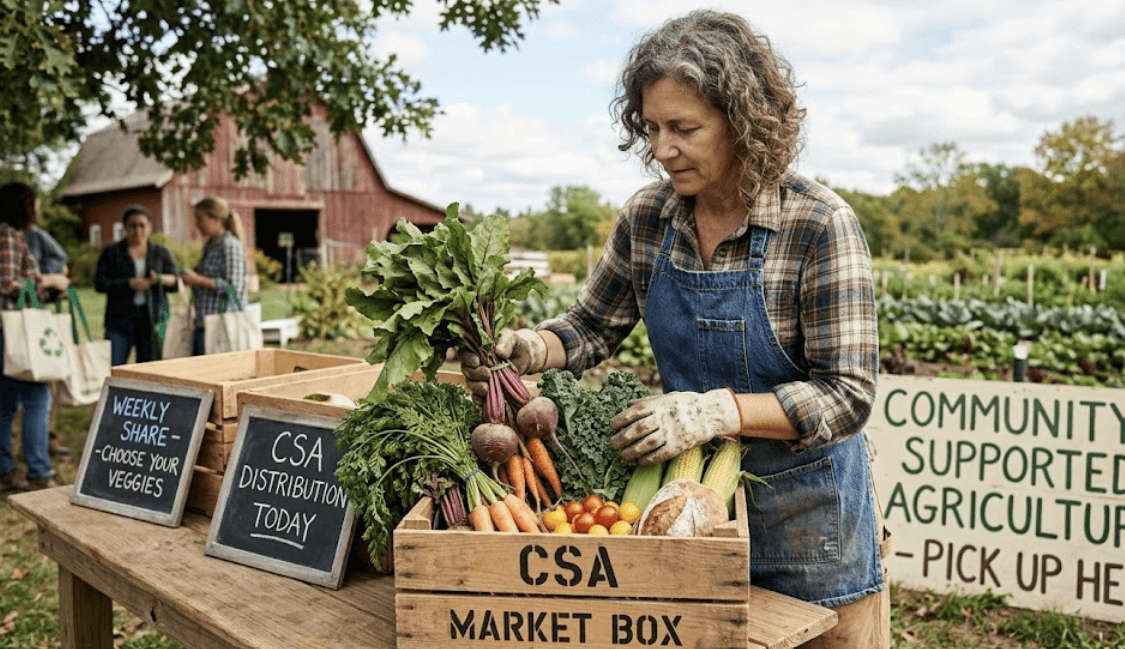
Members often leave a CSA due to practical issues like 'vegetable fatigue,' inconvenience, or a simple feeling of being disconnected from the farm's mission. Building social capital directly counters these issues by fostering a deep sense of belonging and personal investment, making members more resilient to challenges and committed for the long haul.
Let's be honest, the CSA model has its challenges for the consumer. The 'tyranny of the weekly box' is a real phenomenon. One week it's a mountain of chard, the next an avalanche of zucchini. Without a strong connection to the farm, a member is just a customer, and customers are fickle. If a meal kit service seems easier, they'll switch. But if that member feels like a partner in the farm's journey, everything changes.
Here’s a breakdown of common attrition factors and their social capital antidotes:
| Common Reason for Quitting | The Social Capital Solution |
|---|---|
| "Veggie Burnout" / Too Much Produce | A vibrant online community (like a Facebook Group) where members share recipes and preservation tips. A newsletter that teaches them how to make zucchini bread, zucchini noodles, and zucchini pickles. |
| Inconvenient Pickup Times/Location | Empowering members to self-organize. When members know each other, they can arrange to pick up boxes for one another, creating flexibility that you, the farmer, don't have to manage. |
| Feeling Like a Transactional Customer | Personalization and recognition. Use their names. Feature a 'Member of the Week' in your newsletter. Send a handwritten thank-you note. These small acts transform the relationship. |
| Lack of Connection to the Farm | Consistent, authentic storytelling through newsletters and social media. Farm tours that create a powerful, tangible memory of the land and the people who work it. |
| Perceived Value vs. Supermarket | Shifting the value proposition from purely financial to experiential and ethical. When members understand the story behind their food, they see the value far beyond a simple price-per-pound comparison. |
The economic concept of "switching costs" is crucial here. For a normal customer, the switching cost is low—they just go to a different store. For a CSA member embedded in a community, the switching cost is high. Leaving doesn't just mean losing access to vegetables; it means losing friends, losing their connection to the farm, and losing a piece of their identity.
How Can a Newsletter Be More Than Just a Recipe Dump?
Transform your newsletter from a simple list of vegetables into the must-read story of your farm. Achieve this by sharing personal anecdotes, introducing your crew, explaining the 'why' behind your farming practices, and even being honest about failures. This narrative approach builds a powerful, personal connection that makes members feel like insiders.
Your weekly email is arguably the most powerful tool you have for building social capital. It's a direct line into your members' homes. Don't waste it by simply listing the contents of the box. That's a packing slip, not a newsletter. Your goal is to make them feel something. Here are the essential pillars for a newsletter that people actually want to read:
- The Farmer's Journal: Start with a short, personal note. Did a sudden hailstorm threaten the lettuce? Did you finally fix that stubborn tractor? Did you see a family of foxes playing in the field at dawn? Be human. Be vulnerable. Share your joys and frustrations. This is the single most important part of the newsletter.
- The Veggie Spotlight: Pick one vegetable from the box—especially a weird one—and go deep. Don't just give a recipe. Tell its story. Where did it originate? What's a weird historical fact about it? Provide three distinct ways to prepare it: the quick-and-easy way, the fancy way, and the preservation way (e.g., for radishes: slice them on a salad, roast them with butter, or make quick pickles).
- Meet the Crew (and the Critters): Humanize your operation. Feature a short profile of a farmhand, a volunteer, or even the farm dog. Give your tractors names. When members feel like they know the team behind their food, their sense of connection skyrockets.
- The 'Crop Failure' Report: This may sound counterintuitive, but transparency builds immense trust. If the flea beetles decimated the arugula, tell them. Explain what happened, what you learned, and what you're doing differently next time. This shows respect for their intelligence and reinforces the reality of farming.
- Member-Generated Content: Create a feedback loop. Ask members to send in photos of the meals they've made. Feature a 'Member Recipe of the Week.' This fosters a sense of shared ownership and turns passive readers into active participants.
Remember this simple, non-scientific formula:
Newsletter Engagement = (Authenticity + Utility) / (Corporate Jargon)
Keep it real, keep it useful, and for the love of all that is holy, don't sound like a press release.
What are the Key Ingredients for an Unforgettable Farm Tour?
An unforgettable farm tour is an immersive, sensory experience, not just a passive lecture. It should engage all five senses, tell a compelling story about the land, and provide opportunities for hands-on participation. The ultimate goal is to forge a lasting memory that solidifies the member’s emotional connection to their food source.
A farm tour is your opportunity to bring the newsletter to life. It’s where the abstract concepts of soil health and biodiversity become tangible realities. To make it truly memorable, you need to think like an event planner and a storyteller.
The Anatomy of a Perfect Farm Tour:
1. The Welcome Ritual: Don't just have people show up and stand around awkwardly. Create a designated welcome station. Have a sign. Offer a glass of water or sun tea. Have name tags—and make sure you and your crew wear them, too. Start with a simple icebreaker to get people talking to each other.
2. The Narrative Arc: A good tour has a beginning, a middle, and an end.
- Beginning (The 'Why'): Start at the beginning. Not just the seed, but the soil. Grab a handful of dirt. Let them feel it. Talk about your philosophy. Why do you farm this way? This sets the stage for everything else.
- Middle (The 'How'): Walk them through the fields. Show them the tools, the irrigation, the compost piles. This is where you tell the stories of the season—the battle against the squash bugs, the triumph of the tomato trellis. Point out the good, the bad, and the ugly.
- Climax (The 'Wow'): This is the hands-on part. Let them do something! The simple act of pulling a carrot from the earth or picking a sun-warmed cherry tomato is a profound experience for someone disconnected from agriculture. This is the moment they will remember.
- End (The 'We'): Conclude at the wash/pack station to show them the final step. End with a Q&A session. If possible, finish with a shared experience, like a small potluck or sampling some of the produce they just picked. This reinforces the 'we'—the community.
3. Engage All Five Senses:
- Taste: The obvious one. Have tasting stations along the route. A Sungold tomato here, a sprig of dill there.
- Smell: Crush a mint or basil leaf between your fingers and have them smell it. Point out the smell of rich earth after a rain.
- Touch: Encourage them to feel the waxy leaf of a cabbage, the rough skin of a melon, the fine texture of healthy soil.
- Sound: Pause for a moment and ask them to just listen—to the birds, the insects, the wind in the corn.
- Sight: Curate the views. Stop at the top of a hill to show them the whole farm. Point out the beauty in the rows of crops.
How Do You Measure the ROI of Social Capital?
While you can't put a direct dollar value on community, you can absolutely measure its tangible outcomes. The return on investment (ROI) of social capital is seen in key performance indicators like member retention rate, referral rate, and event participation. These metrics provide clear, quantifiable data on the health and loyalty of your CSA.
Measuring social capital isn't about tracking friendships with a spreadsheet. It's about tracking the business-critical behaviors that a strong community fosters. If you're going to invest time and energy into newsletters and events, you need to know if it's working. Here are the essential metrics to track:
Member Retention Rate (MRR): This is your North Star metric. A high retention rate is the clearest sign of a healthy, happy membership. Calculate it at the end of each season.
- Formula:
MRR = ((Total Members at End of Season - New Members Acquired During Season) / Members at Start of Season) * 100 - Example: You start with 100 members. You end with 95. During the season, 10 new people joined. So, of the original 100, 85 stayed. Your retention rate is 85%.
- Formula:
Net Promoter Score (NPS): This is a simple, powerful way to gauge member satisfaction and loyalty. Send out a one-question survey: "On a scale of 0-10, how likely are you to recommend our CSA to a friend or colleague?"
- Promoters (9-10): Your biggest fans.
- Passives (7-8): Satisfied but unenthusiastic.
- Detractors (0-6): Unhappy members.
- Formula:
NPS = % of Promoters - % of Detractors
Engagement Metrics: These are leading indicators that tell you if your community-building efforts are resonating.
- Newsletter Open Rate & Click-Through Rate: Are people actually reading what you write?
- Social Media Engagement: How many comments, shares, and messages are you getting in your private group?
- Event Attendance: What percentage of your membership shows up for farm tours or potlucks?
Referral Rate: How many of your new members were referred by existing members? Track this during sign-up by simply asking, "How did you hear about us?"
Here's how you might track this in a simple table:
| Metric | Season 1 (Pre-Focus) | Season 2 (Post-Focus) | Change |
|---|---|---|---|
| Retention Rate | 65% | 80% | +15% |
| NPS | +20 | +50 | +30 |
| Newsletter Open Rate | 35% | 60% | +25% |
| Farm Tour Attendance | 20 members | 55 members | +175% |
This data gives you a concrete way to see the return on your investment in community.
What Are Some Low-Budget, High-Impact Ways to Build Community?
You don't need a huge budget to foster a thriving community; in fact, authenticity often trumps expense. Simple, consistent efforts like creating a private social media group, organizing member-led recipe swaps, or sending handwritten thank-you notes can have an enormous impact. Genuine care is your most valuable and cost-effective tool.
Building community shouldn't break the bank. Some of the most powerful connections are forged through simple, human-scale interactions. Here are some frugal but mighty ideas:
The Digital Campfire (Cost: $0): Create a private Facebook Group or WhatsApp chat exclusively for current CSA members. This becomes their space to ask questions ("Help! What do I do with garlic scapes?"), share successes (photos of their beautiful salads), and self-organize carpools. Your role is to be a facilitator, not a constant content creator. Post a weekly prompt and let the community do the rest.
The Humble Potluck (Cost: Your time + a dish): This is the original social network. Host one or two potlucks per season. It doesn't need to be fancy. A few picnic tables, some string lights, and a gathering of people sharing food they've made from your vegetables is pure community-building gold.
Member-Led Skill Shares (Cost: $0): You have a wealth of talent in your membership. Send out a feeler: "Is anyone an expert canner? A pickling pro? A sourdough wizard?" Ask a member to lead a 30-minute informal workshop during a pickup window. This empowers your members and takes the burden off you.
The Power of Pen and Paper (Cost: A few stamps): In a digital world, analog gestures stand out. Identify a few members each week and write a short, specific thank-you note and tuck it into their box. "Hi Sarah, thanks so much for sharing that amazing kohlrabi slaw recipe in the Facebook group. It was a huge hit!" This takes two minutes and creates a fiercely loyal member.
The Collaborative Playlist (Cost: $0): Create a shared Spotify playlist called "The [Your Farm Name] Harvest Mix" and invite all members to add their favorite songs for working in the kitchen or weeding the garden. It's a fun, quirky way to build a shared identity.
How Can Farmers Avoid Burnout While Building Community?
Community building is vital but can be another major drain on a farmer's limited time and energy. The key is to create sustainable systems, empower members to take the lead, and set clear boundaries. Remember, the goal is to build a community that supports you, not a community that you have to single-handedly entertain.
Farmers already wear a dozen hats. Adding 'Event Planner' and 'Social Media Manager' to the list can be a recipe for burnout. The solution isn't to stop building community, but to do it sustainably.
Delegate to the Devoted: You have superfans in your membership. Identify them. These are the people who always comment, who share photos, who rave about your produce. Formally or informally, anoint them as "Community Ambassadors." Ask them to welcome new members in the Facebook group or to be the point person for organizing a potluck. People want to help; you just have to ask.
Batch Your Work: Don't let community management become a death by a thousand cuts. Dedicate specific blocks of time. For example: Monday morning is for writing the newsletter. Friday afternoon for 30 minutes is for engaging on social media. Stick to it. Don't check the Facebook group 20 times a day.
Set Clear Boundaries: Your members need to know when and how to reach you. Be clear about your 'office hours' for non-emergency communication. In your welcome email, state something like: "For urgent issues with your share, text me. For all other questions (like how to cook turnips), the best place to ask is our community Facebook group!"
Embrace 'Good Enough': Your newsletter doesn't need to win a Pulitzer. Your farm tour photos don't need to be professionally shot. Authenticity is more important than perfection. A blurry photo of a beautiful sunset over the fields, taken on your phone with a heartfelt caption, is more powerful than a slick, staged marketing photo.
Automate the Mundane: Use technology to your advantage. Use an email service like Mailchimp or ConvertKit to create templates and schedule your newsletters in advance. Use CSA management software (like Harvie or Farmigo) to handle the logistics of sign-ups and payments, freeing up your brainpower for the human connections.
Ultimately, building community should be something that energizes you, not depletes you. If you find yourself dreading it, it's a sign to simplify your approach and empower your members more.
What Role Does Technology Play in Modern CSA Community Building?
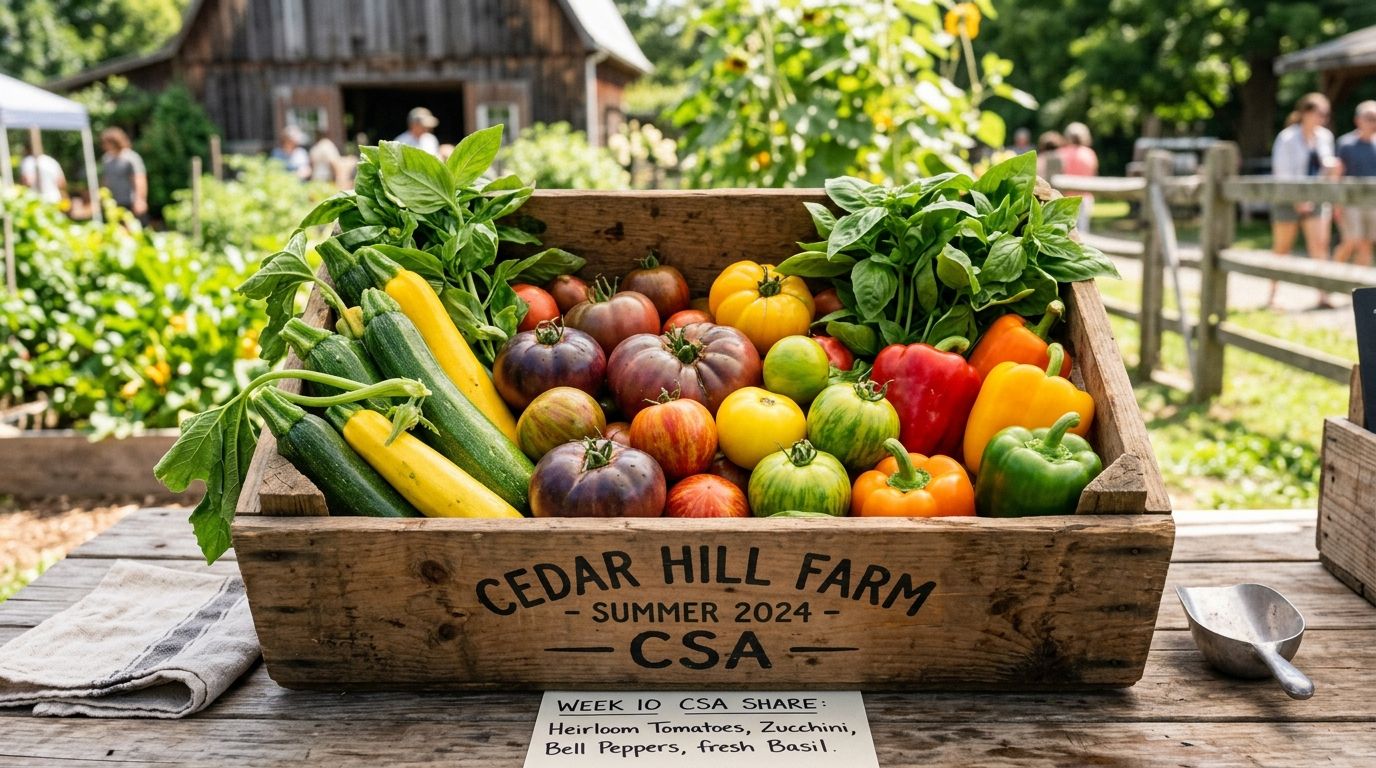
Technology should be a tool to enhance and facilitate real-world connections, not replace them. Use platforms like social media, email marketing, and specialized CSA software to streamline logistics, share the farm's story efficiently, and create a space for members to connect with each other, ultimately making face-to-face interactions more meaningful.
In the past, CSA community was built solely at the pickup spot. Today, we have a digital toolkit that can amplify those connections and keep them alive between Thursdays. The key is to use tech as a bridge, not a barrier.
The Smart Farmer's Tech Stack:
The Megaphone (Email Marketing): Platforms like Mailchimp are essential for your weekly newsletter. They allow you to create beautiful, readable emails, track engagement, and manage your member list efficiently. This is your primary channel for consistent storytelling.
The Community Hub (Private Social Media Groups): A private Facebook Group is the modern-day town square. It's the best place for member-to-member interaction. Unlike a public page, it feels exclusive and safe, encouraging people to share more openly. Instagram is fantastic for visual storytelling—the day-to-day beauty and grit of the farm—but less effective for building deep community discussion.
The Logistics Brain (CSA Management Software): Tools like Harvie, Farmigo, or CSAware are game-changers. They automate the administrative headaches: payments, share customizations, vacation holds, and pickup reminders. By taking these tasks off your plate, they free up your most valuable resource—time—which you can then reinvest in writing a better newsletter or planning a farm tour.
The Storytelling Lens (Your Smartphone): You don't need a fancy camera. A quick, 60-second video of you pulling the first carrots of the season, a time-lapse of the clouds moving over the fields, or a photo of a beneficial insect on a flower can be incredibly powerful. Raw, in-the-moment content builds authenticity.
The Golden Rule of CSA Tech:
Use technology to make the offline world better. The goal of the Facebook group is to make people feel more comfortable talking to each other at the potluck. The goal of the newsletter is to make them appreciate the farm tour more deeply. The goal of the management software is to give you more time to have real conversations at the pickup spot. If your tech isn't serving that ultimate goal, it's a distraction, not a tool.
In the end, building social capital is about playing the long game. It's an investment that pays dividends in loyalty, resilience, and satisfaction for both you and your members. A CSA that is deeply rooted in community can weather a bad season, fend off competition, and thrive for years to come. Because when members aren't just buying vegetables, but are buying into a story, a relationship, and a shared set of values, they become more than customers. They become advocates, partners, and the very soil in which your farm's future will grow. And they'll even learn to love the kohlrabi.
Related Guides & Agronomic References
- To explore connected soil and crop strategies, see our deep-dive on community supported agriculture.
- For complete infrastructure setup and management, consult our guide on first-time CSA members.
- To maintain season-long health and pest suppression, explore our analysis of seasonal farm box schedule.
Expert Insights & FAQs
What Exactly is "Social Capital" in a CSA?
Social capital, in the context of a CSA, is the web of relationships, shared identity, and mutual trust connecting members to each other and to their farmer. It’s the invisible glue that transforms a group of individual customers into a cohesive community, fostering loyalty and a sense of shared investment in the farm’s success.
Why Do CSA Members Quit, and How Can Social Capital Help?
Members often leave a CSA due to practical issues like 'vegetable fatigue,' inconvenience, or a simple feeling of being disconnected from the farm's mission. Building social capital directly counters these issues by fostering a deep sense of belonging and personal investment, making members more resilient to challenges and committed for the long haul.
How Can a Newsletter Be More Than Just a Recipe Dump?
Transform your newsletter from a simple list of vegetables into the must-read story of your farm. Achieve this by sharing personal anecdotes, introducing your crew, explaining the 'why' behind your farming practices, and even being honest about failures. This narrative approach builds a powerful, personal connection that makes members feel like insiders.
What are the Key Ingredients for an Unforgettable Farm Tour?
An unforgettable farm tour is an immersive, sensory experience, not just a passive lecture. It should engage all five senses, tell a compelling story about the land, and provide opportunities for hands-on participation. The ultimate goal is to forge a lasting memory that solidifies the member’s emotional connection to their food source.
How Do You Measure the ROI of Social Capital?
While you can't put a direct dollar value on community, you can absolutely measure its tangible outcomes. The return on investment (ROI) of social capital is seen in key performance indicators like member retention rate, referral rate, and event participation. These metrics provide clear, quantifiable data on the health and loyalty of your CSA.
What Are Some Low-Budget, High-Impact Ways to Build Community?
You don't need a huge budget to foster a thriving community; in fact, authenticity often trumps expense. Simple, consistent efforts like creating a private social media group, organizing member-led recipe swaps, or sending handwritten thank-you notes can have an enormous impact. Genuine care is your most valuable and cost-effective tool.
How Can Farmers Avoid Burnout While Building Community?
Community building is vital but can be another major drain on a farmer's limited time and energy. The key is to create sustainable systems, empower members to take the lead, and set clear boundaries. Remember, the goal is to build a community that supports you, not a community that you have to single-handedly entertain.
What Role Does Technology Play in Modern CSA Community Building?
Technology should be a tool to enhance and facilitate real-world connections, not replace them. Use platforms like social media, email marketing, and specialized CSA software to streamline logistics, share the farm's story efficiently, and create a space for members to connect with each other, ultimately making face-to-face interactions more meaningful.
Johnnie McCormick
Zone 7b/8a - North Central Alabama
Johnnie McCormick is a gardening hobbyist and the founder of My Garden Spot. Raised in north-central Alabama, his passion for gardening began in his youth. In 2008, he established a large market garden, teaching himself high-yield growing methods. In the years since, he has operated seasonal seedling sales for transplants, specializing in heirloom tomatoes, peppers, eggplants, decorative ground covers like Ajuga (Bugleweed), marigolds, nasturtiums, and fresh kitchen-window herb arrangements (basil, cilantro). Today, he gardens in the hills between Birmingham and Jasper, Alabama (Zone 7b/8a), sharing practical, community-focused gardening resources.
Verified Authoritative Citations & References
In alignment with our strict E-E-A-T research and verification guidelines, this guide cross-references data from the United States Department of Agriculture (USDA) and Cooperative Extension Service programs.
- USDA Agricultural Marketing Service (AMS): Community Supported Agriculture (CSA) standards and local market surveys. ams.usda.gov
- Penn State Extension: Small Farm Economics, financial planning, and crop pricing research documents. extension.psu.edu
- Cornell Cooperative Extension: Market gardening business planning and local sales guidelines. smallfarms.cornell.edu
- Alabama Cooperative Extension System (ACES): Local food regulations, CSA legal permits, and farm safety standards. aces.edu

Please log in to view comments.