How Do You Build a Self-Sufficient Integrated Sustainable Homestead?
The Architecture of Sustainability
The romantic vision of the sustainable homestead often clashes violently with the brutal reality of operational inefficiency. Many enthusiastic growers start by randomly scattering raised beds across their yard, erecting a hobby greenhouse wherever it "looks nice," and plowing up a quarter-acre for a market garden without any cohesive master plan. The result is a fractured, exhausting workflow where the farmer spends more time hauling hoses, moving tools, and battling weeds than actually harvesting crops.
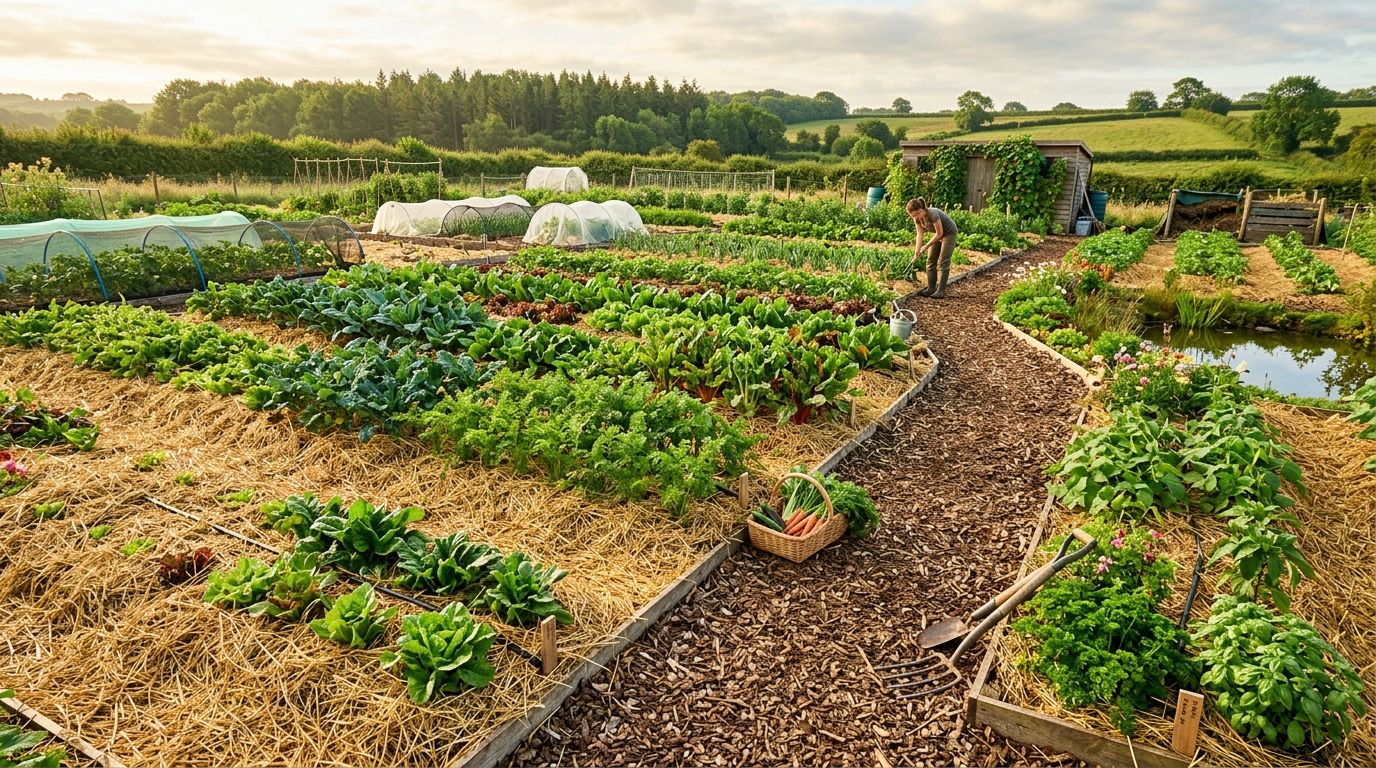
True sustainability is not just about using organic fertilizer; it is about designing a seamless, integrated infrastructure that respects the limits of human labor. When raised beds, greenhouses, and field-scale market gardens are integrated thoughtfully, they create a symbiotic ecosystem. The greenhouse produces the transplants for the market garden. The crop residue from the market garden feeds the compost piles. The compost piles feed the raised beds.
This level of integration requires a fundamental shift in how you view your land. You must stop seeing it as a collection of separate gardens, and start seeing it as a unified, highly engineered biological factory.
Permaculture Zoning: The Key to Integration
The most effective framework for integrating these disparate elements is the permaculture concept of "Zoning." Zoning dictates that the elements you interact with most frequently should be located closest to the center of human activity (the house), while elements requiring less frequent interaction are placed further away.
Zone 1: The Raised Bed Kitchen Garden
Raised beds are intensive, high-input, high-yield systems. They are expensive to build and fill with premium soil, but they offer unparalleled drainage, rapid spring warming, and ergonomic harvesting. Because of this, your raised beds should occupy Zone 1—the area immediately outside your kitchen door.
This is where you grow your "cut-and-come-again" crops: culinary herbs, salad greens, radishes, and cherry tomatoes. These are crops you harvest daily for personal consumption. If you have to walk 100 yards to the back of the property just to clip some basil for dinner, you simply won't do it. By keeping the raised beds in Zone 1, you guarantee that they receive daily observation. This constant vigilance is the ultimate form of pest control, allowing you to spot an aphid outbreak long before it requires chemical intervention.
Zone 2: The Greenhouse and Season Extension
Zone 2 is the ideal location for your greenhouse or high tunnel. These structures require daily interaction—opening vents in the morning, closing them at night, and monitoring irrigation—but you don't necessarily need to visit them five times a day.
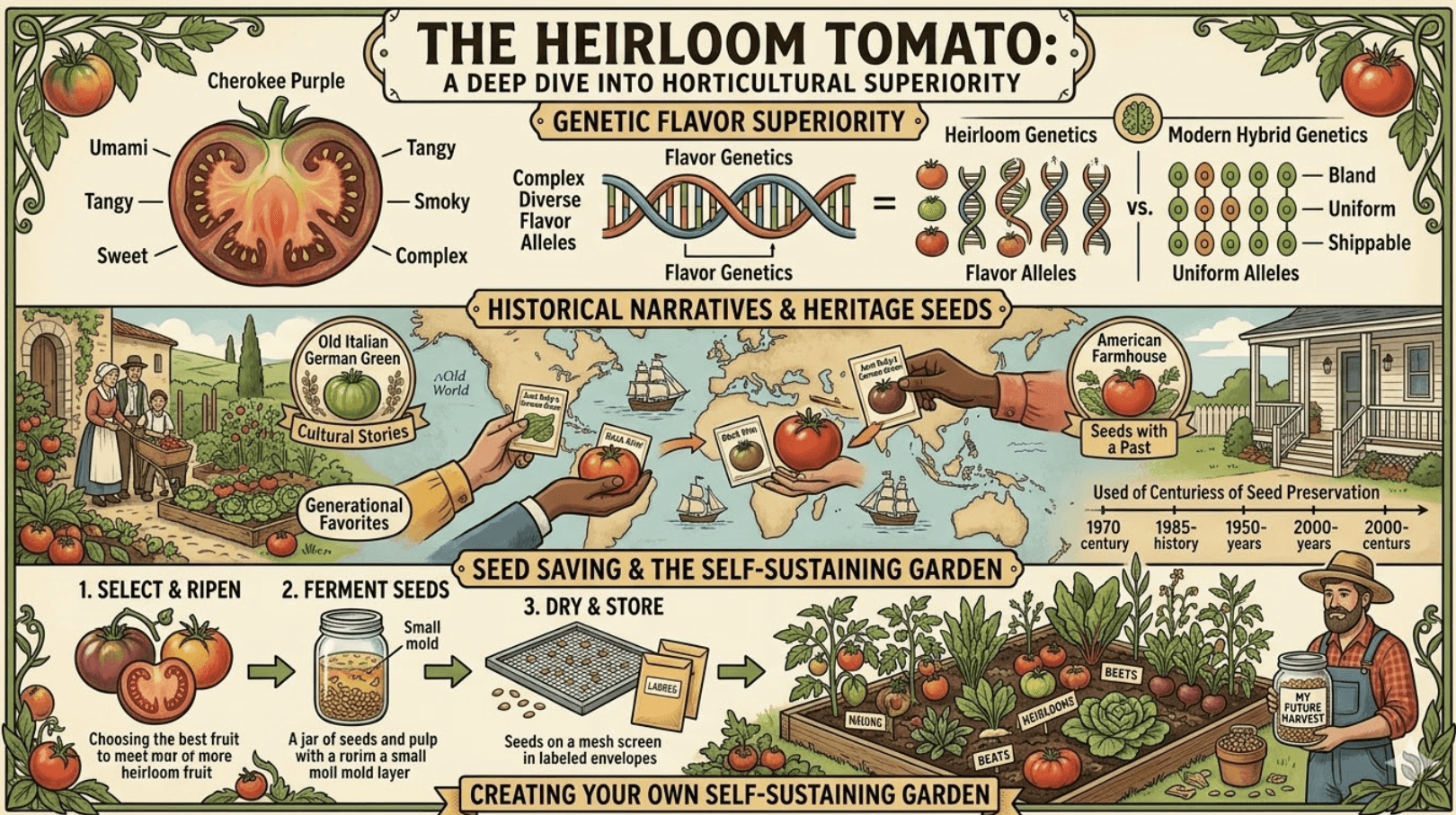
The greenhouse acts as the beating heart of the entire homestead. In late winter, it is the nursery, generating thousands of robust transplants for both the raised beds and the market garden. During the heat of the summer, a properly managed high tunnel becomes an arid, highly controlled environment for growing premium, blight-free heirloom tomatoes and cucumbers.
Zone 3: The Market Garden
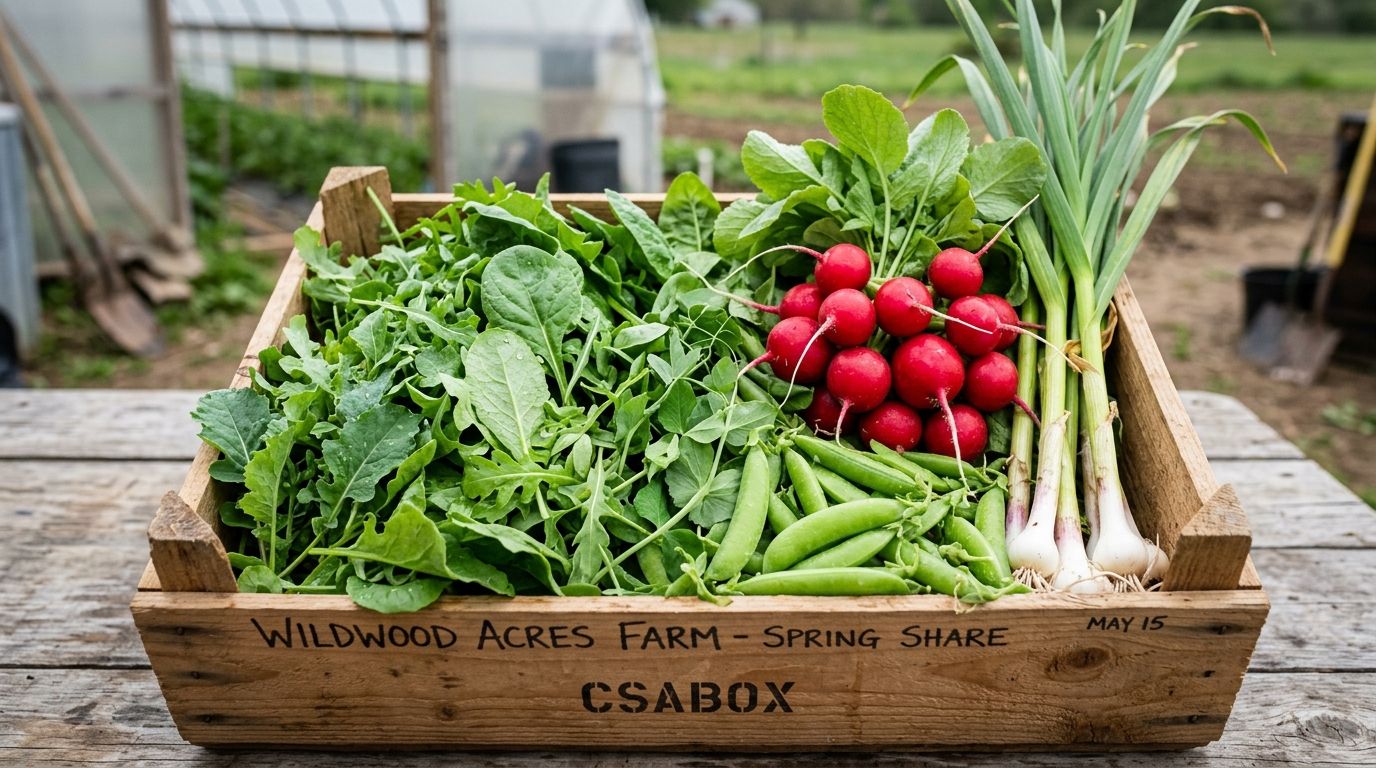
The market garden is where you transition from homesteading to professional agriculture. Whether you are selling at a local farmer's market or have committed to starting a CSA, this area requires scale. Zone 3 should consist of standardized, permanent raised field beds (typically 30 inches wide by 50 or 100 feet long).
These long, uniform beds allow for the efficient use of standardized human-scale tools like the broadfork, the wheel hoe, and the precision seeder. Because you are growing crops that are harvested in large, weekly batches (like carrots, beets, onions, and storage potatoes), it is perfectly acceptable for this zone to be located further from the house.
Biological Symbiosis Between Systems
Integration is not merely spatial; it is biological. The output of one system must become the input for another.
Soil Fertility and Deep Mulch
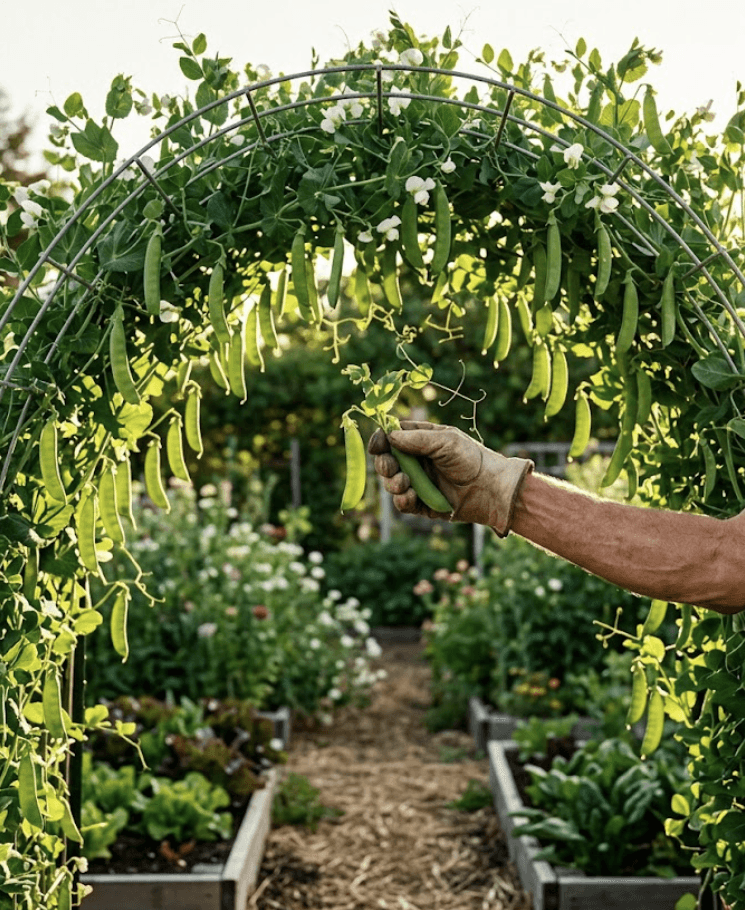
The raised beds in Zone 1 are heavily extracted. They require constant fertility. Rather than purchasing bagged compost, you can utilize the massive amount of organic matter generated by the market garden in Zone 3. When a crop of field peas or beans is finished in the market garden, the nitrogen-rich vines should be chopped and composted.
Furthermore, utilizing deep mulch systems in the market garden—such as heavy applications of spoiled hay or straw—creates a massive reservoir of fungal dominance. Over time, as this mulch breaks down, it can be harvested and applied as a premium top-dressing for the intensive raised beds near the house.
Pest and Disease Management
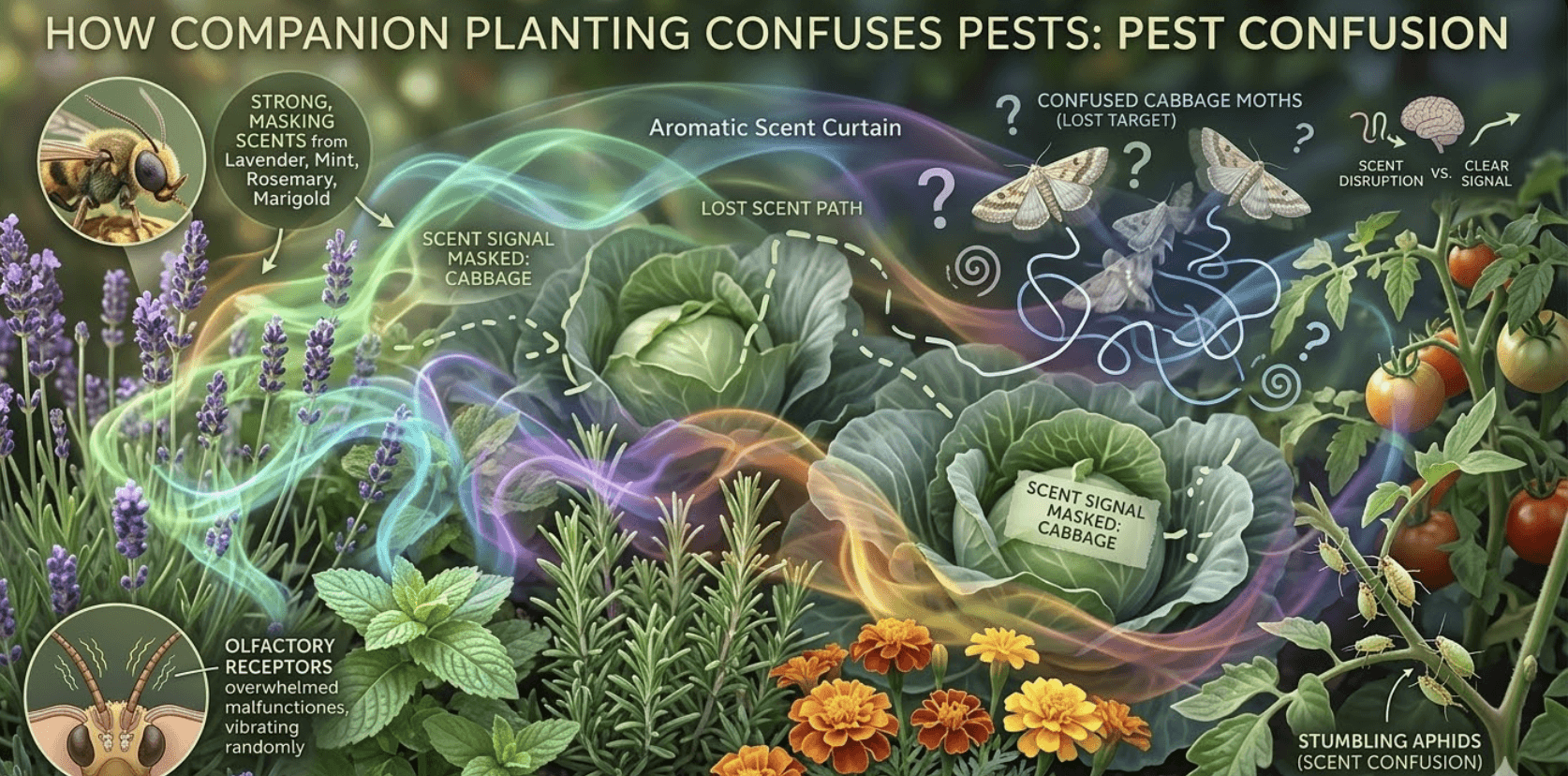
By separating the intensive kitchen garden from the market garden, you create a biological firebreak. If a devastating wave of late blight strikes your field-scale potatoes in Zone 3, the physical distance might be enough to protect the prized heirloom tomatoes growing in your Zone 1 raised beds or your Zone 2 high tunnel.
This integrated approach also allows for sophisticated crop rotation planning. Because you have multiple distinct growing areas, you can ensure that heavy feeders (like brassicas) are never planted in the same soil twice within a three-year period, drastically reducing the buildup of soil-borne pathogens like clubroot.
Water Management and Infrastructure
The single biggest failure point in homestead design is the lack of centralized water infrastructure. If you are dragging 100 feet of garden hose between the raised beds, the greenhouse, and the market garden, you are bleeding labor efficiency.
Designing the Irrigation Hub
Before you build a single raised bed or pound a single greenhouse post, you must map out your irrigation mains. The water source should act as a central hub. From this hub, lay permanent underground PVC or high-density polyethylene (HDPE) mainlines out to each distinct zone.
In Zone 1 (the raised beds), install localized drip tape with a digital timer. Because raised beds drain so rapidly, they require frequent, shallow watering. A timer ensures this happens automatically, freeing you from the daily chore.
In Zone 2 (the greenhouse), install a manifold with multiple valves. Greenhouses have zero access to natural rainfall. You will need separate zones for overhead misting (for seedling trays) and targeted drip irrigation (for mature, in-ground crops like tomatoes, where you want to keep the foliage perfectly dry).
In Zone 3 (the market garden), utilize standardized 5/8-inch drip tape or wobbler sprinklers running off quick-connect hydrants spaced every 50 feet. This allows you to rapidly snap a hose into the hydrant and irrigate a specific block of crops without dragging hundreds of feet of hose across the farm.
Catchment and Resilience
A truly sustainable homestead does not rely solely on municipal water or a fragile, electrically dependent well pump. Integrate massive rainwater catchment systems into your design. The expansive roof of your house or barn can capture thousands of gallons of water during a single storm. Route this water into opaque, UV-resistant IBC totes or dedicated cisterns. While gravity-fed water pressure is often too low to run drip tape effectively in a large market garden, it is absolutely perfect for hand-watering the raised beds in Zone 1 during a severe summer drought.
The Economics of Integration
If your goal is to transition the homestead into a profitable business, integrating these systems is non-negotiable. Profitability in market gardening is entirely dependent on minimizing labor costs and maximizing crop value per square foot.
The Seedling Advantage
By utilizing the greenhouse (Zone 2) to start your own seeds, you drastically reduce your input costs. Purchasing 1,000 organic tomato transplants from a commercial nursery will cost hundreds, if not thousands, of dollars. Starting them yourself from seed in your own greenhouse reduces that cost to pennies per plant.
Furthermore, you can time the transplants perfectly. When you perform your spring soil preparation in the market garden, you are not waiting on a nursery delivery. The moment the soil is workable, your robust, hardened-off transplants are ready to go into the ground.
Season Extension Premium
The greenhouse also allows you to manipulate the market. By integrating a high tunnel into your homestead, you can bring crops to market four weeks earlier in the spring, and four weeks later in the fall. During these "shoulder seasons," supply is incredibly low, and demand is extraordinarily high. You can charge a massive premium for fresh, local spinach in November, or the first ripe tomatoes in June. This season extension is often the difference between a farm that barely breaks even and a farm that generates a comfortable living.
Deep Dive: Scaling Operations and Labor Efficiency
As the homestead matures, the friction points in your infrastructure will become painfully apparent. What worked for a quarter-acre market garden will cause a complete systemic collapse when scaled to a full acre.
Standardizing the Market Garden
The absolute golden rule of market gardening is standardization. Every single bed in Zone 3 must be exactly the same width (typically 30 inches) and exactly the same length (typically 50 or 100 feet). This standardization allows you to purchase exactly one size of insect netting, one size of row cover, one length of drip tape, and one set of human-scale cultivation tools. If your beds are erratic lengths, you will waste hundreds of hours cutting drip tape and folding oversized tarps.
The Wash and Pack Station
A critical component that bridges the gap between the field and the market is the Wash and Pack station. This infrastructure must be located precisely between Zone 3 (the field) and Zone 1 (the house/road access). It requires a concrete or gravel pad, intense shade, heavy-duty washing sinks, and massive drainage.
Do not underestimate the labor involved in washing 100 pounds of carrots. If your wash station is poorly designed, you will lose all the profit you gained in the field to inefficient washing and packing labor.
The Role of Cover Crops
Sustainability in the market garden relies heavily on cover cropping. When a bed is not actively producing a cash crop, it must be planted with a cover crop like winter rye, hairy vetch, or buckwheat. This practice prevents soil erosion, scavenges free nitrogen from the atmosphere, and adds massive amounts of biomass back into the soil, completely eliminating the need for synthetic fertilizers.
The Architecture of Sustainability
The Architecture of Sustainability
The romantic vision of the sustainable homestead often clashes violently with the brutal reality of operational inefficiency. Many enthusiastic growers start by randomly scattering raised beds across their yard, erecting a hobby greenhouse wherever it "looks nice," and plowing up a quarter-acre for a market garden without any cohesive master plan. The result is a fractured, exhausting workflow where the farmer spends more time hauling hoses, moving tools, and battling weeds than actually harvesting crops.
True sustainability is not just about using organic fertilizer; it is about designing a seamless, integrated infrastructure that respects the limits of human labor. When raised beds, greenhouses, and field-scale market gardens are integrated thoughtfully, they create a symbiotic ecosystem. The greenhouse produces the transplants for the market garden. The crop residue from the market garden feeds the compost piles. The compost piles feed the raised beds.
This level of integration requires a fundamental shift in how you view your land. You must stop seeing it as a collection of separate gardens, and start seeing it as a unified, highly engineered biological factory.
Permaculture Zoning: The Key to Integration
Permaculture Zoning: The Key to Integration
The most effective framework for integrating these disparate elements is the permaculture concept of "Zoning." Zoning dictates that the elements you interact with most frequently should be located closest to the center of human activity (the house), while elements requiring less frequent interaction are placed further away.
Zone 1: The Raised Bed Kitchen Garden
Raised beds are intensive, high-input, high-yield systems. They are expensive to build and fill with premium soil, but they offer unparalleled drainage, rapid spring warming, and ergonomic harvesting. Because of this, your raised beds should occupy Zone 1—the area immediately outside your kitchen door.
This is where you grow your "cut-and-come-again" crops: culinary herbs, salad greens, radishes, and cherry tomatoes. These are crops you harvest daily for personal consumption. If you have to walk 100 yards to the back of the property just to clip some basil for dinner, you simply won't do it. By keeping the raised beds in Zone 1, you guarantee that they receive daily observation. This constant vigilance is the ultimate form of pest control, allowing you to spot an aphid outbreak long before it requires chemical intervention.
Zone 2: The Greenhouse and Season Extension
Zone 2 is the ideal location for your greenhouse or high tunnel. These structures require daily interaction—opening vents in the morning, closing them at night, and monitoring irrigation—but you don't necessarily need to visit them five times a day.
The greenhouse acts as the beating heart of the entire homestead. In late winter, it is the nursery, generating thousands of robust transplants for both the raised beds and the market garden. During the heat of the summer, a properly managed high tunnel becomes an arid, highly controlled environment for growing premium, blight-free heirloom tomatoes and cucumbers.
Zone 3: The Market Garden
The market garden is where you transition from homesteading to professional agriculture. Whether you are selling at a local farmer's market or have committed to starting a CSA, this area requires scale. Zone 3 should consist of standardized, permanent raised field beds (typically 30 inches wide by 50 or 100 feet long).
These long, uniform beds allow for the efficient use of standardized human-scale tools like the broadfork, the wheel hoe, and the precision seeder. Because you are growing crops that are harvested in large, weekly batches (like carrots, beets, onions, and storage potatoes), it is perfectly acceptable for this zone to be located further from the house.
Biological Symbiosis Between Systems
Biological Symbiosis Between Systems
Integration is not merely spatial; it is biological. The output of one system must become the input for another.
Soil Fertility and Deep Mulch
The raised beds in Zone 1 are heavily extracted. They require constant fertility. Rather than purchasing bagged compost, you can utilize the massive amount of organic matter generated by the market garden in Zone 3. When a crop of field peas or beans is finished in the market garden, the nitrogen-rich vines should be chopped and composted.
Furthermore, utilizing deep mulch systems in the market garden—such as heavy applications of spoiled hay or straw—creates a massive reservoir of fungal dominance. Over time, as this mulch breaks down, it can be harvested and applied as a premium top-dressing for the intensive raised beds near the house.
Pest and Disease Management
By separating the intensive kitchen garden from the market garden, you create a biological firebreak. If a devastating wave of late blight strikes your field-scale potatoes in Zone 3, the physical distance might be enough to protect the prized heirloom tomatoes growing in your Zone 1 raised beds or your Zone 2 high tunnel.
This integrated approach also allows for sophisticated crop rotation planning. Because you have multiple distinct growing areas, you can ensure that heavy feeders (like brassicas) are never planted in the same soil twice within a three-year period, drastically reducing the buildup of soil-borne pathogens like clubroot.
Water Management and Infrastructure
Water Management and Infrastructure
The single biggest failure point in homestead design is the lack of centralized water infrastructure. If you are dragging 100 feet of garden hose between the raised beds, the greenhouse, and the market garden, you are bleeding labor efficiency.
Designing the Irrigation Hub
Before you build a single raised bed or pound a single greenhouse post, you must map out your irrigation mains. The water source should act as a central hub. From this hub, lay permanent underground PVC or high-density polyethylene (HDPE) mainlines out to each distinct zone.
In Zone 1 (the raised beds), install localized drip tape with a digital timer. Because raised beds drain so rapidly, they require frequent, shallow watering. A timer ensures this happens automatically, freeing you from the daily chore.
In Zone 2 (the greenhouse), install a manifold with multiple valves. Greenhouses have zero access to natural rainfall. You will need separate zones for overhead misting (for seedling trays) and targeted drip irrigation (for mature, in-ground crops like tomatoes, where you want to keep the foliage perfectly dry).
In Zone 3 (the market garden), utilize standardized 5/8-inch drip tape or wobbler sprinklers running off quick-connect hydrants spaced every 50 feet. This allows you to rapidly snap a hose into the hydrant and irrigate a specific block of crops without dragging hundreds of feet of hose across the farm.
Catchment and Resilience
A truly sustainable homestead does not rely solely on municipal water or a fragile, electrically dependent well pump. Integrate massive rainwater catchment systems into your design. The expansive roof of your house or barn can capture thousands of gallons of water during a single storm. Route this water into opaque, UV-resistant IBC totes or dedicated cisterns. While gravity-fed water pressure is often too low to run drip tape effectively in a large market garden, it is absolutely perfect for hand-watering the raised beds in Zone 1 during a severe summer drought.
The Economics of Integration
The Economics of Integration
If your goal is to transition the homestead into a profitable business, integrating these systems is non-negotiable. Profitability in market gardening is entirely dependent on minimizing labor costs and maximizing crop value per square foot.
The Seedling Advantage
By utilizing the greenhouse (Zone 2) to start your own seeds, you drastically reduce your input costs. Purchasing 1,000 organic tomato transplants from a commercial nursery will cost hundreds, if not thousands, of dollars. Starting them yourself from seed in your own greenhouse reduces that cost to pennies per plant.
Furthermore, you can time the transplants perfectly. When you perform your spring soil preparation in the market garden, you are not waiting on a nursery delivery. The moment the soil is workable, your robust, hardened-off transplants are ready to go into the ground.
Season Extension Premium
The greenhouse also allows you to manipulate the market. By integrating a high tunnel into your homestead, you can bring crops to market four weeks earlier in the spring, and four weeks later in the fall. During these "shoulder seasons," supply is incredibly low, and demand is extraordinarily high. You can charge a massive premium for fresh, local spinach in November, or the first ripe tomatoes in June. This season extension is often the difference between a farm that barely breaks even and a farm that generates a comfortable living.
Deep Dive: Scaling Operations
Deep Dive: Scaling Operations and Labor Efficiency
As the homestead matures, the friction points in your infrastructure will become painfully apparent. What worked for a quarter-acre market garden will cause a complete systemic collapse when scaled to a full acre.
Standardizing the Market Garden
The absolute golden rule of market gardening is standardization. Every single bed in Zone 3 must be exactly the same width (typically 30 inches) and exactly the same length (typically 50 or 100 feet). This standardization allows you to purchase exactly one size of insect netting, one size of row cover, one length of drip tape, and one set of human-scale cultivation tools. If your beds are erratic lengths, you will waste hundreds of hours cutting drip tape and folding oversized tarps.
The Wash and Pack Station
A critical component that bridges the gap between the field and the market is the Wash and Pack station. This infrastructure must be located precisely between Zone 3 (the field) and Zone 1 (the house/road access). It requires a concrete or gravel pad, intense shade, heavy-duty washing sinks, and massive drainage.
Do not underestimate the labor involved in washing 100 pounds of carrots. If your wash station is poorly designed, you will lose all the profit you gained in the field to inefficient washing and packing labor.
The Role of Cover Crops
Sustainability in the market garden relies heavily on cover cropping. When a bed is not actively producing a cash crop, it must be planted with a cover crop like winter rye, hairy vetch, or buckwheat. This practice prevents soil erosion, scavenges free nitrogen from the atmosphere, and adds massive amounts of biomass back into the soil, completely eliminating the need for synthetic fertilizers.
The Architecture of Sustainability (Phase 2 Implementation)
The Architecture of Sustainability
The romantic vision of the sustainable homestead often clashes violently with the brutal reality of operational inefficiency. Many enthusiastic growers start by randomly scattering raised beds across their yard, erecting a hobby greenhouse wherever it "looks nice," and plowing up a quarter-acre for a market garden without any cohesive master plan. The result is a fractured, exhausting workflow where the farmer spends more time hauling hoses, moving tools, and battling weeds than actually harvesting crops.
True sustainability is not just about using organic fertilizer; it is about designing a seamless, integrated infrastructure that respects the limits of human labor. When raised beds, greenhouses, and field-scale market gardens are integrated thoughtfully, they create a symbiotic ecosystem. The greenhouse produces the transplants for the market garden. The crop residue from the market garden feeds the compost piles. The compost piles feed the raised beds.
This level of integration requires a fundamental shift in how you view your land. You must stop seeing it as a collection of separate gardens, and start seeing it as a unified, highly engineered biological factory.
Permaculture Zoning: The Key to Integration (Phase 2 Implementation)
Permaculture Zoning: The Key to Integration
The most effective framework for integrating these disparate elements is the permaculture concept of "Zoning." Zoning dictates that the elements you interact with most frequently should be located closest to the center of human activity (the house), while elements requiring less frequent interaction are placed further away.
Zone 1: The Raised Bed Kitchen Garden
Raised beds are intensive, high-input, high-yield systems. They are expensive to build and fill with premium soil, but they offer unparalleled drainage, rapid spring warming, and ergonomic harvesting. Because of this, your raised beds should occupy Zone 1—the area immediately outside your kitchen door.
This is where you grow your "cut-and-come-again" crops: culinary herbs, salad greens, radishes, and cherry tomatoes. These are crops you harvest daily for personal consumption. If you have to walk 100 yards to the back of the property just to clip some basil for dinner, you simply won't do it. By keeping the raised beds in Zone 1, you guarantee that they receive daily observation. This constant vigilance is the ultimate form of pest control, allowing you to spot an aphid outbreak long before it requires chemical intervention.
Zone 2: The Greenhouse and Season Extension
Zone 2 is the ideal location for your greenhouse or high tunnel. These structures require daily interaction—opening vents in the morning, closing them at night, and monitoring irrigation—but you don't necessarily need to visit them five times a day.
The greenhouse acts as the beating heart of the entire homestead. In late winter, it is the nursery, generating thousands of robust transplants for both the raised beds and the market garden. During the heat of the summer, a properly managed high tunnel becomes an arid, highly controlled environment for growing premium, blight-free heirloom tomatoes and cucumbers.
Zone 3: The Market Garden
The market garden is where you transition from homesteading to professional agriculture. Whether you are selling at a local farmer's market or have committed to starting a CSA, this area requires scale. Zone 3 should consist of standardized, permanent raised field beds (typically 30 inches wide by 50 or 100 feet long).
These long, uniform beds allow for the efficient use of standardized human-scale tools like the broadfork, the wheel hoe, and the precision seeder. Because you are growing crops that are harvested in large, weekly batches (like carrots, beets, onions, and storage potatoes), it is perfectly acceptable for this zone to be located further from the house.
Biological Symbiosis Between Systems (Phase 2 Implementation)
Biological Symbiosis Between Systems
Integration is not merely spatial; it is biological. The output of one system must become the input for another.
Soil Fertility and Deep Mulch
The raised beds in Zone 1 are heavily extracted. They require constant fertility. Rather than purchasing bagged compost, you can utilize the massive amount of organic matter generated by the market garden in Zone 3. When a crop of field peas or beans is finished in the market garden, the nitrogen-rich vines should be chopped and composted.
Furthermore, utilizing deep mulch systems in the market garden—such as heavy applications of spoiled hay or straw—creates a massive reservoir of fungal dominance. Over time, as this mulch breaks down, it can be harvested and applied as a premium top-dressing for the intensive raised beds near the house.
Pest and Disease Management
By separating the intensive kitchen garden from the market garden, you create a biological firebreak. If a devastating wave of late blight strikes your field-scale potatoes in Zone 3, the physical distance might be enough to protect the prized heirloom tomatoes growing in your Zone 1 raised beds or your Zone 2 high tunnel.
This integrated approach also allows for sophisticated crop rotation planning. Because you have multiple distinct growing areas, you can ensure that heavy feeders (like brassicas) are never planted in the same soil twice within a three-year period, drastically reducing the buildup of soil-borne pathogens like clubroot.
Water Management and Infrastructure (Phase 2 Implementation)
Water Management and Infrastructure
The single biggest failure point in homestead design is the lack of centralized water infrastructure. If you are dragging 100 feet of garden hose between the raised beds, the greenhouse, and the market garden, you are bleeding labor efficiency.
Designing the Irrigation Hub
Before you build a single raised bed or pound a single greenhouse post, you must map out your irrigation mains. The water source should act as a central hub. From this hub, lay permanent underground PVC or high-density polyethylene (HDPE) mainlines out to each distinct zone.
In Zone 1 (the raised beds), install localized drip tape with a digital timer. Because raised beds drain so rapidly, they require frequent, shallow watering. A timer ensures this happens automatically, freeing you from the daily chore.
In Zone 2 (the greenhouse), install a manifold with multiple valves. Greenhouses have zero access to natural rainfall. You will need separate zones for overhead misting (for seedling trays) and targeted drip irrigation (for mature, in-ground crops like tomatoes, where you want to keep the foliage perfectly dry).
In Zone 3 (the market garden), utilize standardized 5/8-inch drip tape or wobbler sprinklers running off quick-connect hydrants spaced every 50 feet. This allows you to rapidly snap a hose into the hydrant and irrigate a specific block of crops without dragging hundreds of feet of hose across the farm.
Catchment and Resilience
A truly sustainable homestead does not rely solely on municipal water or a fragile, electrically dependent well pump. Integrate massive rainwater catchment systems into your design. The expansive roof of your house or barn can capture thousands of gallons of water during a single storm. Route this water into opaque, UV-resistant IBC totes or dedicated cisterns. While gravity-fed water pressure is often too low to run drip tape effectively in a large market garden, it is absolutely perfect for hand-watering the raised beds in Zone 1 during a severe summer drought.
The Economics of Integration (Phase 2 Implementation)
The Economics of Integration
If your goal is to transition the homestead into a profitable business, integrating these systems is non-negotiable. Profitability in market gardening is entirely dependent on minimizing labor costs and maximizing crop value per square foot.
The Seedling Advantage
By utilizing the greenhouse (Zone 2) to start your own seeds, you drastically reduce your input costs. Purchasing 1,000 organic tomato transplants from a commercial nursery will cost hundreds, if not thousands, of dollars. Starting them yourself from seed in your own greenhouse reduces that cost to pennies per plant.
Furthermore, you can time the transplants perfectly. When you perform your spring soil preparation in the market garden, you are not waiting on a nursery delivery. The moment the soil is workable, your robust, hardened-off transplants are ready to go into the ground.
Season Extension Premium
The greenhouse also allows you to manipulate the market. By integrating a high tunnel into your homestead, you can bring crops to market four weeks earlier in the spring, and four weeks later in the fall. During these "shoulder seasons," supply is incredibly low, and demand is extraordinarily high. You can charge a massive premium for fresh, local spinach in November, or the first ripe tomatoes in June. This season extension is often the difference between a farm that barely breaks even and a farm that generates a comfortable living.
Deep Dive: Scaling Operations (Phase 2 Implementation)
Deep Dive: Scaling Operations and Labor Efficiency
As the homestead matures, the friction points in your infrastructure will become painfully apparent. What worked for a quarter-acre market garden will cause a complete systemic collapse when scaled to a full acre.
Standardizing the Market Garden
The absolute golden rule of market gardening is standardization. Every single bed in Zone 3 must be exactly the same width (typically 30 inches) and exactly the same length (typically 50 or 100 feet). This standardization allows you to purchase exactly one size of insect netting, one size of row cover, one length of drip tape, and one set of human-scale cultivation tools. If your beds are erratic lengths, you will waste hundreds of hours cutting drip tape and folding oversized tarps.
The Wash and Pack Station
A critical component that bridges the gap between the field and the market is the Wash and Pack station. This infrastructure must be located precisely between Zone 3 (the field) and Zone 1 (the house/road access). It requires a concrete or gravel pad, intense shade, heavy-duty washing sinks, and massive drainage.
Do not underestimate the labor involved in washing 100 pounds of carrots. If your wash station is poorly designed, you will lose all the profit you gained in the field to inefficient washing and packing labor.
The Role of Cover Crops
Sustainability in the market garden relies heavily on cover cropping. When a bed is not actively producing a cash crop, it must be planted with a cover crop like winter rye, hairy vetch, or buckwheat. This practice prevents soil erosion, scavenges free nitrogen from the atmosphere, and adds massive amounts of biomass back into the soil, completely eliminating the need for synthetic fertilizers.
Related Guides & Agronomic References
- To explore connected soil and crop strategies, see our deep-dive on market gardening enterprise.
- For complete infrastructure setup and management, consult our guide on greenhouse climate control.
- To maintain season-long health and pest suppression, explore our analysis of living soil health and biology.