What Comes in a CSA Box? Monthly Guide by Season

What Comes in a CSA Box? A Month-by-Month Guide to Seasonal Farm Shares
Surrendering to the Season: The CSA Paradigm Shift
When you purchase a Community Supported Agriculture (CSA) share, you are fundamentally changing your relationship with the food system. You are inherently surrendering the illusion of total control that modern supermarkets provide. In a conventional grocery store, you can stand under buzzing fluorescent lights in the dead of January and purchase a perfectly uniform, yet entirely flavorless, beefsteak tomato flown in from an industrial greenhouse thousands of miles away. The modern global supply chain has severed consumer awareness from agricultural reality, conditioning shoppers to expect every single vegetable to be available 365 days a year at an identical price point.
Joining a CSA shatters this artificial paradigm. Instead of buying whatever you want, whenever you want it, you eat exactly what the local living soil produces in real-time. This loss of unilateral control is precisely why a CSA is so transformative. It forces you to eat seasonally, aligning your diet, culinary creativity, and kitchen habits with the biological rhythms of the earth. You are trading bland supermarket predictability for peak nutrient density, unmatched post-harvest freshness, and a direct, tangible relationship with the grower who worked the beds.
However, this unpredictability can also feel daunting, especially for first-time members accustomed to planning their weekly meals around static grocery lists. When you open your box, you are observing the direct outcome of regional weather patterns, soil microbial vitality, and the farmer’s careful succession planning. If a late spring freeze struck the orchard during peach blossom bloom, there will be no stone fruit. If a sustained mid-summer heatwave triggered exponential vegetative growth in the cucurbits, you will receive an avalanche of summer squash and slicing cucumbers.
To help you prepare your pantry, your knife skills, and your culinary mindset, here is an exhaustive, month-by-month guide detailing exactly what to expect in your weekly CSA box across the growing season. This breakdown is written from the practical perspective of a former market gardener who has designed planting schedules, weeded beds at dawn, and packed hundreds of crates for CSA distribution.
The Post-Harvest Cold Chain: Why CSA Produce Outlasts the Grocery Store
Before examining the specific crops you will receive each month, it is essential to understand why fresh CSA produce behaves so differently in your kitchen compared to supermarket vegetables. The primary difference comes down to post-harvest handling, specifically the elimination of "field heat" and the preservation of cellular moisture.
When a vegetable is harvested from an open field in direct sunlight, its core temperature can easily reach 80°F to 90°F. At these temperatures, the plant tissue is respiring at an astronomical rate, rapidly metabolizing its stored sugars into carbon dioxide and water vapor. If a harvested head of romaine lettuce is thrown into a warm packing bin, it will lose up to 50% of its usable shelf life within three hours. In industrial agriculture, produce often travels on unrefrigerated flatbeds to regional distribution hubs before ever encountering a chilled warehouse, resulting in the limp, watery greens so common in big-box produce aisles.
On a dedicated market farm, the cold chain begins within minutes of cutting. Experienced growers utilize hydrocooling tanks filled with clean, 34°F to 38°F well water to rapidly pull the latent field heat out of tender foliage like spinach, baby kale, and arugula. This thermal shock immediately halts cellular respiration, locking in sugars and tightening the stomata on the leaf surfaces. After hydrocooling, greens are spun in commercial centrifuges to remove external droplets and placed directly into cold storage held at 36°F and 95% relative humidity.
Because your CSA share bypasses multi-day shipping depots, cross-country freight lines, and retail distribution shelves, the produce you pick up on Tuesday was typically harvested on Monday afternoon or Tuesday morning. When stored properly in your refrigerator's crisper drawer, unwashed CSA leafy greens will frequently remain crisp, vibrant, and sweet for 14 to 21 days—tripling the lifespan of conventional store-bought greens.
Early Season (May & June): The Spring Awakening
Spring is the season of tender foliage, rapid vegetative expansion, and delicate, nuanced flavors. For the grower, spring is a frantic race against the lingering winter cold. After months of consuming heavy, storage-cured root vegetables and imported produce, the arrival of the first spring CSA box is a physiological and culinary breath of fresh air.
Because early-season soil temperatures are still cool and daylight hours are just beginning to lengthen, farmers concentrate their efforts on cold-hardy annuals that can survive light morning frosts. Historically, this period was known as the "hungry gap" because cellared winter provisions were depleted, yet heavy warm-season crops were months away from maturity. A skilled market farmer bridges this gap using unheated high tunnels, row covers, and cold frames to force early brassicas and alliums into production ahead of the field season.
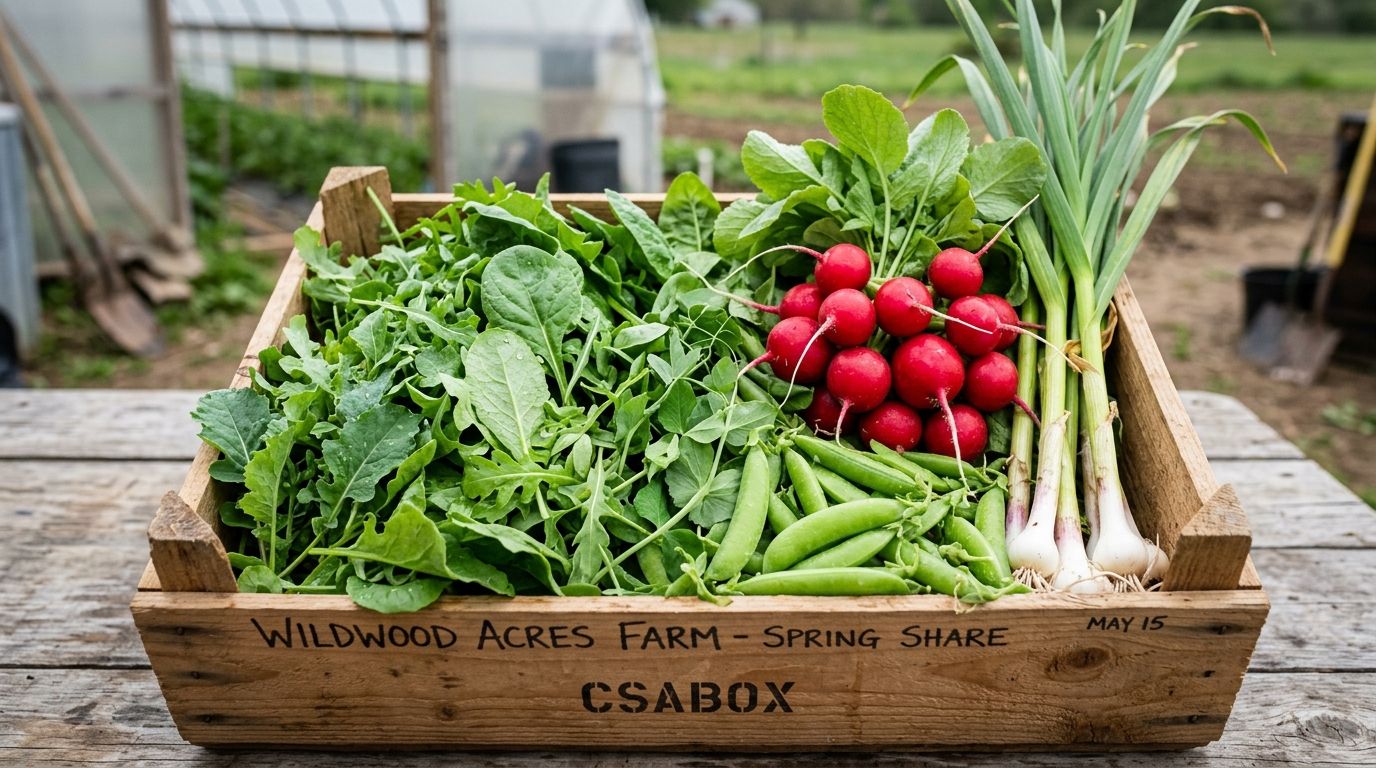
The Spring Harvest Contents
- The Tender Leafy Greens: Early boxes deliver an explosion of salad varieties. Expect bags of succulent baby spinach, spicy wild arugula, tender butterhead (Boston/Bibb) lettuce, crisp oakleaf, and young baby kale. Because these plants grow under mild spring sun, their cell walls remain exceptionally tender and free of the bitter heat-stress compounds that develop in July.
- The Crisp Root Crops: Spring produces some of the sweetest, crunchiest raw-eating vegetables of the year. You will receive bunches of French Breakfast and Cherry Belle radishes, crisp snow peas, sugar snap peas, and pure white Hakurei turnips. Unlike purple-top storage turnips, Hakurei turnips are mild, juicy, and meant to be eaten raw like apples.
- The Immature Alliums: Long before storage onions and garlic finish bulbing in mid-summer, the farm thins its allium beds. You will receive green garlic (young garlic harvested before clove division, looking like a stout scallion with an intense garlic aroma), spring onions, and garlic scapes (the curling, edible floral stems snapped off hardneck garlic to direct energy back into the subterranean bulbs).
- Perennial Treats and Shoots: Depending on your farm's infrastructure, spring shares frequently feature freshly snapped spears of perennial asparagus, delicate pea shoots, and tart stalks of rhubarb.
Culinary Strategy for Spring Shares
When evaluated strictly by physical weight, spring boxes often feel the "lightest" of the entire season. A crate overflowing with four heads of butterhead lettuce, two bags of spinach, a bunch of radishes, and snap peas may weigh only four to six pounds. However, from an economic standpoint, spring shares carry a very high retail replacement value; organic baby greens are among the most expensive commodities per ounce in grocery stores.
Your kitchen strategy during May and June should focus heavily on raw, vibrant preparations. These delicate vegetables will disintegrate if subjected to long braises or heavy stews. Build massive daily salads dressed with light vinaigrettes that let the natural peppery bite of arugula and the sweetness of spinach shine. Use sliced radishes and Hakurei turnips as raw dippers for hummus or herb butter.
Crucially, practice whole-plant cooking to eliminate food waste. Never discard the leafy green tops of your fresh radishes or turnips. Wash them thoroughly in a cold water basin and puree them with toasted sunflower seeds, olive oil, parmesan cheese, and garlic scapes into a bright, peppery spring pesto that freezes beautifully.
Mid-Season (July & August): The Summer Surge
As late June transitions into July, the agricultural landscape undergoes an explosive transformation. This is the chaotic, high-energy zenith of the farm year. Solar radiation peaks, daytime temperatures climb into the 80s and 90s, and the farm transitions from harvesting leaf tissue to harvesting fruiting bodies. The weekly boxes shift dramatically from light, airy crates of greens to dense, heavy crates packed with vibrant color.
Fruiting crops demand tremendous biological energy. The plants spend weeks building expansive root systems and foliage before setting flowers and swelling with water-dense fruits. When July arrives, everything ripens simultaneously. For the consumer, this is the period where "CSA fatigue" can set in if you do not have an efficient meal-prep system. When twenty pounds of perishable produce enters your kitchen every seven days, decisive kitchen management is non-negotiable.
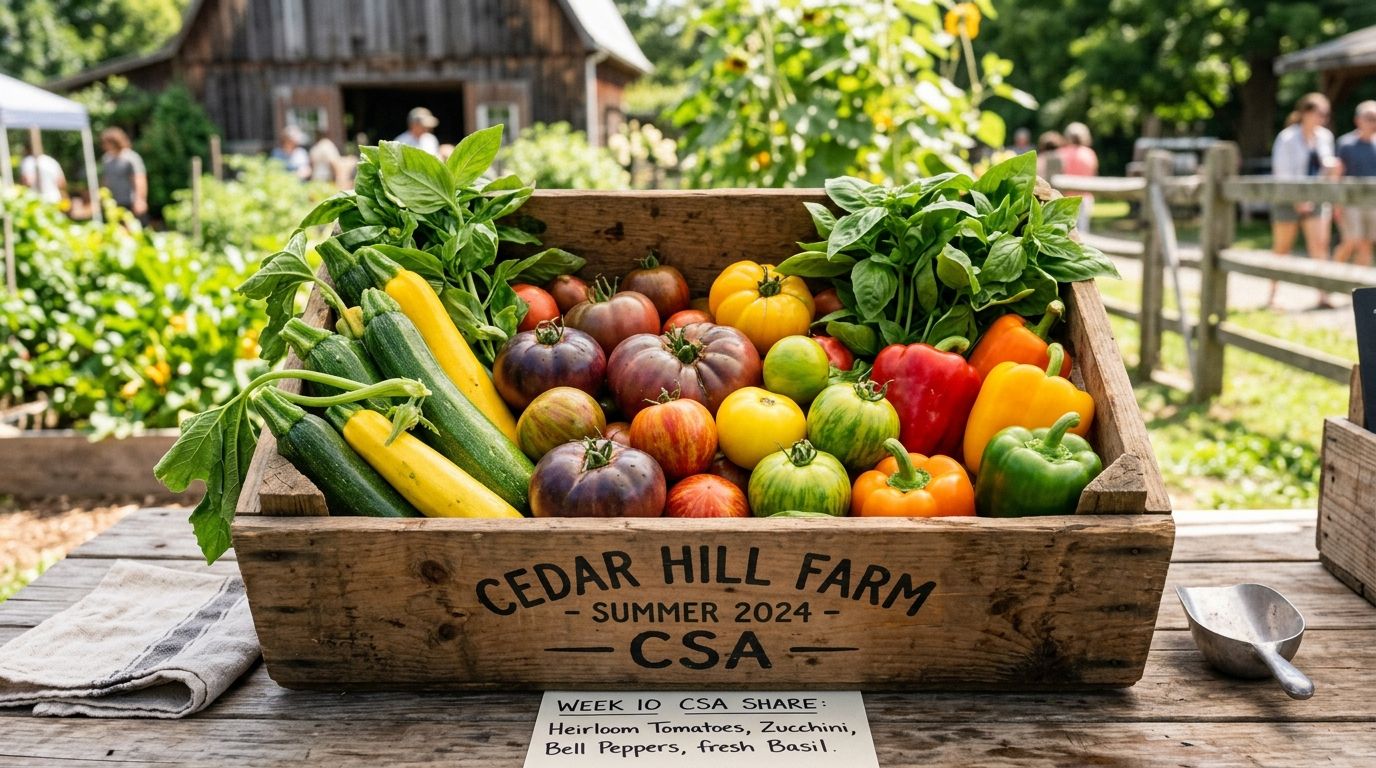
The Summer Harvest Contents
- The Solanaceae (Nightshade) Dynasty: This is the undisputed centerpiece of the summer CSA. You will receive heavy, irregularly shaped heirloom tomatoes (such as Cherokee Purple, Brandywine, and Green Zebra) exhibiting profound sweetness and complex acidity. Pints of multicolored cherry tomatoes, sweet bell peppers, Italian frying peppers (Carmen), spicy jalapeños, and glossy Italian or Asian eggplants arrive in abundance.
- The Cucurbit Influx: Prepare for an endless stream of summer squash and cucumbers. Zucchini, yellow crookneck squash, and star-shaped pattypan squash grow at an astonishing rate during August, requiring daily field harvests. Crisp slicing cucumbers and knobby pickling cucumbers will populate every delivery.
- Field Staples & Legumes: Sweet corn (picked at dawn so its sugars remain un-caramelized), tender yellow wax beans, stringless green snap beans, and massive, aromatic bunches of Genovese basil.
- Warm-Season Melons: By late August, farms with sufficient acreage will begin harvesting personal-sized Sugar Baby watermelons, fragrant cantaloupes, and green-fleshed honeydews.
Culinary Strategy for Summer Shares
Summer cooking requires speed and volume processing. Field-ripened heirloom tomatoes have fragile skins and low pectin levels; if left on a warm countertop for five days, they will collapse. Never refrigerate raw slicing tomatoes, as temperatures below 50°F deactivate the volatile enzymatic compounds responsible for their characteristic aroma and flavor.
When faced with the inevitable "zucchini glut," master the classical French technique of ratatouille. Cooking diced eggplant, zucchini, bell peppers, onions, and crushed heirloom tomatoes down with olive oil and garlic allows you to reduce eight pounds of raw vegetables into a concentrated, savory stew that keeps in the refrigerator for a week and pairs with grains, crusty bread, or grilled meats.
For excess tomatoes, skip the tedious multi-hour water-bath canning if you are short on time. Core the tomatoes, place them whole on a sheet tray in the freezer until solid, and then transfer them into airtight freezer bags. In the dead of winter, simply run them under warm tap water; their skins will slip off effortlessly, and you can drop them directly into simmering chili, soups, or marinara sauces.
Late Season (September & October): The Autumn Harvest
As September unfolds, nighttime temperatures plummet and daylight hours shrink. Plant metabolic rates slow down across the fields. The sun-loving nightshades and cucurbits begin to yellow, succumbing to powdery mildew and terminal exhaustion. In their place emerges the most nutrient-dense and satisfying harvest of the agricultural year: the cool-season storage crops of autumn.
The arrival of the first light frost in late September or early October is an agricultural milestone. While freezing temperatures will instantly blacken tomato and pepper vines, they trigger a profound biochemical survival mechanism in cold-hardy brassicas and root vegetables. To prevent ice crystals from piercing their cellular membranes, these plants rapidly convert stored complex starches into simple glucose and fructose. This natural sugar serves as an internal antifreeze, dropping the freezing point of the plant's cell sap. For the home cook, this means that carrots, parsnips, and kale harvested after a hard frost possess an astonishing, candy-like sweetness that no summer crop can match.
The Autumn Harvest Contents
- Heavy Storage Roots: Expect substantial quantities of frost-sweetened carrots, earthy red and golden beets, sweet parsnips, rutabagas, and diverse potato varieties (Yukon Gold, red-skinned, and fingerlings). These dense staples dramatically increase the overall physical weight of late-season boxes.
- Cured Winter Squashes: The thin-skinned zucchini of August is replaced by hard-rind winter squashes. You will receive tan butternut, ribbed dark-green acorn, sweet single-serving delicata, and rich, chestnut-flavored Japanese kabocha. Because these squashes have been field-cured in the late summer sun to harden their outer rinds, they can sit on a cool pantry shelf for three to six months without refrigeration.
- Robust Hardy Greens: Delicate spring lettuces give way to thick, textured greens capable of withstanding freezing temperatures. Look forward to deep green Lacinato (Dinosaur) kale, ruffled curly kale, broad collard greens, and rainbow Swiss chard with vibrant magenta and gold stems.
- The Cole Crops (Brassicas): Autumn is the prime season for the cabbage family. Boxes feature dense heads of green and purple cabbage, pristine white cauliflower, sweet broccoli crowns, nutty kohlrabi, and heavy stalks of Brussels sprouts.
Culinary Strategy for Autumn Shares
In autumn, the kitchen pressure eases significantly. Unlike a ripe heirloom tomato that demands to be processed within 48 hours, autumn storage vegetables are remarkably forgiving. A crate of butternut squash, sweet potatoes, and parsnips will rest patiently in a cool, dark cupboard for weeks until you are ready to cook.
Shift your cooking techniques from quick raw preparations to slow, high-heat caramelization. High-temperature sheet-pan roasting (425°F) is your greatest asset: toss cubed carrots, parsnips, beets, and delicata squash with olive oil, sea salt, and fresh rosemary. The intense heat caramelizes the vegetable sugars, creating crisp, deeply flavorful roasted medleys. Autumn is also the ideal season for blending hearty pureed soups—such as roasted butternut squash soup or creamy potato-leek soup—which freeze exceptionally well for winter meals.
Master Seasonal Harvest & Yield Matrix
To help visualize how the contents, weight, and botanical diversity of your CSA box evolve throughout a standard 24-week agricultural program, review the following monthly harvest schedule:
| Month | Average Weight | Dominant Botanical Families | Core Box Components | Culinary Focus |
|---|---|---|---|---|
| May | 4 – 7 lbs | Brassicaceae, Amaranthaceae, Allium | Spinach, Arugula, Hakurei Turnips, Radishes, Green Garlic, Pea Shoots | Raw salads, green garlic vinaigrettes, turnip green pestos |
| June | 7 – 12 lbs | Asteraceae, Fabaceae, Amaranthaceae | Butterhead Lettuce, Sugar Snap Peas, Scallions, Swiss Chard, Garlic Scapes, Strawberries | Quick stir-fries, pickled garlic scapes, crisp snacking |
| July | 12 – 18 lbs | Solanaceae, Cucurbitaceae, Lamiaceae | Heirloom Slicing Tomatoes, Zucchini, Pattypan, Cucumbers, Bell Peppers, Genovese Basil | Fresh salsas, ratatouille, gazpacho, caprese salads |
| August | 18 – 25 lbs | Solanaceae, Cucurbitaceae, Poaceae | Cherry Tomatoes, Eggplant, Sweet Corn, Green Beans, Cantaloupes, Jalapeños | Freezer tomato storage, roasted eggplant dips, corn chowders |
| September | 15 – 22 lbs | Apiaceae, Brassicaceae, Cucurbitaceae | Frost Carrots, Beets, Lacinato Kale, Delicata Squash, Leeks, Fingerling Potatoes | Sheet-pan roasting, braised greens, hearty vegetable hashes |
| October | 18 – 24 lbs | Brassicaceae, Cucurbitaceae, Apiaceae | Butternut Squash, Brussels Sprouts, Broccoli, Cabbage, Parsnips, Storage Onions | Pureed squash soups, slow-cooked stews, fermented sauerkraut |
The "Surprise" Elements: Value-Add Items & Collaborative Add-Ons
While fresh vegetables form the core framework of every farm share, the most rewarding moments for members often arise from unexpected surprises. A professionally managed CSA is not merely a box of calories; it is an ongoing culinary curriculum.
Throughout the season, experienced growers integrate fresh culinary herbs into share boxes to enhance flavor profiles. You might find aromatic bundles of Italian flat-leaf parsley, pungent French thyme, fresh oregano, cilantro, or delicate dill fronds. Many farms also interplant pollinator strips within crop rows to provide habitat for beneficial predatory insects, frequently adding small bouquets of zinnias, sunflowers, or edible nasturtium blooms to brighten your kitchen table.
Furthermore, many forward-thinking operations run cooperative distribution models, partnering with neighboring producers to offer optional "add-on" shares. When purchasing your core vegetable share, you can often opt into add-on subscriptions such as:
- Pasture-Raised Egg Shares: A weekly dozen of eggs from pasture-rotated laying hens with deep amber yolks.
- Artisan Sourdough Shares: Freshly baked loaves from local micro-bakeries utilizing regional stone-ground flours.
- Gourmet Mycological Shares: Specialty lion's mane, oyster, and shiitake mushrooms produced by local indoor growers.
- Apiary & Orchard Shares: Raw local wildflower honey and seasonal stone fruit (peaches, plums, apples) from partnered regional orchards.
These collaborative subscriptions transform your weekly pickup into a comprehensive regional market depot, routing your grocery dollars directly into your immediate community economy.
The Kitchen Triage Method: Managing the Bounty Without Waste
The single most common reason members fail to renew their CSA share the following season is produce guilt. When you invest upfront in premium agricultural produce, discovering a forgotten, liquefied bag of spinach in the back of your crisper drawer feels like both an economic and moral failure.
To successfully navigate an entire 24-week season without feeling overwhelmed, you must execute the Kitchen Triage Method. The moment you bring your share crate home, immediately unpack and sort your vegetables into three distinct biological tiers based on respiration rate and shelf stability:
Tier 1: High Perishability (Consume within 1 to 3 Days)
This category encompasses delicate greens with high transpiration rates and fragile cell structures: baby spinach, wild arugula, tender lettuces, pea shoots, sweet corn (whose sugars begin converting to starch within hours of harvest), and ripe heirloom tomatoes. These ingredients must dictate your kitchen meal plan for the first 72 hours following pickup. Prepare large dinner salads, blend greens into breakfast smoothies, and slice fresh tomatoes onto toast immediately.
Tier 2: Moderate Perishability (Consume within 4 to 7 Days)
Vegetables with moderate cellular density belong here: green beans, summer zucchini, cucumbers, bell peppers, broccoli heads, and scallions. These items will comfortably rest in proper crisper storage until the weekend. Plan your weekend sheet-pan dinners, stir-fries, and pasta bakes around these vegetables.
Tier 3: Low Perishability (Stable for 2 to 6+ Weeks)
This category comprises robust storage organs: carrots, beets, winter squashes (butternut, kabocha, acorn), potatoes, dry storage onions, garlic, and dense cabbage heads. These items can be safely ignored during the first week. If you experience a particularly busy work week and cannot finish your vegetables, let your Tier 3 items wait in a cool pantry or crisper drawer while you focus strictly on finishing Tiers 1 and 2.
The Emergency Preservation Tactic: Quick-Pickling
If you reach day five and realize you have more Tier 1 and Tier 2 vegetables than you can eat, deploy the quick-pickle technique. You do not need hot-water canning equipment or sterilized mason jar vacuum lids. Simply slice your excess radishes, cucumbers, jalapeños, green beans, or carrots into thin rounds. Pack them into clean glass jars with a smashed clove of garlic and black peppercorns. Bring a simple brine of equal parts water and 5% white vinegar (or apple cider vinegar), 1 tablespoon of kosher salt, and 1 teaspoon of cane sugar to a rapid boil. Pour the boiling brine over the vegetables, seal the jars, and allow them to cool to room temperature before transferring them to the refrigerator. This five-minute process immediately preserves your produce for up to three months, yielding crisp, tangy condiments for sandwiches and grain bowls.
Choosing the Right CSA Model for Your Lifestyle
As the regional food movement has matured, the operational structure of Community Supported Agriculture has diversified to fit varying household dynamics. The classical model—where members pay upfront in late winter and receive a uniform, pre-packed crate of whatever the farm harvested that morning—remains the purest embodiment of seasonal eating. However, it requires culinary adaptability and an adventurous palate.
If the prospect of receiving three bunches of beets when your family dislikes beets causes hesitation, seek out farms offering a Market-Style or Custom-Choice CSA. In this system, your upfront subscription is loaded into an online farm account as digital debit credit (frequently accompanied by a 10% bonus from the farmer). Each week, you log in to select the exact varieties and quantities your family will consume, minimizing waste.
Volume sizing is equally critical. A standard "Full Share" is calibrated to feed a vegetable-centric family of four, or a couple that cooks at home six nights a week. If you are a single professional or frequently dine out, a Full Share will easily overwhelm your kitchen. Begin your first season with a "Half Share" (or bi-weekly share). Supplementing a smaller share with occasional visits to your local farmer's market is vastly preferable to drowning in excess produce.
For independent research on crop budgeting and seasonal share valuation, consult the comprehensive University of Kentucky Cooperative Extension CSA Planning Guidelines, which document weekly enterprise budgets and harvest schedules for small-scale growers. To locate vetted, reputable farm share programs in your specific community, the national agricultural directory at LocalHarvest.org remains the premier search database.
Related Guides & Practical Homestead Resources
To deepen your understanding of how commercial farm shares operate, how to plan diversified crop successions, and how to scale garden production, explore our comprehensive guides:
- CSA Program Masterclass & Subscription Models: Our flagship deep dive into launching, budgeting, and managing a profitable farm subscription model.
- The Micro-CSA Model: Cultivating Community and Crops in Your Backyard: How backyard homesteaders can generate steady income on a quarter-acre or less.
- Community Supported Agriculture: Legal and Permitting Considerations: Navigating liability, crop-share member agreements, and cottage food regulations.
- Winter CSA Shares: Extending Your Season for Year-Round Income: Cold-hardy storage strategies, high tunnel winter production, and root cellaring.
- Regenerative Soil Biology & Fertility Systems: Building the living fungal and bacterial networks that produce ultra-nutrient-dense seasonal harvests.
Conclusion: The Rhythm of Real Food
Committing to a Community Supported Agriculture share is fundamentally an act of biological citizenship. It asks you to step away from the artificial, year-round uniformity of the industrial grocery aisle and step into the living, breathing reality of regional farming. Yes, there will be humid August weeks where your kitchen counter groans beneath more squash than you thought possible; and there will be cold, blustery spring weeks where a torrential rainstorm delays the snap pea harvest.
Yet by understanding the seasonal progression of the soil—from the crisp, rejuvenating greens of May to the heavy, sun-drenched nightshades of mid-summer and the sweet, dense roots of late October—you cease fighting the contents of the crate. You learn to cook with intuition, preserve excess with confidence, and savor transient, hyper-seasonal flavors that no supermarket freight network can replicate. You are no longer just a passive consumer purchasing commodities; you are an active partner in the harvest.
Expert Insights & FAQs
How much food is actually in a full share?
A standard 'Full Share' is typically designed to provide enough weekly vegetables to feed a family of four, or a couple consisting of two aggressive, plant-based home cooks. It often equates to two large grocery bags of produce.
Do I get to pick what goes in my box?
In a traditional 'Farmer's Choice' CSA, the farmer dictates the contents based on what is ripe that week. However, many farms now offer a 'Market Style' or 'Custom Choice' model where you can log into a portal and select your exact items each week.
What happens if I go on vacation for a week?
Most CSA programs allow you to either place a 'vacation hold' on your box (crediting your account for a future week), have a friend or neighbor pick it up in your place, or donate that week's box to a local food bank.
Are all CSA boxes certified organic?
No. While many CSA farms utilize organic, regenerative, or pesticide-free practices, formal USDA Organic Certification is expensive and time-consuming. Many small farms operate organically without the official certification. Always ask the farmer directly about their growing practices.
What if I receive a vegetable I don't know how to cook?
This is part of the CSA experience! Most farms provide a weekly newsletter containing recipes specifically tailored to that week's box contents. You can also turn to quick pickling or roasting for unfamiliar items.
When does the typical CSA season start and end?
In most temperate climates, a standard summer CSA season runs for 20 to 24 weeks, beginning in late May or early June and concluding in late October just before the hard frosts arrive.
Can I visit the farm where my food is grown?
Yes! Transparency is a core tenet of Community Supported Agriculture. Most farms host an annual 'member day' or farm tour, allowing you and your family to walk the fields and see exactly where your food comes from.
What are CSA 'Add-on' shares?
Add-on shares are supplementary subscriptions you can purchase alongside your vegetable share. Common add-ons include pasture-raised eggs, local honey, artisan sourdough bread, gourmet mushrooms, or cut flower bouquets.
Johnnie McCormick
Zone 7b/8a - North Central Alabama
Johnnie McCormick is a gardening hobbyist and the founder of My Garden Spot. Raised in north-central Alabama, his passion for gardening began in his youth. In 2008, he established a large market garden, teaching himself high-yield growing methods. In the years since, he has operated seasonal seedling sales for transplants, specializing in heirloom tomatoes, peppers, eggplants, decorative ground covers like Ajuga (Bugleweed), marigolds, nasturtiums, and fresh kitchen-window herb arrangements (basil, cilantro). Today, he gardens in the hills between Birmingham and Jasper, Alabama (Zone 7b/8a), sharing practical, community-focused gardening resources.
Verified Authoritative Citations & References
In alignment with our strict E-E-A-T research and verification guidelines, this guide cross-references data from the United States Department of Agriculture (USDA) and Cooperative Extension Service programs.
- USDA Agricultural Marketing Service (AMS): Community Supported Agriculture (CSA) standards and local market surveys. ams.usda.gov
- Penn State Extension: Small Farm Economics, financial planning, and crop pricing research documents. extension.psu.edu
- Cornell Cooperative Extension: Market gardening business planning and local sales guidelines. smallfarms.cornell.edu
- Alabama Cooperative Extension System (ACES): Local food regulations, CSA legal permits, and farm safety standards. aces.edu

Please log in to view comments.