Vegetable Guide: The Complete Manual for French Breakfast Radishes

Vegetable Guide: The Complete Manual for French Breakfast Radishes
For most Americans, the word "radish" conjures up a very specific, generally unpleasant culinary memory. We think of those perfectly spherical, aggressively red spheres that come in a plastic bag at the supermarket. They are usually pithy on the inside, overwhelmingly spicy, and entirely devoid of nuance. They are treated as an afterthought—a mandatory splash of color on a generic salad bar.
The French Breakfast radish is an entirely different biological entity.
It is elongated, cylindrical, and elegantly tapered. The top two-thirds of the root are a vibrant, fuchsia-pink, while the bottom third tapers into a crisp, pure white tip. When grown correctly in cool, biologically active soil, a French Breakfast radish is not aggressively spicy. It is mild, slightly sweet, and incredibly crisp. The traditional French preparation is to slice them lengthwise, smear them with high-quality cultured butter, sprinkle them with coarse sea salt, and eat them raw.
For the small-scale market gardener, the French Breakfast radish is not just a culinary delight; it is an absolute economic powerhouse. It is one of the fastest-maturing crops on the farm, often going from dry seed to a harvestable bunch in twenty-one to twenty-eight days. This velocity allows you to cycle a single garden bed four or five times in a single season, maximizing the profitability of your square footage.
However, because they grow so fast, there is zero margin for error. If you stress a radish plant for even forty-eight hours, the root will turn woody, crack open, or become overwhelmingly spicy.

Seed Biology and Variety Selection
The French Breakfast radish (Raphanus sativus) belongs to the Brassicaceae family, making it a close cousin to broccoli, cabbage, and kale. Because it is a Brassica, it is fundamentally a cool-weather crop.
If you attempt to grow French Breakfast radishes in the blistering heat of July, the plant will experience severe thermal stress. It will completely abandon root production and instead "bolt," sending up a tall central stalk to produce flowers and seeds. The resulting root will be fibrous, incredibly spicy, and completely inedible.
Therefore, you must target the "shoulder seasons"—early spring and late fall.
When purchasing seed, you have two primary options: Open-Pollinated (OP) heirlooms and F1 Hybrids.
The traditional OP 'French Breakfast' strain is widely available and very inexpensive. However, for a commercial market garden where uniformity is critical, many growers opt for hybrid varieties like 'D'Avignon'. These F1 hybrids have been selectively bred to mature at the exact same day, meaning you can clear-cut the entire bed in one harvest rather than selectively picking through the row over a week.
Precision Soil Preparation
The biological objective of a radish is to push a taproot downward into the earth. If that taproot encounters physical resistance, the radish will deform.
If the soil is heavily compacted from tractor tires or foot traffic, the radish will grow short and bulbous rather than elongated. If the growing tip of the radish hits a rock or a hard clump of un-composted wood chips, it will "fork," splitting into two or three tangled, ugly roots.
To achieve the perfect cylindrical shape of a French Breakfast radish, your soil must be completely frictionless.
This requires meticulous bed preparation. You should ideally be growing in raised permanent beds built with deep, loose compost. Before planting, it is highly recommended to use a broadfork to deeply aerate the soil profile without inverting the soil layers. Following the broadfork, you must rake the top two inches of the bed to a perfectly smooth, fine tilth, removing any debris or rocks.
The Nitrogen Warning
Radishes require fertile soil, but they are incredibly sensitive to excess nitrogen.
If you amend a radish bed with a massive dose of raw chicken manure or synthetic nitrogen fertilizer, the plant will respond by rapidly generating massive, lush green leaves. However, it will completely neglect root development. You will harvest a beautiful bouquet of radish greens with a tiny, thread-like red root attached.
Always ensure your compost is fully finished and rely on a balanced organic amendment profile rather than heavy nitrogen loading.
Sowing Mechanics and Precision Spacing
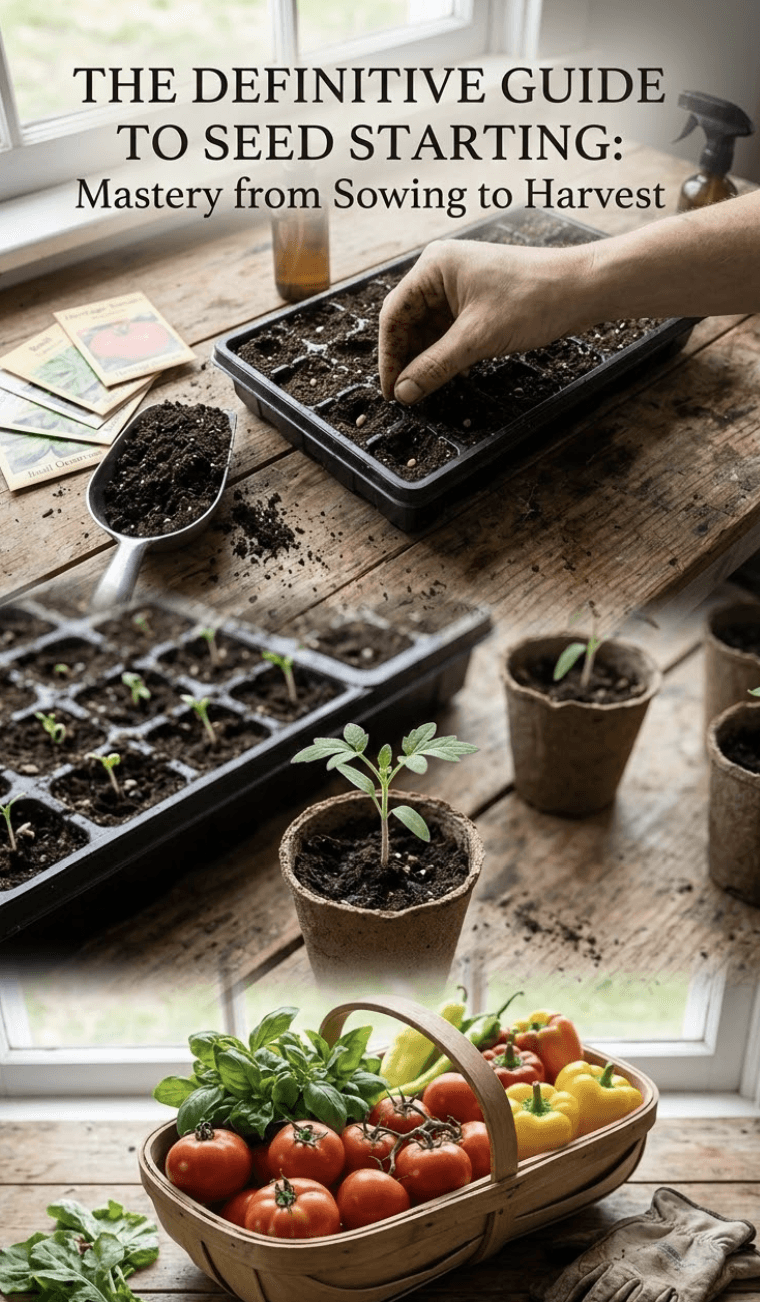
Because a radish crop matures in less than a month, transplanting them from seedling trays is a complete waste of time and labor. They must be direct-seeded into the soil.
The spacing of the seed is the single most critical factor in a successful radish crop.
A French Breakfast radish needs exactly one inch of horizontal space to swell to its proper diameter. If you sow the seeds too densely (e.g., three seeds per inch), the radishes will compete for water and sunlight. They will physically press against each other, stunting their growth and forcing them to stay thin and woody.
Many backyard gardeners simply scatter radish seeds by hand and then come back two weeks later to "thin" the seedlings, plucking out the extras to achieve proper spacing. In a commercial market garden, thinning is an unacceptable labor expense. You cannot pay a farmhand $15 an hour to crawl on their hands and knees plucking tiny seedlings.
You must sow the seed accurately the first time. For small-scale farms, this requires a precision seeder like the Jang JP-1 or the EarthWay seeder. By calibrating the seed roller correctly, the machine will drop exactly one radish seed every 1.5 inches in a perfectly straight line. You can easily fit five or six rows of radishes in a standard 30-inch wide market bed.
Irrigation: The Key to Crispness and Mild Flavor
The crisp, watery crunch of a perfect French Breakfast radish is the direct result of consistent cellular hydration. The overwhelming, spicy "bite" of a bad radish is the direct result of drought stress.
When a radish plant is deprived of water, it concentrates its mustard oils (glucosinolates) as a defense mechanism, resulting in a harsh, burning flavor. Furthermore, fluctuating moisture levels—allowing the bed to dry out completely and then flooding it with a heavy watering—will cause the radish cells to swell too rapidly, physically cracking the root wide open.
You must maintain even, consistent soil moisture from the moment the seed hits the dirt until the moment you pull the harvest.
Because radish seeds are planted very shallowly (about 1/4 inch deep), the top layer of soil can dry out rapidly on a sunny breezy day. During the germination phase (days 1 through 5), you may need to briefly run overhead irrigation twice a day simply to keep the soil surface moist. Once the canopy establishes and shades the soil, you can transition to deep, less frequent waterings via drip tape.
Pest Management: Defeating the Flea Beetle
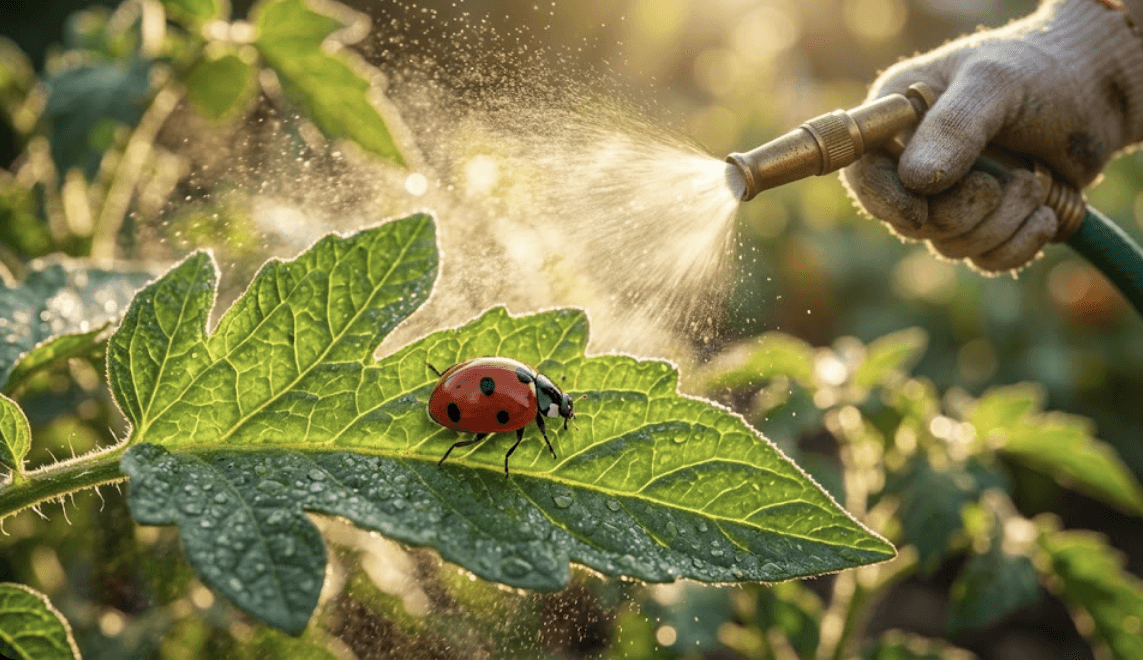
The French Breakfast radish grows so fast that it generally outpaces most agricultural pests. There is, however, one glaring exception: the Flea Beetle.
Flea beetles are tiny, black, jumping insects that possess an almost supernatural ability to locate newly germinated Brassica crops. They do not eat the root; they eat the leaves. They chew hundreds of tiny "shot holes" through the foliage.
A light flea beetle infestation is merely an aesthetic issue. But a heavy infestation on young seedlings will completely destroy the plant's photosynthetic capacity, stunting the root growth entirely.
Because organic market gardeners cannot spray synthetic neurotoxins to kill the beetles, the absolute best defense mechanism is physical exclusion.
The moment you finish seeding a bed of radishes, you should immediately cover the bed with an agricultural fabric, such as Agribon (a spun-bond row cover) or ProtekNet (a fine insect netting), supported by wire hoops. You must bury the edges of the netting in the dirt. This physical barrier completely prevents the flea beetles from accessing the crop. You leave the netting on for the entire 28-day growth cycle, only removing it to harvest.
For a deep dive into the lifecycle and organic management of flea beetles, the Cornell University College of Agriculture and Life Sciences provides excellent pathology resources.
Harvesting and Post-Harvest Handling
A French Breakfast radish does not "hold" in the field. When it is ready, you have a window of about three to four days to pull it. If you leave it in the ground for an extra week, it will rapidly become oversized, pithy (spongy on the inside), and overly spicy.
Harvesting is incredibly fast. Because the soil is loose and well-prepared, you simply grasp the base of the greens and pull smoothly upward.
In a commercial setting, radishes are almost always sold in bunches, rather than loose by the pound. The visual appeal of the vibrant green tops contrasting with the bright red roots is a massive selling point at a farmers market. You should aim to bunch them in the field as you pull them, wrapping a rubber band around the stems of 8 to 10 premium radishes.

The Cold Chain
The moment you pull a radish out of the earth, the biological clock starts ticking. The lush green tops will begin to transpire and wilt within thirty minutes if exposed to direct sun and wind.
You must move the harvested bunches immediately into the shade and begin the washing process.
Washing radishes requires high water pressure to blast the sticky loam off the delicate white tips. A stainless steel spray table or a bubbler tank is highly effective. As soon as the dirt is removed, the radishes must be plunged into ice-cold water to completely remove the "field heat."
Once chilled, they should be packed into waxed cardboard boxes or plastic totes and moved directly into a walk-in cooler set to 35°F (1.6°C) with 95% humidity. If you manage the cold chain perfectly, the greens will remain vibrant and upright for up to a week.
Conclusion: The Ultimate Quick Turn Crop
The French Breakfast radish is the ultimate test of a market gardener's precision.
It requires flawless soil preparation, pinpoint seeding accuracy, and hyper-vigilant irrigation management. But if you master those variables, it rewards you with an incredibly fast, highly profitable crop that requires almost zero ongoing maintenance.
It is the perfect crop to fill a brief gap in your crop rotation, bringing early spring cash flow to the farm while your tomatoes and peppers are still sitting in the greenhouse waiting for the last frost to pass.
Expert Insights & FAQs
Are radish leaves edible?
Yes, radish greens are completely edible and highly nutritious. While their slightly prickly texture makes them less desirable for raw salads, they are excellent when sautéed like spinach, added to soups, or blended into a peppery pesto.
How long does a French Breakfast radish take to mature?
Under ideal cool-weather conditions with proper moisture, they are one of the fastest-growing vegetables in the garden, typically reaching harvestable maturity in just 25 to 30 days from sowing.
Can I start French Breakfast radishes indoors in seed trays?
No. Radishes, like carrots, are taproots. Transplanting them disturbs the root structure and almost guarantees stunted, deformed vegetables. They must be direct-sown exactly where they are meant to grow.
Why are my radishes cracking and splitting open in the ground?
Splitting is the result of irregular watering. If the soil dries out, the radish's skin hardens. When water is suddenly reintroduced, the interior swells faster than the skin can stretch, causing it to split. Consistent, even moisture prevents this.
What does it mean when my radish sends up a tall flower stalk?
This is called "bolting," and it means the plant has shifted from root production to seed production, usually triggered by hot weather or lengthening days. Once a radish bolts, the root becomes woody and inedible. Pull it and compost it.
Why are my radishes so incredibly spicy and bitter?
Excessive heat and inconsistent watering cause radishes to produce high levels of glucosinolates, the compounds responsible for their heat. Growing them in cool spring or autumn weather with steady moisture guarantees a mild, sweet flavor.
Can I grow French Breakfast radishes in containers?
Yes, they are exceptionally well-suited for container gardening. Because their roots are shallow and elongated, a window box or container that is at least 6 to 8 inches deep will provide ample room. Just ensure the potting mix is loose and drains well.
Why are my French Breakfast radishes all tops and no roots?
This is usually caused by excessive nitrogen in the soil, which encourages lush leafy growth at the expense of root development. It can also be caused by failing to thin the seedlings; if they are crowded, they do not have the physical space to swell.
Johnnie McCormick
Zone 7b/8a - North Central Alabama
Johnnie McCormick is a gardening hobbyist and the founder of My Garden Spot. Raised in north-central Alabama, his passion for gardening began in his youth. In 2008, he established a large market garden, teaching himself high-yield growing methods. In the years since, he has operated seasonal seedling sales for transplants, specializing in heirloom tomatoes, peppers, eggplants, decorative ground covers like Ajuga (Bugleweed), marigolds, nasturtiums, and fresh kitchen-window herb arrangements (basil, cilantro). Today, he gardens in the hills between Birmingham and Jasper, Alabama (Zone 7b/8a), sharing practical, community-focused gardening resources.
Verified Authoritative Citations & References
In alignment with our strict E-E-A-T research and verification guidelines, this guide cross-references data from the United States Department of Agriculture (USDA) and Cooperative Extension Service programs.
- Cornell Cooperative Extension: Home Vegetable Gardening Guide and vegetable variety recommendations. gardening.cals.cornell.edu
- Penn State Extension: Master Gardener Manual and companion planting matrices. extension.psu.edu
- Alabama Cooperative Extension System (ACES): Raised bed construction plans and regional seed planting calendars. aces.edu
- USDA NRCS: Cover crops and biological soil health guidelines. nrcs.usda.gov

Please log in to view comments.