Vegetable Guide: Mastering Heirloom Spinach Before the Summer Heat

Vegetable Guide: Mastering Heirloom Spinach Before the Summer Heat
When most modern consumers think of spinach, they picture the ubiquitous clear plastic clamshell at the grocery store labeled "Baby Spinach."
Inside that plastic box are thousands of tiny, perfectly flat, spade-shaped leaves. They are uniform, mild-mannered, and relatively watery. That product is the result of decades of intense corporate breeding designed to create a leaf that can be mechanically harvested by massive tractors, washed in industrial chlorine baths, and shipped across the continent without turning to mush.
It is functional, but it is entirely devoid of character.
Heirloom spinach—specifically classic varieties like Bloomsdale Long Standing—is a completely different agricultural experience.
True heirloom spinach is characterized by its deeply "savoyed" (crinkled and blistered) leaves. It is not flat; it is heavily textured, resembling a dark green, biological topographic map. The leaves are incredibly thick, dense, and packed with a profound, earthy, mineral-rich flavor that simply does not exist in modern hybrid varieties.
For the small-scale market gardener, offering massive, hand-bunched rosettes of deeply savoyed heirloom spinach is a massive competitive advantage. It visually stands out on the market table, practically screaming "farm-fresh." It is the ultimate cool-weather cash crop.
However, heirloom spinach is notorious for being incredibly finicky. It demands precise soil chemistry, perfect timing, and a deep understanding of its biological aversion to heat.

The Biology of the Seed
Spinach (Spinacia oleracea) has a very unique seed. It is relatively large, angular, and often covered in tiny, sharp spikes.
Biologically, spinach is a true cold-weather obligate. It not only tolerates cold, but it also requires cold to thrive. The seeds will easily germinate in soil temperatures as low as 40°F (4°C). In fact, if the soil temperature rises above 75°F (24°C), the seeds enter a state of thermal dormancy and refuse to sprout entirely.
Because of this intense preference for cold, spinach is one of the very first crops a market gardener will seed into the ground in the early spring, often just days after the snow melts and the soil thaws enough to work. It is also the very last crop planted in the late fall.
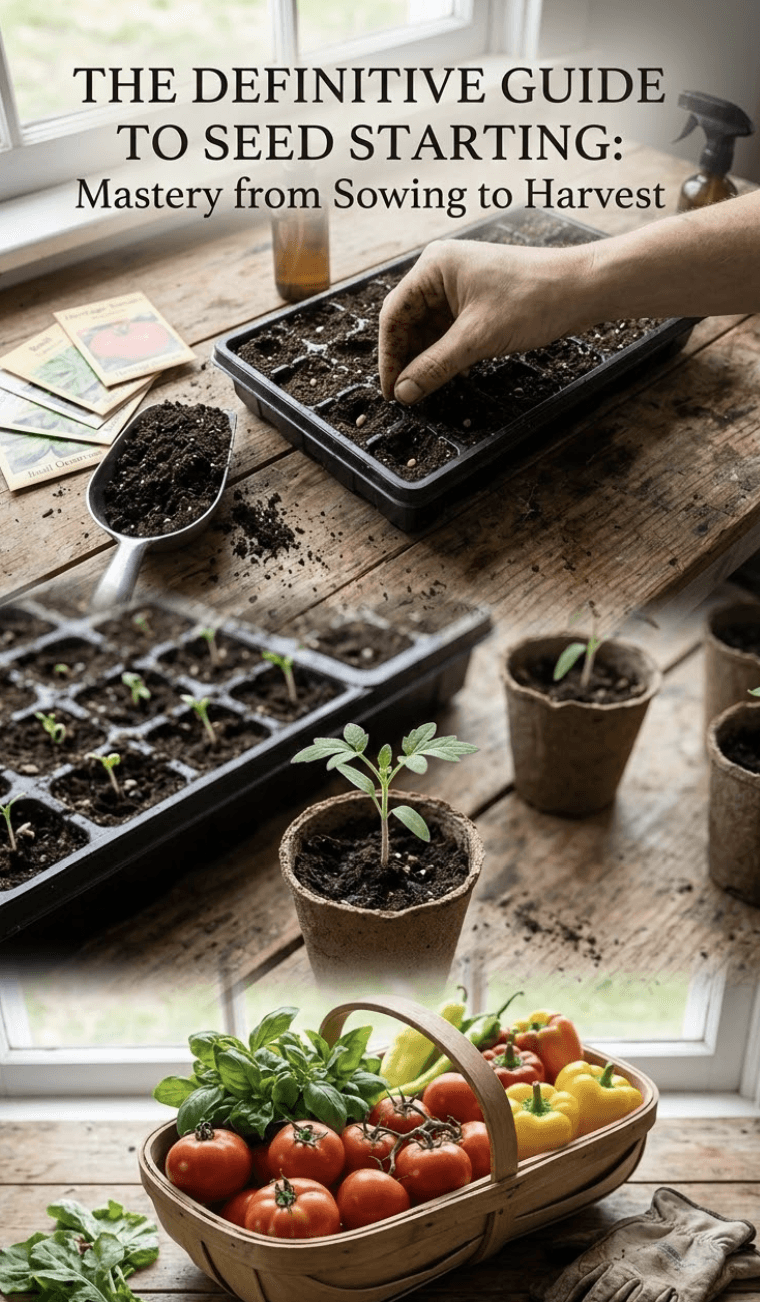
Spinach possesses a long, delicate taproot. Because of this taproot architecture, spinach absolutely hates being transplanted. If you start spinach seeds in a plug tray in a greenhouse and then attempt to transplant them into the field, the physical shock to the taproot will almost always trigger the plant to immediately "bolt" (go to seed) while it is still tiny.
Therefore, you must direct-seed spinach directly into the garden bed where it will mature.
Soil Chemistry: The pH Imperative
Spinach is arguably the most pH-sensitive crop in the entire vegetable garden.
Most vegetables prefer slightly acidic soil (around a pH of 6.5). Spinach, however, demands a neutral to very slightly alkaline soil profile (pH 6.8 to 7.2).
If you attempt to grow spinach in acidic soil (e.g., pH 5.5), the crop will be a total failure. The plants will emerge from the soil, but they will be stunted, sickly, and pale yellow. This is not because the soil lacks nutrients; it is because the high acidity chemically "locks up" the nutrients in the soil, preventing the spinach roots from absorbing them.
Before you ever plant a seed of heirloom spinach, you must conduct a soil test. If your soil is acidic, you must aggressively amend the bed with agricultural lime (calcium carbonate) several months prior to planting to raise the pH.
Furthermore, because spinach is grown entirely for its dark green vegetative foliage, it is a heavy feeder of Nitrogen and Iron. The deep, emerald-green color of a perfect Bloomsdale leaf is a direct reflection of adequate iron uptake. You must build your spinach beds with heavy applications of rich, fully finished compost or a granular organic fertilizer like blood meal.
Sowing Mechanics and Spacing
Because you are growing heirloom spinach to full maturity to achieve those massive, savoyed leaves, you cannot broadcast the seed thickly like a lawn.
If you crowd heirloom spinach, the plants will compete fiercely for water and nitrogen. The resulting leaves will be tiny, yellow, and the plants will bolt prematurely due to the stress of competition.
For full-sized heirloom heads, you must precision-seed the crop. Using a precision seeder (like the Jang JP-1), you should calibrate the machine to drop one seed every two to three inches in the row, with the rows spaced four to six inches apart.
This spacing allows the individual spinach plants to spread their leaves wide, forming beautiful, flat, overlapping rosettes that cover the entire surface of the soil, naturally acting as a living mulch to suppress weeds.
Overwintering: The Ultimate Spinach Hack
One of the most powerful economic strategies for a small farm is overwintering spinach.
Spinach is so incredibly cold-hardy that it can survive being frozen completely solid. If you seed a bed of spinach in late September, the plants will grow to about three inches tall before the hard freezes of November arrive and the diminishing daylight shuts down their vegetative growth.
At this point, you cover the bed with a heavy-duty agricultural fabric (like Agribon AG-50) supported by wire hoops, creating a "low tunnel."
The spinach will simply go dormant. It will freeze solid on a 10°F night in January. When the sun comes up and warms the low tunnel, the leaves will thaw out and look perfectly fine. They produce natural antifreeze proteins in their cellular structure that prevent the cell walls from rupturing when frozen.
When the days begin to lengthen in late February, that dormant spinach will instantly "wake up" and explode into rapid growth, weeks before you can even get a tractor into the muddy spring fields to prep new beds. Overwintered spinach produces the sweetest, thickest, most incredible leaves of the entire year, because the cold temperatures force the plant to convert its starches into sugars.
Defeating the Leaf Miner
While spinach is generally free from the flea beetles that plague radishes, it has one devastating nemesis: the Spinach Leaf Miner.
The leaf miner is a tiny, non-descript fly. In the spring, the female fly lands on the underside of a spinach leaf and lays a cluster of tiny, chalk-white eggs. When the eggs hatch, the microscopic maggots do not eat the outside of the leaf; they bore into the leaf, living perfectly protected between the upper and lower epidermal layers.
As they eat their way through the interior of the leaf, they leave behind winding, serpentine "mines" or large, translucent brown blotches that completely ruin the crop for market.
Because the maggots are inside the leaf, chemical sprays are completely ineffective.
The absolute best defense is physical exclusion. The moment you seed the spinach bed, you must immediately cover it with a fine insect netting (like ProtekNet). The netting physically prevents the adult fly from landing on the leaves to lay her eggs.
For an extensive, academic deep dive into the life cycle and organic mitigation strategies for this devastating pest, the Penn State Extension provides world-class entomological resources.

Harvesting Mechanics
When harvesting heirloom spinach, you have two primary options: the "cut-and-come-again" method, or harvesting the entire rosette.
For the highest quality presentation at a farmers market, harvesting the entire rosette is preferred. Using a sharp field knife, you locate the base of the plant where the root meets the soil line. You slice cleanly through the taproot, pulling up the entire head of spinach intact, holding it together by the crown.
This method yields a massive, impressive bunch that can be tied with a rubber band.
However, if you want to extend the harvest window, you can use the cut-and-come-again method. Instead of cutting the root, you simply use a knife to shear off the largest, outermost leaves of the plant, leaving the tiny inner leaves and the growing point intact. The plant will continue to push new growth from the center, allowing you to harvest the same bed two or three times over a three-week period.
The Bolting Danger
The season for spinach always ends abruptly.
As spring turns into summer, the days get longer (surpassing 14 hours of daylight) and the temperatures inevitably spike into the 80s. This combination of long photoperiods and high heat triggers the spinach plant to bolt.
The central stem of the plant will rapidly elongate, shooting upward to form a flower stalk. The moment a spinach plant begins to bolt, the leaves change shape—becoming sharply arrow-shaped rather than rounded—and they turn incredibly bitter.
There is no stopping this biological imperative. When the spinach bolts, the season is over. You must quickly clear-cut the bed, run a broadfork through the soil, and immediately plant a heat-loving summer crop, like tomatoes or peppers, in its place.
Conclusion: The Emerald Cash Crop
Mastering heirloom spinach varieties like Bloomsdale Long Standing requires a fundamental shift away from the industrial "baby spinach" mindset.
You must focus on meticulous pH management, precision spacing to allow the rosettes to achieve their massive potential, and aggressive physical exclusion of the leaf miner. If you execute these steps flawlessly, you will pull hundreds of pounds of the darkest, sweetest, most nutrient-dense greens out of your early spring garden, cementing your reputation at the farmers market as a grower of true quality.
Expert Insights & FAQs
What is seed priming and is it necessary?
Seed priming (osmopriming) involves soaking spinach seeds in room-temperature water for 12 to 24 hours before planting, then rinsing and drying them. This washes away natural germination inhibitors present in the seed coat, significantly speeding up germination times in cold early-spring soil.
How do I harvest spinach without killing the plant?
Use the "cut-and-come-again" method. Harvest only the largest, outermost leaves by snipping them at the base of the stem. Leave the smaller, central leaves (the crown) fully intact. The plant will continue to push new growth from the center, allowing for multiple harvests over several weeks.
How cold can heirloom spinach tolerate?
Spinach is incredibly frost-hardy. Established plants can easily survive temperatures dropping into the low 20s Fahrenheit (-6°C). If grown under a protective low tunnel or a cold frame, many heirloom varieties will survive sub-zero temperatures and continue to produce throughout the winter.
What is the best heirloom spinach variety to resist early bolting?
'Bloomsdale Long Standing' is legendary for its ability to delay bolting slightly longer than other heirloom varieties. It produces thick, deeply savoyed (crinkled) leaves. For overwintering and fall planting, 'Giant Winter' is a phenomenal, cold-hardy heirloom choice.
Why are my spinach leaves turning yellow and stunted?
Yellowing leaves are usually a sign of nitrogen deficiency or a pH lockout. Spinach requires heavy nitrogen for leaf production. If your soil pH is below 6.0, the acidic environment prevents the roots from absorbing nitrogen, even if it is present in the soil. Test your pH and apply a liquid fish emulsion for a quick nitrogen boost.
Should I start spinach seeds indoors to get a head start?
It is highly discouraged. Spinach produces a long, sensitive taproot. If grown in indoor plastic cell trays, the taproot becomes confined and stressed, which often causes the plant to bolt prematurely shortly after being transplanted. Always direct-sow spinach seeds into the garden bed.
Can I grow spinach in the summer if I use shade cloth?
No. While shade cloth lowers the temperature, it does not change the photoperiod (the length of the day versus the length of the night). Because day length is the primary trigger for bolting, spinach will still bolt in the middle of summer even if grown in deep shade.
Why did my spinach turn into a tall stalk with small, bitter leaves?
This is called "bolting." Spinach is a long-day plant. When the days grow longer than 13 to 14 hours in late spring, the plant is genetically triggered to stop producing leaves and immediately shoot up a flower stalk to produce seeds. The bitterness is a defense mechanism to protect the seeds from herbivores.
Johnnie McCormick
Zone 7b/8a - North Central Alabama
Johnnie McCormick is a gardening hobbyist and the founder of My Garden Spot. Raised in north-central Alabama, his passion for gardening began in his youth. In 2008, he established a large market garden, teaching himself high-yield growing methods. In the years since, he has operated seasonal seedling sales for transplants, specializing in heirloom tomatoes, peppers, eggplants, decorative ground covers like Ajuga (Bugleweed), marigolds, nasturtiums, and fresh kitchen-window herb arrangements (basil, cilantro). Today, he gardens in the hills between Birmingham and Jasper, Alabama (Zone 7b/8a), sharing practical, community-focused gardening resources.
Verified Authoritative Citations & References
In alignment with our strict E-E-A-T research and verification guidelines, this guide cross-references data from the United States Department of Agriculture (USDA) and Cooperative Extension Service programs.
- Cornell Cooperative Extension: Home Vegetable Gardening Guide and vegetable variety recommendations. gardening.cals.cornell.edu
- Penn State Extension: Master Gardener Manual and companion planting matrices. extension.psu.edu
- Alabama Cooperative Extension System (ACES): Raised bed construction plans and regional seed planting calendars. aces.edu
- USDA NRCS: Cover crops and biological soil health guidelines. nrcs.usda.gov

Please log in to view comments.