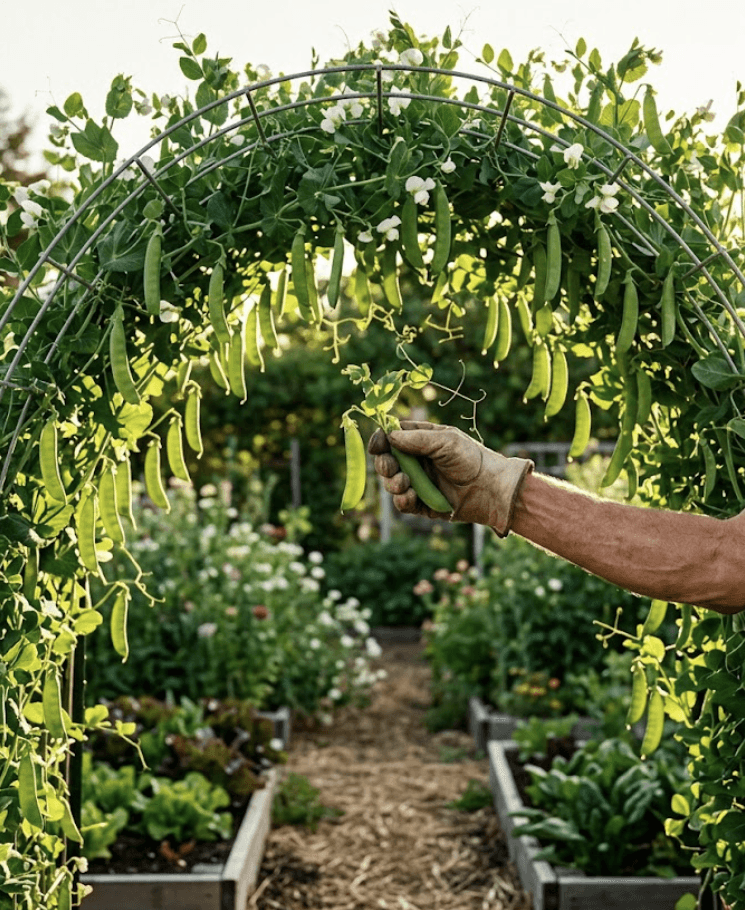
Vegetable Guide: How to Grow Sugar Snap Peas on a Trellis
There is a brief, magical window in the early spring garden when the frost is receding, the soil is just beginning to wake up, and the air holds a crisp chill. This is the exact moment to plant sugar snap peas (Pisum sativum var. macrocarpon). Unlike the tough, starchy shelling peas of the past or the flat, fibrous snow peas used in stir-fries, the modern sugar snap pea is a horticultural triumph. The entire pod is edible, plump, fiercely crunchy, and holds a water-rich sweetness that makes it the undisputed candy of the vegetable garden.
However, despite their popularity, sugar snap peas are frequently misunderstood by home gardeners. We often see well-intentioned growers plant them in warm May soils, let them sprawl haphazardly across the ground, and wonder why the vines succumb to powdery mildew before producing a meaningful harvest.
Here at My Garden Spot, managed by MBG Services, we approach cultivation with a blend of academic precision and practical, dirt-under-the-fingernails experience. Growing a massive, vertical wall of sugar snap peas requires more than just dropping seeds into the dirt. It demands a master-level understanding of vertical gardening infrastructure, the delicate mechanics of cool-soil germination, and the absolute biological necessity of bacterial inoculation.
In this comprehensive vegetable guide, we will unpack the science and the strategy behind cultivating the ultimate sugar snap pea harvest, teaching you how to build the perfect trellis, hack the soil microbiome, and reap baskets of sweet, crisp pods before the summer heat even arrives.
The Biological Imperative of the Trellis
Before we discuss the soil, we must look to the sky. Sugar snap peas are vining legumes. While seed catalogs occasionally offer "bush" varieties, true, high-yielding sugar snap peas (like the legendary 'Super Snappy' or 'Sugar Snap' original) are indeterminate climbers. Their genetic code compels them to grow vertically, often reaching six to eight feet in height.
Why Sprawling Fails
If you allow pea vines to sprawl on the ground, you are inviting a cascade of horticultural disasters:
- Fungal Pathogens: The soil surface is damp and teeming with fungal spores. When pea leaves rest on wet earth, they rapidly contract soil-borne blights and powdery mildew.
- Pest Access: Slugs, pillbugs, and rodents have unobstructed access to your harvest when it lies on the ground.
- Reduced Photosynthesis: A tangled mat of vines shades its own leaves, drastically reducing the plant's ability to photosynthesize and produce the sugars that make the pods sweet.
- Harvesting Nightmare: Finding green pods hidden inside a tangled mat of green leaves on the ground is an exercise in profound frustration.
The Anatomy of the Climb: Understanding Tendrils
Peas climb differently than pole beans. Beans are "twiners"—they wrap their entire main stem around a pole. Peas, on the other hand, use specialized, modified leaves called tendrils. These tiny, thread-like structures reach out blindly into the air. When they brush against a physical object, the cells on the contact side slow their growth, while the cells on the opposite side accelerate, causing the tendril to rapidly coil and lock onto the support.
Because tendrils are microscopic in their gripping action, they cannot wrap around a thick wooden post or a wide bamboo cane. They require a thin lattice to grab onto. ### Building the Ultimate Vertical Infrastructure To support a heavy wall of mature pea vines, your trellis must be strong, tall, and offer thin gripping points. Here are the two most effective professional methods:
- The Cattle Panel Arch or Wall: This is the gold standard for raised beds. A galvanized steel cattle panel (usually 16 feet long and 50 inches wide) can be arched between two raised beds or cut in half and secured vertically using heavy-duty T-posts. The 4-inch by 4-inch wire grid is the exact thickness required for pea tendrils to lock onto effortlessly. It is virtually indestructible and will last for decades.
- The T-Post and Nylon Trellis Netting: For long, in-ground rows, drive a heavy metal T-post into the ground every 8 feet. Stretch a high-tensile wire across the top of the posts, and suspend heavy-duty horticultural nylon netting (often called "pea netting") down to the soil line. Anchor the bottom of the netting with landscape staples. The thin nylon squares are perfect for tendrils, and at the end of the season, you can simply cut the netting down and compost it along with the dead vines.
Pro-Tip: Always orient your trellis North-to-South if possible. This allows the morning sun to hit the east side of the wall and the afternoon sun to hit the west side, ensuring even light distribution and maximizing photosynthesis.
The Secret Weapon: Rhizobia Bacterial Inoculation
If there is one master-level secret to explosive legume growth, it is understanding the subterranean relationship between pea roots and bacteria.
Peas are heavy consumers of nitrogen. However, adding synthetic nitrogen fertilizer to a pea bed is actually counterproductive. It fuels massive, weak leafy growth at the expense of flower and pod production. Instead, you must allow the plant to manufacture its own nitrogen through a symbiotic relationship with a specific genus of soil bacteria called Rhizobia.
The Mechanics of Nitrogen Fixation
Our atmosphere is approximately 78% nitrogen gas (N2). However, plants cannot breathe in this gas; they can only absorb nitrogen through their roots in the form of nitrates or ammonium.
Rhizobia bacteria possess the miraculous ability to pull atmospheric nitrogen gas from the air pockets in the soil and convert it into plant-available ammonia. In nature, these bacteria float freely in the soil. When a pea seed germinates, its roots exude chemical signals (flavonoids) calling out to the Rhizobia.
The bacteria swim to the root hairs and infect them. The plant responds by building a small, pinkish bump called a root nodule to house the bacteria. Inside this custom-built nodule, the plant feeds the bacteria sugars derived from photosynthesis. In exchange, the bacteria pump a constant, perfectly calibrated drip of pure nitrogen directly into the plant's vascular system.
How to Properly Inoculate Your Seeds
While Rhizobia bacteria exist naturally in some soils, you cannot guarantee that the specific strain required for Pisum sativum is present in high enough concentrations in your garden bed. To guarantee maximum yield, you must physically inoculate the seeds immediately before planting.
- Purchase the Right Inoculant: Buy a fresh packet of powdered legume inoculant (specifically labeled for peas and beans) from a reputable supplier. This powder contains billions of dormant Rhizobia spores.
- The Slurry Method: Do not simply dust the dry seeds with the powder; it will fall off in the soil. Place your pea seeds in a bowl. Add a tiny splash of water (or a weak solution of water and molasses) to make the seeds sticky.
- Coat the Seeds: Sprinkle the black inoculant powder over the sticky seeds and toss them until every single seed is coated in a dark, muddy slurry.
- Plant Immediately: The bacteria are living organisms and will die if exposed to prolonged direct sunlight or heat. Plant the coated seeds into the damp soil immediately.
Managing Cool Soil Germination
Sugar snap peas despise the heat, but their love for the cold presents a distinct set of germination challenges. The mantra for planting peas is "as soon as the soil can be worked." In many USDA zones, this means late February or March, when the soil is wet, heavy, and hovering just above freezing.
The Danger of Cold-Soil Rot (Pythium)
Pea seeds are large, starchy, and biologically programmed to absorb massive amounts of water before sprouting (a process called imbibition). If you plant a dry pea seed into 40°F (4°C) soil that is saturated from spring rains, the seed will sit there in a state of suspended animation. It is too cold to actively grow, but it is absorbing water.
This cold, wet environment is the perfect breeding ground for Pythium, a devastating water-mold pathogen. Pythium will aggressively attack the dormant, swollen pea seed, turning it to mush before it ever has a chance to sprout.
Advanced Protocol: Pre-Sprouting Indoors
To bypass the threat of cold-soil rot, master gardeners utilize a technique called pre-sprouting (or chitting). By germinating the seeds indoors in a controlled environment, you skip the vulnerable dormant phase entirely.
- The Soak: Soak your pea seeds in a jar of room-temperature water for exactly 12 hours to initiate imbibition.
- The Damp Towel: Drain the water. Place the swollen seeds between two layers of a damp (not soaking wet) paper towel. Slip the towel into a loosely closed plastic bag to retain humidity.
- The Wait: Leave the bag on your kitchen counter at room temperature (around 68°F/20°C). Check them every 24 hours.
- The Radicle Emergence: Within 2 to 4 days, you will see a tiny white tail (the radicle, or embryonic root) poke through the seed coat.
- Inoculate and Plant: The moment the radicles emerge, gently roll the sprouted seeds in your Rhizobia inoculant powder and carefully plant them outside in the cold garden bed. Because they are already alive and actively growing, they will shrug off the cold soil and push through the surface days before a directly sown dry seed would.
Soil Architecture and Planting Dynamics
While peas are incredibly self-sufficient once their nitrogen-fixing nodules are established, they require specific soil architecture to thrive during their first few weeks of life.
Bed Preparation
Prepare a deeply loosened, well-draining garden bed. Because peas fix their own nitrogen, your soil prep should focus entirely on the other two macro-nutrients: Phosphorus (P) and Potassium (K), which are critical for robust root development and heavy flowering.
Incorporate a dusting of bone meal (for phosphorus) and wood ashes or kelp meal (for potassium) into the top six inches of the soil. Ensure your pH is neutral, ideally hovering between 6.5 and 7.0. Rhizobia bacteria struggle to survive in highly acidic soils.
The Trench Planting Method
Because sugar snap peas grow so tall, they require deep anchoring. We recommend the "trench method" for sowing.
- Dig a trench 2 inches deep and 4 inches wide at the base of your trellis.
- Water the bottom of the trench thoroughly before placing the seeds.
- Place your pre-sprouted, inoculated seeds into the trench in a zig-zag pattern, spacing the seeds about 2 inches apart. (Peas do not mind being slightly crowded, as their intertwined vines help support each other).
- Cover the seeds with 1 inch of loose, fine soil.
- As the seedlings grow to be a few inches tall, gently pull the remaining excavated soil back around their stems, filling the trench completely. This deep planting encourages a robust lower root system that anchors the heavy vines against spring winds.
Mid-Season Care and Harvest Optimization
Once your sugar snap peas have locked onto the trellis and are climbing skyward, your primary role shifts from active cultivation to environmental management.
Watering the Bloom
During the vegetative climbing phase, peas require only moderate water. However, the moment you see the first white blossoms appear on the vines, the plant's water demands skyrocket.
If the soil dries out during the flowering and pod-setting phase, the plant will abort its blossoms, and your yield will plummet. Provide at least 1 inch of deep watering per week, directly at the soil level. Never use an overhead sprinkler, as splashing water onto the leaves is an invitation for powdery mildew.
The Harvest Window: Sugar vs. Starch
The most critical aspect of growing sugar snap peas is knowing exactly when to pick them. The transformation from a sweet, juicy delicacy into a tough, starchy chore happens in a matter of days.
- The Visual Cue: Do not wait for the peas inside the pod to bulge heavily against the skin. You want the pod to look plump, cylindrical, and slightly glossy.
- The Taste Test: The only true way to measure maturity is to eat one right off the vine. It should snap loudly and flood your palate with sugary juice.
- Daily Harvesting: During peak production, you must harvest every single day. If you leave mature pods on the vine, the plant receives a biological signal that it has successfully reproduced. It will immediately stop producing new flowers and begin dying back. By constantly stripping the mature pods from the vine, you force the plant to continuously produce new flowers in a desperate attempt to create more seeds.
Conclusion
Growing a towering, verdant wall of sugar snap peas is the ultimate initiation into the spring gardening season. It is a crop that rewards preparation, scientific curiosity, and architectural foresight.
By taking the time to construct a rigid vertical trellis, hacking the nitrogen cycle with Rhizobia bacteria, and outsmarting the cold soil through indoor pre-sprouting, you elevate your garden from a passive hobby to a master-class biological system. Embrace the chill of the early spring, get your infrastructure in place, and prepare for a harvest so sweet and abundant that most of it will be eaten right there in the garden, long before it ever reaches the kitchen.
Expert Insights & FAQs
Can I save the seeds from my sugar snap peas for next year?
Yes! Sugar snap peas are self-pollinating and rarely cross with other varieties. To save seed, leave a few of the healthiest, most vigorous pods on the vine at the end of the season. Let them dry completely until the pods turn brown and paper-thin. Shell the dry peas and store them in a cool, dark place for next spring.
Why are my pea leaves turning white and powdery?
This is powdery mildew, a fungal disease that thrives in humid, stagnant air and warm days. It is often a sign that the spring season is ending and the heat is arriving. To prevent it, ensure your trellis allows for maximum airflow, space your plants properly, and never water the leaves from above.
What are the best companion plants for sugar snap peas?
Peas pair beautifully with cool-weather root crops. Because peas pull nitrogen from the air and fix it into the soil, planting carrots, radishes, or turnips at the base of the pea trellis is a brilliant use of space and shared nutrients. Avoid planting peas near alliums (onions or garlic), which can inhibit legume growth.
Are sugar snap peas suitable for container gardening?
Yes, provided the container is at least 12 inches deep and you provide a sturdy vertical structure. However, container soil warms up and dries out much faster than in-ground soil, so you must be highly vigilant about daily watering during the pod-setting phase.
Can I grow sugar snap peas in the middle of summer?
No. Sugar snap peas are obligate cool-weather crops. When temperatures consistently exceed 80°F (27°C), the blossoms will drop, the vines will turn yellow, and the plant will rapidly succumb to heat stress and powdery mildew. They must be grown in early spring or early autumn.
Can sugar snap peas survive a hard frost?
Yes. Pea seedlings are remarkably frost-hardy and can easily survive temperatures dropping into the mid-20s Fahrenheit (-4°C). If an unseasonably severe, deep freeze is forecasted, you can drape a layer of agricultural frost cloth over the trellis to protect the tender growing tips.
How tall should my pea trellis be?
For indeterminate sugar snap peas, your trellis should be an absolute minimum of 6 feet tall, though 7 to 8 feet is preferred. If the trellis is too short, the vines will reach the top, fold over on themselves, and create a dense, disease-prone canopy that shades out the lower production zones.
Is bacterial inoculant absolutely necessary to grow peas?
While peas will grow without it if your soil already contains native *Rhizobia*, applying a fresh inoculant guarantees maximum nitrogen fixation. It is a cheap, organic, and highly effective way to double your yield and improve the overall fertility of your garden bed.
Johnnie McCormick
Zone 7b/8a - North Central Alabama
Johnnie McCormick is a gardening hobbyist and the founder of My Garden Spot. Raised in north-central Alabama, his passion for gardening began in his youth. In 2008, he established a large market garden, teaching himself high-yield growing methods. In the years since, he has operated seasonal seedling sales for transplants, specializing in heirloom tomatoes, peppers, eggplants, decorative ground covers like Ajuga (Bugleweed), marigolds, nasturtiums, and fresh kitchen-window herb arrangements (basil, cilantro). Today, he gardens in the hills between Birmingham and Jasper, Alabama (Zone 7b/8a), sharing practical, community-focused gardening resources.
Verified Authoritative Citations & References
In alignment with our strict E-E-A-T research and verification guidelines, this guide cross-references data from the United States Department of Agriculture (USDA) and Cooperative Extension Service programs.
- Cornell Cooperative Extension: Home Vegetable Gardening Guide and vegetable variety recommendations. gardening.cals.cornell.edu
- Penn State Extension: Master Gardener Manual and companion planting matrices. extension.psu.edu
- Alabama Cooperative Extension System (ACES): Raised bed construction plans and regional seed planting calendars. aces.edu
- USDA NRCS: Cover crops and biological soil health guidelines. nrcs.usda.gov

Please log in to view comments.