The Science of Fruit Thinning: Preventing Biennial Bearing in Apple and Peach Trees

How Does Fruit Thinning Prevent Biennial Bearing in Apple and Peach Trees?
The science of fruit thinning prevents biennial bearing in apple and peach trees by strategically reducing the number of developing fruits, which interrupts the inhibitory hormonal signals originating from seeds that suppress flower bud formation for the following year, thereby ensuring a consistent annual crop. This deliberate management of crop load is one of the most critical interventions in pomology, directly influencing not only the regularity of harvests but also the ultimate size, color, and flavor quality of the individual fruits. An unthinned tree, driven by its biological imperative to produce as many seeds as possible, will often set a far greater number of fruits than it can support energetically. This "overcropping" leads to a cascade of physiological consequences: a massive drain on the tree's carbohydrate reserves, the production of small and inferior fruit, and the strong hormonal suppression of floral initiation for the subsequent season. By understanding and manipulating the intricate physiological, hormonal, and bioenergetic processes at play, growers can guide the tree away from this boom-and-bust cycle and toward a sustainable equilibrium of annual, high-quality fruit production.
1. Understanding the Physiological Phenomenon of Biennial Bearing
Biennial bearing, also known as alternate bearing, is a deeply rooted physiological tendency in many pome and stone fruit species, most notably in apples (Malus domestica). From an evolutionary perspective, this behavior can be interpreted as a resource management strategy or a form of predator satiation. By producing a massive, synchronized crop in one year, the tree overwhelms seed predators (insects, birds, mammals), ensuring that at least some seeds survive to germinate. The following "off" year starves out these predator populations, preventing them from becoming established. While advantageous in a wild setting, this cycle is a significant challenge in commercial and home orchards, leading to market gluts, price volatility, and inefficient use of resources.
The intensity of biennial bearing is highly cultivar-dependent. Certain apple varieties are notoriously prone to this cycle, including 'Honeycrisp', 'Fuji', 'Golden Delicious', and 'Baldwin'. These cultivars exhibit a strong physiological response to heavy crop loads, making aggressive and timely thinning absolutely essential for consistent production. Other varieties, such as 'Gala' and 'Empire', are considered more regular-bearing, though they will still enter a biennial cycle if crop load is not managed. The phenomenon is less pronounced but still present in peaches (Prunus persica), where overcropping primarily results in dramatically smaller fruit and reduced tree vigor rather than a complete absence of flowers the next year. However, a severe overcrop in a peach tree can still significantly reduce the quantity and quality of fruiting wood for the following season.
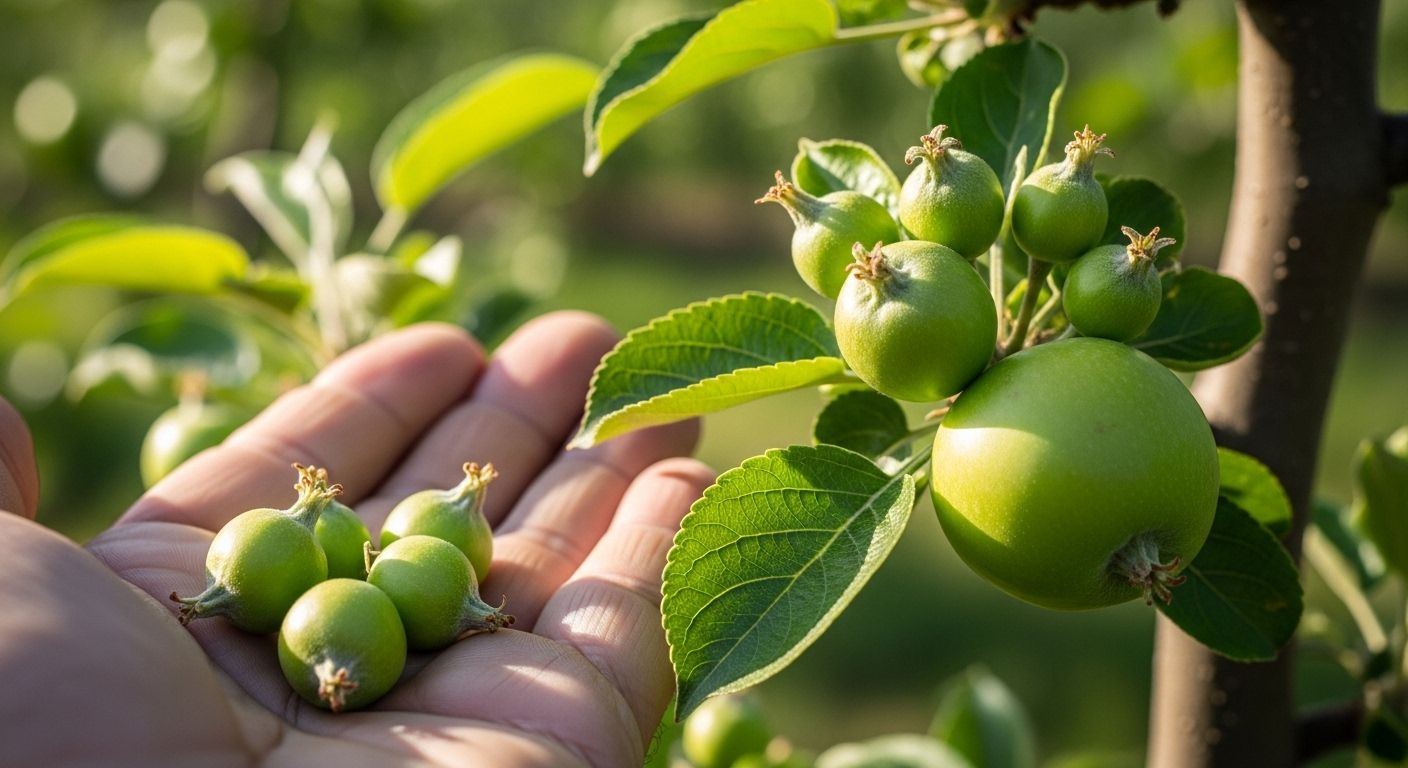
The physiological trigger for biennial bearing is not merely resource depletion, though that is a contributing factor. The primary driver is a powerful hormonal signal originating from the developing seeds within the fruit. A heavy crop load means a massive number of seeds are developing simultaneously. These seeds produce plant hormones, primarily gibberellins, that are translocated to the adjacent buds on the spurs or shoots. These hormones actively inhibit the process of floral induction—the critical physiological switch where a vegetative bud meristem is programmed to become a flower bud. If this inhibition occurs during the key window of floral initiation (typically 4 to 8 weeks after bloom), the tree will fail to form an adequate number of flower buds for the next spring, thus guaranteeing an "off" year.
2. The Hormonal Signaling Pathway of Seed Development and Floral Inhibition
The molecular and physiological mechanisms underlying biennial bearing are centered on the hormonal output of developing seeds. Following successful pollination and fertilization, the embryo and endosperm within each seed begin a period of rapid cell division and growth. This process is accompanied by the synthesis of high concentrations of plant growth regulators, most notably gibberellins (GAs) and auxins (like indole-3-acetic acid, IAA). Research has identified specific gibberellins, such as GA4 and GA7, as being particularly potent inhibitors of floral induction in apple trees. These hormones are not confined to the fruit; they are actively transported out of the developing fruitlet and into the vascular system of the spur or shoot that supports it.
This hormonal signal travels basipetally (downward from the point of origin) to the axillary buds located at the base of leaves on the same spur or shoot. These buds contain apical meristems, which hold the potential to differentiate into either a vegetative shoot or a reproductive flower cluster. The fate of these meristems is determined during a critical period in early summer. When high concentrations of GAs from the nearby seeds arrive at these meristems, they interfere with the expression of key floral initiation genes. Genes such as LEAFY (LFY) and APETALA1 (AP1) are known as floral meristem identity genes; they are the master switches that tell a meristem to become a flower. Gibberellins have been shown to suppress the transcription of these genes, effectively locking the bud into a vegetative pathway for the following year.
The timing of this hormonal inhibition is paramount. The critical window for floral bud initiation in apples typically occurs from 30 to 60 days after full bloom. It is during this period that the tree's buds are receptive to the signals that determine their developmental fate. If a heavy crop of fruitlets is present during this window, the resulting flood of inhibitory GAs ensures that very few buds will be initiated as floral buds. Fruit thinning is effective precisely because it physically removes these hormone-producing factories before or during this critical window. By reducing the number of seeds to a manageable level, the overall concentration of inhibitory GAs reaching the buds is lowered significantly. This allows the floral induction signals—which are thought to be promoted by other hormones like cytokinins and specific carbohydrate levels—to dominate, permitting the buds to differentiate and develop into flowers for the following spring's bloom. This targeted interruption of the hormonal signaling pathway is the fundamental scientific principle behind thinning for the prevention of biennial bearing.
3. Comparing Floral Primordia Initiation and Bud Morphology in Apple vs. Peach Trees
The practical strategies for fruit thinning are dictated by the distinct botanical differences in how and where apple and peach trees initiate and develop their flower buds. Understanding this comparative morphology is essential for effective crop load management.
Apple (Malus domestica) Morphology and Bearing Habit: Apples predominantly produce fruit on specialized, slow-growing woody structures called spurs. These spurs can remain productive for a decade or more, developing a complex, gnarled appearance over time. The flower buds on apples are typically "mixed buds," meaning a single bud contains the primordia for both the floral cluster (usually 5-6 flowers) and a small rosette of leaves and a vegetative shoot. The central flower in this cluster, known as the "king bloom," opens first and often develops into the largest fruit.
The process of floral initiation in an apple bud occurs in the summer prior to flowering. An axillary bud on a spur will receive hormonal and nutritional signals that determine its fate. If conditions are favorable (i.e., low inhibition from nearby fruit), the apical meristem within the bud will begin to differentiate, forming the rudimentary structures of the inflorescence that will emerge the following spring. Because the flowers and leaves emerge from the same bud and are located on a persistent spur, the inhibitory hormonal signal from developing fruit has a very direct and localized effect on the potential flowering sites for the next year. Thinning apples, therefore, focuses on two objectives:
- Reducing Cluster Density: Removing all but one fruit (ideally the king fruit) from each floral cluster.
- Spacing Spurs: Ensuring that fruiting spurs are adequately spaced along the branch, often removing all fruit from some spurs to allow them to focus entirely on forming a flower bud for the next season.
Peach (Prunus persica) Morphology and Bearing Habit: Peaches exhibit a starkly different bearing habit. They produce fruit almost exclusively on shoots that grew during the previous season (one-year-old wood). They do not form complex, long-lived spur systems like apples. The flower buds of a peach are "simple" or "pure" buds, meaning they contain only flower primordia—typically a single flower per bud—and no leaf primordia. These flower buds are usually located at the nodes of the one-year-old shoots, often in groups of two or three, flanking a central vegetative bud that will produce a new leafy shoot.
This morphology has profound implications for management. Since peaches fruit on new wood, an entirely new network of fruiting shoots must be encouraged to grow each year through strategic pruning. The hormonal inhibition from a heavy crop load is less about preventing a specific bud on a spur from flowering and more about the overall depletion of tree resources, which leads to weak vegetative growth. If the tree produces poor-quality, short, spindly shoots in the "on" year, there will be very few sites available for flower buds to form for the "off" year. Thinning peaches is therefore not about reducing clusters, but about spacing individual fruits along the length of these one-year-old shoots. The goal is to allow each remaining fruit sufficient access to the resources (carbohydrates and water) supplied by the leaves on that shoot, ensuring both large fruit size in the current year and vigorous new shoot growth to serve as the fruiting wood for the next. This foundational knowledge is a cornerstone of any successful orchard plan, as detailed in our ultimate guide to growing fruit trees, which covers the importance of selecting species and cultivars with their specific growth habits in mind.
4. The Bioenergetics of Carbohydrate Allocation: Source-Sink Dynamics
The hormonal signals that regulate biennial bearing do not operate in a vacuum; they are intrinsically linked to the tree's overall energy budget, a concept best understood through the lens of source-sink dynamics. In plant physiology, a "source" is any part of the plant that produces or mobilizes carbohydrates, primarily mature leaves carrying out photosynthesis. A "sink" is any part of the plant that consumes these carbohydrates for growth or storage, such as roots, shoot tips, cambium, storage tissues, and, most powerfully, developing fruits. The allocation of resources from sources to sinks is a highly regulated process, with different sinks competing for the available energy supply.
During the critical early summer period, a tree with a heavy crop load faces intense internal competition. The developing fruitlets represent an exceptionally strong and demanding physiological sink. The process of cell division and expansion, seed development, and the accumulation of sugars and organic acids within the fruit requires a massive influx of carbohydrates. It is estimated that a single, full-sized apple requires the full photosynthetic output of 30 to 40 healthy leaves to reach its potential in size, color, and sugar content. When a tree is carrying thousands of fruitlets, the collective demand becomes enormous, effectively monopolizing the tree's entire carbohydrate production.
This overwhelming demand from the fruit sink has several cascading consequences for the tree's bioenergetics:
- Starvation of Other Sinks: The developing flower buds for the following year are a relatively weak sink compared to the fruit. When the fruit load is heavy, there are simply not enough carbohydrates available to fuel the energy-intensive process of floral primordia differentiation. This resource deficit works in concert with the inhibitory hormonal signals to prevent flower bud formation.
- Reduced Vegetative Growth: Shoot elongation and leaf development are also compromised. The tree produces shorter, weaker shoots with smaller leaves, which reduces the "source" capacity for both the current and subsequent seasons, creating a negative feedback loop.
- Inhibited Root Growth: The root system, another critical sink, receives a reduced allocation of carbohydrates. This can limit the tree's ability to absorb water and nutrients, further stressing the system and making it more susceptible to drought and other environmental pressures.
Fruit thinning is a direct bioenergetic intervention. By manually removing a significant portion of the competing fruit sinks early in their development, the grower fundamentally alters the tree's internal resource allocation. The remaining fruitlets now have access to a much larger pool of carbohydrates per fruit, allowing them to grow larger and develop higher quality attributes. More importantly, the overall demand on the tree is reduced to a sustainable level. This frees up a significant portion of the carbohydrate supply to be allocated to the other vital sinks, including the vegetative buds that are poised to initiate flowers for the next season. Thinning rebalances the tree's energy budget, ensuring that it can simultaneously perfect a modest current crop while investing in the reproductive structures for a future one.
5. Manual Hand-Thinning Methods: Timing and Spacing Protocols for High-Quality Yields
Manual hand-thinning is the most precise and often most effective method for managing crop load, particularly for home orchardists and in commercial operations for high-value cultivars or as a follow-up to chemical thinning. The success of this practice hinges on two critical factors: timing and spacing.
Timing the Thinning Operation: The ideal window for hand-thinning is after the risk of frost has passed and natural pollination-related fruit drop has occurred, but before the tree invests significant energy into the fruitlets that will be removed. This typically corresponds to when the developing fruits are between 15-25 mm (about 0.5 to 1.0 inch) in diameter. Thinning at this stage, approximately 30-45 days after full bloom, accomplishes several goals:
- It is early enough to have a maximum impact on promoting return bloom for the following year by removing the inhibitory hormone sources during the critical floral initiation window.
- It allows the grower to selectively remove damaged, misshapen, or insect-infested fruitlets.
- It precedes the tree's natural self-thinning event, often called the "June drop," where the tree sheds fruitlets it cannot support due to competition. Thinning before this drop ensures the tree's resources are channeled only into the desired fruit from an early stage.
Thinning Technique: The physical act of removing the fruitlet should be done carefully to avoid damaging the spur or the branch, which are the sites of future production. Instead of pulling the fruitlet straight off, which can tear the spur, the preferred method is to hold the fruit stem (pedicel) between the thumb and forefinger and push the fruitlet off with another finger, effectively snapping it at the base. Alternatively, small, sharp pruning snips can be used to cut the stem. For apples, leaving the tiny stem on the spur is perfectly acceptable and minimizes damage.
Spacing Protocols for Apple and Peach: The correct spacing is determined by the leaf-to-fruit ratio required for optimal development and differs based on the tree's bearing habit.
| Tree Type | Bearing Habit | Thinning Protocol | Spacing Guideline | Target |
|---|---|---|---|---|
| Apple | Spurs | Reduce each cluster to a single fruit. | 6 to 8 inches (15-20 cm) between fruits. | One apple per spur; remove all fruit from some spurs. |
| Peach | 1-Year Shoots | Remove excess single fruits. | 4 to 6 inches (10-15 cm) between fruits. | Evenly spaced fruit along the length of the shoot. |
For apples, the first step is to assess each fruit cluster. The "king" fruit, which develops from the central king bloom, is often the largest and best-shaped; this is typically the one to retain. All other smaller, lateral fruitlets in the cluster should be removed. After thinning within the clusters, the next step is to look at the spacing between the remaining single apples. A good rule of thumb is to leave one apple for every 6-8 inches of branch length, which is roughly the width of an open hand. This often means removing all the fruit from some spurs to allow them a year to focus on vegetative growth and forming a strong flower bud.
For peaches, the process is simpler as there are no clusters. The goal is to systematically work along each fruiting shoot from the previous year, removing young peaches to achieve a final spacing of 4-6 inches. Shoots that are less than a foot long may only be able to support one or two peaches. Stronger, more vigorous shoots can support more. This rigorous spacing is absolutely critical for peaches, as unthinned trees will produce a large quantity of small, flavorless, and often unusable "golf ball" sized fruit.
6. Chemical and Mechanical Thinning Agents for Commercial Orchard Management
While hand-thinning offers unparalleled precision, its labor-intensive nature makes it prohibitively expensive as the sole method for crop load management in large commercial orchards. Consequently, growers have developed a sophisticated suite of chemical and mechanical tools to achieve the majority of the thinning work efficiently. These methods require deep technical knowledge, as their effectiveness is highly dependent on weather conditions, tree physiology, and precise timing.
Chemical Thinning Agents: Chemical thinners are plant growth regulators or caustic substances that are sprayed on the trees to induce a portion of the flowers or young fruitlets to abscise (drop). They are generally categorized into two groups:
Blossom Thinners: These are applied during the bloom period to prevent fertilization or damage the flower pistils, thus preventing fruit set.
- Ammonium Thiosulfate (ATS) and Lime Sulfur: These are caustic salts that act by burning the delicate stigma and style of the flower, preventing pollen germination and fertilization. Their efficacy is greatest when applied during full bloom, but they carry a high risk of phytotoxicity (leaf burn) if applied in hot, slow-drying conditions. They are often used in organic production systems.
Post-Bloom Thinners: These are applied after petal fall, typically when fruitlets are between 5-20 mm in diameter. They work hormonally to induce fruit drop.
- Naphthaleneacetic Acid (NAA): A synthetic auxin, NAA is one of the oldest and most widely used thinners. It is thought to work by creating a temporary carbohydrate stress in the tree and stimulating ethylene production, which promotes the formation of an abscission layer at the base of the fruit stem, causing weaker fruitlets to drop. It is highly effective but can inhibit fruit growth if applied too late or at too high a concentration.
- 6-Benzyladenine (BA): A synthetic cytokinin (e.g., MaxCel, Exilis). BA works by stimulating cell division. When applied, it causes the strongest fruitlets to become even stronger sinks for carbohydrates, effectively starving their weaker neighbors on the same spur and causing them to drop. A significant benefit of BA is that it can also increase cell division in the remaining fruit, leading to larger final fruit size.
- Carbaryl: An insecticide (in the carbamate class) that has a well-known thinning effect on apples. Its exact mechanism is not fully understood but is believed to interfere with seed development or carbohydrate transport to the fruitlet. Due to its toxicity to bees and other beneficial insects, its use is declining in favor of more targeted hormonal thinners.
The success of a chemical thinning program depends on a multitude of factors, including the cultivar, tree vigor, temperature before and after application (warm temperatures increase absorption and activity), and spray coverage. Growers often use a combination of products and applications to achieve their target crop load, frequently following up with manual hand-thinning to correct any inconsistencies.
Mechanical Thinning: Mechanical thinning is a more recent innovation aimed at reducing the reliance on chemicals and labor. The most common device is the "Darwin String Thinner," a machine mounted on a tractor with a rotating drum of plastic strings. The operator drives down the orchard row during bloom, and the spinning strings physically knock off a percentage of the flowers from the canopy. The aggressiveness of the thinning is controlled by the tractor's ground speed and the rotational speed (RPM) of the drum. While less precise than chemical or hand-thinning, it is a very fast and cost-effective way to remove a large number of potential fruits at the earliest possible stage, reducing the need for more intensive follow-up thinning later.
7. Impact of Strategic Thinning on Post-Harvest Quality and Tree Structural Longevity
The benefits of a diligent fruit thinning program extend far beyond the primary goal of preventing biennial bearing. The practice has a profound and direct impact on the marketable quality of the current year's crop and the long-term structural health and productivity of the tree itself.
Enhancement of Fruit Quality: An unthinned or under-thinned tree produces fruit that is often commercially worthless. By establishing an optimal leaf-to-fruit ratio, thinning ensures that each remaining fruit receives an abundant supply of the resources needed for development.
- Fruit Size: This is the most immediate and obvious benefit. With fewer fruits competing for a finite supply of carbohydrates, water, and nutrients, the remaining fruits can reach their full genetic size potential. In commercial markets, fruit size is a primary determinant of price, making this a critical economic consideration.
- Fruit Color: For red apple and peach cultivars, color development is driven by sunlight exposure, which triggers the synthesis of anthocyanin pigments in the fruit's skin. Over-cropped trees have dense canopies with excessive fruit clusters that shade one another. Thinning opens up the canopy, allowing sunlight to penetrate and reach the surface of each developing fruit, resulting in a more uniform and intense coloration. This effect is amplified when thinning is combined with a good pruning program, such as the one described in our technical guide on summer pruning fruit trees, which further improves light distribution.
- Sugar Content and Flavor: The concentration of sugars (measured as Brix) and the development of complex flavor and aromatic compounds are energy-intensive processes. By increasing the supply of photosynthates available to each fruit, thinning leads to sweeter, more flavorful produce.
- Uniform Maturity: On an over-cropped tree, fruit maturity can be highly variable, complicating harvest. A properly thinned crop tends to ripen more uniformly, allowing for a more efficient and consolidated harvest window.
Improvement of Tree Health and Structural Longevity: The annual stress of over-cropping takes a significant toll on the physical structure and physiological resilience of a tree.
- Prevention of Limb Breakage: The sheer weight of an excessive fruit load can cause major structural damage. Large branches can crack and break, permanently damaging the tree's framework and creating entry points for diseases like fire blight or cytospora canker. Thinning is a proactive measure to keep the crop load well within the structural capacity of the tree's scaffold limbs.
- Reduced Physiological Stress: Supporting a massive crop places the entire tree under immense physiological stress. This can deplete stored energy reserves needed for winter survival, making the tree more susceptible to cold injury. A stressed tree is also less able to defend itself against pests and diseases.
- Enhanced Root and Wood Development: By rebalancing the source-sink relationship, thinning allows the tree to allocate more energy to its root system and the development of strong, healthy structural wood. A robust root system improves drought tolerance and nutrient uptake, while a strong woody framework supports decades of sustained, high-quality production. In essence, thinning is not just about the next crop; it's an investment in the long-term capital of the orchard.

8. An Integrated Seasonal Timeline for Effective Crop Load Balancing
Ach
Expert Insights & FAQs
1. Understanding the Physiological Phenomenon of Biennial Bearing
Biennial bearing is a physiological cycle where a fruit tree produces a heavy crop one year (the "on" year) followed by a very light or non-existent crop the next (the "off" year). This pattern is primarily driven by hormonal inhibition from the excessive seed load in the "on" year, which prevents the tree from forming flower buds for the subsequent season.
2. The Hormonal Signaling Pathway of Seed Development and Floral Inhibition
Developing seeds, particularly the endosperm and embryo, are potent factories for gibberellins (GAs) and auxins. These hormones are transported to adjacent buds where high GA concentrations, specifically, act as powerful inhibitors of floral meristem identity genes. This hormonal signal effectively prevents the bud from transitioning from a vegetative to a reproductive state, thus suppressing flower formation for the next year.
3. Comparing Floral Primordia Initiation and Bud Morphology in Apple vs. Peach Trees
Apples primarily bear fruit on long-lived, complex spur systems and form "mixed" buds containing both leaf and flower primordia. Peaches, in contrast, bear fruit almost exclusively on one-year-old shoots and develop "simple" flower buds that contain only floral parts. This fundamental difference in bearing habit dictates entirely different thinning and pruning strategies for each species.
4. The Bioenergetics of Carbohydrate Allocation: Source-Sink Dynamics
Bioenergetically, fruit trees operate on a source-sink model where leaves (sources) produce carbohydrates that are allocated to growing regions (sinks). A heavy fruit crop constitutes a dominant sink, monopolizing energy and starving other critical sinks like roots, vegetative shoots, and, most importantly, the developing flower buds for the next season, thereby enforcing biennial bearing.
5. Manual Hand-Thinning Methods: Timing and Spacing Protocols for High-Quality Yields
Effective manual hand-thinning requires precise timing and spacing. It should be performed when fruitlets reach 15-25 mm in diameter, before the tree's natural "June drop." Apples should be thinned to one fruit per spur cluster, spaced 6-8 inches apart. Peaches are thinned to single fruits spaced 4-6 inches apart along last year's shoots.
6. Chemical and Mechanical Thinning Agents for Commercial Orchard Management
For large-scale commercial orchards, hand-thinning is often economically unfeasible. Growers rely on chemical thinning agents like naphthaleneacetic acid (NAA) and benzyladenine (BA) applied post-bloom, or caustic blossom thinners like ammonium thiosulfate (ATS). Mechanical methods, such as string thinners used during bloom, are also employed to reduce labor costs and manage crop load efficiently.
7. Impact of Strategic Thinning on Post-Harvest Quality and Tree Structural Longevity
Strategic thinning directly enhances post-harvest fruit quality by increasing size, improving color through better light exposure, and concentrating sugars and flavors (higher Brix). It also ensures tree longevity by preventing limb breakage from excessive weight, reducing physiological stress, and promoting strong, well-spaced structural branches, which leads to a more resilient and productive tree over its lifespan.
8. An Integrated Seasonal Timeline for Effective Crop Load Balancing
Effective crop load balancing is a year-round process. It begins with dormant pruning to remove excess fruiting wood, followed by potential blossom thinning, primary chemical or hand-thinning when fruitlets are 15-25 mm, and a final touch-up thinning after the natural "June drop." This integrated approach ensures consistent, high-quality yields and long-term tree health.
Johnnie McCormick
Zone 7b/8a - North Central Alabama
Johnnie McCormick is a gardening hobbyist and the founder of My Garden Spot. Raised in north-central Alabama, his passion for gardening began in his youth. In 2008, he established a large market garden, teaching himself high-yield growing methods. In the years since, he has operated seasonal seedling sales for transplants, specializing in heirloom tomatoes, peppers, eggplants, decorative ground covers like Ajuga (Bugleweed), marigolds, nasturtiums, and fresh kitchen-window herb arrangements (basil, cilantro). Today, he gardens in the hills between Birmingham and Jasper, Alabama (Zone 7b/8a), sharing practical, community-focused gardening resources.
Verified Authoritative Citations & References
In alignment with our strict E-E-A-T research and verification guidelines, this guide cross-references data from the United States Department of Agriculture (USDA) and Cooperative Extension Service programs.
- University of California Fruit & Nut Research Center: Backyard orchard culture and tree spacing guidelines. homeorchard.ucanr.edu
- Cornell Cooperative Extension (Pomology): High-density planting, rootstock selection, and summer pruning manuals. ecommons.cornell.edu
- Oregon State University Extension Service: Training and pruning backyard fruit trees guide. catalog.extension.oregonstate.edu
- Penn State Extension: Small-scale fruit production and pest monitoring guides. extension.psu.edu


Please log in to view comments.