Strategic Intercropping: Shading Cool-Weather Greens Under Summer Tomatoes

How Do You Intercrop Cool-Weather Greens Under Summer Tomatoes for Season-Long Harvests?
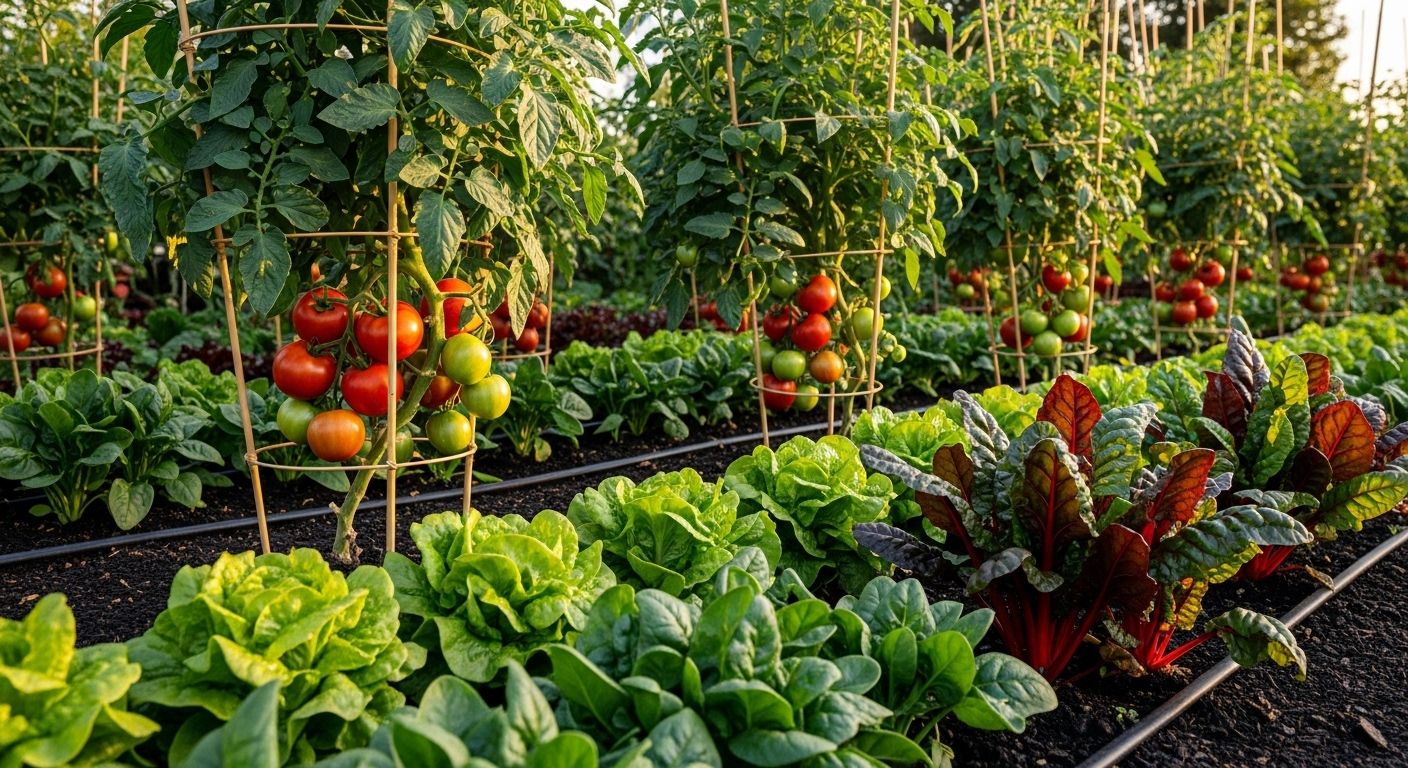
In the pursuit of maximizing yield from a finite garden space, horticulturalists and market gardeners continually seek innovative methods that intensify production without compromising plant health. One such advanced technique, deeply rooted in the principles of agroecology, is the strategic intercropping of cool-weather greens within the understory of a mature summer tomato canopy. This polyculture system transcends simple companion planting, creating a multi-layered, symbiotic environment where the overstory crop actively modifies the microclimate to benefit the understory crop. As summer temperatures climb, the sprawling foliage of indeterminate tomatoes provides a natural, dynamic shade cloth, dappling the intense midday sun and cooling the soil surface. This shading effect is critical for preventing the premature bolting of heat-sensitive crops like lettuce, spinach, and arugula, effectively extending their harvest window deep into the warmest months. This article provides a comprehensive, science-based exploration of this system, delving into the physics of light management, the physiological responses of the plants, the mathematics of yield efficiency, and the practical logistics of implementation, from spatial planning to micro-irrigation. By understanding these underlying mechanisms, growers can transform a standard garden bed into a highly productive, resilient, and resource-efficient ecosystem.
How does understory intercropping maximize Photosynthetically Active Radiation (PAR) efficiency?
Photosynthesis, the engine of plant growth, is driven by a specific spectrum of light known as Photosynthetically Active Radiation (PAR), which encompasses wavelengths from 400 to 700 nanometers. In a traditional monoculture system, a significant portion of incoming solar radiation is wasted, either by falling on bare soil between plants or by exceeding the light saturation point of the crop's leaves. Strategic intercropping addresses this inefficiency by creating a multi-tiered canopy architecture that intercepts and utilizes light more completely.
The Physics of Light Interception: Beer-Lambert Law in the Garden
The amount of light penetrating a plant canopy can be modeled using the Beer-Lambert Law, an equation typically used in chemistry and physics to describe light attenuation. In an agricultural context, it is expressed as:
I = I_0 * exp(-k * LAI)
Where:
- I is the light intensity beneath the canopy.
- I_0 is the light intensity above the canopy (full sun).
- k is the canopy extinction coefficient, a value that describes how effectively the canopy blocks light. It depends on leaf angle, clumping, and solar angle. For many vegetable crops, k ranges from 0.4 to 0.7.
- LAI is the Leaf Area Index, a dimensionless quantity that is the ratio of total upper leaf surface area to the ground area beneath it.
For example, a vigorous tomato canopy with an LAI of 3.0 and an extinction coefficient (k) of 0.6 would transmit only about 16.5% of the full sun's light to the ground level. This level of shading is often ideal for preventing heat stress and bolting in cool-weather greens. Our interactive Garden Planning Tool can help you visualize how canopy density affects understory planting space over a season.
Light Saturation Points of Different Crops
Different plants have different light saturation points—the intensity at which the photosynthetic rate plateaus. Further increases in light intensity do not increase photosynthesis and can even cause photoinhibition (light-induced damage).
- Tomatoes (Solanum lycopersicum): As a full-sun, C3-pathway plant, tomatoes have a high light saturation point, typically around 1,500-2,000 µmol/m²/s. They are adapted to utilize intense, direct sunlight.
- Lettuce (Lactuca sativa): Lettuce has a much lower light saturation point, often between 400-800 µmol/m²/s. Light intensity above this range provides diminishing returns and contributes to heat stress.
By planting lettuce under tomatoes, the system allows the tomatoes to operate near their optimal light level in the upper canopy, while the filtered light reaching the understory is much closer to the optimal, lower-intensity range for the lettuce. This partitioning of the light resource is the core of the system's efficiency.
Light Transmission vs. Leaf Area Index (LAI) Table
This table demonstrates how the percentage of light reaching the understory decreases as the tomato canopy (the overstory) becomes denser. We assume a constant extinction coefficient (k) of 0.6.
| Tomato Canopy LAI | Light Transmission to Understory (%) |
|---|---|
| 0.5 | 74.1% |
| 1.0 | 54.9% |
| 1.5 | 40.7% |
| 2.0 | 30.1% |
| 2.5 | 22.3% |
| 3.0 | 16.5% |
| 3.5 | 12.2% |
| 4.0 | 9.1% |
As the table shows, a young tomato plant with a low LAI allows plenty of light for establishing the greens. As the tomato plant grows and its LAI increases, it naturally creates the shadier conditions the greens need to survive the mid-summer heat, a process known as temporal niche partitioning.
Which specific cool-weather greens thrive under a mature tomato canopy?
Selecting the right understory crops is crucial for success. The ideal candidates share several key traits: shade tolerance, a relatively compact growth habit, a shallow root system that minimizes competition with the deeper-feeding tomatoes, and a quick maturity cycle. It's also beneficial to choose varieties known for their heat tolerance, as the shade provides significant but not absolute protection from high ambient temperatures.
Recommended Greens and Herbs
Here is a detailed list of greens and herbs that have been shown to perform well in the understory of a tomato canopy. For specific planting dates in your region, consult our comprehensive Planting Calendar to time your transplants perfectly.
- Loose-Leaf Lettuces (Lactuca sativa): These are the top performers. Unlike head lettuces, they can be harvested leaf-by-leaf, providing a continuous yield. Their open structure is less prone to rot in the humid under-canopy environment.
- Recommended Varieties: 'Black Seed Simpson', 'Oakleaf', 'Salad Bowl Red/Green', 'Lollo Rossa'. These varieties are known for being slow to bolt.
- Spinach (Spinacia oleracea): Spinach is notoriously quick to bolt in summer heat. The shade from tomatoes can delay this process significantly. For more tips on this, explore our guide on how to stop heirloom lettuce and spinach from bolting in late May.
- Recommended Varieties: 'Tyee', 'Bloomsdale Long Standing', 'Corvair'. Look for varieties labeled as 'savoy' or 'semi-savoy' as they often have better heat tolerance.
- Arugula (Eruca vesicaria): While arugula bolts quickly, the shade keeps the leaves tender and less peppery for a longer period. Succession planting small patches every two weeks is an effective strategy.
- Recommended Varieties: 'Astro', 'Rocket', 'Wasabi'.
- Asian Greens (Brassica species): Many Asian greens are adapted to cooler temperatures and partial shade.
- Tatsoi: Forms a beautiful, spoon-shaped, dark green rosette that is very tolerant of low light.
- Mizuna: A fast-growing green with delicate, serrated leaves and a mild, peppery flavor.
- Pac Choi (Bok Choy): Dwarf varieties like 'Toy Choy' are excellent choices for intercropping.
- Radishes (Raphanus sativus): While not a leafy green, fast-maturing radishes can be sown around the base of young tomato plants. They are typically harvested before the tomato canopy becomes dense enough to inhibit root development.
- Recommended Varieties: 'Cherry Belle', 'French Breakfast'.
- Herbs: Many herbs benefit from the partial shade, which can increase the concentration of aromatic oils and prevent leaf scorch.
- Basil: A classic tomato companion, basil is said to improve tomato flavor and may repel some pests. The partial shade prevents it from flowering too early.
- Cilantro: Extremely prone to bolting, cilantro can yield for several extra weeks in the cool understory.
- Parsley: Both flat-leaf and curly varieties thrive in the dappled light.
Crop Selection Table
| Crop Type | Recommended Varieties | Key Benefits in Understory | Typical Days to Maturity |
|---|---|---|---|
| Loose-Leaf Lettuce | 'Black Seed Simpson', 'Oakleaf' | Very shade tolerant, slow to bolt, cut-and-come-again | 30-50 days |
| Spinach | 'Tyee', 'Bloomsdale' | Significantly delayed bolting, tender leaves | 40-55 days |
| Arugula | 'Astro', 'Rocket' | Milder flavor, extended harvest window | 20-40 days |
| Asian Greens | Tatsoi, Mizuna, 'Toy Choy' Pac Choi | Excellent low-light tolerance, rapid growth | 25-50 days |
| Radishes | 'Cherry Belle', 'French Breakfast' | Quick crop before canopy closure, utilizes early space | 21-30 days |
| Herbs | Basil, Cilantro, Parsley | Delayed flowering, enhanced aromatic oils, pest benefits | 50-70 days |
When planning your polyculture, consider using our Companion Visualizer to map out these complex arrangements and ensure each plant has the resources it needs.
What is the mathematical formula for calculating the Land Equivalent Ratio (LER) of tomato-greens polycultures?
The Land Equivalent Ratio (LER) is a critical metric used in agronomy to quantify the efficiency of an intercropping system compared to growing the same crops in monocultures. An LER greater than 1.0 indicates a yield advantage for the polyculture, meaning it would take more total land to produce the same yields if the crops were grown separately. An LER of 1.2, for example, signifies a 20% yield advantage.
The LER Formula Explained
The formula is a sum of the partial LERs for each crop in the mixture:
LER = LER_tomato + LER_greens
Where:
- LER_tomato = Y_intercrop_tomato / Y_monoculture_tomato
- LER_greens = Y_intercrop_greens / Y_monoculture_greens
Let's break down the variables:
- Y_intercrop_tomato: The yield (e.g., in kg/m²) of tomatoes when grown with the greens.
- Y_monoculture_tomato: The yield of tomatoes when grown alone in the same area under the same conditions (the control plot).
- Y_intercrop_greens: The yield of greens when grown under the tomatoes.
- Y_monoculture_greens: The yield of greens when grown alone in the same area (typically, this would be in full sun for a spring crop).
A Practical Calculation Example
Imagine a 10m² garden plot. You conduct an experiment to measure the LER of a tomato-lettuce system.
Monoculture Plots:
- On a 10m² plot of only tomatoes, you harvest 50 kg of fruit. (Y_monoculture_tomato = 5 kg/m²)
- On a separate 10m² plot of only lettuce (grown in spring), you harvest 15 kg of leaves. (Y_monoculture_greens = 1.5 kg/m²)
Intercrop Plot:
- On your 10m² plot with tomatoes and intercropped lettuce, you harvest:
- 45 kg of tomatoes (Y_intercrop_tomato = 4.5 kg/m²). The slight reduction is due to minor competition for nutrients and water.
- 10 kg of lettuce (Y_intercrop_greens = 1.0 kg/m²). The yield is lower than the full-sun monoculture due to shading, but it's a harvest you otherwise wouldn't get in mid-summer.
- On your 10m² plot with tomatoes and intercropped lettuce, you harvest:
Calculate the Partial LERs:
- LER_tomato = 45 kg / 50 kg = 0.9
- LER_greens = 10 kg / 15 kg = 0.67
Calculate the Total LER:
- LER = 0.9 + 0.67 = 1.57
Conclusion: The LER of 1.57 is significantly greater than 1.0. This result demonstrates a major advantage to intercropping. It means that to achieve the same total harvest of 45 kg of tomatoes and 10 kg of lettuce using monocultures, you would require 15.7 m² of land (9 m² for the tomatoes and 6.7 m² for the lettuce). The intercropping system achieved this on just 10 m², representing a 57% increase in land-use efficiency.
This powerful metric proves that even if the yield of each individual crop is slightly depressed compared to its monoculture potential, the combined output from the same parcel of land is far greater. This principle is fundamental to both small-scale intensive gardening and large-scale regenerative agriculture.
How does tomato canopy shade buffer Vapor Pressure Deficit (VPD) to prevent lettuce bolting?
Vapor Pressure Deficit (VPD) is a critical environmental factor that describes the 'thirst' of the air. It is the difference between the amount of moisture the air can hold when saturated and the actual amount of moisture it currently holds. A high VPD indicates dry air, which forces a plant to transpire more rapidly, leading to water stress. For cool-weather crops like lettuce and spinach, high VPD, combined with high temperatures and long daylight hours, is a primary trigger for the hormonal shift that causes bolting (premature flowering).
The Science of VPD
VPD is calculated using temperature and relative humidity (RH). The formula is:
VPD = SVP - AVP
Where:
- SVP (Saturation Vapor Pressure): The maximum amount of water vapor the air can hold at a given temperature. SVP increases exponentially with temperature. It can be estimated using the Buck equation.
- AVP (Actual Vapor Pressure): The actual amount of water vapor in the air. It is calculated as: AVP = SVP * (RH / 100)
Therefore, the full formula can be written as:
VPD = SVP - (SVP * (RH / 100)) or VPD = SVP * (1 - (RH / 100))
How the Tomato Canopy Creates a Low-VPD Microclimate
The tomato overstory acts as a living buffer, creating a more favorable microclimate for the understory greens in two key ways:
- Reduces Leaf Temperature: By intercepting direct solar radiation, the canopy prevents the lettuce leaves from heating up excessively. A leaf in direct sun can be 5-15°C hotter than the ambient air temperature. By keeping the leaf surface cooler, the SVP at the leaf's boundary layer is significantly reduced.
- Increases Local Humidity: Both the tomatoes and the greens are constantly transpiring, releasing water vapor. The dense canopy structure traps some of this moisture, creating a pocket of higher relative humidity around the understory plants compared to the open air.
Example Scenario:
- In Full Sun: Ambient Temp = 30°C, RH = 40%. Lettuce leaf temp = 35°C. The VPD experienced by the leaf is very high, causing rapid water loss and stress.
- Under Tomato Canopy: Ambient Temp = 30°C, RH = 40%. The shaded microclimate might have a local temperature of 28°C and a local RH of 60%. The lettuce leaf temperature might only be 27°C. The resulting VPD is much lower, allowing the plant to maintain turgor pressure and avoid the stress signals that lead to bolting.
Shade Cloth as an Analog
The effect of a tomato canopy is similar to using agricultural shade cloth, a common tool for extending cool-season crops. Understanding how different types of shade cloth perform can provide insight into the quality of shade you want your tomato canopy to provide. For those gardening in high tunnels, managing heat is critical, as detailed in our article, "Why Is My High Tunnel So Hot In June?".
Shade Cloth Performance Comparison
| Shade Cloth Type | % Shade | Temperature Reduction | PAR Reduction | Key Characteristics |
|---|---|---|---|---|
| Black Woven | 30-80% | Good | Proportional | Absorbs radiation. Durable and most common. Creates a warmer environment just above the cloth. |
| White Woven | 30-60% | Better | Proportional | Reflects radiation. Results in a cooler environment underneath compared to black cloth. |
| Aluminized (Knit) | 40-70% | Best | Proportional | Reflects radiation away from the structure while allowing more diffuse light to pass through. |
A dense tomato canopy functions most like a black woven shade cloth, absorbing radiation and re-radiating some heat, but its benefit is enhanced by the evaporative cooling effect of its own transpiration.
What are the specific spatial spacing layouts for transplanting understory greens beneath tomatoes?
Proper spatial arrangement is critical to ensure that both the overstory and understory crops have access to sufficient light, water, nutrients, and airflow. The goal is to maximize ground cover without creating excessive competition or conditions conducive to disease. The ideal layout depends on your bed width, tomato pruning strategy, and the growth habit of your chosen greens. This type of intensive planting is especially effective in raised beds, a topic covered in our Raised Bed Gardening Beginners Guide.
Layout 1: Single Row of Tomatoes
This is common in 30-inch or 3-foot wide beds. The tomatoes are planted down the center of the bed.
- Tomato Spacing: Indeterminate tomatoes pruned to a single or double leader should be spaced 18-24 inches apart.
- Greens Placement: Transplant two parallel rows of greens, one on each side of the central tomato line. Position the greens approximately 6-8 inches away from the tomato stems. This allows room for the tomato stem to thicken and provides a buffer for watering.
- Greens Spacing: Space loose-leaf lettuce or spinach 6-8 inches apart within their rows.
Visual Representation (Top-Down View):
----------------------------------------- (Bed Edge)
G - G - G - G - G - G - G - G - G (Greens Row 1)

      T           T           T          (Tomato Row)

G - G - G - G - G - G - G - G - G (Greens Row 2)
----------------------------------------- (Bed Edge)
Layout 2: Double Row of Tomatoes
This layout is suitable for wider beds (4-5 feet). Tomatoes are planted in two rows, often staggered for better light penetration.
- Tomato Spacing: Space the two tomato rows about 24-30 inches apart. Within each row, space plants 24 inches apart, offsetting them from the other row.
- Greens Placement: The prime real estate for greens is the central pathway between the two tomato rows. Plant one or two dense rows of greens down this central corridor.
- Greens Spacing: In the central corridor, you can plant very densely, spacing greens 4-6 inches apart in a grid or staggered pattern.
Visual Representation (Top-Down View):
---------------------------------------------------- (Bed Edge)
      T           T           T           T         (Tomato Row 1)

          G - G - G - G - G - G - G - G             (Greens Row)

  T           T           T           T             (Tomato Row 2)
---------------------------------------------------- (Bed Edge)
Timing is Everything: The Staggered Planting Calendar
The success of these layouts hinges on temporal stacking—planting the crops at different times.
- Early Spring (2-4 weeks before last frost): Prepare your beds. You can find detailed instructions in our Ultimate Guide to Spring Soil Preparation.
- Last Frost Date: Transplant your hardened-off tomato seedlings into their final positions.
- 1-2 Weeks After Tomato Transplant: Once the tomatoes have recovered from transplant shock and are showing new growth, transplant your understory greens seedlings. The young tomato plants will not yet cast significant shade, allowing the greens to establish quickly.
- Mid-Summer: As the tomato plants grow large and the canopy fills in, the greens will be entering their prime harvest period, now fully benefiting from the protective shade.
This staggered approach ensures the fast-growing greens don't out-compete the young tomatoes for light and that the shade is available when the greens need it most.
Do allelochemical root exudates of Solanum lycopersicum inhibit or promote brassica greens?
Allelopathy is a biological phenomenon where one organism produces biochemicals that influence the germination, growth, survival, and reproduction of other organisms. These biochemicals, known as allelochemicals, can have positive (promotional) or negative (inhibitory) effects. The question of whether tomatoes (Solanum lycopersicum) negatively impact brassicas (like arugula, tatsoi, or kale) is a common concern in companion planting lore.
The Chemistry of Tomato Roots
Tomato plants, like other members of the nightshade family, produce a range of secondary metabolites. The most well-known is the steroidal glycoalkaloid α-tomatine. Tomatine is present in all parts of the plant but is most concentrated in green fruit and foliage. It is also exuded from the roots into the rhizosphere (the soil zone immediately surrounding the roots).
The primary ecological role of tomatine is defensive. It has potent antifungal and antimicrobial properties, helping to protect the tomato plant from soil-borne pathogens like Fusarium and Verticillium wilt. It is also known to deter many insect pests.
Evaluating the Evidence for Inhibition
While some laboratory studies have shown that high concentrations of purified tomatine can inhibit seed germination or radicle elongation of certain plants (including some brassicas) in petri dishes, these results rarely translate directly to a complex garden ecosystem. Here's why:
- Concentration: The concentration of tomatine exuded by roots into the soil is far lower and more diffuse than the concentrations used in lab bioassays.
- Microbial Degradation: Healthy soil is teeming with microorganisms. Bacteria and fungi are highly effective at metabolizing and degrading complex organic compounds like allelochemicals, often neutralizing them before they can affect neighboring plants.
- Soil Adsorption: Allelochemicals can bind to soil particles (especially clay and organic matter), rendering them biologically inactive.
- Overriding Factors: In a real-world garden setting, the powerful effects of resource competition (for light, water, nutrients) and microclimate modification (shading, humidity) are far more significant drivers of plant success or failure than subtle allelopathic interactions.
In the specific case of tomato-brassica intercropping, the overwhelming observational evidence from millions of gardeners and market farmers suggests that any potential negative allelopathy is insignificant. The profound benefits of the canopy shading and improved microclimate far outweigh any minor, often undetectable, biochemical inhibition. In fact, the antimicrobial properties of tomato root exudates might even offer a slight protective benefit to the understory crops by suppressing certain damping-off pathogens in the soil. For more on the complex interactions of companion planting, see our article on the science of companion planting for natural pest deterrence.
How do you manage water partitioning and micro-irrigation in a high-density dual-canopy bed?
Watering a multi-layered planting system presents a unique challenge. The overstory crop (tomatoes) develops a deep, extensive root system and requires deep, infrequent watering to encourage drought resilience. The understory crop (leafy greens) has a shallow, fibrous root system and requires more frequent, lighter watering to keep the top few inches of soil consistently moist. Applying a single watering strategy to both is inefficient and can harm one or both crops.
The Drip Irrigation Solution
Drip irrigation is by far the most effective method for managing water in this system. It allows for precise placement and differential application rates. Overhead watering with a sprinkler or hose is highly discouraged as it wets the dense foliage of both crops, dramatically increasing the risk of fungal diseases like powdery mildew, downy mildew, and septoria leaf spot.
Recommended Drip System Design
Your goal is to create two independently managed watering zones within the same bed.
Zone 1: The Tomato Line
- Placement: Run a single line of drip tubing approximately 2-3 inches from the base of the tomato plants.
- Emitter Type: Use pressure-compensating drip emitters with a relatively high flow rate, such as 0.5 to 1.0 gallon per hour (GPH).
- Emitter Spacing: Place one emitter on each side of the tomato stem, or use tubing with built-in emitters spaced every 9-12 inches.
- Watering Schedule: Water deeply 2-3 times per week, aiming to saturate the soil profile to a depth of 12-18 inches. The duration will depend on your soil type and flow rate, but could range from 60 to 120 minutes per session.
Zone 2: The Greens Line(s)
- Placement: Run separate drip lines along each row of greens, positioned directly in the plant line.
- Emitter Type: Use tubing with lower flow rates and closer spacing. Drip tape with 4-6 inch emitter spacing or tubing with 0.25 GPH emitters is ideal. Alternatively, short-throw micro-sprayers can be used if care is taken to keep water off the tomato foliage.
- Watering Schedule: Water for shorter durations but more frequently, perhaps for 20-30 minutes daily or every other day. The goal is to keep the top 2-4 inches of soil consistently moist but not waterlogged.
Automation and Soil Moisture Monitoring
For optimal efficiency, connect your two zones to a multi-zone irrigation timer. This allows you to program the different schedules required by each crop. To further refine your watering, consider using a soil moisture meter. Check the moisture at a depth of 6-8 inches for the tomatoes and at 2-3 inches for the greens to inform your irrigation schedule, adjusting for rainfall and temperature.
Mulching for Moisture Conservation
Applying a 2-3 inch layer of organic mulch, such as shredded leaves or straw, is crucial in this system. It should be applied after the greens have been transplanted and the drip lines are in place.
- Benefits:
- Reduces surface evaporation, conserving water for both crops.
- Suppresses weed growth, which would compete for water and nutrients.
- Keeps the soil cooler.
- Prevents soil from splashing onto leaves, reducing the spread of soil-borne pathogens.
Properly designed micro-irrigation, combined with diligent mulching, is the key to maintaining water balance and ensuring both your tomatoes and greens can thrive together.

What are the biological pest suppression benefits of companion planting tomatoes with aromatic understory herbs?
Intercropping is not just about resource partitioning; it's also about creating a complex, resilient ecosystem that is less vulnerable to pest outbreaks. By incorporating aromatic herbs and flowers into the understory, you can activate several mechanisms of biological pest control, a practice often referred to as Integrated Pest Management (IPM).
Mechanisms of Pest Suppression
Trap Cropping: Some companion plants are more attractive to pests than the main crop. For example, nasturtiums are often planted as a trap crop for aphids. The aphids congregate on the nasturtiums, where they can be more easily managed or will attract predators away from the tomatoes.
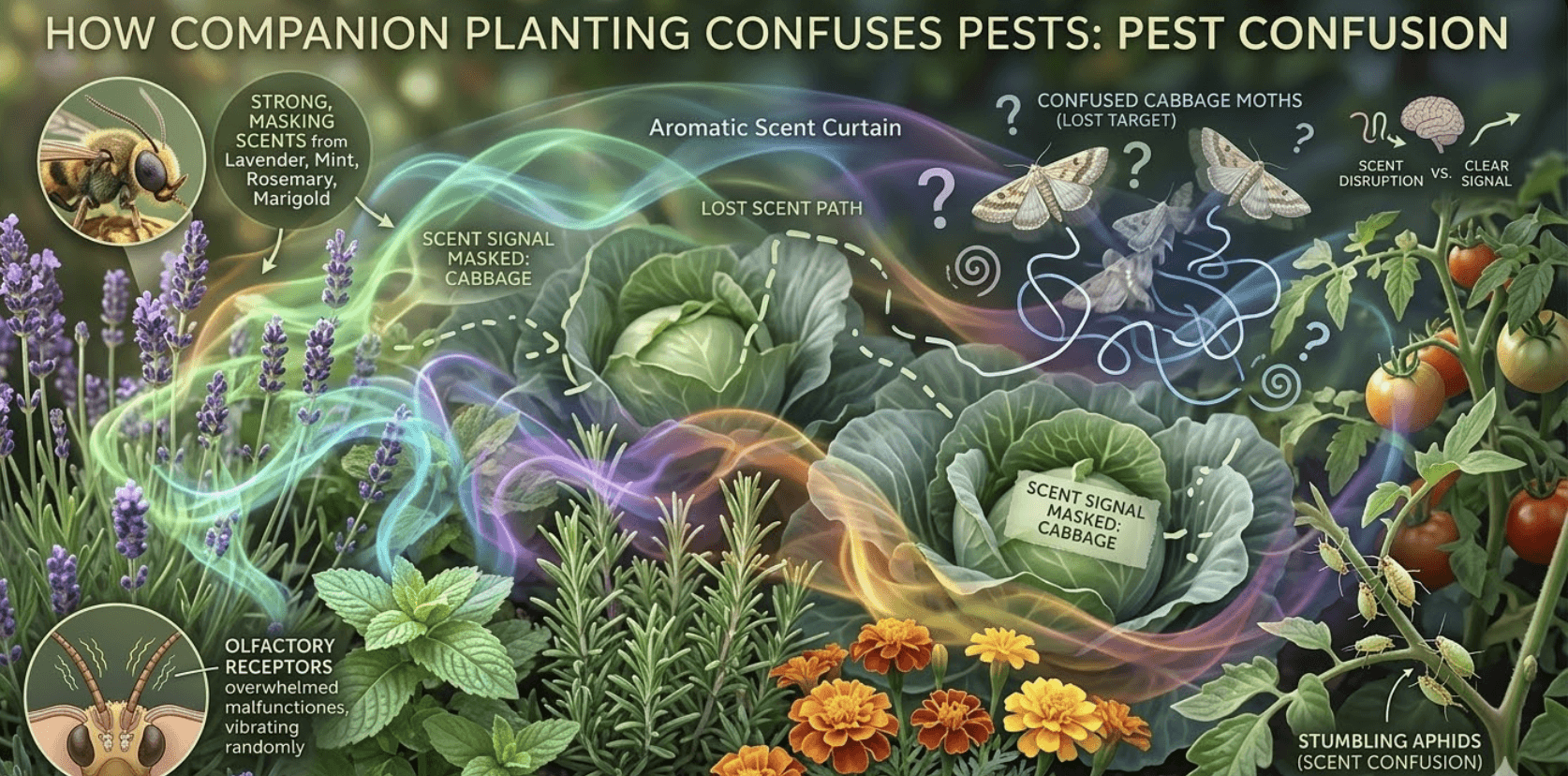
Pest Confusion (Scent Masking): Many insect pests locate their host plants by detecting specific Volatile Organic Compounds (VOCs) released by the plant. Planting aromatic herbs like basil, mint, or rosemary creates a complex aromatic landscape. The strong scents of these companions can mask the signature scent of the tomato plants, making it harder for pests like the tomato hornworm moth (Manduca quinquemaculata) to find them.
Attracting Beneficial Insects (Pharm-ecology): This is perhaps the most powerful benefit. Many small-flowered herbs and flowers provide an essential food source (nectar and pollen) for adult beneficial insects. These insects then lay their eggs near pest populations, and their larvae do the actual work of pest control.
- Ladybugs: Adults and larvae are voracious predators of aphids.
- Hoverflies (Syrphid Flies): The adults are pollinators, while the larvae resemble small slugs and consume vast numbers of aphids.
- Parasitic Wasps: Tiny, non-stinging wasps (like Trichogramma species) lay their eggs inside the eggs of pest caterpillars, including tomato hornworms. Other wasps parasitize aphids.
- Lacewings: Both adults and the formidable larvae (called 'aphid lions') consume aphids, mites, and other small pests.
Effective Companion Herbs and Flowers for the Tomato Understory
- Basil: The classic tomato companion. Its strong aroma is thought to repel tomato hornworms and whiteflies.
- Borage: Its blue, star-shaped flowers are extremely attractive to beneficial bees and predatory wasps. It also accumulates silica and other micronutrients.
- French Marigolds (Tagetes patula): The roots of French marigolds release a chemical (alpha-terthienyl) that is toxic to root-knot nematodes, a serious soil pest for tomatoes. Their scent may also deter other pests above ground.
- Cilantro/Coriander: Allowing some cilantro to flower will produce umbels of tiny white blossoms that are a magnet for hoverflies and parasitic wasps.
- Sweet Alyssum: This low-growing flower creates a living mulch and its tiny white flowers are an excellent food source for beneficial insects.
By diversifying the plant species within your tomato bed, you create a more stable environment. This polyculture approach provides habitats and food sources for a wider range of organisms, including the natural enemies of your pests. This is a core principle of regenerative gardening and is far more sustainable than relying on chemical interventions. For targeted pest issues, consult our guide to organic aphid control.
Managing Human Interactions and Liability in Intensive Gardens
When intensive, beautiful gardens like these are part of a U-Pick operation, Community Supported Agriculture (CSA) farm, or even a highly-trafficked community garden, another layer of management arises: legal liability. The same principles of proactive risk management used in IPM can be applied to visitor safety.
Premises Liability Statuses
Understanding the legal status of visitors is crucial:
- Invitees: Customers in a U-Pick or CSA members visiting the farm. You owe them the highest duty of care to ensure the premises are reasonably safe.
- Licensees: Social guests who are on the property for their own purposes. You have a duty to warn them of known dangers.
- Trespassers: People on the property without permission. The duty of care is lowest, but you cannot willfully injure them.
Mitigating Risks: Signage and Safety
Clear signage is a primary tool for risk mitigation. The legal text on warning signs should be clear and comply with state agritourism laws, which often provide liability protection for inherent risks of farming.
Example Agritourism Warning Sign Text (Varies by State):
WARNING Under [State Name] law, there is no liability for an injury to or death of a participant in an agritourism activity conducted at this agritourism location if such injury or death results from the inherent risks of the agritourism activity. Inherent risks of agritourism activities include, among others, risks of injury inherent to land, equipment, and animals, as well as the potential for you to act in a negligent manner that may contribute to your injury or death. You are assuming the risk of participating in this agritourism activity.
The Attractive Nuisance Doctrine
Intensive gardens may have features like ponds, irrigation equipment, or climbing trellises that could be considered an 'attractive nuisance' to children. It is critical to identify and secure these areas (e.g., fencing a pond, securing ladders) to mitigate this specific risk.
Actuarial Risk Calculation Table for a Small U-Pick Operation
This table provides a simplified model for how an insurer might view risks associated with an intercropped U-Pick patch.
| Hazard | Likelihood (1-5) | Severity (1-5) | Risk Score (L x S) | Mitigation Strategy |
|---|---|---|---|---|
| Trip and Fall on Drip Lines/Tools | 4 (Likely) | 2 (Minor) | 8 | Clear pathways, tool discipline, warning signs |
| Allergic Reaction (Bee Sting, Plant) | 3 (Possible) | 3 (Moderate) | 9 | Signage about insects, have first-aid kit with antihistamine |
| Child Injury (Attractive Nuisance) | 2 (Unlikely) | 5 (Severe) | 10 | Fencing dangerous areas, direct supervision rule |
| Foodborne Illness (Contamination) | 2 (Unlikely) | 4 (Major) | 8 | Handwashing station, no-pet policy in fields, proper harvest training |
| Heat Stroke/Dehydration | 3 (Possible) | 3 (Moderate) | 9 | Provide water access, shaded rest area, post heat warnings |
By proactively managing these risks, you protect both your visitors and your farm business, ensuring your productive garden remains a source of community engagement and not a liability.
Expert Insights & FAQs
How does understory intercropping maximize Photosynthetically Active Radiation (PAR) efficiency?
Understory intercropping maximizes Photosynthetically Active Radiation (PAR) efficiency by capturing photons that would otherwise strike bare soil. Sun-loving tomatoes utilize high-intensity light in the upper canopy, while the shade-tolerant greens below are adapted to thrive on the lower-intensity, filtered light, effectively harvesting energy from multiple vertical layers.
Which specific cool-weather greens thrive under a mature tomato canopy?
Shade-tolerant, fast-maturing greens with shallow root systems are ideal. Varieties of loose-leaf lettuce (e.g., Black Seed Simpson), spinach (e.g., Tyee), arugula, and certain Asian greens like tatsoi perform exceptionally well. Compact herbs such as basil and cilantro also benefit from the moderated microclimate, resisting bolting.
What is the mathematical formula for calculating the Land Equivalent Ratio (LER) of tomato-greens polycultures?
The Land Equivalent Ratio (LER) is calculated with the formula: LER = (Ytg / Yt) + (Ygt / Yg). In this equation, Ytg is the yield of tomatoes in the intercrop, Yt is the monoculture tomato yield, Ygt is the yield of greens in the intercrop, and Yg is the monoculture greens yield.
How does tomato canopy shade buffer Vapor Pressure Deficit (VPD) to prevent lettuce bolting?
The tomato canopy reduces solar radiation on understory lettuce, lowering leaf surface temperature. It also traps transpired moisture, increasing local humidity. Both effects—lower temperature and higher humidity—decrease the Vapor Pressure Deficit (VPD), reducing the plant's water stress and transpiration rate, which are key triggers for bolting.
What are the specific spatial spacing layouts for transplanting understory greens beneath tomatoes?
For single-stem pruned tomatoes spaced 18-24 inches apart, plant a single row of greens 4-6 inches from the tomato base. In wider beds with two rows of tomatoes, plant two rows of greens down the center pathway, maintaining at least 6 inches from each tomato stem for adequate airflow.
Do allelochemical root exudates of Solanum lycopersicum inhibit or promote brassica greens?
Scientific literature does not support a strong, direct allelopathic inhibition of brassica greens by tomato root exudates. While tomatoes produce compounds like tomatine, these primarily deter soil pathogens. In a healthy, microbially active soil, any potential negative effects are generally negligible compared to the benefits of shading.
How do you manage water partitioning and micro-irrigation in a high-density dual-canopy bed?
Use dual-line drip irrigation. Place one drip line with 0.5-1.0 GPH emitters near the deep-rooted tomatoes, and a second line with lower-flow 0.25 GPH emitters or micro-sprayers for the shallow-rooted greens. Water the tomato line deeply and infrequently, and the greens line shallowly and more often to match their distinct needs.
What are the biological pest suppression benefits of companion planting tomatoes with aromatic understory herbs?
Aromatic herbs like basil, marigolds, and cilantro release volatile organic compounds (VOCs) that can mask the scent of tomatoes, confusing pests like hornworms. They also attract beneficial predatory insects such as hoverflies and parasitic wasps, which prey on aphids and other common garden pests, creating a more resilient ecosystem.
Johnnie McCormick
Zone 7b/8a - North Central Alabama
Johnnie McCormick is a gardening hobbyist and the founder of My Garden Spot. Raised in north-central Alabama, his passion for gardening began in his youth. In 2008, he established a large market garden, teaching himself high-yield growing methods. In the years since, he has operated seasonal seedling sales for transplants, specializing in heirloom tomatoes, peppers, eggplants, decorative ground covers like Ajuga (Bugleweed), marigolds, nasturtiums, and fresh kitchen-window herb arrangements (basil, cilantro). Today, he gardens in the hills between Birmingham and Jasper, Alabama (Zone 7b/8a), sharing practical, community-focused gardening resources.
Verified Authoritative Citations & References
In alignment with our strict E-E-A-T research and verification guidelines, this guide cross-references data from the United States Department of Agriculture (USDA) and Cooperative Extension Service programs.
- Cornell Cooperative Extension: Home Vegetable Gardening Guide and vegetable variety recommendations. gardening.cals.cornell.edu
- Penn State Extension: Master Gardener Manual and companion planting matrices. extension.psu.edu
- Alabama Cooperative Extension System (ACES): Raised bed construction plans and regional seed planting calendars. aces.edu
- USDA NRCS: Cover crops and biological soil health guidelines. nrcs.usda.gov
Please log in to view comments.