Value-Added Add-Ons: Incorporating Local Honey, Eggs, and Bread into Your CSA

How Do You Incorporate Value-Added Add-Ons Like Honey, Eggs, and Bread into a CSA?
Let's be honest. Your CSA box is a thing of beauty. A cornucopia of jewel-toned beets, crisp lettuces, and tomatoes that taste like actual sunshine. But as your members unpack their weekly haul, a thought might cross their mind: "Okay, I've got the salad handled, but what about... everything else?" That's where the magic of value-added add-ons comes in. We're talking about transforming your box of glorious vegetables into the foundation of a complete, locally-sourced meal. Think a dozen farm-fresh eggs, a golden loaf of sourdough bread still warm from the baker's oven, and a jar of shimmering local honey. Suddenly, you're not just a farmer; you're the curator of their entire weekend breakfast, the hero who saved them a trip to the grocery store. This isn't just about adding a few extra items. It's a high-level business strategy designed to skyrocket member retention, increase your average revenue per member, and weave your farm even deeper into the fabric of your local food community. It's about making your CSA so ridiculously convenient and delicious that the thought of leaving becomes unthinkable. So, let's roll up our sleeves and dive into the nitty-gritty of adding these powerhouse products to your lineup.
Why is your CSA box lonely without local honey, eggs, and artisan bread?
Your weekly share of vegetables is the star of the show, no doubt. But even stars need a supporting cast. By offering only produce, you're providing the core components of a healthy meal, but you're leaving the customer to finish the shopping list elsewhere. This creates a psychological and logistical gap. The modern consumer, even the dedicated local-food advocate, is relentlessly pursued by convenience.
Adding these three staples—eggs, bread, and honey—completes a fundamental food equation. It's the difference between selling ingredients and selling a solution.
- The Breakfast Solution: A dozen eggs, a loaf of artisan bread, and a drizzle of honey alongside your fresh spinach and tomatoes is a complete, farm-to-table breakfast. You've just solved Sunday morning for your members.
- The Lunch Solution: A sandwich on local bread with sliced cucumbers and a hard-boiled egg. Simple, effective, and now sourced almost entirely from your farm's offerings.
- The Dinner Solution: A frittata using your kale, onions, and those farm-fresh eggs. Bread on the side for dipping. You're not just a box of veggies; you're the architect of an easy, delicious weeknight dinner.
This synergy creates what marketers call a 'sticky' product. The more problems you solve for your customer, the harder it is for them to leave. They're not just buying vegetables from you; they're integrating your service into the rhythm of their weekly meal planning. Each add-on is another anchor holding that member to your farm, making your CSA an indispensable part of their lifestyle rather than just a subscription they might reconsider next season. This is a core concept we explore in our guide on drafting your first CSA agreement and its logistics, where building a comprehensive offering is key.
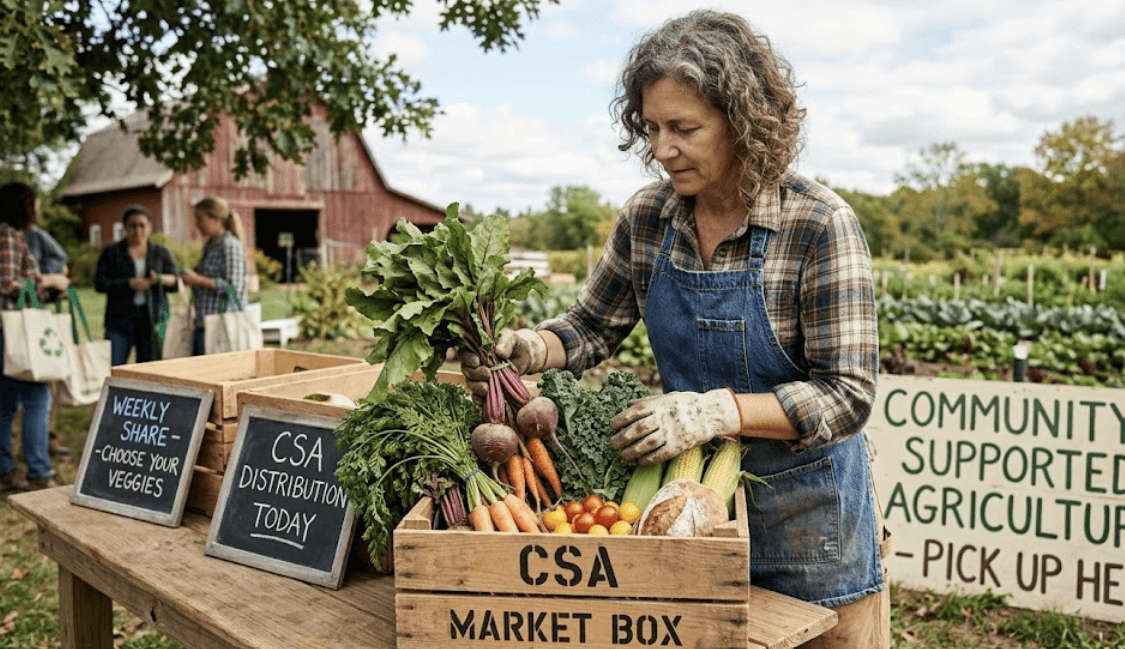
How do value-added add-ons dramatically improve your CSA member retention?
The business of a CSA isn't just about one season; it's about building a sustainable enterprise with predictable, recurring revenue. The enemy of this model is churn—the rate at which members leave. Every farmer knows that it's far cheaper to keep an existing member than to acquire a new one. Add-ons are your secret weapon against churn.
Let's talk numbers. The industry average for CSA retention can hover anywhere from 50% to 70%. That means you could be losing 30-50% of your members each year. Now, imagine you add eggs, bread, and honey. A member who previously spent $30/week on your veggie share might now be spending $45/week with add-ons. This has two powerful effects:
Increased Switching Costs: The member is now replacing more of their grocery bill with your service. To leave your CSA, they don't just have to find a new source for veggies; they have to find a new source for high-quality eggs, their favorite sourdough, and that amazing local honey. The logistical and emotional barrier to leaving becomes significantly higher.
Higher Customer Lifetime Value (CLV): This is a critical business metric. Let's calculate a simplified version:
- CLV = (Average Weekly Spend x Weeks in Season x Gross Margin) x Member Lifespan
By increasing the Average Weekly Spend from $30 to $45, you've boosted the core of this equation by 50%. But the real magic is in extending the 'Member Lifespan'. If these add-ons convince a member to stay for three years instead of two, you've not only increased their weekly value but also the duration of that value stream. A detailed breakdown of how to calculate these figures can be found in our deep dive on how to properly price CSA shares for profitability.
Think of it like agricultural intercropping. A single crop (vegetables) is great, but vulnerable. By planting companion crops (add-ons), you create a more resilient and productive ecosystem. The Land Equivalent Ratio (LER) is a concept used to measure the efficiency of intercropping. An LER greater than 1.0 indicates an advantage. For your business, the 'Business LER' of adding these products is almost certainly greater than 1.0; the combined value is far greater than the sum of its parts. You can visualize how different crops support each other with our Companion Visualizer tool.
Ultimately, a member who buys multiple products from you is more engaged. They read your newsletters more closely, they feel more connected to the farm's success, and they become better brand advocates. This is the kind of community building that leads to near-100% retention rates, a goal we discuss in our guide to boosting retention through newsletters and farm tours.
What are the logistical nightmares of managing perishable add-ons like eggs and bread?
Alright, let's not sugarcoat it. While the rewards are great, the operational complexity of adding perishables is where many farms stumble. Your beautiful, sturdy kale can handle a bit of jostling. A dozen eggs or a delicate loaf of bread? Not so much. This is a game of precision, timing, and temperature.
The Cold Chain is Non-Negotiable: Eggs must be kept at or below 45°F (7°C) to inhibit bacterial growth, primarily Salmonella. This isn't just a suggestion; it's a food safety requirement. This means you need a bulletproof cold chain from the moment your egg supplier hands them over to the moment your member picks them up.
- Transport: Are you picking up eggs in an insulated vehicle? A simple cooler with ice packs might work for a small scale, but for 100 dozen eggs, you need a refrigerated van or a dedicated insulated cargo area.
- On-Farm Storage: You'll need dedicated refrigerator space that can reliably hold the required temperature.
- Delivery/Pickup: This is the weakest link. If your CSA boxes sit in the sun for three hours at a pickup spot, the eggs are compromised. You need shaded pickup locations, clear communication with members about pickup windows, and potentially insulated bags or box liners.
The Crush Factor: Artisan bread is often crusty on the outside and soft on the inside, which also makes it susceptible to being squashed by a rogue kohlrabi. Your entire packing process needs to be re-evaluated.
- Box Tetris: A standardized packing order is essential. Heavy, durable items on the bottom (potatoes, squash), lighter items in the middle (peppers, cucumbers), and the most delicate items—bread and fragile greens—on the very top.
- Separate Containers: For high-volume add-ons, you might consider packing bread in separate, labeled paper bags that are handed to the member alongside their box. This completely eliminates the risk of crushing.
Inventory and Supplier Roulette: Your vegetable harvest has its own variability, which you've learned to manage. Now you're adding the variability of three other producers. What happens when the baker's oven breaks down? Or the hens go on a laying strike? Or the bees don't produce enough honey in a dry year?
- Communication is Key: You need a direct line to your partners with established protocols. For example: "You must confirm my final order count by Tuesday at 5 PM for a Thursday delivery."
- Buffer Stock (When Possible): Honey is shelf-stable, so you can keep a buffer. Eggs have a decent shelf life if refrigerated properly. Bread is the real challenge, often baked the day of or the day before delivery. You cannot have a buffer.
- Contingency Plans: Have a plan for when a supplier fails. Can you offer a credit for next week? A substitute item? Clear communication with members is crucial to managing these hiccups without losing their trust.
How do you source and vet local partners for high-quality CSA inclusions?
Choosing your partners is like choosing a spouse for your business. Their products, practices, and professionalism will directly reflect on your farm's brand. A bad batch of eggs or a moldy loaf of bread won't just be a mark against the baker; it will be a mark against your CSA. Due diligence is paramount.
Here's a comprehensive vetting checklist:
Product Quality & Philosophy Alignment:
- Taste Test: This is non-negotiable. Sample everything. Is the bread phenomenal? Are the egg yolks rich and orange? Is the honey complex and flavorful?
- Production Practices: Do their values align with yours? If you're a certified organic farm, partnering with a conventional producer might send mixed messages. Are the hens truly pasture-raised? Does the baker use local grains? Does the beekeeper use sustainable practices?
- Visit Their Operation: Go see it for yourself. Is the bakery clean and professional? Are the hens' living conditions what they claim? A site visit tells you more than a hundred emails.
Reliability and Scalability:
- Track Record: How long have they been in business? Can they provide references from other businesses they supply?
- Capacity: Be upfront about your needs. "We'll start with 30 loaves a week, but we hope to scale to 150. Can you handle that?" A partner who can't grow with you will create problems down the line.
- Contingency: Ask them directly: "What is your backup plan if your main oven/delivery vehicle/etc. breaks down?" A professional will have an answer.
The Legal and Financials:
- Licensing and Insurance: This is critical. They must have the proper food handling licenses, kitchen certifications, and business liability insurance. Ask to see the documents. This is especially important when considering things like on-farm events, a topic we cover extensively in our article on liability insurance for U-pick events and farm visits.
- Pricing: Get a clear wholesale price list. Is there a discount for bulk orders? What are the payment terms (Net 15, Net 30)?
- The Partnership Agreement: Don't rely on a handshake. Draft a simple agreement that outlines: quantities, delivery schedule (days and times), quality standards (e.g., "eggs must be clean and candled"), payment terms, and a clear process for handling returns or quality issues. This formalizes the relationship and protects both parties.
Finding the right partners transforms a logistical challenge into a powerful community alliance. You're not just reselling products; you're co-creating a local food hub that strengthens multiple businesses at once.
What is the ideal pricing strategy for 'Subscription Style' add-on modules?
Pricing your add-ons requires a balance between member value, partner fairness, and your own profitability. The goal isn't just to break even; it's to create a new, stable revenue stream. The subscription model is, by far, the superior choice for CSAs.
Why Subscription Over A-La-Carte?
- Predictability: You know exactly how many loaves, dozens, and jars to order each week. This eliminates guesswork, reduces waste, and simplifies logistics.
- Simplicity for Members: Members sign up once at the beginning of the season. They don't have to remember to log in and place an order every week.
- Guaranteed Revenue: You (and your partners) have a guaranteed sales volume for the entire season, making financial planning much easier.
The Golden Pricing Formula
Let's break down how to calculate the final price you'll charge your members. You need to account for the wholesale cost, your desired gross margin, and any payment processing fees.
Final Price = (Wholesale Cost / (1 - Desired Margin Percentage)) + Per-Item Transaction Fee
Let's walk through an example for a dozen eggs:
- Wholesale Cost: Your egg farmer charges you $4.00 per dozen.
- Desired Gross Margin: You need to cover your time for coordination, storage (electricity for the fridge), potential spoilage, and administrative work. A 25-35% margin is a common target. Let's aim for 30% (or 0.30).
- Transaction Fee: Let's assume your payment processor charges a flat $0.30 per transaction for this item.
Calculation Steps:
Calculate the Pre-Fee Price:
$4.00 / (1 - 0.30)$4.00 / 0.70 = $5.71Add the Transaction Fee (if applicable):
$5.71(Some platforms don't have a per-item fee, so adjust accordingly). Let's assume no per-item fee for this example, but factor in the overall percentage fee (e.g., 2.9%) into your margin calculation.Round to a Clean Number: No one wants to pay $5.71. Round up to a sensible retail price like $5.75 or $6.00. Let's choose $6.00.
Now, let's check our margin at the $6.00 price point:
- Profit per Dozen:
$6.00 (Retail) - $4.00 (Wholesale) = $2.00 - Actual Margin:
$2.00 (Profit) / $6.00 (Retail) = 0.333 or 33.3%
This 33.3% margin is a healthy number that compensates you for your work and risk. Apply this same formula to bread and honey. Be transparent with your partners about your pricing strategy; they will appreciate that you are building a sustainable model that benefits everyone.
How do you navigate the food safety regulations of selling non-farm-raised products?
This is the part where you trade your farmer hat for a food safety compliance officer hat. Ignorance is not an excuse, and the consequences of getting this wrong can range from a warning to having your operation shut down. Regulations vary significantly by state and even county, so your first step is to contact your local health department and department of agriculture.
Key Areas of Regulation:
Eggs: This is often the most regulated item. Many states require an 'Egg Handler/Distributor' license even if you are just reselling. There are specific requirements for:
- Refrigeration: The 45°F (7°C) rule is nearly universal.
- Grading and Candling: Some states require eggs to be graded for size and candled (shining a light through them) to check for defects. Your supplier may already do this, but you need to confirm.
- Labeling: Cartons typically need to include the farm name, address, pack date, and safe handling instructions like "Keep Refrigerated."
Artisan Bread: Bread often falls under 'Cottage Food Laws,' which allow for the sale of low-risk foods made in home kitchens. However, there are usually limitations:
- Sales Caps: There might be a maximum annual revenue limit for cottage food operations.
- Labeling: Products must be labeled with ingredients, allergen warnings, and a statement like "Made in a home kitchen that has not been inspected by the department of health."
- Direct-to-Consumer Sales: Some laws stipulate that the producer must sell directly to the consumer. Your role as a CSA 'middleman' might require clarification. It's often permitted if you are simply facilitating the sale, but you must verify.
Honey: Raw honey is generally considered low-risk. The primary regulations revolve around labeling.
- Purity: It must be labeled as 'Honey'. If anything is added, it becomes a 'honey product'.
- Net Weight and Producer Info: Standard labeling laws apply.
- Infant Warning: Many states recommend or require a label warning that honey should not be fed to infants under one year of age due to the risk of botulism.
Your Responsibility as the Distributor
Even if your partners are fully licensed and compliant, you have responsibilities for what happens on your watch. You are the final link in the chain to the consumer. This means your on-farm storage (refrigerators) and distribution practices must meet food safety standards. Keep records of temperatures and delivery times. Document your partner's licenses and insurance. This diligence protects your members, your partners, and your farm's reputation.
What are the best software tools for managing custom CSA box add-ons?
Trying to manage add-on subscriptions with a spreadsheet is a recipe for disaster. You'll spend more time wrestling with formulas and cross-referencing lists than you will farming. Investing in dedicated CSA management software is essential for scaling your add-on program without losing your mind. As we detail in our review of the best CSA management software, the right platform can automate 90% of the administrative burden.
Here are the critical features to look for in a software platform:
Customizable Subscriptions: The software must allow members to sign up for a base vegetable share and then add separate, recurring subscriptions for eggs, bread, honey, or anything else you offer. It should be able to handle different frequencies (e.g., weekly eggs but bi-weekly bread).
Integrated Inventory Management: This is the game-changer. You should be able to set a weekly inventory limit for each add-on (e.g., "We only have 100 dozen eggs available"). The system should automatically prevent overselling. When you generate your pick lists, it should tell you exactly how many of each add-on to order from your partners.
Automated Billing and Payments: The system should handle all the complex billing automatically. It should charge the member for their vegetable share and all their add-ons in a single, recurring transaction. This saves you countless hours of invoicing and chasing payments.
Robust Reporting and Pack Lists: At the end of the sign-up period, you need to press a button and get two crucial reports:
- Partner Order List: A clean report that says, "Order 97 loaves from the baker, 112 dozen eggs from the farmer, and 45 jars of honey from the beekeeper."
- Member Pack List: For each member, a checklist that says, "Jane Doe: Veggie Share, 1 Dozen Eggs, 1 Loaf Sourdough." This makes your pack line incredibly efficient and accurate.
Top Platforms to Consider:
| Platform | Key Strengths | Best For | Price Point |
|---|---|---|---|
| GrazeCart | Robust e-commerce, highly customizable, strong inventory. | Farms serious about scaling their online store and add-ons. | $$$ |
| Farmigo | Built specifically for CSA models, excellent subscription management. | CSAs focused on the subscription model over a-la-carte. | $$ |
| Local Line | Strong focus on wholesale and restaurant sales, but with good CSA features. | Farms that sell through multiple channels (CSA, market, wholesale). | $$ |
| Barn2Door | All-in-one solution with marketing tools and website building. | Farms wanting a single platform for sales, marketing, and web presence. | $$$ |
Choosing the right software is a significant investment, but the return on investment in terms of time saved, reduced errors, and increased sales is immense. It's the digital backbone that makes a complex value-added program run smoothly.

How do you market the 'One-Stop-Shop' convenience to your farm share community?
You've done the hard work of setting up the logistics, vetting partners, and pricing your products. Now it's time to sell it! The key is to shift your marketing message from "We sell vegetables" to "We make your life easier and more delicious."
Crafting the Message:
Your marketing should hammer home the core benefits for the member: convenience, quality, and community.
Lead with Convenience: Use action-oriented headlines in your emails, social media posts, and on your website.
- "Reclaim Your Weekend: Get Your Veggies, Eggs, Bread, and Honey in One Stop."
- "The 5-Minute Grocery Trip: Your CSA Pickup."
- "Breakfast is Solved. What Will You Do With the Extra Time?"
Highlight the Quality Story: You're not just selling convenience; you're selling better products. Tell the story of why these add-ons are superior to their grocery store counterparts.
- "Meet the Hens: Our eggs come from Sarah's flock of pasture-raised hens, free to forage on clover and bugs all day long. You can see the difference in the deep orange yolks!"
- "The 48-Hour Sourdough: John's bread is made with locally milled organic flour and naturally leavened over two days. It's bread the way it's meant to be made."
Marketing Channels and Tactics:
Email Newsletters: This is your most powerful tool. Dedicate entire newsletters to launching the new add-ons. Announce each new partner with a detailed profile, including photos of them and their operation. Create a sense of excitement and exclusivity.
Social Media: Use visuals! Post mouth-watering photos: a slice of toast with honey, a perfectly fried egg on a bed of your greens, a beautiful shot of a full share box including all the add-ons. Run a poll asking, "Which add-on are you most excited for?"
Website/Sign-Up Page: Make the add-ons impossible to miss during the sign-up process. Use high-quality photos and compelling descriptions. Frame them as "Popular Add-Ons" or "Complete Your Share." Your entire farm plan, from what you plant using our Garden Planning Tool to what you sell, should be reflected in a clear, easy-to-navigate online presence.
Create Bundles: Offer a slight discount for members who subscribe to all the add-ons. The "Full Farm Experience" or "Breakfast Club" bundle can be a powerful incentive, encouraging members to go all-in from the start.
By consistently communicating the value proposition of convenience and quality, you're not just selling more products. You're deepening the relationship with your members, making your CSA an integral, indispensable part of their lives, and building a more resilient, profitable, and community-focused farm.
Expert Insights & FAQs
Why is your CSA box lonely without local honey, eggs, and artisan bread?
Your CSA box provides amazing produce, but it's just the start of a meal. Adding honey, eggs, and bread transforms it from a box of ingredients into a nearly complete, convenient, and deeply local shopping experience that members crave, increasing its perceived value and utility.
How do value-added add-ons dramatically improve your CSA member retention?
Value-added add-ons increase member investment and convenience, making your CSA indispensable. By becoming a one-stop-shop for local staples, you solve more of your members' weekly shopping problems, drastically reducing the likelihood they'll churn and boosting their lifetime value to your farm.
What are the logistical nightmares of managing perishable add-ons like eggs and bread?
The logistical challenges are real: maintaining the cold chain for eggs, preventing bread from getting crushed, managing fluctuating supplier inventory, and coordinating just-in-time deliveries. Without a rock-solid plan, you risk spoilage, unhappy customers, and lost profits on these high-demand items.
How do you source and vet local partners for high-quality CSA inclusions?
Vet partners by evaluating product quality, production practices, and reliability. Ask for samples, visit their operation, and check for necessary licenses. A solid partner agreement outlining delivery schedules, quality standards, and payment terms is crucial for a smooth and professional collaboration.
What is the ideal pricing strategy for 'Subscription Style' add-on modules?
The ideal pricing strategy is a recurring subscription model. Calculate your final price using the formula: Price = (Wholesale Cost / (1 - Desired Margin Percentage)) + Transaction Fee. This ensures profitability while offering members a predictable weekly cost and simplifying your administrative workload.
How do you navigate the food safety regulations of selling non-farm-raised products?
Navigating food safety involves understanding state-specific cottage food laws for bread, egg handler licenses, and labeling requirements (e.g., safe handling instructions for unpasteurized honey). You must ensure both your partners and your own operation comply with local health department regulations for storing and distributing these products.
What are the best software tools for managing custom CSA box add-ons?
The best software tools, like Grazecart or Farmigo, offer integrated e-commerce platforms with robust inventory management. Key features include customizable subscriptions, automated billing for add-ons, and pick-and-pack lists that update in real-time to prevent overselling and streamline fulfillment.
How do you market the 'One-Stop-Shop' convenience to your farm share community?
Market the convenience by emphasizing the "complete meal" or "one-stop-shop" angle in your newsletters and social media. Use phrases like, "Skip the grocery store run!" and "Your entire weekend breakfast, delivered." Showcase your partners to build a stronger community narrative around your offerings.
Johnnie McCormick
Zone 7b/8a - North Central Alabama
Johnnie McCormick is a gardening hobbyist and the founder of My Garden Spot. Raised in north-central Alabama, his passion for gardening began in his youth. In 2008, he established a large market garden, teaching himself high-yield growing methods. In the years since, he has operated seasonal seedling sales for transplants, specializing in heirloom tomatoes, peppers, eggplants, decorative ground covers like Ajuga (Bugleweed), marigolds, nasturtiums, and fresh kitchen-window herb arrangements (basil, cilantro). Today, he gardens in the hills between Birmingham and Jasper, Alabama (Zone 7b/8a), sharing practical, community-focused gardening resources.
Verified Authoritative Citations & References
In alignment with our strict E-E-A-T research and verification guidelines, this guide cross-references data from the United States Department of Agriculture (USDA) and Cooperative Extension Service programs.
- USDA Agricultural Marketing Service (AMS): Community Supported Agriculture (CSA) standards and local market surveys. ams.usda.gov
- Penn State Extension: Small Farm Economics, financial planning, and crop pricing research documents. extension.psu.edu
- Cornell Cooperative Extension: Market gardening business planning and local sales guidelines. smallfarms.cornell.edu
- Alabama Cooperative Extension System (ACES): Local food regulations, CSA legal permits, and farm safety standards. aces.edu

Please log in to view comments.