
Vegetable Guide: Growing Early Spring Broccoli
Broccoli is one of the plants I have always had the most trouble with. But, being in the north central Alabama region, I have hot dry summers to contend with, and for broccoli, those hot dry summers always led to a plant that bolts before I could enjoy a harvest. So for the readers who are in my zone or farther south, it is probably already too late to have a successful crop of broccoli. We should have started ours indoors to go out last month right after the first frost. So, I will be putting out another post this summer, about getting broccoli and some other cool weather loving plants for a fall crop.
For our readers farther north, where the last frost has not been long ago, this post about broccoli will still have relevance. So, enjoy the article, and don't forget to leave a post in the forum to let us all know how your broccoli crops goes this year.
In this exhaustive guide, we are going to bypass the elementary advice and dig deep into the agronomy of spring broccoli. We will explore the delicate psychology of the transplant, the exact soil biochemistry required to prevent hollow stems, the warfare tactics needed to defeat the dreaded cabbage white butterfly, and the secrets to coaxing weeks of secondary harvests out of a single plant. Let us begin.
The Botanical Reality: You Are Eating a Flower
Before we can successfully grow broccoli, we must fundamentally understand what it is we are trying to harvest. We need to look at the plant through a botanical lens.
When you grow a tomato, you are waiting for a pollinated fruit to ripen. When you grow a carrot, you are waiting for a taproot to swell with carbohydrates. But when you grow broccoli, you are waiting on something you might not expect: you are trying to cultivate a massive, tightly clustered floral arrangement, and you must eat it before it actually blooms.
The "head" of broccoli is technically an inflorescence—a dense, highly organized network of branching stems culminating in thousands of microscopic, unopened flower buds. The plant’s entire life purpose, its singular genetic directive, is to push that head upward, open those buds into vibrant, cross-shaped yellow flowers, attract pollinators, and make seeds.
Your goal as a gardener is to intercept this process at the exact moment of maximum biological tension. You want the plant to build the largest possible floral structure, gathering massive amounts of energy and nutrients into the crown, but you must sever it from the stem moments before those buds realize their destiny and burst open. If the buds turn yellow, the sugars in the stem have rapidly converted to harsh, bitter defense compounds, and the texture becomes fibrous and woody.
This is exactly why broccoli requires such intense vigilance. It is a crop defined by a remarkably narrow window of culinary perfection.
The Spring Timing Paradox: Heat vs. Cold
Broccoli belongs to the brassica family (the cole crops), sharing its lineage with cabbage, kale, Brussels sprouts, and cauliflower. As a strict rule, these crops are cool-season lovers. They thrive when the days are mild and the nights carry a distinct chill.
However, spring broccoli cultivation presents a unique psychological thriller for the gardener. You are caught between two opposing, equally destructive weather threats: the lingering, bitter freezes of the receding winter, and the impending, aggressive heat waves of early summer.
The Heat Threat (Bolting)
If you plant your broccoli too late in the spring, the plant will not have enough time to develop a large, leafy frame before the ambient air temperatures consistently cross the 80-degree Fahrenheit threshold. When broccoli gets hot, it panics. The heat acts as a biological alarm bell, telling the plant, "Summer is here, the environment is becoming hostile, we are going to die, reproduce immediately!"
This heat-induced panic response triggers "bolting." The central stem rapidly elongates, separating the tightly packed buds into a loose, spindly, unappetizing mess, and the yellow flowers open prematurely. You lose the tight crown, and the harvest is ruined.
The Cold Threat (The Vernalization Trap)
To avoid the summer heat, the logical solution is to plant as early as possible. But here is the trap: while mature, established broccoli plants can easily survive a hard frost and even a light blanket of snow, young transplants are highly susceptible to cold-induced stress.
If you put a young broccoli seedling into the garden and it experiences a prolonged period of temperatures hovering just above freezing for a week or two, it undergoes a physiological process called vernalization. The prolonged cold tricks the young plant's internal clock into thinking it has just survived an entire winter. When the weather finally warms up a few weeks later, the plant thinks it is in its second year of life.
Because broccoli is biologically programmed to flower in its second year, the tiny, six-inch-tall plant will immediately try to reproduce. Instead of growing large, solar-panel leaves to build energy for a massive head, it will produce a pathetic, bite-sized head the size of a coin. This devastating phenomenon is known in the gardening world as "buttoning."
The Dreaded Buttoning: Causes and Prevention
Buttoning is the absolute most common reason beginner gardeners give up on broccoli. You wait two months, carefully watering and weeding your bed, and your plant proudly presents a head so small it wouldn't satisfy a mouse. Once a plant buttons, it is game over. You cannot reverse the process. No amount of fertilizer will save it. You must pull the plant, toss it in the compost, and start over.
Preventing buttoning requires you to eliminate any and all stress from the seedling's life. Cold weather is a primary stressor, but it is certainly not the only one.
1. Root-Bound Transplants: If you buy your seedlings from a big-box hardware store in late spring, they have likely been sitting in tiny plastic cells for weeks on end. Their roots have hit the plastic walls, run out of soil, and begun spiraling around themselves, physically choking the plant. This intense physical restriction tells the plant it has run out of space to grow. It panics, assumes it is dying, and it buttons. Always choose young, vigorous seedlings, or better yet, grow your own in larger, forgiving pots.
2. Nutrient Starvation: If a young transplant is placed into poor, infertile, unamended soil, it quickly assesses its environment and realizes it does not have the nutritional resources required to build a large frame. It panics, scales back its ambitions, and it buttons.
3. Drought Stress: If you let your seedling dry out completely during its first few weeks in the ground, the hydraulic system of the plant collapses. The sudden lack of turgor pressure causes a massive physiological shock. It panics, and it buttons.
The secret to massive, grocery-store-sized broccoli heads is maintaining a state of continuous, luxurious, uninterrupted vegetative growth from the moment the seed sprouts until the day the head forms. The plant must genuinely believe it is living in a stress-free paradise.
Seed Starting and The Perfect Transplant
Because of the incredibly narrow weather window between the last frost and the first heat wave, direct sowing broccoli seeds into the spring garden is usually a fool's errand. By the time the soil is warm enough for the seeds to germinate naturally, you are already too close to the summer heat.
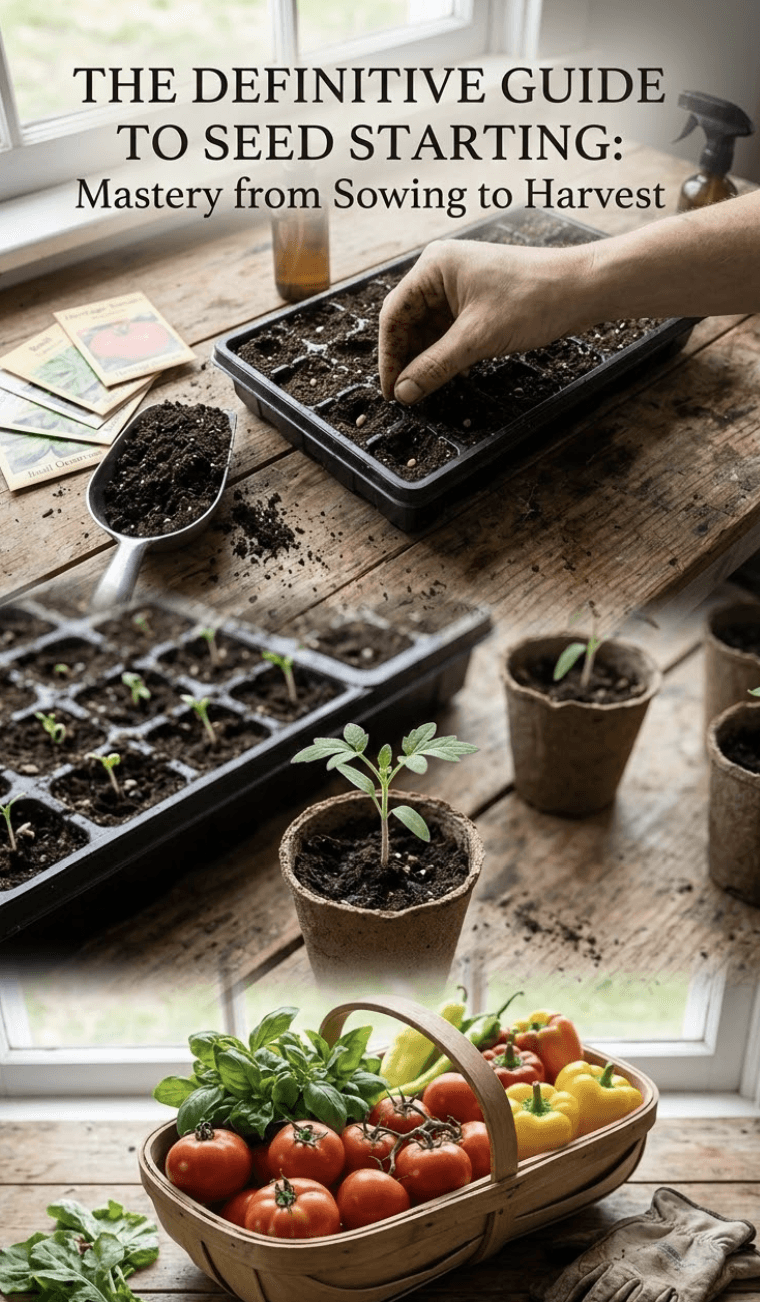
To succeed with spring broccoli, you must start your seeds indoors, under bright, intense grow lights, approximately 6 to 8 weeks before your last expected spring frost.
The Indoor Nursery Dynamics
Broccoli seeds germinate rapidly, often within 4 to 7 days, at standard room temperature. The moment they break the soil surface and show their cotyledons (seed leaves), they demand intense, direct light. If you rely on a sunny windowsill, the seedlings will stretch desperately toward the glass, developing long, weak, spindly stems that will inevitably snap when exposed to the outdoor wind. Keep your grow lights just two inches above the top of the seedlings to keep them short and stocky.
As they grow, ensure you are potting them up into progressively larger containers. Do not let them become root-bound. A broccoli transplant ready for the spring garden should have 4 to 5 true leaves, a stem as thick as a pencil, and a root system that gently holds the soil together but is not spiraling endlessly around the bottom of the pot.
The Hardening Off Protocol
This is the critical step where impatience destroys the harvest. You have raised a beautiful, pampered seedling in a climate-controlled room. It has never felt a breeze, never experienced a drop in temperature, and never been exposed to the harsh, unfiltered ultraviolet radiation of the actual sun.
If you take that soft, indoor plant and shove it directly into the spring garden, the UV rays will scorch its delicate leaves paper-white, the wind will snap its weak stem, and the temperature drop will send it into deep shock. (And remember what shock causes? Buttoning.)
You must "harden off" the plants over a period of 7 to 10 days to alter their cellular structure.
- Days 1 to 3: Place the seedlings outside in a completely shaded area, protected from the wind, for just two or three hours a day. Bring them back inside at night.
- Days 4 to 6: Move them into dappled sunlight or gentle morning sun for half the day. Leave them out a bit longer, allowing them to feel a gentle breeze. This physical movement forces the plant to release cellulose, actively thickening and strengthening its main stem.
- Days 7 to 10: Gradually move them into full sun. Leave them out overnight, provided the temperatures are safely above freezing.
During this meticulous process, the plant is actively building a thicker, waxy cuticle layer on its leaves to act as botanical sunscreen. Once fully hardened, the transplant transforms from a fragile houseplant into a tough, resilient warrior ready for the open earth.
Soil Architecture and Biochemistry
Broccoli is an unapologetic, voracious glutton. It produces a massive amount of dense, heavy biomass in a very short period, and it requires a luxurious, highly engineered soil profile to fuel that explosive growth.
The Nitrogen Engine
During its first two months in the ground, the plant is entirely focused on vegetative growth. It needs to build massive, wide leaves. These leaves are the solar panels that will eventually harvest the sunlight necessary to power the formation of the heavy crown.
Nitrogen is the primary biological driver of leaf expansion. Prior to transplanting, you must heavily amend your beds with rich, fully composted organic matter. Incorporating a slow-release organic nitrogen source, such as blood meal, feather meal, or composted chicken manure, into the top six inches of soil will provide a steady drip of fuel.
However, a word of caution: do not overdo the nitrogen right as the plant begins to form its head. Too much late-stage nitrogen will result in a physiological disorder called "hollow stem" (which we will discuss shortly) and loose, irregular, unappealing florets.
Phosphorus and Potassium
While nitrogen builds the leafy frame, phosphorus and potassium are required to build the dense, tightly packed flower buds of the head. Bone meal (for phosphorus) and kelp meal or wood ashes (for potassium) should be worked into the soil well before planting. These elements ensure the structural integrity of the plant and dictate the density, weight, and cellular strength of your final harvest.
The pH Sweet Spot and Disease Prevention
Broccoli demands a slightly acidic to neutral soil pH, ideally hovering perfectly between 6.5 and 7.0. But pH management in the brassica family is not just about nutrient availability; it is a matter of life and death.
There is a devastating soil-borne slime mold known as "Clubroot." If this pathogen exists in your soil, it will aggressively infect the roots of your broccoli, causing them to swell into massive, grotesque, tumor-like nodules. These swollen roots are entirely incapable of absorbing water or nutrients. A plant infected with clubroot will look perfectly fine in the cool morning, wilt completely flat against the dirt in the afternoon sun, and eventually stunt and die.
Clubroot spores are incredibly resilient and can live dormant in the soil for up to 20 years. However, the pathogen is highly sensitive to alkaline conditions. If you have struggled with clubroot in the past, heavily amending your soil with fast-acting agricultural lime to push the pH up to 7.2 or 7.3 will effectively suppress the spores and protect your roots without harming the broccoli.
The Micronutrient Mandate: Boron and Molybdenum
Most gardeners understand the big three (NPK: Nitrogen, Phosphorus, Potassium). But broccoli cultivation separates the amateurs from the experts through the careful management of micronutrients. Broccoli has an unusually high demand for two specific trace elements.
Boron Deficiency and the Hollow Stem
If you have ever harvested a beautiful, heavy head of broccoli, brought it into the kitchen, sliced the thick stem in half, and recoiled at the sight of a dark, brown, rotting, hollow cavity running down the center, you have encountered boron deficiency.
Boron is a critical micronutrient responsible for cellular wall stability and the transport of sugars throughout the plant's vascular system. When broccoli grows extremely rapidly (fueled by heavy nitrogen applications and abundant spring rains), it expands its cellular structure faster than it can uptake boron from the soil. The cells in the very center of the fast-growing stem simply collapse and die, leaving a hollow tube that often fills with water and begins to rot from the inside out.
If your soil is sandy, highly alkaline, or depleted of organic matter, you are at high risk. A proactive application of a highly diluted foliar spray containing borax applied to the leaves a few weeks before the head forms will completely eliminate this issue, ensuring solid, crisp, sweet stems.
Molybdenum and the Whiptail Defect
Molybdenum is a trace element required in microscopic quantities, but without it, broccoli cannot convert nitrates into usable proteins. A deficiency results in a bizarre, highly recognizable physiological disorder known as "whiptail."
The leaves of a molybdenum-deficient plant become severely deformed, narrow, strap-like, and twisted, looking more like ragged green whips than broad solar panels. Without proper, fully formed leaves, the plant cannot photosynthesize effectively, and the head will never form.
Molybdenum deficiency is almost exclusively triggered by highly acidic soil (a pH below 5.5). In highly acidic conditions, the element becomes chemically locked in the soil matrix and physically unavailable to the roots. Simply raising your pH with agricultural lime to the proper 6.5-7.0 range releases the naturally occurring molybdenum and prevents whiptail entirely.
Spacing and Airflow Architecture
Broccoli plants are massive architectural structures. A fully mature, happy broccoli plant with its leaves fully extended can easily span three feet in diameter.
If you are accustomed to squeezing radishes, carrots, and lettuce into tight, efficient rows, you must radically recalibrate your spatial awareness for this crop. Broccoli plants should be spaced an absolute minimum of 18 to 24 inches apart in all directions.
Crowding broccoli is a fatal error for two primary reasons:
- Subterranean Resource Competition: If their root zones overlap too heavily, they will compete aggressively for water and nitrogen. The loser of this subterranean battle will stress out and, predictably, button.
- Fungal Pathogens: Broccoli leaves are huge and naturally trap humidity beneath their dense canopy. If the plants are jammed together shoulder-to-shoulder, the wind cannot penetrate the bed. Stagnant, humid air is the exact breeding ground required for devastating fungal diseases like Alternaria leaf spot and Downy Mildew. Proper, generous spacing ensures a continuous breeze sweeps through the garden, physically drying the foliage and preventing fungal spores from germinating.
Hydrology and Temperature Management
Broccoli is composed of over 85% water. The hydraulic demands of a plant pushing out massive leaves and a dense, fleshy head are astronomically high.
Consistent Moisture is Non-Negotiable
You must treat your broccoli bed like a slightly wrung-out sponge. It should never be soggy and waterlogged (which rots the roots and starves them of vital oxygen), but it must never be allowed to dry out completely.
If the soil dries out during the crucial weeks leading up to the harvest, the plant will panic, the stem will turn incredibly tough and woody to conserve moisture, and the head will bolt prematurely. Aim to provide 1 to 1.5 inches of deep, penetrating water per week. Always water at the soil level using drip irrigation or a soaker hose. Overhead watering splashes soil-borne bacteria onto the leaves and encourages rot to take hold inside the tight crevices of the developing head.
The Mulch Mandate
Because you need to keep the roots cool as the late spring days grow predictably warmer, bare soil is your enemy. Bare dirt absorbs solar radiation, heating the subterranean root zone and accelerating the plant's biological desire to bolt.
The exact moment your transplants are established in the ground, apply a thick, 2-to-3-inch layer of organic mulch. Clean wheat straw, shredded autumn leaves, or untreated grass clippings work perfectly. This organic blanket reflects the sun, insulates the soil, drops the root zone temperature by up to 10 degrees, and dramatically slows surface evaporation, maintaining the even moisture the plant craves.
Shade Cloth Interventions
As we push deeper into the spring season, unexpected heat waves are incredibly common. If the forecast calls for several days of 85-degree weather and your broccoli heads are still developing, you must intervene mechanically to save the crop.
Deploying a lightweight, 30% density horticultural shade cloth suspended on hoops over your broccoli bed can be a lifesaver. The cloth intercepts a fraction of the solar radiation, dropping the ambient air temperature beneath the canopy just enough to keep the plant from panicking and bolting, buying you the extra week you need for the heads to reach full, harvestable size.
Pest Pathology: Defending the Crown
A heavily fertilized, lush green brassica plant is a biological beacon to every pest in the county. Growing broccoli requires a proactive, militaristic approach to pest management. You are not just gardening; you are defending a fortress.
The Cabbage White Butterfly (The Green Menace)
On a sunny spring afternoon, you will likely see a delicate, beautiful white butterfly fluttering aimlessly around your garden. Do not be fooled by its innocence. This is the Cabbage White Butterfly, and it is actively dropping biological landmines on your crop.
The butterfly lands for a fraction of a second, gluing a single, microscopic, bullet-shaped yellow egg to the underside of your broccoli leaf. Within days, that egg hatches into a velvety-green caterpillar known as a cabbage worm or cabbage looper.
These caterpillars possess a voracious appetite and absolute perfect camouflage. They blend seamlessly with the blue-green hue of the broccoli leaf. They will rapidly chew massive, ragged holes through the foliage, completely skeletonizing the plant. Even worse, as the broccoli head forms, they will crawl up into the tight florets to hide, leaving behind trailings of dark green, granular excrement (frass) deep inside the head you intend to eat.
The Defense Strategy:
- Exclusion: The absolute most effective method is to prevent the butterfly from ever touching the plant. Immediately after transplanting, cover the entire bed with a lightweight floating row cover (insect netting) supported by hoops. Because broccoli does not require insect pollination to form its edible head, you can leave the netting on for the entire lifecycle of the crop.
- Biological Warfare (Bt): If you choose not to use netting, you must deploy Bacillus thuringiensis (Bt). This is a naturally occurring soil bacterium that is completely harmless to humans, pets, bees, and beneficial insects. However, when a caterpillar ingests a leaf sprayed with Bt, the bacteria activate inside the alkaline gut of the insect, literally dissolving its stomach lining. The caterpillar stops feeding within hours and dies a few days later. Spraying a liquid Bt solution on the tops and undersides of the leaves every 7 to 10 days will completely eradicate the loopers.
The Hidden Enemy: Aphids
Aphids are the stealth assassins of the broccoli world. These tiny, soft-bodied, sap-sucking insects congregate in massive colonies on the undersides of the leaves, draining the lifeblood (phloem) from the plant and causing the leaves to curl, yellow, and distort.
But the true nightmare occurs when aphids infest the broccoli crown. They crawl deep inside the tightly packed florets. Because they are often the exact same color as the broccoli, you will not see them until you boil or steam the head in your kitchen, at which point hundreds of tiny, dead gray bugs will float to the surface of your cooking water. It is a profound culinary tragedy.
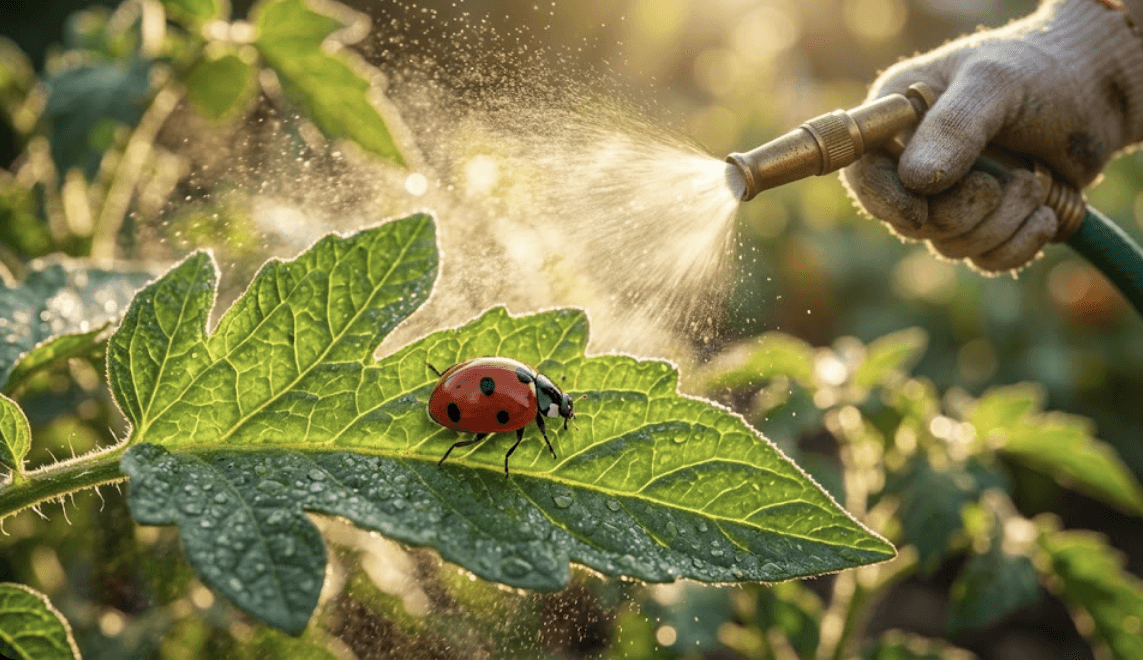
The Defense Strategy: You must inspect your plants weekly. Flip the leaves over. If you see early colonies of aphids, blast them off immediately with a sharp, high-pressure jet of water from the garden hose. Aphids are fragile; the physical trauma of the water blast will kill most of them, and those that survive the fall to the dirt are usually eaten by ground beetles before they can climb back up. Fostering a healthy population of ladybugs and green lacewings (voracious aphid predators) by planting companion flowers is your best long-term organic defense.
Cutworms: The Midnight Lumberjacks
You spend weeks raising the perfect seedling. You harden it off flawlessly. You transplant it into the garden. The next morning, you walk out to check on it, and the plant has been perfectly severed right at the soil line, lying flat on the dirt, looking as though a tiny lumberjack chopped it down with an axe.
This is the work of the cutworm, a nocturnal grub that curls around the tender stems of young transplants and chews right through them under the cover of darkness.
The Defense Strategy: You must equip your transplants with armor. Before planting, create a "cutworm collar." Take a standard cardboard toilet paper tube, cut it into two-inch sections, and slip one section over the stem of the seedling as you plant it, pressing the cardboard an inch down into the soil. The cutworm cannot chew through the cardboard barrier. By the time the cardboard decomposes into the soil, the broccoli stem will have grown too thick and woody for the cutworm to penetrate.
Harvesting Mechanics: The Main Event and the Aftermath
After months of soil management, watering, and fending off caterpillars, the massive central crown of your broccoli plant will swell to its full glory. Knowing exactly when and how to harvest separates the master from the novice.
Timing the Cut
Do not judge a broccoli head by its size; judge it by the tightness of its buds. Some varieties naturally produce central heads that are 8 inches across, while others max out at 4 or 5 inches.
You must monitor the individual buds (florets) making up the head. They should be incredibly tight, compact, and deep blue-green or purple, depending on the variety you planted. The moment you see the individual buds begin to swell slightly, or if you notice the head spreading out and becoming less dense, you are on the absolute precipice of flowering. If you see even a tiny speck of yellow petals peeking through the green, you have waited too long.
Harvest immediately in the early morning, when the plant is fully hydrated, crisp, and pumped full of cellular water from the cool night.
The Angle of the Cut
Take a heavy, sharp harvest knife. Follow the stem down about 5 to 6 inches below the main head and slice cleanly through the thick stalk.
Crucial Step: You must make this cut at a steep, 45-degree angle. If you cut the stem flat, horizontally across, the flat stump will act exactly like a cup. When it rains, water will pool on top of the flat stump, inviting bacterial soft rot to enter the wound and rot the entire plant from the top down. An angled cut ensures that rainwater effortlessly runs off the stump, allowing the wound to heal cleanly and scab over.
The Beauty of Side Shoots (The Second Harvest)
Many beginners cut the main head, declare victory, and immediately rip the entire plant out of the ground by the roots to plant something else. This is a tragic waste of potential.
Once the main apical head is removed, the plant's apical dominance is broken. It will panic, realizing it failed its primary mission to produce seed, and it will immediately activate dormant lateral buds located lower down on the main stem, tucked neatly inside the leaf axils.
Within a week or two, the plant will push out dozens of secondary, miniature broccoli heads, known as side shoots or side florets. While they will not be as massive as the central crown, they are incredibly tender, sweet, and absolutely perfect for roasting or stir-fries.
If you continue to water the plant and feed it a light dose of liquid nitrogen, a single broccoli plant will continue to produce these side shoots for 4 to 6 weeks after the main harvest, effectively doubling your total yield. You only pull the plant when the summer heat finally becomes so intense that the side shoots immediately bolt into flowers before reaching an edible size.
Companion Planting Architecture
Broccoli is a heavy, dominating presence in the garden, but it plays surprisingly well with strategic neighbors, allowing you to build a highly functional ecosystem.
- The Allium Alliance: Plant your broccoli alongside garlic, onions, or scallions. The pungent, sulfurous volatile oils released by alliums act as a heavy olfactory camouflage, confusing the cabbage white butterfly and making it incredibly difficult for the pest to locate the brassicas by scent alone.
- Aromatic Herbs: Thyme, rosemary, and mint planted nearby serve a similar masking function and actively repel certain flying pests.
- The Nightshade Feud: Never plant broccoli in the same bed as tomatoes, peppers, or eggplants. Both groups are incredibly heavy feeders that demand massive amounts of phosphorus and calcium. They will ruthlessly compete for subterranean resources, and the aggressive root systems of the nightshades will usually out-compete the broccoli, leaving your brassicas stunted and nutrient-starved.
Conclusion
Growing early spring broccoli is certainly not for the passive gardener. It is a highly engaged, dynamic process that requires you to act simultaneously as a biochemist, an architect, and a pest control specialist. You must expertly balance the thermal paradox of spring, pamper the root system with perfect nutrition, and vigilantly guard the developing crown from an army of hungry insects.
But when you finally execute that angled cut on a crisp, dewy morning, carrying a heavy, flawless, vibrant green crown into your kitchen, the intense effort completely evaporates. You have captured the absolute essence of the spring garden, mastering a difficult crop, and beating the summer heat at its own game. Happy growing.
Expert Insights & FAQs
Should I pull the plant out immediately after harvesting the main head?
No! If you leave the plant in the ground and continue to water it, it will activate dormant buds along the sides of the main stem. Within a couple of weeks, the plant will push out dozens of smaller, tender secondary heads known as "side shoots." This secondary harvest can continue for weeks, significantly increasing your total yield.
What is clubroot and how do I stop it?
Clubroot is a devastating soil-borne slime mold that causes the roots of brassica plants to swell into grotesque, tumor-like nodules, rendering them unable to absorb water or nutrients. The plant will wilt in the sun and die. The clubroot pathogen thrives in acidic soil. Raising your soil pH to 7.2 using agricultural lime will heavily suppress the spores and protect your crop.
Why should I cut the broccoli stem at an angle?
When you harvest the main central crown, you leave a thick stump behind to encourage the growth of secondary side shoots. If you cut the stump perfectly flat, rainwater will pool on the flat surface, inviting bacterial rot to enter the open wound and destroy the rest of the plant. A 45-degree angled cut ensures water cleanly runs off the stump, allowing it to heal.
Can I grow broccoli in the shade to protect it from the summer heat?
While broccoli appreciates a drop in ambient temperature, it still requires massive amounts of solar energy to build a dense, heavy head. It needs a minimum of 6 to 8 hours of direct sunlight. Growing it in heavy shade will result in loose, spindly, unappetizing heads. If heat is an issue, use a lightweight 30% shade cloth suspended above the plants rather than planting them in the permanent shadow of trees or buildings.
Why is the main stem of my harvested broccoli hollow and rotting inside?
A hollow stem is the classic symptom of Boron deficiency. Boron is a trace micronutrient required for cell wall stability. When broccoli grows rapidly, it can outpace the available boron in the soil, causing the core of the stem to collapse, die, and rot. Applying a highly diluted foliar spray of borax before the head forms will prevent this structural failure.
What are the tiny green worms eating holes in my broccoli leaves?
These are cabbage worms or cabbage loopers, the larvae of the Cabbage White Butterfly. They are perfectly camouflaged and possess voracious appetites. The best organic defense is applying a liquid spray of *Bacillus thuringiensis* (Bt), a naturally occurring soil bacteria that exclusively targets the digestive systems of caterpillars without harming beneficial insects, pets, or humans.
Is it safe to eat broccoli if the yellow flowers have started to open?
It is completely safe and not toxic, but the culinary quality will be heavily compromised. Once the buds open into yellow flowers, the plant changes its internal chemistry. The sugars are spent, the stem becomes tough and woody, and the flavor turns distinctly bitter. It is best to harvest before any yellow appears, but if it happens, you can still chop it finely for soups or stir-fries where the bitterness is masked.
Why did my broccoli plant produce a tiny head the size of a golf ball?
This is a physiological response called "buttoning." It occurs when the young transplant experiences extreme stress, causing it to panic and prematurely enter its reproductive cycle. The most common causes are exposing the seedling to prolonged near-freezing temperatures (vernalization), letting it become severely root-bound in its pot before planting, or allowing the soil to completely dry out.
Johnnie McCormick
Zone 7b/8a - North Central Alabama
Johnnie McCormick is a gardening hobbyist and the founder of My Garden Spot. Raised in north-central Alabama, his passion for gardening began in his youth. In 2008, he established a large market garden, teaching himself high-yield growing methods. In the years since, he has operated seasonal seedling sales for transplants, specializing in heirloom tomatoes, peppers, eggplants, decorative ground covers like Ajuga (Bugleweed), marigolds, nasturtiums, and fresh kitchen-window herb arrangements (basil, cilantro). Today, he gardens in the hills between Birmingham and Jasper, Alabama (Zone 7b/8a), sharing practical, community-focused gardening resources.
Verified Authoritative Citations & References
In alignment with our strict E-E-A-T research and verification guidelines, this guide cross-references data from the United States Department of Agriculture (USDA) and Cooperative Extension Service programs.
- Cornell Cooperative Extension: Home Vegetable Gardening Guide and vegetable variety recommendations. gardening.cals.cornell.edu
- Penn State Extension: Master Gardener Manual and companion planting matrices. extension.psu.edu
- Alabama Cooperative Extension System (ACES): Raised bed construction plans and regional seed planting calendars. aces.edu
- USDA NRCS: Cover crops and biological soil health guidelines. nrcs.usda.gov

Please log in to view comments.