
Vegetable Guide: How to Grow Cabbage in a No-Till Garden
Welcome back to My Garden Spot! If you step outside right now, take a deep breath, and smell that rich, damp earth waking up from its winter slumber, you know exactly what time it is. The heavy spring rains are soaking the ground, the days are finally stretching out, and we are in the thick of the great spring planting rush.
While everyone else is losing their minds over tomatoes and peppers—which, let’s be honest, have no business being outside until the soil is practically wearing a sweater—we are going to talk about the real unsung hero of the spring and fall garden: the humble cabbage.
Cabbage often gets a bad rap. For many, it brings up childhood memories of boiled, sulfurous mush. But in the hands of a home gardener, cabbage is a culinary powerhouse. A dense, crisp, frost-kissed head of homegrown cabbage, turned into fresh slaw or slowly roasted with olive oil, is a completely different vegetable than the sad, pale bowling balls sitting under the fluorescent lights of the grocery store.
But we aren't just going to talk about how to grow it. We are going to talk about how to grow it better. We are going to dive deep into growing cabbage using no-till gardening methods. Cabbage and no-till agriculture are a match made in horticultural heaven.
In this incredibly thorough, beginner-friendly (but expert-level) guide, we are going to break down exactly how to build a no-till bed, how to time your plantings perfectly depending on where you live, and how to defend your gorgeous green globes from the endless army of pests trying to eat them before you do. Grab a cup of coffee, and let's get our hands dirty.
The Zone Guide: When to Plant Your Cabbage
Before we even touch a trowel, we need to talk about location and timing. Cabbage is a cool-weather crop. It absolutely loves crisp mornings, mild afternoons, and a healthy dose of rain. What it hates—with a burning passion—is the sweltering, humid heat of mid-summer. If you try to force a cabbage to mature in the blazing heat of August, it will bolt (try to produce flowers), turn incredibly bitter, or simply rot from the inside out.
Because of this, timing your planting to match your local climate is the single most important decision you will make.
The Primary Sweet Spot: USDA Zones 4 through 8
This guide is primarily tailored for the classic, temperate gardening zones of North America (Zones 4 through 8). If you live in this massive middle swath of the country, you get the luxury of two distinct cabbage seasons: a spring crop and a fall crop.
Right now, as the spring soil is warming up, is the classic time to get your spring transplants into the garden. You want to start your seeds indoors about 4 to 6 weeks before your last expected spring frost. When they have three or four true leaves, you move them outside. They can handle a light frost without breaking a sweat. The goal is to have them completely finished growing and harvested by the time the summer heat fully arrives in late June or July.
Then, you do it all over again in late summer. You start seeds indoors in July, plant them outside in August, and let them mature as the autumn days get shorter and cooler.
Adjusting for the Deep South: Zones 9 through 11
If you live down South where the summers are brutally long and hot, you need to completely flip the script. Do not try to plant cabbage right now in the middle of spring; it will not survive your June heat.
Instead, you treat cabbage as a strict winter crop. You will want to start your seeds in the late fall (October or November) and let them grow slowly right through the mild winter months. They will be perfectly ready for a massive harvest in January or February.
Adjusting for the Far North: Zones 1 through 3
If you live in the frozen north where the growing season is incredibly short, you don't get a spring and a fall crop. You get one shot. You will start your seeds indoors in late spring, plant them outside once the brutal freezes are over, and let them grow straight through your very mild, short summer for an early autumn harvest.
The Magic of the No-Till Garden
Okay, let's talk about the soil. For generations, the standard practice for getting a garden ready in the spring involved firing up a loud, gas-smelling rototiller and pulverizing the earth into a fine, fluffy powder.
We now know that this is one of the worst things you can possibly do to your garden.
A healthy garden relies on a complex, microscopic ecosystem called the soil food web. Beneath the surface, there are miles of beneficial fungal threads, billions of helpful bacteria, and armies of earthworms working around the clock to break down organic matter and deliver nutrients to your plants' roots. When you run a rototiller through that ecosystem, it is the equivalent of dropping a tornado onto a bustling city. It destroys the fungal networks, chops up the earthworms, and causes the soil structure to eventually collapse and compact. Furthermore, tilling brings thousands of dormant weed seeds up to the surface and exposes them to sunlight, guaranteeing you will spend your entire summer pulling weeds.
Why Cabbage Loves No-Till
Cabbage is what we call a "heavy feeder." It needs a massive amount of nutrition to build those dense, tightly packed heads. It also requires incredibly consistent soil moisture.
No-till gardening solves both of these problems beautifully. By layering rich compost and deep organic mulch on top of the soil rather than mixing it in, you create a system that acts like a giant sponge. The mulch protects the soil from the sun, virtually eliminating evaporation and keeping the roots cool and hydrated. Meanwhile, the undisturbed earthworms come up to the surface, eat the compost, and pull it down into the root zone for you, naturally aerating the soil in the process.
How to Build a No-Till Cabbage Bed
If you are starting from scratch this spring, converting a patch of grass or weeds into a no-till bed is surprisingly easy. You don't need a machine; you just need cardboard and compost. This method is often called "sheet mulching" or "lasagna gardening."
Step 1: The Smother Layer Find some plain, unwaxed brown cardboard boxes. Remove all the packing tape and staples. Lay the cardboard directly over the grass or weeds you want to turn into a garden. Overlap the edges of the cardboard by at least six inches so no sunlight can peek through. This cardboard layer will completely smother and kill the grass beneath it, and over the course of the season, it will break down and become worm food. Water the cardboard thoroughly so it hugs the ground.
Step 2: The Compost Layer Next, you are going to pile a thick layer of high-quality compost directly on top of the wet cardboard. You want a minimum of 4 inches of compost, though 6 inches is even better. This is where your cabbage roots are going to live for the first month of their lives. You can use bagged compost, municipal compost, or the black gold from your own backyard bin.
Step 3: The Mulch Layer Finally, top the compost with a 2-inch layer of organic mulch. Clean wheat straw, shredded autumn leaves, or untreated grass clippings work perfectly. This acts as your moisture barrier and weed suppressant.
You now have a perfectly pristine, deeply nutritious garden bed ready for planting, and you didn't have to turn a single shovel of dirt.
Planting Cabbage in a No-Till System
Cabbage seeds are tiny, and they take a relatively long time to turn into a mature head (anywhere from 70 to 100 days). Because of this, we almost never plant cabbage seeds directly into the garden bed. The weather is too unpredictable, and the tiny sprouts are too easily eaten by pests.
Always use transplants. Whether you started them yourself indoors under grow lights or bought a six-pack from your local nursery, the method for getting them into a no-till bed is specific and incredibly satisfying.
The Art of the Transplant
First, let's talk about spacing. Cabbage plants are absolute real estate hogs. While the head itself might only be the size of a cantaloupe, the massive, spreading outer leaves (called the wrapper leaves) need a lot of room to stretch out and photosynthesize. If you pack your cabbages too tightly, they will compete for sunlight and water, resulting in tiny, loose heads. Furthermore, crowded plants restrict airflow, which invites fungal diseases.
Give your cabbage plants an absolute minimum of 18 inches of space between each plant in all directions. If you are growing a giant variety, give them 24 inches.
Here is how you plant them into your new no-till bed:
- Part the Mulch: Use your hands to push the top layer of straw or leaf mulch aside, creating a small, bare circle of compost. You never want mulch directly touching the stem of the seedling, as it can cause rot.
- Make the Hole: You don't need a shovel. Because your compost is so loose and fluffy, just use a dibbler or your fingers to poke a hole deep enough for the root ball.
- The Power Boost: Before you drop the plant in, throw a small handful of worm castings or a sprinkle of balanced, slow-release organic fertilizer into the hole. This gives the young plant an immediate nutritional boost right at the root zone.
- Plant Deeply: Cabbage seedlings can be a bit top-heavy. Plant them slightly deeper than they were in their nursery pot, burying a bit of the stem up to the first set of leaves. This helps anchor them firmly against spring winds.
- Firm and Water: Gently firm the compost around the base of the plant to remove any large air pockets, and immediately water it in deeply. Pull the mulch back around the plant, keeping it an inch away from the stem.
Feeding the Beast: Nutrition in the No-Till Garden
As we mentioned earlier, cabbage is a heavy feeder. It takes a massive amount of biological energy to fold those thick, crispy leaves over each other into a dense head.
In a traditional tilled garden, you would constantly till synthetic granular fertilizers into the dirt. In a no-till garden, we rely on top-dressing and liquid feeds to keep the soil food web happy, letting the microbes do the heavy lifting of feeding the plant.
The Nitrogen Phase
During the first half of its life, your cabbage plant is only interested in one thing: growing massive outer wrapper leaves. These big, beautiful leaves are the solar panels that will eventually power the formation of the head.
To grow big leaves, the plant needs nitrogen. About three weeks after you transplant your cabbage into the garden, give it a top-dressing. Sprinkle a handful of organic blood meal or composted chicken manure around the base of the plant (under the mulch). Alternatively, you can use a liquid feed. A highly diluted fish emulsion mixed into your watering can every two weeks provides a gentle, easily absorbed hit of nitrogen that the shallow roots can drink up immediately.
The Potassium Phase
As the plant matures, you will notice the innermost leaves starting to cup inward. This is the magical moment when the plant stops focusing on spreading out and starts focusing on building the tight, central head.
At this stage, the plant's nutritional demands shift. It needs less nitrogen and more potassium and phosphorus to ensure the head is dense, sweet, and crisp. Too much nitrogen at this stage can actually cause the head to grow too fast and split open.
Switch away from the fish emulsion. If you pre-loaded your no-till bed with good compost, the plant probably has everything it needs. But if you want to ensure a massive head, a light top-dressing of kelp meal (which is loaded with potassium and trace minerals) scratched into the surface of the compost will work wonders.
Watering: The Secret to Stopping Split Heads
If there is one heartbreak that plagues cabbage growers more than any other, it is the dreaded split head. You go out to the garden one morning to admire your perfectly round, bowling-ball-sized cabbage, and you find it has cracked completely open down the middle, looking like a green pac-man.
Splitting is almost never caused by a disease. It is a hydraulic failure caused by inconsistent watering.
Cabbage leaves are full of water. When the soil dries out during a warm spring week, the cabbage essentially pauses its growth. The outer leaves of the head tighten up and harden a bit to conserve moisture. If you follow that dry spell with a massive, heavy soaking (either from a rainstorm or leaving the sprinkler on too long), the roots suddenly suck up a huge volume of water. The interior cells of the cabbage head expand rapidly, but the hardened outer leaves cannot stretch fast enough to accommodate the new size. The pressure builds until the head literally bursts open.
Once a head splits, you must harvest it immediately. It will not heal, and the open wound will quickly invite rot and insects into the core of your vegetable.
Hydration in the No-Till System
The absolute best way to prevent splitting is to provide consistent, even moisture so the plant never has to pause its growth.
This is where your no-till system shines. The deep layer of compost combined with the top layer of mulch acts like a moisture-regulating sponge. It absorbs the heavy spring rains and slowly releases the moisture back to the roots over time.
You should aim to give your cabbage about 1 to 1.5 inches of water per week. The best way to deliver this is via drip irrigation or a soaker hose snaked beneath the mulch. Watering at the soil level keeps the leaves dry, which drastically reduces the chances of fungal diseases taking hold in the tight folds of the cabbage.
If you stick your finger under the mulch and the compost feels dry down to the second knuckle, it's time to water. If it feels like a damp sponge, leave it alone.
The Constant Battle: Pest Management
Let’s be incredibly real for a moment. You are not the only creature in your neighborhood who thinks fresh, tender cabbage is delicious. Growing brassicas is an exercise in pest management. Because you are creating a lush, green buffet, every bug in a three-mile radius is going to show up.
In a no-till garden, we don't reach for broad-spectrum chemical pesticides. Those chemicals kill the beneficial insects and damage the delicate soil food web we worked so hard to build. Instead, we use physical barriers, biological controls, and keen observation.
The White Butterfly Menace
On a beautiful, sunny afternoon, you will likely see a delicate, pretty white butterfly fluttering lazily around your garden. Do not be fooled by its innocent appearance. This is the Cabbage White Butterfly, and it is actively trying to destroy your crop.
The butterfly lands on your cabbage leaves for just a second to lay tiny, bullet-shaped yellow eggs on the undersides. A few days later, those eggs hatch into velvety-green caterpillars (cabbage worms). These caterpillars blend perfectly with the cabbage leaves, making them incredibly hard to spot. They are voracious eaters, and within a week, they can skeletonize a young cabbage plant, leaving nothing but the thick leaf veins behind. Even worse, as the head forms, they will bore straight into the center, leaving behind a trail of gross, dark green frass (caterpillar poop).
The Defense: The absolute best, 100% foolproof way to stop the Cabbage White Butterfly is physical exclusion. The moment you plant your transplants in the garden, cover the entire bed with a lightweight floating row cover (often sold as insect netting). Support the netting with wire hoops so it doesn't rub against the plants, and bury the edges in the mulch. Because cabbage does not require bees for pollination (we eat the leaves, not a fruit), you can leave this netting on for the entire life of the crop. If the butterfly can't physically touch the leaf, she can't lay her eggs.
If you don't want to use netting, your next best option is a biological spray commonly known as Bt (a naturally occurring soil bacteria). When the caterpillar eats a leaf sprayed with Bt, the bacteria disrupt its digestive system. The caterpillar stops eating immediately and dies a few days later. It is incredibly effective, entirely organic, and completely harmless to humans, pets, and helpful pollinators like bees. You will need to reapply it after a heavy rain.
The Slug Problem
Here is the one downside to no-till gardening: slugs absolutely love mulch. The damp, cool environment under a thick layer of straw or leaves is a slug paradise. Slugs feed at night, chewing large, ragged holes in the outer wrapper leaves of your cabbage.
The Defense: Do not use toxic slug baits, as they can harm birds and pets that eat the poisoned slugs. Instead, rely on organic iron phosphate baits, which cause the slugs to stop feeding and safely break down into fertilizer in the soil.
You can also use the classic beer trap. Sink a shallow dish (like an old tuna can) into the mulch so the rim is level with the soil, and fill it with cheap beer. The yeast attracts the slugs; they fall in and drown. You can also head out to the garden at 10 PM with a flashlight and hand-pick them, tossing them into a bucket of soapy water. It sounds gross, but it is highly effective.
Aphids: The Stealth Attackers
Aphids are tiny, soft-bodied insects that congregate in massive colonies on the undersides of the leaves and deep within the folds of the developing head. They suck the sap out of the plant, causing the leaves to curl and yellow.
The Defense: In a healthy, organic no-till garden, aphids are usually managed by predatory insects like ladybugs, green lacewings, and parasitic wasps. To encourage these good guys to hang around, plant companion flowers like sweet alyssum, dill, and yarrow near your cabbage beds.
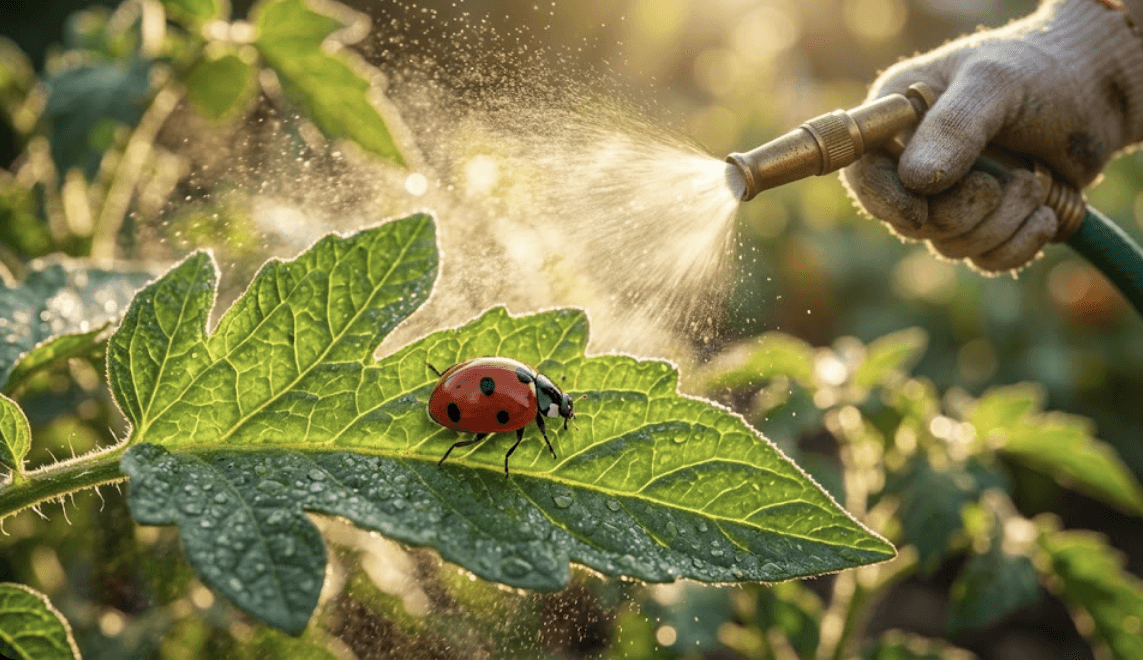
If an aphid infestation gets out of hand before the cavalry arrives, a sharp blast of water from the hose is often enough to knock them off the plant. Because they are so weak, they generally cannot climb back up. For severe cases, a spray of insecticidal soap (which suffocates them on contact) will clear them out quickly.
The Harvest: Knowing When and How to Cut
After months of careful watering, feeding, and defending your crop, the moment of truth arrives. Knowing exactly when to harvest your cabbage requires a bit of tactile feedback.
Do not judge a cabbage by its size. Some varieties are bred to be massive, ten-pound behemoths, while others are naturally small, two-pound mini-cabbages. You cannot tell if it is ready just by looking at it.
You must use the squeeze test.
Place both hands on the central head of the cabbage and give it a firm, gentle squeeze. If it feels soft, spongy, or gives way under your pressure, it needs more time. The internal leaves are still loose and filling out.
If it feels rock-hard, dense, and solid—like a slightly yielding bowling ball—it is ready to come out of the garden.
The No-Till Harvest Method
When it is time to harvest, bring a large, sharp knife out to the garden.
Pull the large, floppy outer wrapper leaves down away from the tight central head to expose the thick main stem. Slice cleanly through the stem as close to the base of the tight head as possible.
Now, here is the most crucial step for a no-till gardener: Do not pull the root out of the ground.
In traditional gardening, you would rip the entire plant, root ball and all, out of the dirt and throw it in the compost pile. In a no-till system, we leave the roots right where they are.
Take a pair of loppers or a hand saw and cut the remaining stem right at the soil level. Leave the massive root system buried in the compost. Over the next few weeks, those roots will slowly rot and decay. As they break down, they provide a massive feast for the earthworms and soil bacteria. More importantly, as the roots decompose, they leave behind a network of tiny underground tunnels, creating natural aeration and water channels throughout your garden bed.
You can take the large wrapper leaves you left behind and simply lay them on top of the mulch. They will break down quickly, returning their nutrients straight back to the soil surface. It is a perfect, closed-loop biological system.
The Frost-Kissed Fall Cabbage
Before we wrap up, a quick note about that secondary fall crop we mentioned earlier. If you live in Zones 4 through 8 and you manage to grow a fall cabbage crop, you are in for a serious culinary treat.
As the autumn days get shorter and the first light frosts hit the garden, a magical chemical reaction happens inside the cabbage plant. To protect its cells from freezing and bursting, the cabbage converts its stored starches into complex sugars. These sugars act like a natural botanical antifreeze.
The result? A cabbage that has survived a few fall frosts will be exponentially sweeter, more tender, and more flavorful than a cabbage harvested in the heat of early summer. It is truly one of the greatest rewards of the late-season garden.
Growing cabbage in a no-till system is a lesson in letting nature do the heavy lifting. By building rich, spongy soil, protecting the soil life, and staying vigilant against the butterflies, you can produce stunning, massive heads of cabbage that look like they belong in a magazine. Get your cardboard, get your compost, and get planting.
Expert Insights & FAQs
Are the big, floppy outer leaves of the cabbage edible?
Yes! The large outer wrapper leaves are completely edible and packed with nutrients. However, because they are older and have been exposed to the elements, they tend to be tougher and slightly more bitter than the tender inner head. They are excellent when thinly sliced and added to slow-cooked soups, stews, or used as wraps for stuffed cabbage rolls.
Can I plant cabbage in the same spot every year?
It is highly recommended that you practice crop rotation. Do not plant cabbage (or any of its relatives like broccoli, kale, or cauliflower) in the exact same spot two years in a row. Rotating them to a different bed prevents soil-borne diseases (like the devastating clubroot) from building up in the soil over time and depleting specific nutrients.
Do I really have to leave the roots in the ground after I harvest?
In a strict no-till system, yes! Leaving the roots to decay in the soil is a fundamental practice. The decaying roots feed the beneficial soil microbes and earthworms. As they rot away, they create natural channels for air and water to penetrate deep into the soil structure, preventing compaction without you ever having to use a tiller or a shovel.
How long will a harvested head of cabbage last in storage?
Cabbage is one of the best storage crops in the garden. If you harvest a dense, healthy head, do not wash it. Simply place it in a plastic bag in the crisper drawer of your refrigerator, and it will easily last for 4 to 6 weeks. For long-term winter storage, late-season varieties can last for months in a cool, humid root cellar.
Why did my cabbage plant grow tall and sprout yellow flowers instead of forming a head?
This is called "bolting." It happens when the plant experiences severe stress, usually from intense summer heat or a sudden lack of water. The plant panics, thinks it is dying, and rushes to produce seeds before it perishes. Once a cabbage bolts, the leaves become tough and extremely bitter. It is best to pull the plant and start over.
What companion plants grow well with cabbage?
Cabbage loves aromatic herbs and flowers that confuse pests. Planting thyme, sage, and mint nearby can help mask the scent of the cabbage from the white butterfly. Sweet alyssum is a fantastic companion flower to tuck around the edges of the bed; it attracts tiny parasitic wasps that naturally hunt and kill cabbage worms and aphids.
Can I grow cabbage in containers if I don't have a garden bed?
Absolutely! Cabbage grows beautifully in containers. However, because cabbage has a large footprint, you need a substantial pot. Use a container that holds at least 5 to 7 gallons of soil per plant. Ensure it has excellent drainage and use a high-quality potting mix, not heavy garden soil. You will need to water containers much more frequently than in-ground no-till beds.
Why are my cabbage leaves full of holes but I don’t see any bugs?
If your leaves look like Swiss cheese but you can't find the culprit, you likely have one of two problems. If the damage appears overnight, it is almost certainly slugs or snails hiding in the mulch during the day. If the damage happens during the day, look closely for perfectly camouflaged, velvety-green cabbage worms hiding along the thick veins on the undersides of the leaves.
Johnnie McCormick
Zone 7b/8a - North Central Alabama
Johnnie McCormick is a gardening hobbyist and the founder of My Garden Spot. Raised in north-central Alabama, his passion for gardening began in his youth. In 2008, he established a large market garden, teaching himself high-yield growing methods. In the years since, he has operated seasonal seedling sales for transplants, specializing in heirloom tomatoes, peppers, eggplants, decorative ground covers like Ajuga (Bugleweed), marigolds, nasturtiums, and fresh kitchen-window herb arrangements (basil, cilantro). Today, he gardens in the hills between Birmingham and Jasper, Alabama (Zone 7b/8a), sharing practical, community-focused gardening resources.
Verified Authoritative Citations & References
In alignment with our strict E-E-A-T research and verification guidelines, this guide cross-references data from the United States Department of Agriculture (USDA) and Cooperative Extension Service programs.
- Cornell Cooperative Extension: Home Vegetable Gardening Guide and vegetable variety recommendations. gardening.cals.cornell.edu
- Penn State Extension: Master Gardener Manual and companion planting matrices. extension.psu.edu
- Alabama Cooperative Extension System (ACES): Raised bed construction plans and regional seed planting calendars. aces.edu
- USDA NRCS: Cover crops and biological soil health guidelines. nrcs.usda.gov

Please log in to view comments.