Vegetable Guide: Growing Scallions (Green Onions) in Small Spaces

Vegetable Guide: Growing Scallions (Green Onions) in Small Spaces
As we navigate the notoriously erratic temperature swings of late April 2026, the modern horticulturalist faces a familiar spatial dilemma. The brassicas are rapidly consuming their allotted square footage, the early indeterminate tomatoes are aggressively stretching toward their trellis wires, and the garden real estate—whether you are operating a half-acre market plot or a ten-square-foot urban balcony—is shrinking by the day.
In the ruthless mathematics of high-density planting, every square inch must justify its existence. Enter the scallion (Allium fistulosum), commonly masquerading under its culinary alias, the green onion.
While giant pumpkins win county fairs and heirloom tomatoes win Instagram, the humble scallion is the unsung, heavy-lifting champion of the high-efficiency garden. It demands almost zero horizontal space, scoffs at shallow soil profiles, and operates with a biological rapidity that puts most traditional alliums to shame.
Here at My Garden Spot, we do not treat the scallion as an afterthought to be scattered randomly in the margins. When cultivated with academic precision, Allium fistulosum can yield a continuous, staggering volume of biomass from spaces that would otherwise remain barren. In this master-level guide, we will dissect the botany of the bunching onion, explore the precise mechanics of small-space and container architecture, and outline the exact late-April execution strategies required to maintain a perpetual harvest of crisp, pungent alliums through the heat of the summer and beyond.
The Botanical Identity Crisis: What is a Scallion?
Before we engineer the soil and configure the spatial layout, we must establish exactly what organism we are cultivating. The term "scallion" is colloquially abused in the agricultural sector, often applied to any onion pulled prematurely before its bulb has swollen.
However, true scallions belong primarily to the species Allium fistulosum (the Welsh onion or Japanese bunching onion). Unlike standard bulb onions (Allium cepa), true scallions are genetically programmed to ignore bulb formation. Regardless of the photoperiod (day length) or the ambient temperature, A. fistulosum pours its photosynthetic energy entirely into vertical foliar growth and the division of its basal plate.
The Physiology of the Non-Bulber
Standard A. cepa onions respond to the lengthening days of late spring by converting their leafy layers into swollen, carbohydrate-rich storage organs (the bulb). This is a biological survival mechanism for enduring drought or winter.
Allium fistulosum, conversely, forms a straight, elegant pseudostem (the white part you chop for your stir-fry). Because it never receives the hormonal trigger to bulb, it can be planted at an astonishing density. The plants do not require subterranean lateral expansion space. If you understand this genetic quirk, you unlock the secret to hyper-dense container cultivation.
Spatial Dynamics: The Architecture of Small Spaces
If you are gardening on a balcony, a patio, or working with highly regimented raised beds, spatial efficiency is your primary limiting factor. Scallions possess a root architecture that makes them the ultimate "gap-filler."
Shallow Root Systems and Container Hydrology
Alliums, across the board, are notoriously poor at foraging for water and nutrients. They possess a fibrous, shallow root system devoid of root hairs, relying heavily on arbuscular mycorrhizal fungi in wild settings to extend their reach.
In a small-space container setting, this shallow root system is a massive advantage. You do not need deep, heavy, 15-gallon pots to grow world-class scallions. A container depth of merely 6 to 8 inches is entirely sufficient, provided you master the hydrology of the potting medium.
- The Container Medium: Because the volume of soil is small, its physical properties must be flawless. A standard peat or coir-based potting mix amended with 20% perlite provides the necessary capillary action to pull moisture evenly through the shallow root zone while preventing the anaerobic, waterlogged conditions that lead to basal rot.
- The Evaporation Threat: Shallow containers heat up and dry out exponentially faster than in-ground beds. In the intensifying sun of late April and early May, a 6-inch-deep window box can become a desiccated wasteland in an afternoon. Consistent, even moisture is the only way to maintain the cellular turgor pressure required for that signature scallion "snap."
The Multi-Sowing Module Technique
The legacy method of growing scallions involves digging a shallow trench and sprinkling seeds individually, resulting in a tedious, time-consuming thinning process. In a small space, this is wildly inefficient.
Instead, we employ the multi-sowing module technique, heavily popularized by modern no-till market gardeners.
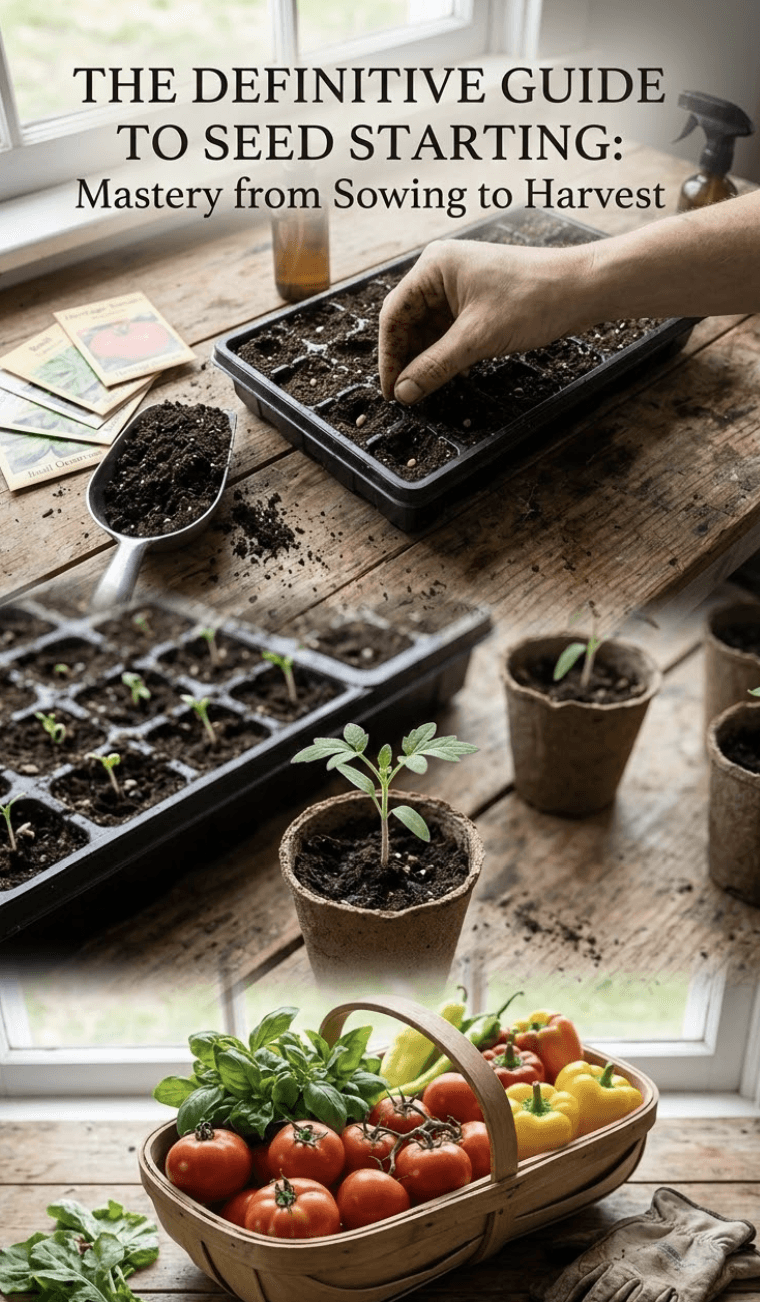
- The Sowing: In your seed starting trays (or directly in your pots), do not plant one seed per hole. Drop 5 to 8 seeds into a single tight cluster.
- The Growth: As the seeds germinate and grow, they will push against each other, forming a tight, upright clump of scallions. Because they do not form bulbs, this crowding does not stunt their vertical growth; it simply forces them to grow perfectly straight.
- The Transplant/Spacing: Plant these entire multi-sown clumps 4 to 6 inches apart in your raised bed or container. You have just increased your yield per square foot by 600% without sacrificing air circulation between the clusters.
Soil Chemistry: Feeding the Foliar Engine
Scallions are cultivated entirely for their vegetative growth. We want thick, dark green, hollow leaves (scapes) and crisp, brilliant white pseudostems. To achieve this, we must manipulate the soil chemistry to heavily favor nitrogen, while maintaining the background elements necessary for pungency.
The Nitrogen Imperative
Nitrogen is the core building block of chlorophyll and the primary driver of rapid cellular expansion in leaves. Because scallions grow so quickly, and because they are crammed into small spatial footprints, they will rapidly exhaust the ambient nitrogen in a container or raised bed.
- The Baseline: Prior to your late-April transplanting or direct sowing, amend your substrate with a high-quality, fully mature compost. Incorporate a slow-release, organic nitrogen source, such as blood meal (12-0-0) or feather meal.
- The Liquid Top-Up: Once the scallions are 4 inches tall, their nitrogen demand peaks. Because they lack deep, expansive roots to hunt for nutrients, you must deliver the food directly to them. Apply a liquid fish emulsion or kelp extract drench every 14 days. This highly bio-available nitrogen bypasses the slow microbial breakdown process and is immediately absorbed by the shallow roots.
The Role of Sulfur in Allium Flavor
The characteristic sharp, pungent "bite" of a scallion is derived from organic sulfur compounds, specifically allyl propyl disulfide. If you grow scallions in completely sterile, synthetic potting soil lacking in sulfur, they will look beautiful but taste like vaguely onion-scented water.
Most municipal compost and organic matter contain trace amounts of sulfur, but for maximum culinary impact in small container spaces, a very light dusting of agricultural gypsum (calcium sulfate) applied to the soil prior to planting will ensure the biochemical pathways responsible for flavor are fully fueled.
The Late April Execution: Succession Mathematics
It is currently late April 2026. The danger of hard, killing frosts has largely passed in most temperate zones, but the soil is still deliciously cool. Scallions are remarkably cold-tolerant, happily germinating in soil temperatures as low as 45°F (7°C), though their optimal germination velocity occurs between 60°F and 70°F (15°C to 21°C).
If you plant all your scallion seeds today, you will have a massive, unmanageable harvest in exactly 60 days, followed by nothing. The secret to continuous, small-space harvesting is the mathematics of succession planting.
The 14-Day Cycle
To ensure you have fresh green onions for garnishes, salads, and stir-fries from June through November, you must discipline yourself to plant small batches frequently.
- Batch 1 (Late April): Direct sow your first clusters in your balcony pots or raised beds.
- Batch 2 (Mid-May): Exactly 14 days later, sow a second round of clusters.
- The Continuous Loop: Continue this 14-day succession sowing until late August. As you harvest the mature clusters from Batch 1, immediately re-amend that tiny patch of soil with a handful of compost, and drop the seeds for Batch 8 into the exact same spot.
Because scallions take up so little room, you can reserve a single 2-foot by 2-foot square in your garden dedicated entirely to this rotating assembly line of alliums.
Watering Mechanics: Turgor Pressure and the "Crunch"
The physiological structure of an Allium fistulosum leaf is fascinating. It is a hollow tube, designed by evolution to be highly efficient and wind-resistant. However, the structural integrity of this hollow tube relies entirely on internal hydraulic pressure, known botanically as turgor pressure.
When the shallow root system of the scallion experiences a drought, the plant transpires moisture out of its leaves faster than it can replace it. The water vacuoles inside the plant cells shrink. The cellular walls lose their rigidity, and the once-proud, upright scallion flops over, becoming rubbery and limp.
- The Watering Protocol: In the small-space or container garden, you must never allow the potting medium to dry out completely. Check the soil moisture daily. It should feel like a wrung-out sponge.
- The Mulch Mandate: Even in pots, a thin layer of fine organic mulch (like shredded straw or untreated grass clippings) applied around the base of the scallion clusters will dramatically reduce surface evaporation and keep the shallow root zone cool and hydrated.
Pest Pathology and the Allium Defense
One of the great joys of cultivating alliums is their inherent chemical warfare capabilities. The same sulfur compounds that make them delicious to us make them highly offensive to a wide array of garden pests. In fact, utilizing the "Carrots Love Tomatoes" companion planting philosophy, scallions are frequently interplanted with carrots to chemically mask the scent of the carrot crop, effectively blinding the devastating Carrot Rust Fly.
However, scallions are not entirely invincible. In high-density, small-space environments, specific pests can isolate and attack them.
Onion Thrips (Thrips tabaci)
Thrips are microscopic, cigar-shaped insects that thrive in hot, dry conditions—exactly the kind of microclimate that develops on a sun-baked urban balcony in mid-July.
Thrips do not chew holes; they possess rasping-sucking mouthparts. They scrape the epidermal layer of the scallion leaf and suck up the exuding plant sap. The damage presents as silvery, stippled streaks along the green leaves, eventually causing the leaf to dry out and die.
- The Organic Defense: Because thrips thrive in dry heat, maintaining high humidity in the microclimate is your first line of defense. Consistent watering and occasional overhead misting in the early morning can disrupt their lifecycle. For severe infestations, a targeted application of organic insecticidal soap or Neem oil applied directly to the leaves (especially down in the tight crevices where the leaves meet the pseudostem) will smother the insects.
Allium Leaf Miner (Phytomyza gymnostoma)
A relatively recent and highly destructive pest in North America, the allium leaf miner fly punctures the leaves to lay eggs. The emerging maggots mine their way down the hollow leaf tube and into the pseudostem, leaving behind winding, necrotic trails and introducing secondary bacterial rots.
- The Barrier Method: The only truly effective organic control for leaf miners is mechanical exclusion. Because scallions do not require insect pollination (we are eating the vegetative growth, not the fruit), you can cover your container or raised bed patch with a lightweight, floating row cover (insect netting) from the day of planting until the day of harvest.
Harvesting Mechanics: The "Cut-and-Come-Again" Reality
When your scallions reach roughly the thickness of a pencil (usually 60 to 70 days from sowing), they are ready for harvest.
In a traditional market garden, the entire plant is pulled, the roots are trimmed, and the bunch is washed for sale. However, in a small-space garden where maximizing yield is the ultimate goal, pulling the entire plant is a missed opportunity. Allium fistulosum is highly regenerative.
The Regenerative Cut
If you do not need the white pseudostem for a specific recipe and simply want the pungent green foliage for a garnish, do not pull the plant.
- Take a sharp, sanitized pair of bypass pruners or kitchen shears.
- Cut the green leaves off exactly one inch above the point where the white pseudostem turns green (the basal meristem area).
- Leave the white stem and the roots completely undisturbed in the soil.
Because you have left the root system and the active growing point intact, the plant will immediately begin to push new green growth up through the center of the cut stem. With adequate nitrogen and water, you can harvest the exact same scallion plant three or four times over the course of the summer before the plant eventually exhausts its vitality.
The Cluster Pull
If you utilized the multi-sowing module technique described earlier and you do want the white stems, you can harvest selectively. Because the plants are growing in tight clusters of 5 to 8, you can gently grasp the largest, thickest scallion in the clump, press your fingers firmly against the soil at its base to hold the neighbors in place, and pull the single large scallion out. The remaining, smaller scallions in the cluster will suddenly experience a flush of newly available space and nutrients, rapidly expanding to fill the void.
Advanced Container Configurations for the Urban Agronomist
For those operating with extreme spatial restrictions—such as high-rise balconies, fire escapes, or sunny kitchen windowsills—the physical configuration of your containers can drastically alter your yield.
Vertical Tiering
Because scallions do not possess deep taproots or sprawling, wide canopies, they are the ideal candidates for vertical tiered planters. A multi-tiered shelving unit holding narrow, 6-inch-deep window boxes can transform a single square foot of balcony floor space into ten linear feet of planting area.
When arranging a vertical tier, ensure that the scallions are placed on the topmost shelves. While they can tolerate partial shade, they thrive and grow fastest in full sun. By placing them high up, you guarantee they intercept maximum solar radiation, while their slender, upright foliage allows dappled light to filter down to shade-tolerant crops (like lettuce or spinach) on the lower tiers.
The Upcycled Gutter Garden
One of the most spatially efficient and cost-effective methods for growing scallions involves upcycling standard aluminum or vinyl rain gutters.
- Cut a clean, unpainted rain gutter into 3-foot or 4-foot sections.
- Drill drainage holes every 4 inches along the bottom.
- Affix end caps to seal the gutters.
- Mount the gutters directly to a sunny fence, a balcony railing, or the side of a wooden shed using sturdy brackets.
Fill the gutters with a premium, perlite-heavy potting mix and multi-sow your scallion clusters every 4 inches. This creates a stunning, architectural "floating row" of alliums that requires zero floor space, utilizes wasted vertical real estate, and places the crop at a highly ergonomic height for daily harvesting.
Conclusion
The cultivation of Allium fistulosum in small spaces is an exercise in horticultural efficiency. The scallion is not a diva; it is a biological workhorse. By acknowledging its shallow root architecture, manipulating its soil chemistry with targeted nitrogen, and executing a ruthless 14-day succession planting schedule, you can transform a single pot or a forgotten corner of a raised bed into a perpetual factory of pungent, crisp, culinary delight.
As the spring of 2026 accelerates into summer, do not leave your small spaces empty. Exploit the vertical geometry of the bunching onion, master the hydrology of the container, and ensure that from May until November, your kitchen is never without the sharp, fresh bite of a homegrown scallion.
High-Density Intercropping and Space Maximization
Because of their entirely vertical architecture and remarkably shallow, non-invasive root systems, scallions are the ultimate interstitial crop. In a highly intensive market garden or urban container system, devoting an entire dedicated bed exclusively to scallions is often a misuse of valuable real estate. Instead, scallions should be viewed as an opportunistic "filler" crop that can be squeezed into the margins and pathways of larger, slower-growing vegetables.
For example, when transplanting heavy-feeding brassicas (like broccoli or kale) on 18-inch centers, the vast expanses of bare soil between the plants are vulnerable to weed encroachment and solar degradation for at least four weeks. By transplanting tight clusters of scallions into these exact gaps, you utilize the space perfectly. The scallions will reach maturity and be harvested long before the broccoli canopy closes over and shades them out.

This strategy not only maximizes your yield per square foot but also provides a distinct biological advantage: the strong sulfuric compounds exuded by the growing scallions act as a highly effective olfactory camouflage, actively deterring the cabbage moths and aphids that relentlessly target the brassicas.
Regenerative Soil Preparation for Alliums
While scallions are widely considered an "easy" crop, they are surprisingly sensitive to soil compaction and poor drainage. To cultivate thick, vibrant green stalks with pristine white shanks, the soil must be loose, friable, and rich in organic matter.
In a regenerative no-till system, we avoid mechanically rototilling the beds, which destroys the soil structure and triggers massive weed seed germination. Instead, prepare the scallion beds by broadforking. This ancient, manual technique deeply aerates the subsoil without inverting the soil horizons, allowing the delicate, fibrous scallion roots to penetrate effortlessly and access deeper moisture reserves during the heat of summer.
Following aeration, top-dress the bed with a 1-inch layer of finely sifted, high-quality compost. Avoid using raw or uncomposted manures, as the excessive, volatile nitrogen will cause the scallions to grow too rapidly, resulting in weak, floppy stalks that are highly susceptible to fungal diseases like downy mildew. A balanced, biologically active compost provides the slow, steady drip of nutrients necessary for strong, upright cellular growth.
The Economics of Scallion Production
For the small-scale farmer or homesteader looking to generate revenue, scallions are a foundational cash crop. Their seed cost is microscopic, their days to maturity are extraordinarily short (often 60 days from seed, or 30 days from sets), and they can be tightly packed at a density of up to 40 plants per square foot.

When calculating profitability, the primary labor bottleneck is not planting, but the post-harvest washing and bunching. Pulling the scallions from dry, compacted soil will snap the delicate roots and bruise the white shanks. Always water the bed deeply the night before harvest to ensure the soil is soft and yielding.
Grasp the cluster of scallions firmly at the base of the shank, gently wiggle to break the soil tension, and pull straight up. Immediately transfer the harvest to a wash station. The outer, dirty layer of skin (the wrapper leaf) must be manually peeled down and snapped off to reveal the brilliant, clean white shank underneath. Bunch them in groups of six to eight, secure them with a rubber band, and hydro-cool them in ice water to maintain maximum crispness before market display.
Pest Management: The Onion Root Maggot
Despite their natural pest-repellent properties, scallions are not invincible. Their greatest nemesis is the onion root maggot (Delia antiqua). The adult fly, which resembles a small housefly, is attracted to the scent of damaged or freshly planted alliums. She lays her eggs at the base of the plant, right at the soil line.
When the larvae hatch, they immediately bore downward into the subterranean stem and roots, hollowing out the plant from the inside. The first symptom you will observe is the sudden yellowing and wilting of the central stalks, even when the soil is perfectly moist. If you pull up a wilted scallion and find the white base rotting and teeming with small white maggots, you have an infestation.
Because the maggots feed underground, topical organic sprays are entirely useless. The only effective defense in a regenerative system is mechanical exclusion. Immediately after sowing your seeds or planting your sets, drape the entire bed tightly with a lightweight, spun-bonded row cover (such as Agribon AG-15). Ensure the edges are firmly buried in the soil. By physically preventing the adult fly from landing near the base of the plants, you break the reproductive cycle entirely and guarantee a pristine harvest.
Expert Insights & FAQs
Is it better to harvest the whole plant or just cut the green tops?**
It depends on your culinary needs. If you need the crisp white pseudostem, you must pull the entire plant (or pull a single plant from a multi-sown cluster). If you only need the green foliage for a garnish, use the cut-and-come-again method, snipping the greens an inch above the soil line to allow the plant to regrow.
Why are the tips of my scallion leaves turning yellow and brown?**
Yellowing or browning tips usually indicate environmental stress, most commonly fluctuating moisture levels (letting the pot dry out entirely and then flooding it), or a lack of available nitrogen. It can also occasionally be caused by Thrip damage; inspect the leaves closely for tiny, cigar-shaped insects.
Can scallions survive a frost?
Yes, scallions are highly frost-tolerant. In many hardiness zones, a late spring frost will not faze them, and established plants can often survive deep into the winter, sometimes overwintering completely to resume growth the following spring.
How often should I fertilize my container-grown scallions?
Because they are grown in small volumes of soil and require massive amounts of nitrogen for rapid leaf production, you should apply a liquid organic nitrogen fertilizer (like fish emulsion or kelp extract) every 10 to 14 days during their active growing season.
Will my scallions eventually turn into large bulb onions if I leave them in the ground?
If you are growing true scallions (*Allium fistulosum*), no. They are genetically incapable of forming a large bulb, regardless of how long they remain in the soil. They will simply continue to thicken their straight pseudostem and divide at the base to form clumps.
Do scallions need deep pots to grow well?
No. Scallions have a shallow, fibrous root system that rarely penetrates deeper than 4 to 6 inches. A window box, a hanging basket, or an upcycled rain gutter that is 6 inches deep is perfectly adequate for producing world-class scallions, provided you manage the moisture and nutrient levels correctly.
Why are my scallions falling over and looking limp?
Limp scallions are almost universally suffering from a lack of turgor pressure due to underwatering. Because their roots are incredibly shallow, the top two inches of soil drying out will instantly cause the hollow leaves to collapse. Ensure your potting medium remains consistently damp like a wrung-out sponge.
Can I grow scallions from the root ends of store-bought green onions?
Yes. If you cut the green tops off a store-bought scallion and leave about an inch of the white stem with the roots attached, you can press it into damp potting soil. It will rapidly regenerate new green growth. However, this is a clonal regeneration, and the plant will eventually exhaust its energy after two or three regrowths. For sustained, long-term harvesting, growing from true seed is far superior.
Johnnie McCormick
Zone 7b/8a - North Central Alabama
Johnnie McCormick is a gardening hobbyist and the founder of My Garden Spot. Raised in north-central Alabama, his passion for gardening began in his youth. In 2008, he established a large market garden, teaching himself high-yield growing methods. In the years since, he has operated seasonal seedling sales for transplants, specializing in heirloom tomatoes, peppers, eggplants, decorative ground covers like Ajuga (Bugleweed), marigolds, nasturtiums, and fresh kitchen-window herb arrangements (basil, cilantro). Today, he gardens in the hills between Birmingham and Jasper, Alabama (Zone 7b/8a), sharing practical, community-focused gardening resources.
Verified Authoritative Citations & References
In alignment with our strict E-E-A-T research and verification guidelines, this guide cross-references data from the United States Department of Agriculture (USDA) and Cooperative Extension Service programs.
- Cornell Cooperative Extension: Home Vegetable Gardening Guide and vegetable variety recommendations. gardening.cals.cornell.edu
- Penn State Extension: Master Gardener Manual and companion planting matrices. extension.psu.edu
- Alabama Cooperative Extension System (ACES): Raised bed construction plans and regional seed planting calendars. aces.edu
- USDA NRCS: Cover crops and biological soil health guidelines. nrcs.usda.gov

Please log in to view comments.