Working Share Agreements: Legally Exchanging Labor for Weekly Produce

How Do You Legally Set Up Working Share Agreements for Weekly CSA Produce?
The idea is idyllic: spending a few hours a week in the sun-drenched fields of a local farm, hands in the soil, and returning home with a bounty of fresh, organic produce. This arrangement, commonly known as a "working share" or "work-for-share," is a cornerstone of many Community Supported Agriculture (CSA) programs. It promises a symbiotic relationship where the member gains an intimate connection to their food and offsets the cost of a share, while the farmer secures dedicated, seasonal labor for critical tasks like weeding, harvesting, and packing. However, beneath this rustic surface lies a complex web of federal and state labor laws that can pose significant legal and financial risks for even the most well-intentioned small farms. The U.S. Department of Labor (DOL) and the Internal Revenue Service (IRS) have specific, strict definitions for what constitutes employment. Simply bartering labor for goods does not bypass these regulations. For-profit farms, in particular, must navigate the intricacies of the Fair Labor Standards Act (FLSA), which governs minimum wage, overtime, and record-keeping requirements. Misclassifying a working share member as a "volunteer" or "intern" when they are, in the eyes of the law, an employee can lead to severe penalties, including back wages, fines, and legal fees. This article provides a comprehensive framework for understanding these legal obligations and structuring a working share program that is both fair and compliant.
What exactly is a CSA working share and how does it benefit a small farm?
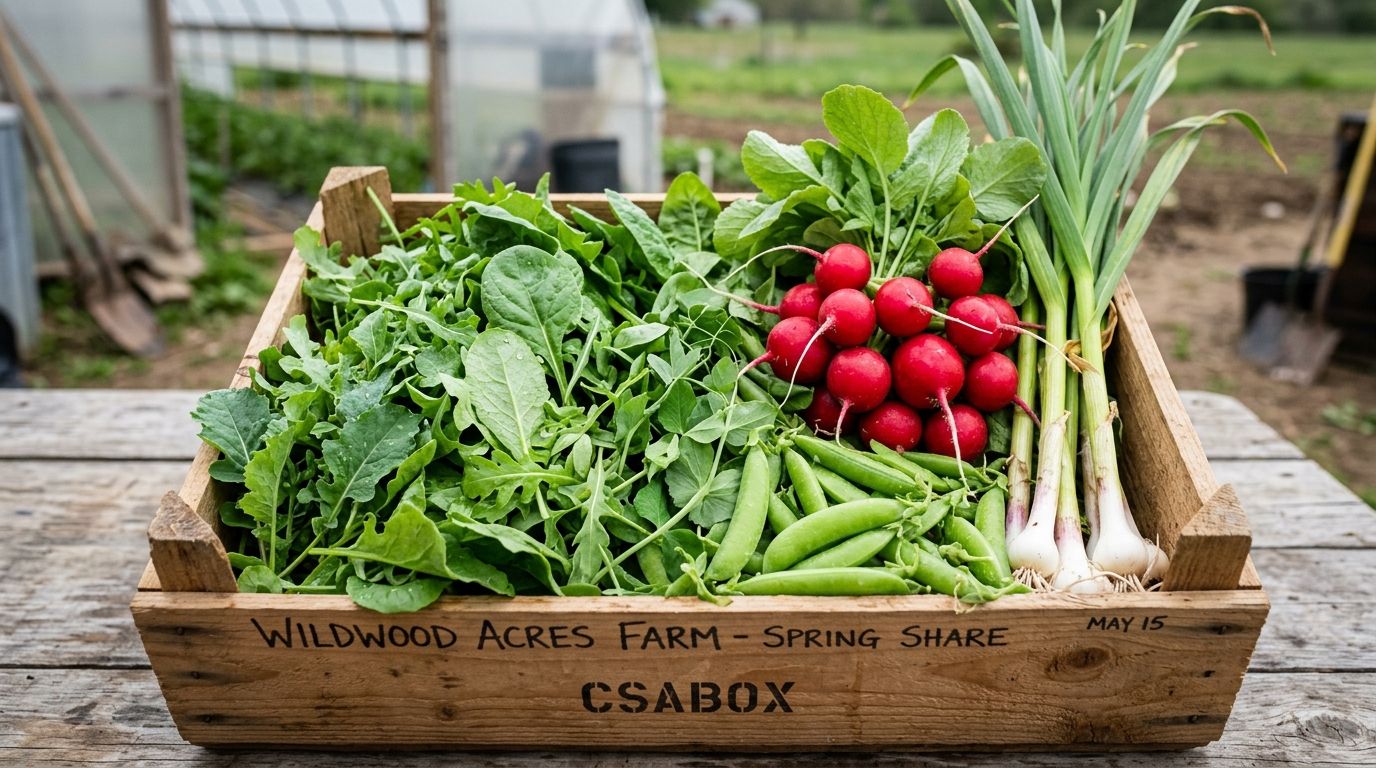
A Community Supported Agriculture (CSA) working share is a specific membership tier that formalizes the exchange of labor for produce. Unlike a standard member who simply pays a fee upfront for a season's worth of food, a working share member integrates into the farm's operations. Typically, this involves a commitment of 4-6 hours of labor per week, though the exact terms can vary significantly from farm to farm. In return, their CSA share, which might otherwise cost $500 to $900 for a season, is provided at a steep discount or for no cash cost.
For small-scale, diversified farms, the benefits of a well-structured working share program are multifaceted:
Labor Security: Farming is intensely seasonal. A working share program provides a predictable and motivated labor pool during peak periods of planting, cultivation, and harvesting. This is especially crucial for tasks that are difficult to mechanize, such as hand-weeding delicate greens or harvesting heirloom tomatoes. Having a reliable team allows farmers to manage their time more effectively, focusing on more complex operational and business tasks. Many farmers find this model more reliable than hiring temporary day labor.
Reduced Cash Outlay: Labor is often the single largest expense on a small farm. By compensating with produce—a product the farm is already creating—farmers can reduce their direct payroll expenses. This can be a critical financial strategy for new farms or those operating on thin margins. A clear understanding of how to price CSA shares for profitability is essential before determining the value of a work-share exchange.
Enhanced Community Engagement: Working share members become more than just customers; they become advocates and integral parts of the farm community. This hands-on involvement fosters a profound understanding of the challenges and rewards of farming. This deeper relationship often translates into higher member retention rates, positive word-of-mouth marketing, and a stronger local food system. These members are often the most enthusiastic participants in farm events and can provide valuable feedback.
Knowledge Transfer: The program serves as an informal apprenticeship for individuals interested in agriculture. Members learn practical skills, from proper harvesting techniques for different vegetables to the principles of organic pest control. This educational component can be a powerful draw for members and fulfills a community-building mission for the farmer.
Here is a comparison of the different membership types:
| Feature | Standard CSA Member | Working Share Member |
|---|---|---|
| Primary Contribution | Financial (upfront payment) | Labor (weekly hours) & reduced payment |
| On-Farm Involvement | Minimal (share pickup, occasional events) | High (scheduled work shifts) |
| Relationship to Farm | Customer / Supporter | Participant / Team Member |
| Primary Benefit | Convenience, access to fresh produce | Reduced cost, hands-on experience, community |
| Associated Risk | Financial risk of crop failure | Physical risk of farm work, time commitment |
Ultimately, a working share program transforms the transactional nature of a CSA into a collaborative partnership. It helps bridge the gap between food producers and consumers, creating a resilient and interconnected local food economy. For those just starting out, exploring the fundamentals of what community supported agriculture is can provide a solid foundation for developing such programs.
Why do farm working shares face intense legal scrutiny under the Fair Labor Standards Act?
The central legal challenge for working share agreements stems from the Fair Labor Standards Act (FLSA), a federal law enacted in 1938 to protect workers from exploitation. The FLSA establishes standards for minimum wage, overtime pay, record-keeping, and youth employment. The U.S. Department of Labor (DOL), the agency that enforces the FLSA, uses a very broad definition of employment to determine who is covered by the act.
The key concept is the "suffer or permit to work" standard. This means that if a business knows or has reason to believe that a person is performing work for its benefit, and it allows that work to continue, an employment relationship exists. The label the parties give the relationship—be it "working share," "volunteer," or "barter"—is irrelevant. The DOL looks at the economic reality of the situation.
For-profit farms face intense scrutiny for several key reasons:
The Nature of the Work: Working share members typically perform tasks that are integral to the farm's business operations. Weeding, harvesting, washing produce, and packing CSA boxes are not peripheral activities; they are the core functions that generate revenue for the farm. When an individual's labor directly contributes to the commercial activity of a for-profit entity, the DOL presumes they are an employee.
The Expectation of Compensation: The entire premise of a working share is an exchange: labor for produce. This exchange of value is viewed by the DOL as compensation. The FLSA explicitly allows for compensation to be paid "in-kind" (e.g., with food or lodging), but it requires that this compensation, when valued, meets minimum wage standards. The act of providing a valuable CSA share in return for labor solidifies the argument for an employment relationship.
The Lack of a True Volunteerism Exemption for For-Profits: The FLSA's definition of a "volunteer" is extremely narrow and generally applies only to individuals who donate their time for public service, religious, or humanitarian reasons to non-profit organizations. An individual cannot legally volunteer their services to a for-profit, private-sector business, especially when performing the same work as paid employees or work that the business would otherwise have to pay someone to do.
When a farm misclassifies a working share member as a non-employee, it typically fails to:
- Pay at least the federal or state minimum wage (whichever is higher).
- Pay overtime (time-and-a-half) for hours worked over 40 in a week (note: some agricultural exceptions to overtime exist, but they apply to employees and vary by state and task).
- Keep accurate records of hours worked and wages paid.
- Pay the employer's share of payroll taxes (Social Security and Medicare).
- Provide workers' compensation insurance coverage.
A DOL investigation, which can be triggered by a complaint from a disgruntled member or a random audit, can result in significant financial penalties. The farm could be liable for back wages for all working share members for up to three years, plus an equal amount in liquidated damages. This financial blow can be devastating for a small farm operating on tight margins.
What is the legal difference between a volunteer, an intern, and an employee on a farm?
Understanding the distinct legal definitions of employee, intern, and volunteer is critical for any farm manager. Misclassification is one of the most common and costly legal mistakes a small business can make. The determination depends on the economic reality of the relationship, not the title given to the individual.
| Category | Employee | Intern (Unpaid, For-Profit) | Volunteer |
|---|---|---|---|
| Defining Principle | Suffer or permit to work in exchange for compensation. | An extension of a formal educational program. | Donates labor for charitable/civic reasons. |
| Applicable Entity | For-profit and non-profit organizations. | Primarily for-profit, under strict criteria. | Non-profit or public sector organizations only. |
| Compensation | Must be paid at least minimum wage (cash or in-kind equivalent) and overtime where applicable. | No compensation is expected or received. The primary benefit is educational. | No compensation. A nominal stipend for expenses may be permissible but not goods/services. |
| Primary Beneficiary | The employer benefits from the labor performed. | The intern must be the primary beneficiary of the arrangement. | The non-profit organization and the public it serves are the beneficiaries. |
| Key Legal Test | The "economic reality" test and the FLSA's "suffer or permit to work" standard. | The DOL's "Primary Beneficiary Test" (7 factors). | The individual works for civic, charitable, or humanitarian reasons without expectation of pay. |
| FLSA Status | Fully covered by minimum wage and overtime rules. | Not considered an employee if all legal criteria are met. | Not considered an employee. |
In-Depth Look at Each Classification
Employee: This is the default classification for any individual performing work for a for-profit business. The employer controls the what, where, and how of the work. The worker is economically dependent on the business for this compensation. They are provided with tools and equipment. On a farm, anyone regularly scheduled to weed, harvest, or staff a market stand is almost certainly an employee.
Intern: The concept of an unpaid internship at a for-profit enterprise is very narrowly defined by the DOL. To qualify, the arrangement must satisfy all criteria of the "Primary Beneficiary Test." Key factors include:
- There is no expectation of compensation.
- The internship provides training similar to that which would be given in an educational environment.
- The internship is tied to the intern's formal education program (e.g., for academic credit).
- The intern's work complements, rather than displaces, the work of paid employees while providing significant educational benefits.
- The work does not provide an immediate advantage to the employer and may even impede operations.
- There is no guarantee of a job at the conclusion of the internship.
For a farm, this means a student from a university horticulture program who is receiving academic credit and is shadowing the farmer to learn about advanced crop planning for market gardeners might qualify as an intern. Someone who is simply performing manual labor for 10 hours a week in exchange for experience does not.
Volunteer: This is the most misunderstood category. Individuals cannot volunteer for for-profit businesses. The FLSA permits volunteerism only for public agencies and non-profit organizations (e.g., 501(c)(3) food banks, community gardens, educational farms). A true volunteer performs services freely, without coercion or expectation of any compensation. If a for-profit CSA tries to classify its working share members as "volunteers," it is in direct violation of the FLSA.
Misclassifying an employee as an intern or volunteer can lead to the same severe penalties as other wage and hour violations: liability for back wages, damages, and fines. It is always safest for a for-profit farm to assume that anyone performing regular, productive work is an employee.
How can for-profit farms legally structure labor-for-produce exchanges without violating wage laws?
Given the legal landscape, for-profit farms must abandon the notion of simple, unregulated bartering. The key to compliance is to formally recognize the employment relationship and structure the arrangement accordingly. There are two primary compliant models.
Model 1: The Clean Transaction (Most Recommended)
This approach creates the clearest legal separation between labor and the CSA share, making it the safest and easiest to defend in an audit. It treats the two aspects of the relationship as distinct transactions.
- Hire as an Employee: The working share member completes all standard hiring paperwork, including a W-4 for tax withholding and an I-9 for employment eligibility.
- Track All Hours: Use a reliable system (digital or paper timesheet) to record every hour the employee works. This is a non-negotiable requirement of the FLSA.
- Pay with a Paycheck: The farm pays the employee for all hours worked at a rate equal to or greater than the state or federal minimum wage. All applicable taxes are withheld, and the employee receives a regular paystub and paycheck.
- Sell the CSA Share Separately: The employee, now with their cash earnings, can choose to purchase a CSA share from the farm, just like any other customer. The farm might offer them an "employee discount," which is a common and permissible business practice.
Example:
- Maria works 4 hours per week at a farm where the state minimum wage is $12.00/hour.
- Her weekly gross pay is 4 hours * $12.00/hour = $48.00.
- The farm issues her a paycheck for $48.00 (less applicable tax withholdings).
- A full CSA share costs $600 for the 20-week season, or $30/week.
- Maria separately pays the farm $30 each week for her share.
- Net Result: Maria receives a weekly vegetable share and $18.00 in cash (before taxes). The farm has a clean, auditable paper trail for both payroll and sales.
Model 2: The In-Kind Wage (Legally Complex)
Section 3(m) of the FLSA allows employers to count the value of food, lodging, or "other facilities" as part of an employee's wages. However, this comes with strict rules.
- The "Reasonable Cost" Rule: The employer can only credit the "reasonable cost" of the goods provided, not the retail price. The DOL defines reasonable cost as the actual cost to the employer, without including any profit. Calculating the precise cost to grow a box of vegetables can be complex, involving inputs like seeds, compost, and overhead. For example, a CSA share that retails for $30 might only have a reasonable cost of $12 to the farmer. The farmer must be able to justify this calculation if audited.
- Acceptance Must Be Voluntary: The employee must voluntarily accept the in-kind payment.
- Minimum Wage Must Be Met: The combination of cash and the credited reasonable cost of the produce must equal at least the minimum wage for all hours worked.
Example:
- David works 4 hours per week at the same farm ($12.00/hour minimum wage). His total weekly compensation must be $48.00.
- The retail value of the weekly share is $30, but the farmer calculates the "reasonable cost" to be $12.
- The farm can credit $12 of David's wages with the produce share.
- The farm must still pay David the remaining amount in cash: $48.00 (total earned) - $12.00 (in-kind credit) = $36.00.
- Net Result: David receives a weekly vegetable share and $36.00 in cash (before taxes). The farm must still run this through payroll, withholding taxes on the full $48.00 of compensation.
This model is more complicated and carries a higher burden of proof for the farmer. The "Clean Transaction" model is strongly recommended for its simplicity and legal clarity. A well-drafted document is essential for either model; for guidance, review the principles in our article on drafting your first CSA agreement.
What are the tax implications of exchanging farm labor for in-kind agricultural produce?
Once an employment relationship is established, both the farm (employer) and the working share member (employee) have tax obligations that cannot be ignored. The IRS is clear that non-cash compensation is generally taxable in the same way as cash wages.
Tax Implications for the Farm (Employer)
When a farm compensates a worker with produce, it is considered a form of barter. The farm is essentially paying wages with its inventory. The tax process for the farm involves several steps:
Determine the Value of Compensation: For tax purposes, the value of the in-kind payment is its Fair Market Value (FMV). This is the retail price—what any non-working member would pay for the same CSA share. This differs from the DOL's "reasonable cost" rule for minimum wage calculation, which can be confusing. If the weekly share retails for $30, then $30 is the amount of weekly compensation for tax purposes.
Calculate Total Gross Wages: The employee's total gross wages are the sum of any cash paid plus the FMV of the produce. Using the "Clean Transaction" example from before: Maria earned $48 in cash. The total compensation is $48. This is straightforward. In the "In-Kind" model: David received $36 in cash and a share with an FMV of $30. His total gross wages for tax purposes would be $66. This is a critical distinction and a source of major confusion. To simplify, most farms align the total compensation value for both wage and tax purposes.
Withhold and Pay Payroll Taxes: The farm is responsible for withholding the following from the employee's total gross wages:
- Federal Income Tax (based on the employee's W-4)
- State Income Tax (if applicable)
- FICA Taxes (7.65% for Social Security and Medicare)
The farm must also pay the employer's share of FICA (another 7.65%) and pay Federal Unemployment Tax (FUTA) and State Unemployment Tax (SUTA).
- Reporting: The farm must report these wages and taxes to the IRS (Form 943, Employer's Annual Federal Tax Return for Agricultural Employees) and provide the employee with a Form W-2 at the end of the year, showing their total cash and non-cash compensation.
Tax Implications for the Worker (Employee)
The working share member's tax responsibilities are more straightforward, provided the farm is handling payroll correctly.
- Taxable Income: The full value of their compensation—both cash and the fair market value of the produce share—is taxable income.
- Form W-2: They will receive a W-2 from the farm at the end of the year, which they will use to file their personal income tax return.
- Withholding: The taxes are already being withheld from their paychecks by the employer, so they typically do not need to make separate estimated tax payments for this income.
Attempting to treat this arrangement as an "off-the-books" barter is tax evasion for both parties. The IRS has specific rules for bartering, and income received in the form of goods or services is taxable. By formalizing the relationship as employment, both the farm and the worker ensure they are compliant with federal and state tax law.
How does workers' compensation and liability insurance apply to working share members?
Insurance is a critical risk management tool for any farm, and the classification of working share members has profound implications for coverage. Relying on the wrong type of policy can leave a farm dangerously exposed in the event of an accident.
Workers' Compensation Insurance
Workers' compensation is a state-regulated insurance system that provides medical, wage replacement, and rehabilitation benefits to employees who are injured or become ill in the course of their employment. In exchange for these guaranteed benefits, the employee gives up the right to sue their employer for negligence.
- Mandatory for Employees: In nearly every state, businesses with employees are required by law to carry workers' compensation insurance. The exact requirements can vary (e.g., some states exempt businesses with fewer than 3-5 employees), and some states have specific rules for agricultural employers. However, it is a significant legal and financial risk to operate without it if you have employees.
- Coverage for Working Share Members: Because legally compliant working share members are classified as employees, they must be included in the farm's workers' compensation policy. The insurance premiums are typically calculated based on payroll, so the farm's total payroll expense (including the value of in-kind wages) must be reported to the insurance carrier.
- The Cost of Non-Compliance: If an employee is injured and the farm does not have workers' compensation coverage, the consequences are severe. The farm owner can be held personally liable for the employee's medical bills and lost wages. Additionally, the state can impose steep fines and penalties for the failure to carry required insurance.
General Farm Liability Insurance
General liability insurance is designed to protect the farm against claims of bodily injury or property damage to third parties. This could include:
- A CSA member who slips and falls in the pickup area.
- A visitor on a farm tour who is injured by equipment.
- Damage caused to a neighbor's property by farm operations.
Critically, most general liability policies contain a specific employee exclusion. This means the policy will not cover injuries sustained by anyone deemed to be an employee. Therefore, a farm cannot rely on its general liability policy to cover an injury to a working share member. If a farm misclassifies a working share member as a "volunteer" and they get hurt, the liability insurer may deny the claim, leaving the farm to pay out of pocket while also facing state penalties for lacking workers' compensation.
Best Practices for Insurance
- Consult an Expert: Speak with an insurance agent who specializes in farm and agricultural business insurance. Be completely transparent about your working share program and how it is structured.
- Classify Correctly: Inform your agent that your working share members are treated as part-time employees.
- Secure Workers' Compensation: Obtain a workers' compensation policy that covers all of your employees, including seasonal and part-time staff.
- Review Your Liability Policy: Ensure your general liability coverage is adequate for your farm's operations, including any agritourism activities like U-pick or farm tours.
- Prioritize Safety: Implement and document a thorough safety training program for all employees. This not only prevents accidents but can also help lower insurance premiums. Proper training on tool use, lifting techniques, and food safety protocols is essential. Tasks like creating no-till beds with silage tarps or operating small machinery should be preceded by mandatory safety demonstrations.
What critical clauses must be included in a legally sound CSA working share agreement?
A written agreement is absolutely essential. It protects both the farm and the working share member by setting clear expectations and formalizing the legal relationship. This document should be drafted or reviewed by a lawyer familiar with agricultural and employment law. Key clauses include:
Identification of Parties & Nature of Relationship: Clearly state the legal names of the farm (employer) and the individual (employee). Crucially, include a sentence explicitly stating that the agreement establishes an at-will employment relationship.
Job Title and Description: Be specific. Instead of "farm help," use titles like "Harvest and Pack Shed Assistant." The description should list the primary duties, such as:
- Hand-weeding beds of salad greens and root vegetables.
- Harvesting crops using specified techniques to ensure quality.
- Washing and packing produce in the pack shed according to food safety standards.
- Assisting with setup and breakdown of the CSA distribution.
- Special projects, such as building advanced Hugelkultur beds to improve water retention.
Compensation and Pay Schedule: State the exact hourly wage, which must meet or exceed the highest applicable minimum wage. Specify the pay period (e.g., weekly, bi-weekly) and the method of payment (e.g., direct deposit, check). If using the "Clean Transaction" model, this section is straightforward.
CSA Share Purchase Agreement: This should be a distinct section or even a separate document. It details the terms of the CSA share that the employee is purchasing. It should include:
- The total cost of the share for the season.
- The payment method (e.g., payroll deduction, separate payment).
- The start and end dates of the CSA season.
- The pickup location, day, and time.
- A clause acknowledging the shared risks of farming, as is standard in CSA agreements.
Work Schedule and Attendance: Define the expected number of hours per week and the process for scheduling shifts. Outline the policy for absences or tardiness and how to request time off.
Safety Training and Farm Policies: Include a clause where the employee acknowledges they have received and understood the farm's safety rules, food handling procedures, and other policies. This is a good place to document training on specific tools or tasks.
Termination of Agreement: Describe how either party can end the employment relationship. Since it is an at-will relationship, either party can terminate it at any time, for any legal reason. This clause should also explain what happens to the CSA share upon termination (e.g., will it be prorated?).
Managing Expectations: The CSA Summer Slump: It's wise to include a section managing expectations around crop availability, which can be affected by pests, disease, or weather. This is often referred to as the "CSA Summer Slump." This transparency helps prevent disappointment and maintain a positive relationship. Consider linking members to tools like our Planting Calendar to help them understand the seasonality of different crops.
Sample Newsletter Snippet for a Pest Issue: Subject: An update from the field: The battle with the flea beetles!
Hi everyone, We wanted to give you a heads-up that you might see some small holes in your arugula and kale this week. We're in the midst of a seasonal battle with flea beetles! We're using organic methods like floating row cover to protect new plantings, but the established crops took a bit of a hit. They are perfectly safe and delicious to eat, just a little less than picture-perfect. Thanks for your understanding as we manage the realities of organic farming!
Sample Newsletter Snippet for a Weather Issue: Subject: Your CSA Share & The Recent Heat Wave
Hello farm members, As you know, we've had a week of record-breaking heat. While we've been irrigating around the clock, the high temperatures have caused some of our cool-weather crops, like spinach and lettuce, to bolt sooner than expected. This week's share will be a bit lighter on delicate greens and heavier on heat-loving crops like zucchini, cucumbers, and the first of the cherry tomatoes. We appreciate your support as we navigate the challenges Mother Nature sends our way. You can find more strategies for communicating these issues in our guide to navigating the CSA summer slump and member expectations.
Signatures: Dated signatures from both the farm representative and the employee are required to make the contract legally binding.

How do organizations like non-profit educational farms differ in utilizing working members?
The legal framework for utilizing labor changes dramatically when the farm is a registered non-profit organization, such as a 501(c)(3) educational farm, a community garden, or a food bank's agricultural project. The FLSA was specifically written to allow for volunteerism within these charitable, educational, and religious sectors.
The Legal Basis for Volunteerism
Under the FLSA, an individual who performs services for a public agency or a private non-profit organization for civic, charitable, or humanitarian reasons, without promise or expectation of compensation, is considered a volunteer, not an employee. The key elements are:
- The Organization's Status: It must be a genuine non-profit entity. A for-profit farm with a social mission does not qualify.
- The Individual's Motivation: The person must be donating their time for altruistic reasons, not to receive personal material gain.
- No Expectation of Compensation: The volunteer cannot expect to be paid, either in cash or in-kind benefits. The non-profit cannot coerce or pressure individuals into "volunteering."
How Non-Profits Can Utilize Labor
Non-profit farms can have a wide range of individuals working on their land, and their classification is critical:
- Paid Staff (Employees): Non-profits have regular employees just like any other business (e.g., Executive Director, Farm Manager). These individuals are subject to all standard wage and hour laws.
- True Volunteers: This is the largest group of workers on many non-profit farms. They might be community members who come for a weekly work day, corporate groups on a service day, or master gardeners fulfilling service hours. They receive no compensation. The farm benefits from their labor, but this is permissible because the ultimate beneficiary is the public through the non-profit's mission (e.g., providing food to a pantry, educating children about agriculture).
- Interns/Apprentices: Non-profits can also have structured internship or apprenticeship programs. These are often educational in nature and may be paid or unpaid. If they are unpaid, they must still meet the primary beneficiary test, ensuring the intern is gaining more from the experience than the organization is from their labor.
The Critical Difference: Compensation
The fundamental difference between a for-profit working share and a non-profit volunteer program is compensation. A for-profit working share is, by definition, an exchange of labor for goods. A non-profit cannot engage in this direct exchange with its volunteers.
What about giving volunteers some vegetables as a "thank you"? This is a legal gray area that requires extreme caution.
- Permissible: A non-profit can give an occasional, informal, and nominal token of appreciation. For example, allowing volunteers to take home a few misshapen carrots or a bag of greens that would otherwise be composted at the end of the day is likely fine.
- Not Permissible: Providing volunteers with a pre-packed, high-value CSA share every week they work creates a clear expectation of compensation. The DOL would likely view this as a form of payment, which would retroactively create an employment relationship and make the non-profit liable for minimum wage for all hours worked.
Non-profit farms that run a CSA program to generate revenue must keep their volunteer labor and their CSA membership completely separate. Volunteers can help grow the food, but they cannot receive a CSA share as payment for that work. If a volunteer also wants to be a CSA member, they must purchase their share separately, just like any other member of the public.
Expert Insights & FAQs
What exactly is a CSA working share and how does it benefit a small farm?
A CSA working share is a formal arrangement where a member commits to a set number of on-farm labor hours per week in exchange for a discounted or fully compensated weekly vegetable share. For small farms, this model provides consistent, reliable labor for essential tasks, reduces cash payroll expenses, and builds a deeply engaged community.
Why do farm working shares face intense legal scrutiny under the Fair Labor Standards Act?
The Fair Labor Standards Act (FLSA) requires employers to pay employees at least the federal minimum wage for all hours worked. The Department of Labor views individuals performing regular, essential tasks for a for-profit farm as employees, regardless of whether they are paid in cash or produce, triggering wage and record-keeping requirements.
What is the legal difference between a volunteer, an intern, and an employee on a farm?
An employee is paid to perform labor under the direction of an employer. A true volunteer donates time to a non-profit organization for altruistic reasons without expecting pay. An intern's work at a for-profit entity must be part of a formal educational program that primarily benefits the intern, not the employer.
How can for-profit farms legally structure labor-for-produce exchanges without violating wage laws?
For-profit farms must treat working share members as part-time employees. This involves tracking all hours worked, paying at least minimum wage, and handling the produce share as a separate transaction or as a carefully calculated in-kind wage deduction that complies with Section 3(m) of the FLSA.
What are the tax implications of exchanging farm labor for in-kind agricultural produce?
From a tax perspective, the fair market value of produce received for labor is considered taxable income to the worker, just like cash wages. The farm must report this value as a payroll expense and is responsible for withholding and paying all applicable payroll taxes, including FICA and federal unemployment taxes.
How does workers' compensation and liability insurance apply to working share members?
If legally defined as employees, working share members must be covered by the farm's workers' compensation insurance policy, which is state-mandated. General farm liability insurance typically excludes injuries to employees, making workers' compensation essential for covering medical bills and lost wages from on-the-job accidents.
What critical clauses must be included in a legally sound CSA working share agreement?
A legally sound agreement must explicitly state the employer-employee relationship, detail the hourly wage, work schedule, and specific job duties. It should also outline the terms of the separate CSA share purchase, safety protocols, termination conditions, and an at-will employment statement to ensure clarity and mitigate disputes.
How do organizations like non-profit educational farms differ in utilizing working members?
Legally registered non-profit organizations (e.g., 501(c)(3)s) with a charitable or educational mission can use true volunteers. These individuals donate their time for civic purposes without any expectation of compensation. Providing a regular, valuable share of produce in exchange for this labor would jeopardize their volunteer status and create an employment relationship.
Johnnie McCormick
Zone 7b/8a - North Central Alabama
Johnnie McCormick is a gardening hobbyist and the founder of My Garden Spot. Raised in north-central Alabama, his passion for gardening began in his youth. In 2008, he established a large market garden, teaching himself high-yield growing methods. In the years since, he has operated seasonal seedling sales for transplants, specializing in heirloom tomatoes, peppers, eggplants, decorative ground covers like Ajuga (Bugleweed), marigolds, nasturtiums, and fresh kitchen-window herb arrangements (basil, cilantro). Today, he gardens in the hills between Birmingham and Jasper, Alabama (Zone 7b/8a), sharing practical, community-focused gardening resources.
Verified Authoritative Citations & References
In alignment with our strict E-E-A-T research and verification guidelines, this guide cross-references data from the United States Department of Agriculture (USDA) and Cooperative Extension Service programs.
- USDA Agricultural Marketing Service (AMS): Community Supported Agriculture (CSA) standards and local market surveys. ams.usda.gov
- Penn State Extension: Small Farm Economics, financial planning, and crop pricing research documents. extension.psu.edu
- Cornell Cooperative Extension: Market gardening business planning and local sales guidelines. smallfarms.cornell.edu
- Alabama Cooperative Extension System (ACES): Local food regulations, CSA legal permits, and farm safety standards. aces.edu

Please log in to view comments.