Do I Need More Air Stones in My Reservoir During the Summer?

Do You Need More Air Stones in Your Hydroponic Reservoir During the Summer?
In controlled environment agriculture (CEA) and hydroponic cultivation, the summer months represent the most significant stress test for a nutrient solution’s life-support system. As ambient temperatures climb, growers often default to the assumption that "more bubbles equal more oxygen." However, the relationship between thermal energy, gas solubility, and root-zone metabolic demand is far more nuanced. Understanding whether your reservoir requires additional air stones—or a complete change in strategy—begins with the fundamental physics of gas saturation.
The Inverse Relationship: Temperature and Solubility
The primary challenge of summer hydroponics is governed by Henry’s Law, which dictates that the solubility of a gas in a liquid is inversely proportional to the temperature of that liquid. As your reservoir temperature increases, the capacity of the water to hold dissolved oxygen (DO) drops significantly.
Pure water at 15°C (59°F) can hold approximately 10.0 mg/L of dissolved oxygen at saturation. When that same water reaches 25°C (77°F)—a common temperature in poorly insulated summer reservoirs—the maximum saturation capacity plummets to roughly 8.2 mg/L. By the time a reservoir hits 30°C (86°F), the ceiling for DO drops to 7.5 mg/L.
Crucially, this is not a linear decline. The metabolic rate of plant roots and the proliferation rate of pathogenic anaerobic bacteria (such as Pythium) both increase exponentially with heat. You are trapped in a "double-jeopardy" scenario: your plants require more oxygen to facilitate high-temperature transpiration and nutrient uptake, yet the reservoir is physically capable of providing less.
Oxygen Uptake and the Rhizosphere Demand
Plants do not consume oxygen through their leaves in the way they do carbon dioxide; they rely on the roots for aerobic respiration. This process—specifically the citric acid cycle—is what provides the energy (ATP) required for active nutrient uptake.
When oxygen levels in the reservoir drop below the threshold of 4–5 mg/L, plants enter a state of hypoxia. Symptoms often mirror nutrient deficiencies: chlorosis, wilting during peak light hours, and stunted vegetative growth. In the summer, if your DO levels hover in this "danger zone," the plant’s ability to move calcium and iron—which are heavily dependent on transpiration-driven mass flow—is severely compromised.
Adding air stones is the standard mechanical response to this deficit, but it is vital to evaluate the efficiency of your oxygen transfer rather than just the volume of air flow.
Mechanical Transfer Efficiency: Bubble Dynamics
Simply dumping more air into a reservoir can be counterproductive if the bubble size is incorrect. Oxygen transfer occurs at the interface between the air bubble and the water. The total surface area of this interface is the primary determinant of transfer efficiency.
A larger number of small bubbles (micro-bubbles) provides significantly more surface area for oxygen diffusion than a smaller number of large, high-pressure bubbles. If your air stones are producing large, "boiling" bubbles that break the surface violently, you are losing energy through turbulence rather than maximizing diffusion.
Assessing Your Current Aeration Profile:
- Bubble Size Distribution: Are your air stones producing a fine mist or large, clattering bubbles? Fine-pore ceramic diffusers are generally superior to the standard "blue cylinder" stones found in hobbyist kits.
- Depth and Pressure: The deeper the reservoir, the longer the bubble’s "dwell time" (the duration it remains submerged). This increases the opportunity for diffusion. In shallow systems (like NFT or DWC trays), oxygen transfer is much harder to maintain than in deep-water reservoirs.
- Surface Turbulence: Are you creating surface agitation? Oxygen exchange also happens at the surface interface. A combination of air stones at the bottom and a water pump outlet creating a "ripple" effect at the surface creates the highest saturation efficiency.
The Fallacy of the "More is Better" Mentality
Many practitioners believe that increasing the pump size will solve thermal DO issues. However, if your air pump is located inside a hot grow room, it is essentially pumping hot, low-density air into your reservoir. This can inadvertently heat the nutrient solution, accelerating the very problem you are trying to solve.
If you find that your DO levels remain below 6 mg/L despite aggressive aeration, the issue is likely thermal, not mechanical. You have reached the "saturation ceiling." No amount of extra air will increase the DO if the water temperature is too high. At this threshold, you must shift your focus from [Increasing Dissolved Oxygen Capacity] to [Managing Reservoir Thermal Stability].
In the following sections of this guide, we will examine why air stones often act as a secondary band-aid, and why maintaining a reservoir temperature below 22°C (72°F) is the primary requirement for successful summer cultivation. Before reaching for another air pump, you must first calculate your current DO saturation percentage to determine if your hardware is the bottleneck or if your climate control is the failure point.
For a deeper dive into the specific aeration requirements for deep water culture (DWC) systems, see: [Optimizing DWC Oxygenation Rates]. If you are experiencing temperature spikes despite external cooling, review our guide on: [Reservoir Insulation and Passive Cooling Techniques].
Diagnostic Assessment: Identifying the Airflow Bottleneck
In the previous section, we established the core tension of summer cultivation: the inverse relationship between water temperature and dissolved oxygen (DO) saturation. Before rushing to purchase additional air pumps or stones, you must determine if your current hardware is actually the limiting factor. Many growers operate under the misconception that "more bubbles equal more oxygen," when in reality, the issue is often a failure in the air-to-water interface or a downstream climate control collapse.
To diagnose whether your aeration system is the bottleneck or merely a scapegoat, you must perform a rigorous audit of your delivery hardware.
The Physics of Gas Exchange: Surface Area vs. Bubble Volume
The fundamental goal of an aeration system is not just to "agitate" the water, but to maximize the total surface area of the air-water interface. A common point of failure is the use of low-quality porous air stones. Over time, these stones accumulate mineral deposits (scale) from nutrient solutions, which significantly reduces the effective surface area of the bubbles produced.
Smaller bubbles are objectively superior to larger ones. Because the force of buoyancy is smaller, smaller bubbles remain submerged for a longer duration, providing an extended window for gas exchange to occur. If your reservoir is currently producing large, turbulent "geyser" bubbles, you are failing at the gas exchange phase. The large bubbles reach the surface and burst before the oxygen can effectively diffuse into the nutrient solution.
The Diagnostic Test:
- Visual Audit: Observe your air stones at full capacity. If they are producing large bubbles (greater than 2mm in diameter), your air stones are likely clogged or of insufficient density.
- Backpressure Check: Disconnect your airline tubing from the air stone. If the air pump produces a significantly louder noise or higher vibration after the stone is disconnected, the stone is creating too much backpressure, forcing the pump to operate outside of its optimal PSI range. This reduces the total volume of air pushed into the water.
- The "Temperature Spread" Test: Measure the temperature of the air being pushed through the lines. If your air pump is located inside the grow room near the lights or heat-generating ballasts, it may be pumping warm, humid air into your cool reservoir. This inadvertently heats your nutrient solution from the bottom up.
If your bubbles are uniform and fine, and your air supply is coming from outside the grow area, your hardware is likely performing at its peak capacity. If you are still seeing root browning or sluggish growth, the bottleneck is not your aeration—it is your climate control.
When Hardware is Sufficient but Climate Fails
It is a thermodynamic reality that at higher water temperatures, the oxygen holding capacity of water drops significantly. At 65°F (18°C), water can hold approximately 9.0 mg/L of dissolved oxygen. At 78°F (25°C), that capacity drops to roughly 8.2 mg/L. While that difference seems marginal on paper, the plant’s metabolic demand for oxygen increases as the temperature rises. This creates a "demand-supply gap" that no amount of additional aeration can bridge.
If your water temperature is consistently hovering above 72°F (22°C), you are fighting a losing battle with gas physics. In this scenario, adding more air stones will simply introduce more ambient heat into the reservoir, potentially accelerating the onset of Pythium (root rot) and other anaerobic pathogens.
If you are experiencing temperature spikes despite external cooling, review our guide on: [Reservoir Insulation and Passive Cooling Techniques].
Evaluating Pump Efficacy and CFM Requirements
When assessing if your air pump is adequate, look past the "Watts" label. The true metric is CFM (Cubic Feet per Minute) or LPM (Liters Per Minute). As a baseline, high-performance DWC systems should aim for a ratio of 0.5 to 1.0 liters of air per minute for every liter of nutrient solution. If your reservoir holds 100 liters, you should be moving at least 50–100 LPM of air.
If you are currently beneath this threshold, adding more stones will not solve the problem—it will only distribute the insufficient air volume over a wider area, resulting in even weaker, less effective bubbles. Before adding more stones, calculate your total system volume and ensure your pump is rated to handle that capacity at your specific water depth. Every foot of water depth introduces hydrostatic pressure; if your air pump is not rated for the depth of your reservoir, the actual air output will be a fraction of the manufacturer's stated specifications.
The Myth of the "Air Stone Expansion"
Many practitioners assume that adding a second or third air stone will act as a buffer against summer heat. However, there is a point of diminishing returns. Excessive aeration can lead to "turbulent cooling," where the constant agitation of the water surface leads to rapid evaporation.
In a confined reservoir, this evaporation changes the concentration of your nutrient solution, leading to osmotic stress on the plants. If you find yourself topping off your reservoir daily with massive amounts of water just to keep the pump submerged, you are dealing with an evaporation issue that is masking as an oxygen deficiency.
If your current aeration setup is creating a visible, uniform "rolling boil" across the surface of the reservoir, you have already maximized the kinetic potential of your aeration. Further investment should be directed toward reservoir chilling or nutrient management rather than additional hardware.
For a deeper dive into the specific aeration requirements for deep water culture (DWC) systems, see: [Optimizing DWC Oxygenation Rates].
Identifying Pathogen Vulnerability
Finally, remember that oxygen is the enemy of root-rot pathogens. However, an improperly maintained aeration system can become a delivery mechanism for heat. If your reservoir temperature is in the "danger zone" (above 75°F/24°C), the most robust aeration system in the world cannot stop the proliferation of anaerobic bacteria if organic matter (sloughed-off root material) is present.
If your hardware is sufficient—meaning you have high-quality, fine-bubble diffusion and adequate LPM—but your roots are still dark, your bottleneck is not aeration. It is the "biological load" of the system. In this instance, adding more air stones is a palliative measure that will not cure the underlying infection. You must shift your focus to reservoir hygiene and temperature stabilization before adjusting your hardware.
In the next section, we will evaluate the cost-benefit analysis of active chilling versus chemical oxygen supplements, providing a framework to decide where to allocate your limited summer maintenance budget.
Balancing the Summer Budget: Active Chilling vs. Chemical Oxygen Supplements
As summer heat forces ambient temperatures into the danger zone for hydroponic reservoirs—typically exceeding 72°F (22°C)—practitioners are faced with a fundamental logistical decision: should you invest in active hardware cooling or rely on chemical oxygen management? Both strategies aim to preserve the dissolved oxygen (DO) levels necessary for root respiration, but they operate on entirely different mechanical principles.
To determine where to allocate your maintenance budget, you must first evaluate the thermodynamic reality of your grow environment.
The Physics of Dissolved Oxygen (DO)
Before purchasing hardware, you must understand the inverse relationship between water temperature and oxygen saturation. As water temperature rises, the kinetic energy of water molecules increases, forcing dissolved gases out of the solution. At 60°F (15.5°C), water can hold approximately 10 ppm of oxygen at saturation. By 80°F (27°C), that capacity drops to roughly 8 ppm.
This drop is not merely a 20% reduction; it is a critical shift in the chemical landscape of your rhizosphere. As DO drops below 6 ppm, aerobic beneficial microbes begin to starve, and anaerobic pathogens—such as Pythium—begin to thrive. Adding more air stones to an 80°F reservoir is akin to blowing air through a straw into a bucket of warm sludge; you are increasing the oxygen content of the air, but the water’s physical capacity to hold that oxygen is structurally limited by the high temperature.
The Case for Active Chilling
An active chiller (a heat exchanger) is the gold-standard investment for summer production. By physically removing thermal energy from the reservoir, you restore the water’s natural ability to hold oxygen.
- Cost-Benefit: While the initial capital expenditure for a high-quality titanium coil chiller is significant, it is a one-time investment that drastically reduces the risk of total crop loss.
- Operational Efficiency: Chilling is a proactive solution. By maintaining a reservoir temperature of 68°F (20°C), you create a "thermal buffer." This allows your existing air stones to operate at their peak efficiency. You aren't just fighting symptoms; you are stabilizing the biological baseline of the root zone.
- Budgeting Priority: If your grow site is located in a basement, garage, or uninsulated shed, active chilling is mandatory. Chemical additives will fail to compensate for the continuous thermal loading of a high-ambient-temperature environment.
Evaluating Chemical Oxygen Supplements
When active chilling is financially unfeasible, practitioners often turn to chemical oxidizers. These products typically utilize hydrogen peroxide ($H_2O_2$) or calcium peroxide to release oxygen directly into the root zone.
- Mechanism: Unlike air stones, which rely on passive diffusion from gas to liquid, chemical oxidizers rely on a chemical reaction that breaks down the compound to release a free oxygen radical. This provides a temporary, high-intensity surge of oxygen.
- The Risk Factor: Chemical oxidizers are aggressive. While they effectively kill pathogens on contact, they are indiscriminate. High concentrations or frequent applications can damage delicate root hairs and kill off the very beneficial bacteria (e.g., Bacillus subtilis) you are trying to cultivate.
- Maintenance Intensity: Using chemicals requires a rigid, high-maintenance schedule. You are essentially "treating" the water rather than "maintaining" the environment. This increases the risk of human error; if you miss a dosing window during a particularly hot week, the resulting crash in oxygen levels can trigger an instantaneous root rot infection.
The Decision Matrix: Where to Invest
To allocate your maintenance budget effectively, run a "heat audit" of your reservoir over a 48-hour period during peak summer temperatures.
- If your reservoir temperature is consistently above 75°F (24°C): Your budget must prioritize active chilling. No amount of chemical supplementation will reliably bridge the gap. In this scenario, chemical oxidizers should be reserved for emergency "rescue" operations only, not as part of your daily routine.
- If your reservoir fluctuates between 70°F and 74°F (21°C–23°C): You are in a "swing zone." Here, the budget should be split. Invest in insulation—reflective foil wraps or rigid foam board around the reservoir—to reduce thermal gain. Supplement this with moderate, prophylactic use of beneficial bacteria rather than harsh chemical oxidizers.
- If you are managing a small-scale system (under 20 gallons): High-quality chilling units are often oversized for these systems. Instead of an expensive chiller, consider the "frozen water bottle" cycle (rotating frozen bottles through the reservoir) combined with an upgrade to high-efficiency, micro-bubble air stones. While labor-intensive, this allows you to reallocate funds toward better nutrient stabilization or [advanced filtration techniques].
The Hidden Costs of Inaction
Neglecting to address temperature through hardware or systemic design leads to a recurring cycle of costs. You will eventually spend more on "emergency" enzymes, hydrogen peroxide, root boosters, and potentially full-system sterilization protocols than you would have spent on a mid-range chiller.
Furthermore, consider the "lost potential" of a heat-stressed crop. Plants in overheated, oxygen-deprived reservoirs prioritize survival over biomass production. Your growth rates will stall, internodal spacing will stretch, and the overall terpene profile will be compromised. When viewed through the lens of potential yield-per-watt, the cost of an active chiller is often recouped in a single successful summer harvest that would have otherwise resulted in stunted growth or catastrophic disease.
In the next section, we will move beyond the reservoir and analyze the role of root-zone stimulants. We will examine whether your plant’s metabolic rate requires supplemental enzymes, or if your current air stone configuration is simply masking a lack of biological equilibrium.
Beyond the Reservoir: Root-Zone Stimulants and Biological Equilibrium
In the previous section, we addressed the physics of dissolved oxygen (DO) and the mechanical limitations of air stone arrays. However, even with an over-engineered aeration system, many growers find that their plants struggle during the heat of summer. When reservoir temperatures creep into the "danger zone" (above 72°F/22°C), oxygen solubility drops precipitously, regardless of how many bubbles you introduce. At this juncture, many practitioners make the mistake of adding more air stones, hoping to force gas exchange. Often, this is a misdiagnosis of a biological, rather than physical, deficiency.
To solve summer nutrient solution stability, we must shift our focus from the mechanics of the pump to the biochemistry of the root zone. Are you truly suffering from an oxygen deficiency, or is your current air stone configuration merely masking a profound lack of biological equilibrium?
The Role of Enzymes in High-Heat Environments
As reservoir temperatures rise, the water’s chemical potential changes. Organic matter—including dead root slough, stray nutrient salts, and microbial byproduct—begins to decompose more rapidly. This organic decay acts as an oxygen sink; the microbes responsible for breaking down this debris consume the dissolved oxygen that your air stones are working so hard to provide.
This is where supplemental enzymes become critical. If your root zone is clogged with decaying matter, it creates a hypoxic micro-environment directly against the root hairs, even if the bulk solution is saturated with oxygen. Enzymes, such as cellulases and xylanases, act as biological catalysts that break down complex organic compounds into simple sugars before they can rot and consume oxygen.
By utilizing a high-quality enzyme product during the summer, you reduce the Biological Oxygen Demand (BOD) of the reservoir. Essentially, you are freeing up the oxygen your air stones provide so it can be utilized by the plant’s respiration process rather than being wasted on the decomposition of organic detritus. If you find yourself needing to increase aeration simply to maintain plant vigor, you are likely suffering from a "dirty" root zone that requires enzymatic intervention rather than more hardware.
Establishing Microbial Dominance: The Probiotic Approach
The philosophy of "sterile" hydroponics is increasingly being challenged, particularly in summer conditions. In a sterile reservoir, any pathogen that enters the system (via a warm, unshielded reservoir or an unfiltered air pump) has a vacuum of competition to exploit. In the heat of summer, Pythium and other water-borne pathogens thrive. If you are operating a sterile system, your air stones are your only line of defense; if they fail or become overwhelmed, the crop is lost.
A more resilient strategy is the introduction of beneficial bacteria and fungi (PGPRs—Plant Growth-Promoting Rhizobacteria). By colonizing the root zone with Bacillus subtilis or Trichoderma species, you create a defensive layer that physically crowds out pathogenic growth.
From a technical standpoint, these microbes also contribute to the plant's metabolic efficiency. In high-heat conditions, nutrient uptake becomes erratic; plants may struggle to translocate phosphorus or potassium, leading to physiological distress that mimics nutrient deficiency. Certain beneficial microbes produce organic acids and siderophores, which improve the bioavailability of nutrients even when the solution’s chemical balance is being altered by fluctuating temperatures.
Before you double your air stone count, consider whether your reservoir is a biological desert. An ecosystem that has achieved biological equilibrium is far more resistant to heat-induced stress than a sterile one—even if the latter has superior oxygenation.
The Diagnostic Threshold: When to Augment vs. When to Supplement
How do you distinguish between a mechanical aeration failure and a biological imbalance? Monitor the following indicators:
- The "Slimy Root" Test: If roots appear translucent, slimy, or discolored despite high DO levels, you have a biological infection, not an oxygen problem. Adding more air stones will not solve a Pythium outbreak; in fact, the turbulence can sometimes facilitate the spread of spores.
- Nutrient Solution Stability (pH/EC): If your reservoir’s pH is swinging wildly and the EC is dropping rapidly without plant growth to match, your root zone is likely experiencing significant microbial anaerobic activity. This indicates a high BOD. Your remedy is a reservoir flush, the addition of beneficial microbes, and enzymatic cleaning, not an upgraded air pump.
- Leaf Turgor in the Afternoon: If plants wilt during peak heat despite high reservoir DO, the plant is likely suffering from "transpirational shock" rather than root hypoxia. The root system cannot pump water fast enough to keep up with the evaporation rate of the leaves. In this case, root stimulants (specifically those containing humic and fulvic acids) help increase root-cell membrane permeability, allowing for more efficient water uptake.
Transitioning to a Balanced System
The goal of summer reservoir management is to achieve a state of "metabolic support." The plant's metabolism accelerates with heat, demanding more nutrients, more water, and higher oxygen turnover. If your air stones are running at capacity and you are still seeing yellowing tips or stunted growth, stop adding hardware.
Instead, perform a systematic audit of your nutrient solution’s health. Is the solution turning cloudy? Is there a subtle scent of stagnation? If so, your air stones are currently performing the task of "oxygenating the rot" rather than nourishing the plant.
In the next section, we will discuss the cooling-to-aeration ratio. We will explore whether it is more cost-effective to invest in a chiller or to maintain a high-DO, biologically active reservoir. We will also examine the specific light-spectrum influence on root-zone temperature—a factor often overlooked by growers focused solely on air pumps. Remember, in hydroponics, the reservoir is the plant’s lifeline, but the roots are the engine; if the engine is fouled, the best fuel and air supply will never reach peak performance.
Do I Need More Air Stones in My Reservoir During the Summer?
As temperatures rise, maintaining a stable hydroponic environment becomes significantly more challenging. One of the most critical factors in this equation is Dissolved Oxygen (DO) levels. Here is the technical breakdown of why your reservoir needs extra attention during the summer months.
Why does summer heat impact my reservoir oxygen levels?
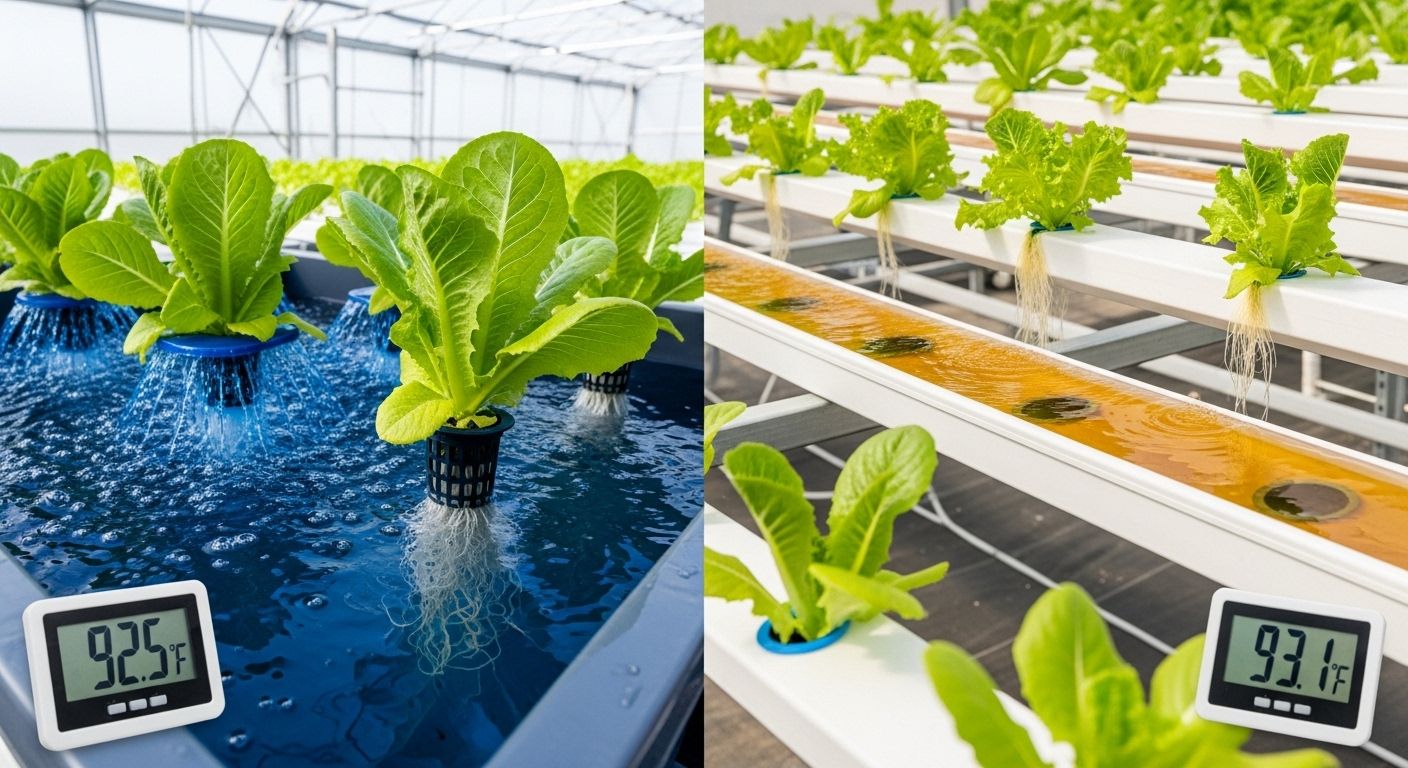
Physics dictates that as the temperature of a liquid increases, its ability to hold dissolved gases—including oxygen—decreases. At 60°F (15°C), water can hold significantly more oxygen than at 80°F (26°C). Simultaneously, as the water temperature rises, your plants’ metabolic rates increase, and the biological activity of beneficial (or pathogenic) microbes accelerates. This creates a "double-jeopardy" scenario: the plant needs more oxygen for root respiration, but the reservoir is physically less capable of providing it.
Will adding more air stones solve the problem?
Adding more air stones is a helpful mitigation strategy, but it has diminishing returns. Increasing the number of stones or the capacity of your air pump increases the surface area for gas exchange and promotes water circulation. This prevents stagnant "dead zones" in the reservoir where oxygen levels could drop to near-zero. However, aeration is not a cooling mechanism. If your reservoir temperature exceeds 75°F (24°C), the oxygen solubility limit may be so low that even aggressive aeration cannot maintain the DO levels required for optimal nutrient uptake and root health.
What are the risks of low dissolved oxygen?
When DO levels drop, roots begin to transition from aerobic respiration to anaerobic respiration. This shift leads to the production of ethanol and other toxic byproducts that can cause root rot (typically Pythium). Symptoms include slimy, brown, or foul-smelling roots. Furthermore, oxygen-starved roots lose their ability to selectively absorb nutrients, leading to sudden, unexplained nutrient deficiencies even if your pH and EC levels appear perfect.
Should I prioritize aeration or cooling?
If you have to choose one, prioritize cooling. While air stones are vital, maintaining a reservoir temperature between 65°F and 70°F (18°C–21°C) is the most effective way to ensure high DO levels. Once water temperatures cross the 75°F threshold, pathogenic bacteria thrive, and the root system’s health will decline regardless of how many air stones you add. If you cannot chill your water, adding aeration is mandatory to slow the onset of anaerobic conditions, but it should be viewed as a temporary "life support" measure rather than a long-term solution.
What is the best way to optimize summer aeration?
To maximize the efficiency of your aeration system during the summer:
- Use High-Quality Diffusers: Swap standard small air stones for ceramic diffusers or micro-pore tubing, which create smaller bubbles. Smaller bubbles increase the surface-area-to-volume ratio, allowing for better gas exchange.
- Ensure Proper Flow: Place stones in the center and corners to ensure the entire volume of water is moving.
- Monitor DO: If possible, use a digital dissolved oxygen meter. Aim for at least 6–8 mg/L of DO in the reservoir.
- Use H2O2 (with caution): Hydrogen peroxide can temporarily boost oxygen levels, but use it sparingly as it can also kill beneficial bacteria (mycorrhizae/beneficial microbes) in your root zone.
Expert Insights & FAQs
Do I need more air stones in my reservoir during the summer?
Yes, increasing aeration is highly recommended in summer. Warmer water holds significantly less dissolved oxygen than cooler water, so adding more air stones helps prevent root rot and supports plant health.
Why does summer heat lower oxygen levels in hydroponic reservoirs?
Water's ability to hold dissolved oxygen decreases as its temperature rises. High reservoir temperatures create an environment where plants struggle to breathe, increasing the risk of pathogens.
What is the ideal water temperature for a hydroponic reservoir?
The ideal temperature range is between 65°F and 72°F (18°C–22°C). If your reservoir exceeds 75°F, you must increase aeration and consider using a water chiller.
Johnnie McCormick
Zone 7b/8a - North Central Alabama
Johnnie McCormick is a gardening hobbyist and the founder of My Garden Spot. Raised in north-central Alabama, his passion for gardening began in his youth. In 2008, he established a large market garden, teaching himself high-yield growing methods. In the years since, he has operated seasonal seedling sales for transplants, specializing in heirloom tomatoes, peppers, eggplants, decorative ground covers like Ajuga (Bugleweed), marigolds, nasturtiums, and fresh kitchen-window herb arrangements (basil, cilantro). Today, he gardens in the hills between Birmingham and Jasper, Alabama (Zone 7b/8a), sharing practical, community-focused gardening resources.
Verified Authoritative Citations & References
In alignment with our strict E-E-A-T research and verification guidelines, this guide cross-references data from the United States Department of Agriculture (USDA) and Cooperative Extension Service programs.
- Cornell CEA (Controlled Environment Agriculture): Hydroponic lettuce and crop nutrient solution recipes. cea.cals.cornell.edu
- University of Arizona CEAC: Controlled Environment Agriculture Center technical guides. ceac.arizona.edu
- USDA National Agricultural Library: Aquaponics and closed-loop recirculating aquaculture guidelines. nal.usda.gov
- Alabama Cooperative Extension System (ACES): Small-scale aquaponic systems and water chemistry guides. aces.edu


Please log in to view comments.