Troubleshooting Hydroponic pH Fluctuation in Warm Reservoir Water

How Do You Fix Hydroponic pH Fluctuations in Warm Reservoir Water?
The meticulously controlled environment of a hydroponic system represents a delicate equilibrium between chemistry, biology, and physics. Growers invest significant resources in calibrating nutrient solutions, monitoring electrical conductivity (EC), and maintaining a precise pH range to ensure optimal nutrient bioavailability. However, the introduction of a single uncontrolled variable—excessive heat—can cause this stable system to devolve into a state of chemical chaos. When reservoir water temperatures climb, especially above 72°F (22°C), operators often observe wild, unpredictable pH fluctuations that defy simple correction. This volatility is not a random occurrence but a predictable cascade of interconnected biophysical and biochemical events.
Warm water acts as a catalyst, simultaneously degrading the physical properties of the solution while accelerating the biological processes within it. The result is a vicious cycle where decreased dissolved oxygen stresses plant roots, creating an anaerobic environment ripe for pathogenic colonization. This, in turn, disrupts normal nutrient uptake, releasing organic acids and other compounds that send pH levels swinging erratically. Understanding this cascade requires a deep dive into gas solubility laws, plant metabolic functions, microbial activity, and the fundamental chemistry of acid-base buffering. This article provides a laboratory-oriented, scientific breakdown of the root causes of pH instability in warm hydroponic reservoirs, offering precise, data-driven strategies for diagnosis, mitigation, and long-term stabilization, ensuring your system remains productive even under thermal stress.
How does warm water physically reduce dissolved oxygen and trigger root pathogens?
The relationship between water temperature and dissolved oxygen (DO) is governed by fundamental principles of physical chemistry, specifically Henry's Law. This law states that at a constant pressure, the amount of a given gas that dissolves in a given type and volume of liquid is directly proportional to the partial pressure of that gas in equilibrium with that liquid. However, the solubility constant itself is highly temperature-dependent. For gases like oxygen, solubility decreases significantly as the temperature of the solvent (water) increases. The kinetic energy of the water molecules becomes too great to maintain the dissolved gas molecules in solution, causing them to escape into the atmosphere.
This is not a minor effect. The maximum oxygen saturation point of water declines precipitously within the temperature range relevant to hydroponics.
Table: Maximum Dissolved Oxygen (DO) Saturation in Freshwater at Sea Level
| Temperature (°F) | Temperature (°C) | Maximum DO (mg/L or ppm) |
|---|---|---|
| 60°F | 15.6°C | 9.9 mg/L |
| 68°F | 20.0°C | 9.1 mg/L |
| 72°F | 22.2°C | 8.7 mg/L |
| 77°F | 25.0°C | 8.2 mg/L |
| 82°F | 27.8°C | 7.8 mg/L |
| 86°F | 30.0°C | 7.5 mg/L |
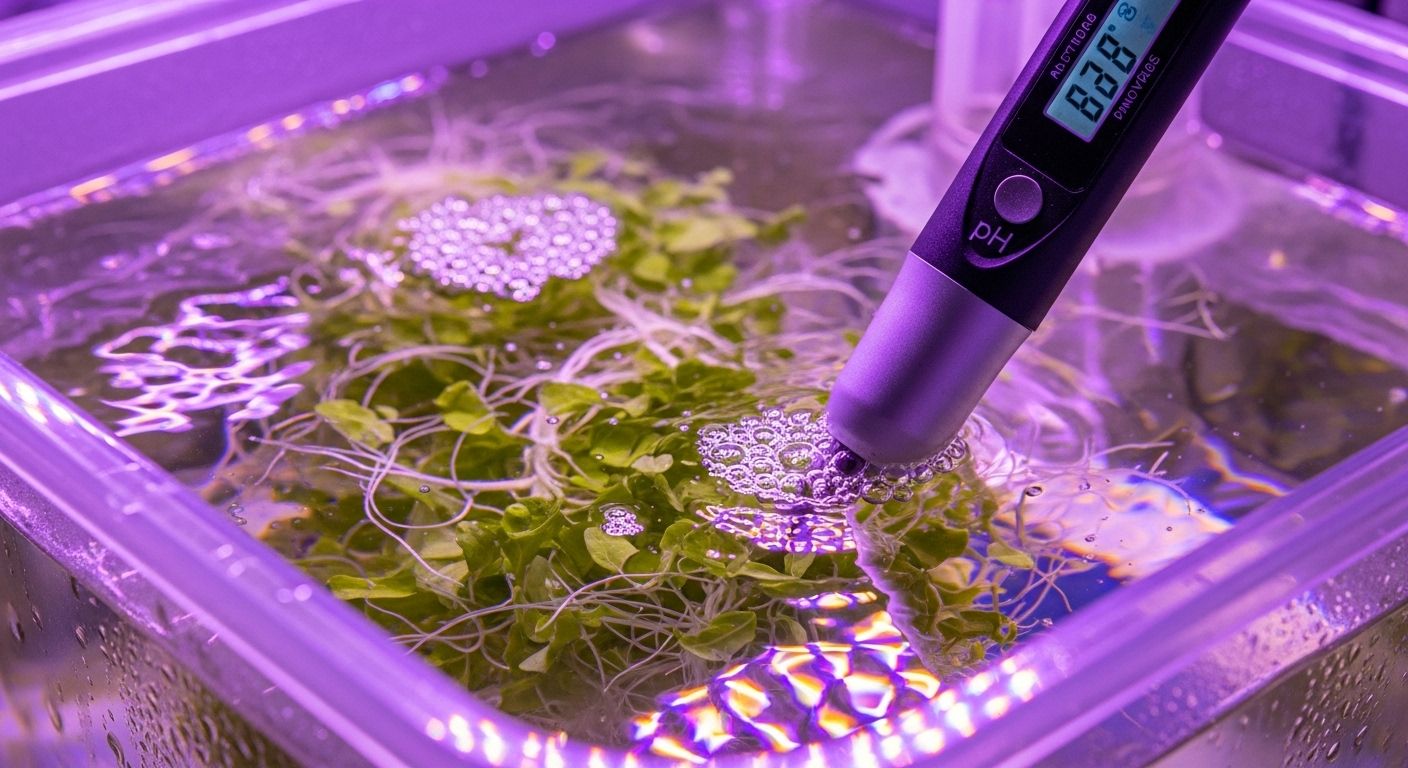
Plant roots require high levels of DO (ideally >6 mg/L) to perform aerobic respiration, the cellular process that generates the energy (ATP) needed for nutrient and water uptake. When DO levels fall below 5 mg/L, roots become stressed and their metabolic functions are impaired. This hypoxic state is the precise condition required for the germination and proliferation of oomycetes, or water molds, most notably Pythium spp. and Phytophthora spp., the primary causative agents of root rot.
These pathogens are facultative anaerobes, meaning they thrive in low-oxygen environments where the plant's natural defenses are weakened. The infection process typically follows these steps:
- Hypoxic Stress: Reduced DO compromises the integrity of root cell membranes.
- Pathogen Activation: Dormant Pythium zoospores become motile and are chemically attracted to the stressed root exudates.
- Infection: The zoospores encyst on the root surface, germinate, and penetrate the root cortex.
- Necrosis and Decay: The pathogen releases enzymes that break down root tissue, causing it to turn brown, slimy, and necrotic. This decay process releases a cascade of organic acids and consumes any remaining oxygen, further exacerbating the anaerobic conditions and causing a sharp, often unpredictable drop in reservoir pH. For a detailed guide on combating this specific issue, explore our article on summer hydroponics, chilling nutrients, and preventing Pythium.
How does accelerated plant metabolism in warm water cause rapid pH drift?
Plants are poikilothermic organisms, meaning their internal temperature and metabolic rate are largely determined by the surrounding environment. In hydroponics, the root zone temperature is the dominant factor influencing metabolic activity. The relationship between temperature and metabolic rate is often described by the Q10 temperature coefficient, which states that for every 10°C (18°F) rise in temperature, the rate of many biological and chemical processes doubles or even triples, up to an optimal point.
This accelerated metabolism directly translates to a more rapid rate of nutrient ion uptake by the roots. This process is not passive; it is an active, energy-intensive transport mechanism that requires the plant to maintain a strict electrochemical balance.
Every nutrient element exists in the solution as a charged ion:
- Cations (Positive Charge): Ammonium (NH₄⁺), Potassium (K⁺), Calcium (Ca²⁺), Magnesium (Mg²⁺)
- Anions (Negative Charge): Nitrate (NO₃⁻), Dihydrogen Phosphate (H₂PO₄⁻), Sulfate (SO₄²⁻)
To maintain its internal pH and overall charge neutrality, a plant cannot simply absorb these charged ions without consequence. It must engage in an ion exchange with the surrounding solution. The mechanism is as follows:
- Cation Uptake: For every positively charged ion (cation) the plant absorbs, it must either absorb a negatively charged ion (anion) of equal charge or release a positively charged ion from its roots. The primary cation released is a hydrogen ion (H⁺). The release of H⁺ ions into the solution increases the concentration of free protons, thereby decreasing the pH (making it more acidic).
- Anion Uptake: Conversely, for every negatively charged ion (anion) absorbed, the plant must release a negatively charged ion. This is typically a hydroxide ion (OH⁻) or a bicarbonate ion (HCO₃⁻). The release of OH⁻ ions into the solution effectively removes H⁺ ions (as they combine to form H₂O), thereby increasing the pH (making it more alkaline).
In a cool reservoir, this ion exchange process occurs at a steady, predictable rate, leading to a slow, manageable pH drift. In a warm reservoir, the supercharged metabolic rate causes this exchange to happen much more quickly and intensely. If a plant is in a vegetative stage and consuming large amounts of nitrate (NO₃⁻), a grower will observe a much faster pH rise than in cooler conditions. Conversely, a nutrient solution rich in ammonium (NH₄⁺) will cause a precipitous pH drop. This effect makes it critical to select the right nutrient profile for each growth phase, a process that can be streamlined with a robust tool like our Garden Planning Tool to map out crop cycles and their corresponding nutrient demands.
What is the ideal reservoir temperature range to prevent pH instability?
The selection of an optimal reservoir temperature is a critical engineering control for maintaining system stability. It represents a carefully calculated compromise between maximizing dissolved oxygen potential and promoting vigorous plant metabolic activity. The range of 65-72°F (18-22°C) is widely accepted in scientific and commercial horticulture for achieving this balance.
Let's analyze the conditions outside this optimal range:
- Temperatures Below 65°F (18°C): In this range, dissolved oxygen levels are excellent (approaching 10 mg/L). However, the low temperature significantly slows down the plant's enzymatic processes. The rate of nutrient uptake, transpiration, and overall growth is reduced. While pH will be exceptionally stable due to the slow rate of ion exchange, crop cycle times will be extended, and overall yield may be diminished. This temperature might be suitable for cold-weather crops like lettuce but is suboptimal for most fruiting crops.
- The Optimal Zone (65-72°F or 18-22°C): This is the "Goldilocks zone." Dissolved oxygen remains high (8.7-9.5 mg/L), well above the threshold for hypoxic stress. Simultaneously, the temperature is warm enough to support a robust and efficient metabolic rate in the root zone. Nutrient uptake is balanced, root health is excellent, and the pH drift caused by ion exchange is slow, linear, and predictable. This allows for easy management and correction with minimal intervention.
- The Danger Zone (Above 72°F or 22°C): As soon as the temperature exceeds this threshold, the system's stability begins to degrade rapidly. As detailed previously, DO levels drop significantly while oxygen consumption by both the plant and microbial populations increases. This creates an oxygen deficit that opens the door for root rot. The combination of pathogenic activity and erratic nutrient uptake by stressed roots is the direct cause of the chaotic pH swings that growers seek to avoid. Managing the ambient temperature in the grow space is a key first step; understanding the dynamics of heat in enclosed spaces, as explained in our article on why a high tunnel gets so hot in June, provides valuable context for controlling reservoir temperatures.
Achieving this ideal temperature range, particularly during summer months, often requires proactive intervention. While passive methods can help, many commercial operations consider an active water chiller to be essential equipment for guaranteeing crop health and preventing catastrophic losses.
How do algae and bacterial blooms alter reservoir pH in warm conditions?
Beyond plant roots and pathogenic oomycetes, a third biological component significantly impacts reservoir chemistry in warm conditions: microbial populations, including algae and bacteria. Warm water, combined with a nutrient-rich solution and light exposure (in the case of algae), creates a perfect incubator for rapid microbial growth, resulting in blooms and biofilms.
Algal Blooms and Photosynthetic pH Swings: Algae are photosynthetic organisms. Their impact on pH is dictated by their respiratory and photosynthetic cycles, which are directly tied to the photoperiod (the light/dark cycle).
- Day Cycle (Lights On): During photosynthesis, algae consume significant amounts of carbon dioxide (CO₂) dissolved in the water. This removal of CO₂ shifts the equilibrium of the carbonate buffer system to the left:
HCO₃⁻ (Bicarbonate) + H⁺ <=> H₂CO₃ (Carbonic Acid) <=> CO₂ + H₂OBy consuming CO₂, the system pulls H⁺ ions out of the solution to create more carbonic acid, which then dissociates into CO₂. This net consumption of H⁺ ions causes a rapid and often dramatic increase in pH throughout the day. - Night Cycle (Lights Off): When the lights are off, photosynthesis ceases, but respiration continues. Both algae and aerobic bacteria consume oxygen and release CO₂ as a waste product. This injection of CO₂ into the solution drives the carbonate buffer equilibrium to the right, forming more carbonic acid, which then dissociates and releases H⁺ ions. This causes a significant decrease in pH overnight.
The result is a diurnal (daily) pH swing that is superimposed on the drift caused by the plant's nutrient uptake. In a severe bloom, it's not uncommon to see the pH rise from 5.8 to 7.0 during the day and plummet back down to 5.5 or lower overnight.
Bacterial Biofilms and Organic Acids: Bacterial populations also explode in warm water. They form slimy biofilms on reservoir walls, tubing, and even the root surfaces themselves. These microbial communities engage in complex metabolic processes, breaking down organic compounds (such as chelating agents or dead root matter). Many of these processes release organic acids as byproducts, contributing to a net long-term decrease in pH and EC. Some bacteria can also engage in denitrification, converting nitrate (NO₃⁻) to nitrogen gas, which removes a key anion from the solution and can alter the plant's uptake patterns, further complicating pH management.
How does water hardness and carbonate buffering affect pH stability?
The chemical composition of your source water is a critical, often overlooked, factor in pH stability. The key parameter is not total dissolved solids (TDS) or general hardness (GH), but rather alkalinity, also known as carbonate hardness (KH). Alkalinity is a measure of the water's capacity to neutralize acid.
This buffering capacity comes primarily from bicarbonate (HCO₃⁻) and carbonate (CO₃²⁻) ions. These ions form a chemical system that can absorb excess hydrogen ions (H⁺) or hydroxide ions (OH⁻), thereby resisting changes in pH. The core chemical reaction is:
CO₂ + H₂O <=> H₂CO₃ (Carbonic Acid) <=> H⁺ + HCO₃⁻ (Bicarbonate) <=> 2H⁺ + CO₃²⁻ (Carbonate)
Here’s how this system impacts your hydroponic reservoir:
- High Alkalinity Source Water (High KH): If your source water is high in bicarbonates (e.g., well water from limestone aquifers), it will have a strong buffering capacity. When your plants release H⁺ ions during cation uptake, or when you add an acid (pH Down), the bicarbonates in the water will neutralize them:
HCO₃⁻ + H⁺ -> H₂CO₃This means you will need to use a significantly larger volume of acid to achieve your target pH. While this makes the pH very resistant to dropping, it can also lead to a constant upward creep as water is added or evaporates, concentrating the buffers. This phenomenon is often called “pH rebound.” - Low Alkalinity Source Water (Low KH): If you use reverse osmosis (RO) or deionized (DI) water, it has virtually zero alkalinity. There is no chemical buffer present in the solution. This means that any influence—the release of H⁺ or OH⁻ ions from roots, CO₂ from respiration, or a small addition of pH adjuster—will cause an immediate and significant change in pH. The system is inherently volatile and requires more frequent monitoring and adjustment.
Managing Alkalinity:
- Testing: Measure the KH of your source water using a titration test kit (commonly found for aquariums). A KH between 3-5 dKH (degrees of Carbonate Hardness) or 50-90 ppm HCO₃⁻ is often considered a good starting point.
- For High KH: Before adding nutrients, pre-adjust the source water pH down to 5.5-6.0 with a strong acid like phosphoric acid. This will convert the bicarbonates into carbonic acid, which then off-gasses as CO₂, effectively removing the buffer from the system.
- For Low KH: With RO water, the nutrient solution itself will provide some buffering, but the system will remain sensitive. Some growers add a small amount of a potassium bicarbonate-based buffer or use nutrient lines specifically formulated for RO water to introduce a controlled amount of buffering capacity.
What are the chemical differences between nitric, phosphoric, and citric pH down?
Not all pH adjusters are created equal. The choice of acid used to lower the pH of your nutrient solution has significant chemical and nutritional implications. The three most common types are phosphoric acid, nitric acid, and citric acid.
Comparison of Common pH Down Acids
| Feature | Phosphoric Acid (H₃PO₄) | Nitric Acid (HNO₃) | Citric Acid (C₆H₈O₇) |
|---|---|---|---|
| Acid Type | Mineral Acid (Strong) | Mineral Acid (Very Strong) | Organic Acid (Weak) |
| Strength (pKa) | pKa1 = 2.15 (strong) | pKa = -1.5 (very strong) | pKa1 = 3.13 (weak) |
| Nutrient Added | Phosphorus (P) as Phosphate (PO₄³⁻) | Nitrogen (N) as Nitrate (NO₃⁻) | None (adds organic carbon) |
| Best Use Case | Flowering, fruiting, or bloom stages where phosphorus demand is high. General purpose. | Vegetative growth stage where nitrogen demand is high. | Organic systems or for growers wishing to avoid mineral acids. Small, temporary adjustments. |
| Stability | Very stable in solution. Provides long-lasting pH reduction. | Very stable in solution. Provides long-lasting pH reduction. | Less stable. Can be metabolized by microbes in the reservoir, causing pH to rebound. |
| Safety | Caustic. Requires gloves and eye protection. | Highly corrosive and a strong oxidizer. Requires extreme care, gloves, and eye protection. | Generally safe, but can still irritate skin and eyes. Food grade. |
| Impact on EC/PPM | Adds to the overall EC/PPM reading as it contributes phosphate ions. | Adds to the overall EC/PPM reading as it contributes nitrate ions. | Minimal impact on EC as it is a non-mineral organic compound. |
Strategic Application: Advanced growers often use a combination of acids based on the plant's life cycle. For example, during the vegetative phase, using nitric acid to lower pH beneficially supplements the nitrogen supply. Once the plants transition to flowering, a switch to phosphoric acid provides extra phosphorus needed for bud and fruit development. This strategic use turns a maintenance task into a supplemental feeding opportunity.
Citric acid is often favored in aquaponics or fully organic hydroponic systems. However, its weakness and susceptibility to microbial degradation mean that pH adjustments are less permanent. The organic carbon it introduces can also fuel bacterial blooms if the system is not kept sterile, which can be counterproductive in a warm reservoir. For most hydroponic applications, phosphoric acid is the most common and reliable choice for its stability and nutritional contribution.
What biological and chemical solutions stabilize pH in warm reservoirs?
When facing persistent pH instability in warm water, reactive adjustments with acids and bases are often insufficient. A proactive approach using stabilizing agents—both biological and chemical—is necessary.
1. Biological Stabilizers (Beneficial Microbes): The principle here is competitive exclusion. By intentionally introducing a large, healthy population of beneficial microorganisms, you create an environment where pathogenic species like Pythium cannot gain a foothold.
- Trichoderma spp.: This is a genus of beneficial fungi that colonize the root surface (the rhizosphere). They act as a protective barrier, actively parasitize pathogenic fungi, and can even produce plant growth-promoting hormones. Their presence helps maintain a healthy root system capable of normal, balanced ion exchange.
- Bacillus subtilis: This is a beneficial bacterium that produces a range of antifungal and antibacterial compounds. It forms a biofilm on the roots that physically shields them from pathogens and outcompetes harmful microbes for nutrients and space.
By preventing the root decay cycle before it starts, these biological inoculants eliminate one of the primary causes of erratic pH swings. Integrating these into your feeding schedule, which can be planned using our Planting Calendar, ensures consistent root protection.
2. Chemical Stabilizers and Buffers:
- Potassium Silicate (K₂SiO₃): This is a highly alkaline supplement that provides plants with silicon and potassium. When added to the reservoir (before pH adjustment), it dissolves to form silicic acid (H₄SiO₄). Silicon is incorporated into cell walls, making plants physically stronger and more resistant to pests and diseases. Chemically, silicic acid has a slight buffering capacity and is known to help stabilize pH in a desirable range. Its high alkalinity requires a significant amount of acid to bring the pH down initially, but the resulting solution is often more stable against further drift.
- Synthetic Buffers (MES): For laboratory or high-precision applications, synthetic pH buffers can be used. MES (2-(N-morpholino)ethanesulfonic acid) is a common biological buffer that is effective in the typical hydroponic pH range (5.5-6.5). It is a zwitterionic compound, meaning it has both positive and negative charges, which makes it an excellent buffer. Unlike the carbonate system, MES is not consumed by the plant and is not volatile, providing very stable pH for extended periods. However, it is expensive and typically reserved for research rather than commercial production.
Implementation Protocol:
- Start with a clean, sterile reservoir.
- If using beneficials, add them to the nutrient solution as per the manufacturer's instructions. Avoid sterilizing agents like hydrogen peroxide or UV filters, as they will kill the beneficial microbes.
- If using potassium silicate, add it to the reservoir water first and mix thoroughly before adding any other nutrients to prevent precipitation.
- Balance the final solution to your target pH. Monitor daily and note the rate of drift. A stabilized system should exhibit a slow, predictable drift of no more than 0.1-0.2 pH units per day.
How do active reservoir chillers compare to passive insulation for temperature control?
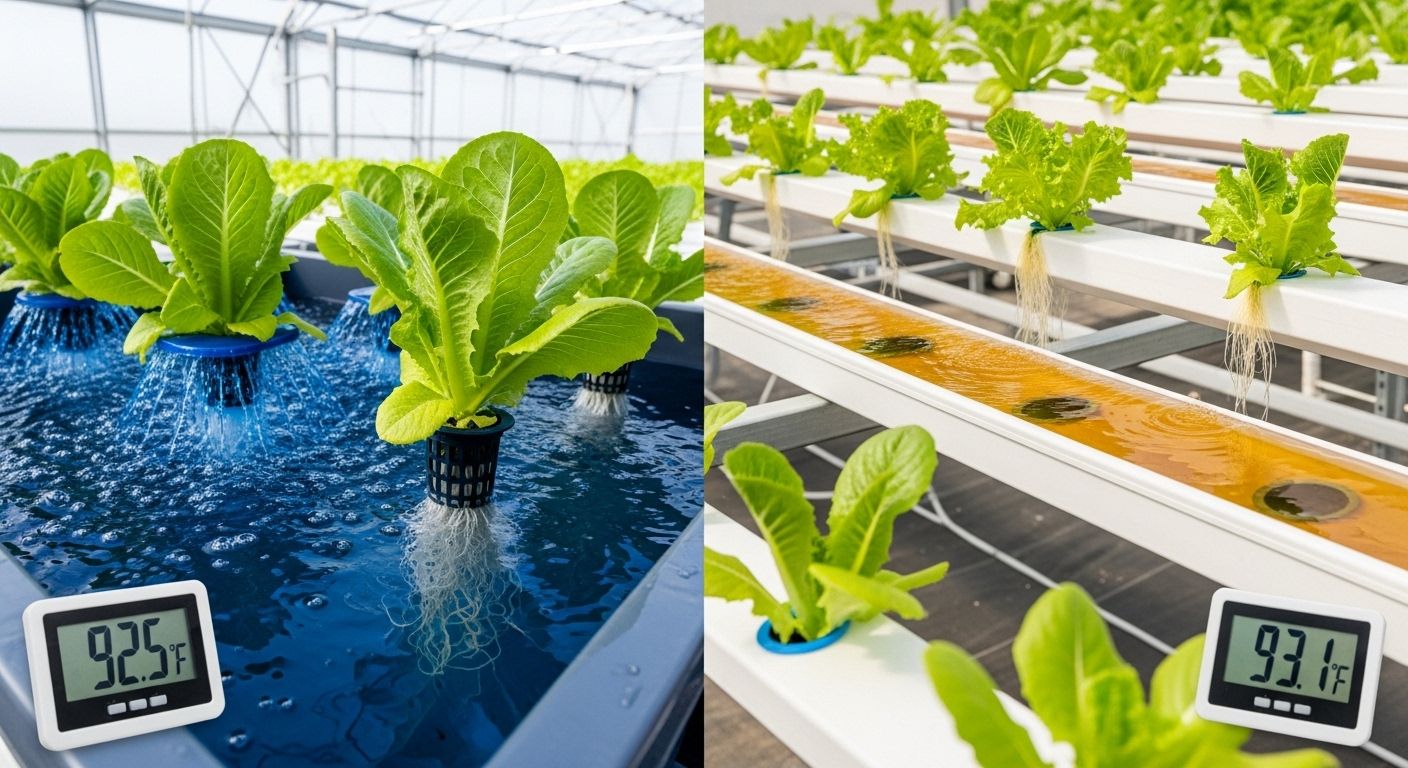
Controlling reservoir temperature is the most direct way to prevent the cascade of problems leading to pH instability. The methods for achieving this can be broadly categorized as active or passive.
Active Control: Reservoir Chillers An active water chiller is a refrigeration unit designed for liquids. Water is pumped from the reservoir, through the chiller where heat is extracted via a heat exchanger and refrigerant cycle, and then returned to the reservoir at a lower temperature.
- Types:
- In-line Chillers: The most common type. Plumbed directly into the circulation loop.
- Drop-in/Probe Chillers: A cooling probe is placed directly into the reservoir.
- Advantages:
- Precise Control: A thermostat allows you to set and maintain an exact temperature (e.g., 68°F) regardless of ambient conditions.
- Effectiveness: It is the only method that guarantees the water will stay within the optimal range, even during extreme heatwaves.
- Reliability: Once set up, they provide consistent, automated cooling.
- Disadvantages:
- High Initial Cost: Chillers are a significant investment, often costing several hundred to thousands of dollars depending on size.
- Energy Consumption: They are essentially refrigerators and will add to electricity costs.
- Heat Output: The chiller itself exhausts heat into the surrounding room, which can raise the ambient temperature of a small, enclosed grow space.
Passive Control: Insulation and Environmental Management Passive methods do not generate cold; they simply slow the transfer of heat from the warmer ambient environment into the cooler reservoir.
- Methods:
- Insulation: Wrapping the reservoir with insulating materials like reflectix, styrofoam, or thick blankets.
- Color: Using white or reflective-colored reservoirs instead of black, which absorbs radiant heat.
- Burial: Burying the reservoir partially or fully in the ground to take advantage of the cooler, more stable soil temperature.
- Location: Placing the reservoir outside the main grow tent/room in a cooler area.
- Frozen Bottles: Temporarily adding frozen water bottles to the reservoir (a semi-passive method).
- Advantages:
- Low Cost: These methods are very inexpensive or free.
- No Energy Use: They have no operational cost.
- Simple: Easy to implement.
- Disadvantages:
- Limited Effectiveness: They only slow heat gain; they cannot lower the temperature below the ambient average. In a prolonged heatwave, the reservoir will eventually warm up.
- Inconsistent: The temperature will still fluctuate, just more slowly. The frozen bottle method causes rapid temperature swings that can stress plants.
Decision Matrix
| Factor | Active Chiller | Passive Insulation |
|---|---|---|
| Effectiveness | High (Guaranteed temperature control) | Low to Moderate (Slows heating only) |
| Initial Cost | High | Very Low |
| Operating Cost | Moderate to High (Electricity) | None |
| Control | Precise and Automated | Imprecise and Manual |
| Best For | Serious hobbyists, commercial grows, hot climates | Small systems, mild climates, budget-conscious growers |
For any serious grower operating in a climate where ambient temperatures regularly exceed 80°F, an active chiller is often the most logical long-term investment to protect their crops. It moves temperature from an unpredictable variable to a controlled parameter, which is the fundamental goal of hydroponics. For managing the overall grow environment, strategies from our definitive guide on evaporative cooling systems can also be applied to reduce the ambient heat load on the reservoir.
Expert Insights & FAQs
How does warm water physically reduce dissolved oxygen and trigger root pathogens?
According to Henry's Law, the solubility of a gas in a liquid is inversely proportional to temperature. As water warms, its capacity to hold dissolved oxygen (DO) plummets, creating a low-oxygen (hypoxic) environment that stresses roots and allows anaerobic pathogens like Pythium spp. (root rot) to proliferate.
How does accelerated plant metabolism in warm water cause rapid pH drift?
Warmer temperatures increase a plant's metabolic rate, causing faster absorption of nutrient ions. To maintain electrochemical neutrality, roots release H+ ions when absorbing cations (like NH4+) and OH- ions when absorbing anions (like NO3-). This accelerated ion exchange causes more rapid and pronounced pH swings in the solution.
What is the ideal reservoir temperature range to prevent pH instability?
The ideal hydroponic reservoir temperature is a narrow window between 65-72°F (18-22°C), with 68°F (20°C) often cited as the optimal target. This range maximizes dissolved oxygen saturation while maintaining a healthy, efficient rate of plant metabolism, preventing the primary drivers of pH instability.
How do algae and bacterial blooms alter reservoir pH in warm conditions?
Algae and bacteria flourish in warm, nutrient-rich water. During the day, algal photosynthesis consumes CO2, forming carbonic acid and causing a sharp pH rise. At night, respiration from all microbes releases CO2, lowering pH. This creates a dramatic daily pH swing, separate from the plant's influence.
How does water hardness and carbonate buffering affect pH stability?
Water hardness, specifically carbonate hardness (KH) or alkalinity, acts as a chemical buffer against pH change. High KH, caused by bicarbonate and carbonate ions, neutralizes acids (like H+ from roots), resisting pH drops but making the solution difficult to lower. Low KH offers no buffering, leading to volatile swings.
What are the chemical differences between nitric, phosphoric, and citric pH down?
Phosphoric acid (H3PO4) is a stable, strong acid that adds phosphorus, ideal for bloom stages. Nitric acid (HNO3) is stronger and adds nitrogen, suitable for vegetative stages. Citric acid is a weak organic acid that is less stable and can be consumed by microbes, requiring more frequent application.
What biological and chemical solutions stabilize pH in warm reservoirs?
Biological solutions involve introducing beneficial microbes like Trichoderma or Bacillus subtilis to outcompete pathogens. Chemical solutions include adding potassium silicate, which helps stabilize pH and strengthens plants, or using synthetic buffers like MES acid for precise, long-term pH control in research settings.
How do active reservoir chillers compare to passive insulation for temperature control?
Active chillers use refrigeration to precisely maintain a target temperature, offering guaranteed control but at a high initial cost and energy use. Passive insulation (like reflective wraps or burying the tank) only slows the rate of heat gain from the environment, making it a low-cost but less effective option.
Johnnie McCormick
Zone 7b/8a - North Central Alabama
Johnnie McCormick is a gardening hobbyist and the founder of My Garden Spot. Raised in north-central Alabama, his passion for gardening began in his youth. In 2008, he established a large market garden, teaching himself high-yield growing methods. In the years since, he has operated seasonal seedling sales for transplants, specializing in heirloom tomatoes, peppers, eggplants, decorative ground covers like Ajuga (Bugleweed), marigolds, nasturtiums, and fresh kitchen-window herb arrangements (basil, cilantro). Today, he gardens in the hills between Birmingham and Jasper, Alabama (Zone 7b/8a), sharing practical, community-focused gardening resources.
Verified Authoritative Citations & References
In alignment with our strict E-E-A-T research and verification guidelines, this guide cross-references data from the United States Department of Agriculture (USDA) and Cooperative Extension Service programs.
- Cornell CEA (Controlled Environment Agriculture): Hydroponic lettuce and crop nutrient solution recipes. cea.cals.cornell.edu
- University of Arizona CEAC: Controlled Environment Agriculture Center technical guides. ceac.arizona.edu
- USDA National Agricultural Library: Aquaponics and closed-loop recirculating aquaculture guidelines. nal.usda.gov
- Alabama Cooperative Extension System (ACES): Small-scale aquaponic systems and water chemistry guides. aces.edu


Please log in to view comments.