Deep Water Culture (DWC) vs. Nutrient Film Technique (NFT) in High Summer Temperatures

DWC vs NFT: Which Hydroponic System Performs Better in High Summer Temperatures?
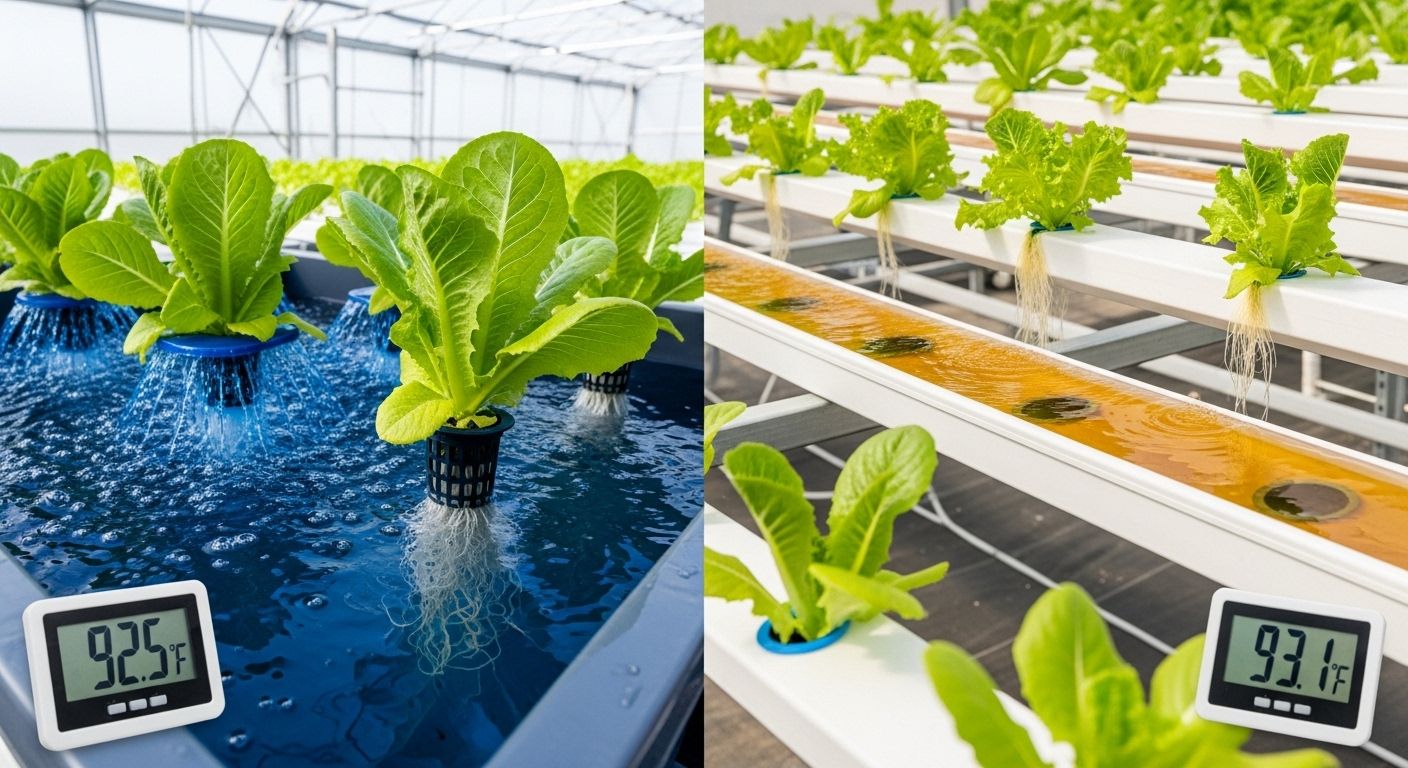
As ambient temperatures soar during the peak of summer, hydroponic growers face a formidable challenge: maintaining a stable and productive root zone environment. The nutrient solution, the lifeblood of any soilless system, is highly susceptible to thermal fluctuations. When water temperatures climb above the optimal range (18-22°C or 65-72°F), a cascade of physiological problems can ensue, compromising plant health and decimating yields. This issue is particularly acute when comparing two popular hydroponic methods: Deep Water Culture (DWC) and the Nutrient Film Technique (NFT). While both are exceptionally efficient, their fundamental designs create vastly different thermal dynamics. DWC systems, characterized by large, static reservoirs of nutrient solution, possess significant thermal mass, offering a buffer against rapid temperature swings. Conversely, NFT systems, which rely on a thin, continuously flowing film of water, have minimal thermal mass, making them highly responsive to ambient greenhouse temperatures. This article provides a rigorous, in-depth analysis of how these two systems perform under the thermal stress of high summer temperatures, exploring the critical roles of thermal mass, dissolved oxygen, pathogen risk, and the engineering solutions available to mitigate heat-related crop failure. We will delve into the physics, biology, and economics that govern summer hydroponic success, empowering growers to make informed decisions for their specific climate and crops.
How does thermal mass differentiate Deep Water Culture from Nutrient Film Technique during heatwaves?
The concept of thermal mass is central to understanding the performance disparity between DWC and NFT in hot climates. Thermal mass, or thermal capacitance, refers to a material's ability to store thermal energy. Water has a very high specific heat capacity, meaning it requires a substantial amount of energy to raise its temperature. A standard DWC system for a few lettuce heads might contain 20-40 liters (5-10 gallons) of water, while commercial systems can hold thousands of liters. This large volume acts as a heat sink.
During a hot day, the DWC reservoir slowly absorbs heat from the surrounding environment. It takes many hours for the bulk water temperature to rise significantly. Conversely, as night falls and ambient temperatures drop, the reservoir slowly releases this stored heat, preventing a sudden, stressful drop in root zone temperature. This buffering effect creates a more stable, predictable environment for plant roots.
In stark contrast, an NFT system circulates a very thin film of nutrient solution—often only a few millimeters deep—through channels. The total volume of water in the entire system at any given moment might be relatively small. The key factor is the high surface-area-to-volume ratio of the water as it flows. This design maximizes heat exchange with the ambient air in the greenhouse or grow room. Consequently, if the air temperature in a high tunnel spikes to 35°C (95°F), the nutrient solution in the NFT channels will approach that temperature very quickly. There is virtually no thermal buffer.
Let's consider a simplified calculation:
- Specific Heat of Water (c): Approximately 4,186 Joules per kilogram per degree Celsius (J/kg°C).
- DWC System: 50 liters of water (mass, m = 50 kg).
- NFT System: 5 liters of water actively circulating in thin films (effective mass for heat exchange, m = 5 kg).
The energy (Q) required to raise the water temperature by 5°C (ΔT) is given by the formula: Q = m * c * ΔT.
- Energy to heat DWC by 5°C: Q = 50 kg * 4186 J/kg°C * 5°C = 1,046,500 Joules.
- Energy to heat NFT by 5°C: Q = 5 kg * 4186 J/kg°C * 5°C = 104,650 Joules.
This demonstrates that it takes ten times more energy to heat the DWC reservoir by the same amount. In a real-world scenario, this translates to a much slower temperature increase over the course of a hot day, giving the grower a wider window to implement cooling strategies. For growers in regions with significant diurnal temperature swings, DWC's stability is a major operational advantage. For those planning their setup, our Garden Planning Tool can help visualize the space requirements for different reservoir sizes, a key factor in maximizing thermal mass.
Why is Dissolved Oxygen (DO) the primary bottleneck for summer hydroponic productivity?
While heat itself can stress plants, the most immediate and critical consequence of high nutrient solution temperature is the reduction of dissolved oxygen (DO). Plant roots, like other living tissues, must respire aerobically to produce the energy (in the form of ATP) needed to function. This energy powers essential processes, most notably the active transport of mineral ions (nutrients) from the solution into the root cells. Without sufficient oxygen, this entire process grinds to a halt.
This phenomenon is governed by physical chemistry, specifically Henry's Law, which states that the amount of dissolved gas in a liquid is proportional to its partial pressure above the liquid. Critically, the solubility constant in Henry's Law is temperature-dependent. For gases like oxygen, solubility decreases as the temperature of the solvent (water) increases. The warmer the water gets, the less oxygen it can physically hold, regardless of how much aeration is provided.
Impact of Low DO on Plant Physiology:
- Reduced Nutrient Uptake: The active transport mechanisms in root membranes are energy-intensive. With low DO, respiration slows, ATP production dwindles, and the roots lose their ability to absorb nutrients like nitrogen, phosphorus, and potassium, even if they are abundant in the solution. This leads to deficiency symptoms despite a perfectly balanced nutrient formula.
- Increased Pathogen Susceptibility: Low DO (hypoxic) or no DO (anoxic) conditions create the ideal environment for anaerobic and facultative anaerobic pathogens. Organisms like Pythium and Fusarium, the agents of root rot, thrive in these conditions while the plant's natural defenses are weakened. A detailed discussion on summer hydroponics, chilling nutrients, and preventing Pythium is essential reading for any warm-climate grower.
- Root Death: In severe cases, prolonged oxygen deprivation leads to cell death, root browning, and the classic slimy texture of root rot. Once the root system is compromised, the plant cannot absorb water or nutrients, leading to rapid wilting and death.
Both DWC and NFT systems rely on aeration to maintain DO levels. DWC systems use air stones to bubble vast amounts of air through the static reservoir. NFT systems aerate the solution as it cascades from the channel return into the main reservoir. However, both methods are fighting a losing battle against physics once the water temperature exceeds approximately 24°C (75°F). At these temperatures, even fully saturated water may not contain enough oxygen to meet the metabolic demands of a large, rapidly growing plant, making temperature control—not just aeration—the primary strategy for success.
What are the specific biological risks of Pythium infestation in warm DWC reservoirs?
Pythium, often referred to as a water mold, is an oomycete pathogen that is the bane of hydroponic growers, especially those using DWC systems in warm conditions. While several species of Pythium can cause damping-off and root rot, Pythium aphanidermatum is particularly aggressive and thrives in the exact conditions created by summer heat: water temperatures between 25°C and 35°C (77°F to 95°F) and low dissolved oxygen levels.
A warm DWC reservoir is a perfect incubator for a Pythium epidemic. Here's a breakdown of the biological risk factors:
- Spore Activation: Pythium often exists as dormant oospores, which can be introduced into a system via contaminated equipment, water sources, or even airborne dust. When temperatures rise and DO levels drop, these spores germinate.
- Zoospore Proliferation: Upon germination, Pythium produces mobile, flagellated zoospores. These microscopic spores can swim freely in the DWC reservoir. In a static body of water, they can easily travel from one plant's root system to the next, spreading the infection with alarming speed.
- Infection Process: Zoospores are attracted to the natural exudates from plant roots, particularly from the delicate root tips. They attach, encyst, and then penetrate the root's epidermis. Once inside, the pathogen's mycelia grow rapidly through the root cortex, releasing enzymes that dissolve cell walls and consume the cell contents.
- Symptoms and System Collapse: The initial symptoms are subtle, perhaps a slight wilting during the hottest part of the day. Upon inspection, the once-pristine white roots will show small brown lesions. As the infection progresses, the entire root mass becomes brown, slimy, and emits a foul, decaying odor. Nutrient and water uptake ceases, and the plant collapses. In a shared DWC reservoir, a single infected plant can lead to the loss of the entire crop within a week.
NFT systems are not immune to Pythium, but the risk profile is different. The constant flow of water can potentially spread zoospores even faster down a channel. However, the lack of a large, static, warm body of water makes the initial incubation and proliferation less explosive than in a DWC tub. The key takeaway is that for DWC growers, managing water temperature is not just about optimizing plant growth; it is the single most critical factor in preventing a complete crop wipeout from Pythium. For anyone struggling with temperature control in a greenhouse, understanding why your high tunnel is so hot in June can provide foundational knowledge for tackling the root cause of the problem.
Can the rapid flow of NFT channels compensate for high ambient greenhouse air temperatures?
It is a common misconception that increasing the flow rate in an NFT system is a viable strategy for cooling the nutrient solution. The logic seems plausible: faster-moving water might create more turbulence, increasing oxygenation, and perhaps a greater cooling effect through evaporation. However, the principles of thermodynamics reveal a different and more challenging reality.
The primary mechanism of heat transfer in a greenhouse is convection. The air, heated by solar radiation, transfers its thermal energy to every surface it touches, including the NFT channels. The thin film of water flowing within these channels is in intimate contact with the channel walls. A faster flow rate does not reduce this contact; it simply means that a greater volume of water is exposed to the heated surface area per unit of time.
Consider the heat transfer equation:
- Q/t = h * A * (T_air - T_water)
Where:
- Q/t is the rate of heat transfer.
- h is the convective heat transfer coefficient.
- A is the surface area of the channels.
- (T_air - T_water) is the temperature difference between the air and the water.
A higher flow rate can slightly increase the convective heat transfer coefficient (h), meaning heat is transferred more efficiently from the warm channel walls into the water. Therefore, instead of cooling the solution, a faster flow rate can actually accelerate the rate at which the solution heats up to match the ambient air temperature.
While there is a minor evaporative cooling effect at the surface of the water film, it is typically insignificant compared to the massive convective heat gain from the surrounding environment. The energy required to evaporate a small amount of water is far less than the thermal energy being transferred from acres of hot plastic or polycarbonate and the trapped, super-heated air inside the greenhouse.
Furthermore, the returning water cascades back into the reservoir, releasing some dissolved CO2 and absorbing some oxygen. While a faster flow increases the frequency of this cycle, it cannot overcome the fundamental physical limitation of oxygen's low solubility in the now-warmer water. The net effect is that a rapid flow rate in a hot greenhouse primarily serves to heat the entire volume of your nutrient reservoir more quickly, working directly against your goal of maintaining a cool root zone.
What is the mathematical relationship between water temperature and oxygen saturation in soil-less systems?
This fundamental relationship is one of the most important principles in hydroponics and aquaculture. The maximum concentration of dissolved oxygen that water can hold at a given temperature and atmospheric pressure is a fixed physical property. This saturation point is not an opinion; it is a law of nature. While complex equations like the Weiss equation provide precise calculations, for practical agricultural purposes, a reference table clearly illustrates the critical impact of temperature.
Here is a table showing the DO saturation point in freshwater at standard atmospheric pressure (1 atm). Note how the capacity for oxygen drops significantly as temperatures enter the danger zone for most hydroponic crops.
| Temperature (°C) | Temperature (°F) | DO Saturation (mg/L or ppm) | Percent Decrease from 18°C |
|---|---|---|---|
| 15 | 59 | 10.08 | -7.8% (Increase) |
| 18 (Optimal) | 64.4 | 9.35 | 0% |
| 20 | 68 | 9.09 | -2.8% |
| 22 | 71.6 | 8.74 | -6.5% |
| 24 | 75.2 | 8.42 | -9.9% |
| 26 | 78.8 | 8.11 | -13.3% |
| 28 | 82.4 | 7.83 | -16.3% |
| 30 | 86 | 7.56 | -19.1% |
| 32 | 89.6 | 7.31 | -21.8% |
As the table clearly shows, by the time the water temperature reaches 30°C (86°F), it has lost nearly 20% of its oxygen-holding capacity compared to the optimal 18°C. This is happening at the exact same time that the plant's metabolic rate (and thus its oxygen demand) is increasing due to the heat. It's a dangerous combination of higher demand and lower supply.
It is crucial to understand that an air pump and air stones in a DWC system do not add more oxygen than the saturation limit allows. Their function is to ensure the water reaches and stays at its maximum possible saturation point for that specific temperature. If the water is 30°C, you can run a thousand air pumps, and you will never achieve a DO level higher than ~7.56 mg/L. This is why temperature management is paramount. You cannot solve a warm water problem with more air. This also has implications for nutrient management, as warm water can sometimes exacerbate hydroponic pH fluctuations, further stressing the plants.
How do you insulate hydroponic reservoirs and NFT channels to combat conductive heat gain?
Insulation is a key passive strategy for mitigating heat gain. The goal is to reduce the transfer of thermal energy from the hot environment into your cooler nutrient solution. The methods differ slightly between DWC and NFT due to their different structures.
Insulating DWC Reservoirs
A DWC reservoir is essentially a large container, making it relatively straightforward to insulate.
- Go Subterranean: The most effective method is to bury the reservoir in the ground. Below a depth of about 30-60 cm (1-2 feet), the soil temperature remains remarkably stable, often staying close to the average annual air temperature. This provides a massive, free heat sink. Excavation can be labor-intensive but offers the best passive thermal stability.
- Build an Insulated Box: For above-ground reservoirs, construct a simple box around the tank using rigid foam insulation panels (e.g., XPS or Polyiso). These panels have high R-values (a measure of thermal resistance). A 5 cm (2-inch) thick panel can have an R-value of 10, significantly reducing heat transfer. Ensure the lid is also insulated.
- Reflective Surfaces: Paint any exposed surfaces, including the lid, a glossy white. White surfaces have high albedo, meaning they reflect a large percentage of incoming solar radiation instead of absorbing it as heat. Avoid black or dark-colored tanks at all costs, as they act as solar ovens.
- Reflective Bubble Wrap: A cost-effective solution is to wrap the entire reservoir in several layers of reflective bubble wrap (e.g., Reflectix). This product works by creating a radiant barrier and providing a small amount of conductive insulation from the trapped air bubbles.
Insulating NFT Channels
Insulating long, narrow NFT channels is more challenging but equally important.
- Reflective Channel Covers: The top surface of the channel is exposed to the most direct solar radiation. Using white, reflective channel covers instead of black ones can make a significant difference. Some commercial channels are co-extruded with a white outer layer and a black inner layer to combine light reflection with algae prevention.
- Pipe Insulation: The return pipes and main feed lines are often overlooked. Insulate them with standard foam pipe insulation, just as you would for plumbing in a house. For larger pipes, foil-faced fiberglass insulation can be used.
- Create a Thermal Break: The supports or benches holding the NFT channels can conduct heat from the hot greenhouse floor directly into the channels. Placing a strip of insulating material like foam or wood between the channel and its metal or plastic support can help.
- Shade Strategically: While not insulation in the traditional sense, using shade cloth directly over the hydroponic system is a form of thermal control. Detailed strategies on using shade cloth for high tunnels can be adapted to protect your channels and reservoir from direct sun, which is the largest source of heat gain.
By combining these insulation techniques, a grower can significantly slow the rate of heat gain, reducing the load on active cooling systems like chillers and extending the window of optimal root zone temperatures throughout the day.
When does the cost-benefit analysis favor industrial water chillers over passive cooling methods?
The decision to invest in an active cooling solution like a water chiller is primarily an economic one. For a hobbyist growing lettuce for personal consumption, the cost is rarely justified. For a commercial operation growing high-value herbs or leafy greens for restaurants, a chiller can be the difference between profitability and bankruptcy.
Here's how to structure a cost-benefit analysis:
1. Calculate the Costs (The Investment)
- Capital Expenditure (CAPEX): This is the upfront cost of the chiller unit and any associated plumbing. A 1/4 HP chiller suitable for a few hundred gallons might cost $400-$800. A 1 HP unit for a larger system could be $2,000+.
- Operating Expenditure (OPEX): This is the ongoing cost of electricity. A 1/4 HP chiller might draw around 300-500 watts. If it runs for 10 hours a day:
- 0.4 kW * 10 hours/day * 30 days/month = 120 kWh/month
- At an electricity price of $0.15/kWh, the monthly cost would be 120 * $0.15 = $18.
- Over a 4-month summer season, this is $72 in operating costs.
Total Annual Cost (Year 1): CAPEX + OPEX (e.g., $600 + $72 = $672)
2. Calculate the Benefits (The Return)
This requires assessing the financial impact of uncontrolled high temperatures.
- Scenario A: Without Chiller. Assume that for 4 months of the year, high temperatures cause a 50% reduction in yield and a 25% total crop loss rate due to disease.
- Normal monthly revenue: 100 kg of basil * $20/kg = $2,000
- Summer monthly revenue: (100 kg * 50% yield) * 75% survival * $20/kg = $750
- Total summer revenue (4 months): 4 * $750 = $3,000
- Scenario B: With Chiller. Assume the chiller maintains optimal temperatures, resulting in no yield reduction or crop loss.
- Summer monthly revenue: $2,000
- Total summer revenue (4 months): 4 * $2,000 = $8,000
Financial Benefit of Chiller: $8,000 (Revenue with Chiller) - $3,000 (Revenue without) = $5,000
3. Make the Decision
- Net Gain (Year 1): $5,000 (Benefit) - $672 (Cost) = $4,328
In this hypothetical scenario, the decision is overwhelmingly in favor of purchasing the chiller. The payback period is less than one month. This analysis should be performed with your own crop values, energy costs, and estimated yield losses. The tipping point is reached when the "Net Gain" calculation turns positive.
When Passive Methods Suffice: Passive methods (insulation, burying reservoirs, shade cloth, painting surfaces white, adding frozen water bottles to small systems) should always be the first line of defense. They have low or no operating costs. In climates with only occasional heat spikes or for growers with more heat-tolerant crops, these methods may be sufficient to keep temperatures below the critical 24°C (75°F) threshold. However, in persistently hot climates like the southern US, Australia, or the Middle East, passive methods can only slow the heat gain; they cannot remove heat. In these regions, a chiller becomes a near-essential piece of equipment for any serious commercial hydroponic venture.

Which specific crop varieties maintain the highest nutrient uptake efficiency in high-temp DWC?
While engineering controls are vital, horticultural selection plays an equally important role in the success of summer hydroponics. Plant genetics determine a species' or variety's inherent ability to cope with thermal stress. Selecting heat-tolerant cultivars can significantly widen your margin of error.
Leafy Greens:
- Lettuce: This is typically the most challenging summer hydroponic crop. Most varieties are prone to bolting (prematurely flowering) and tip burn in response to heat. However, some have been specifically bred for hot climates.
- 'Jericho' Romaine: An Israeli variety renowned for its exceptional heat tolerance and resistance to bolting.
- 'Black Seed Simpson': A classic loose-leaf variety that is more heat-tolerant than many other types.
- Salanova® Types: Many varieties in this line are bred for controlled environment agriculture and show good heat resistance.
- Swiss Chard: Varieties like 'Fordhook Giant' and 'Bright Lights' are far more heat-tolerant than lettuce or spinach and can produce continuously through the summer.
- Watercress: As a semi-aquatic plant, watercress is naturally adapted to growing in water and can handle warmer temperatures better than many terrestrial plants adapted for hydroponics.
Herbs:
- Basil: A quintessential summer herb, basil thrives in conditions that would destroy lettuce. It is an excellent choice for high-temperature DWC and NFT systems. Genovese, Thai, and Lemon basil varieties all perform well.
- Mint: Known for its aggressive growth, mint is very resilient and can tolerate warm water temperatures, though flavor may be slightly affected at the extremes.
Fruiting Crops: While generally more challenging due to their higher oxygen and nutrient demands, some fruiting crops are better suited for warm hydroponic conditions.
- Peppers: Both hot and sweet peppers are native to warmer climates and their root systems are inherently more tolerant of heat than cool-weather crops. They still require excellent aeration.
- Okra: A classic southern crop, okra loves heat. Its root system is robust and can handle the warm, low-DO conditions of summer DWC better than most other vegetables.
- Tomatoes: Tomato performance is highly dependent on variety. While high water temperatures are a challenge, the bigger issue is often high air temperatures causing blossom drop. However, certain heat-set varieties can be more resilient. For in-depth planning on what to grow when, our Planting Calendar provides a valuable regional resource for scheduling your crops.
It's important to note that even these 'heat-tolerant' varieties have their limits. They will still perform better with cooler water. Their advantage lies in their ability to survive and remain productive at temperatures where other varieties would fail completely. A strategy of combining heat-tolerant cultivars with the best possible temperature management practices will yield the most successful summer harvests.
Advanced Greenhouse and Commercial Management Strategies
Beyond the specific choice between DWC and NFT, a holistic approach to managing the entire growing environment is critical for commercial success in summer. This involves integrating strategies for light, humidity, and even business risk.
Managing Light and Temperature with Shade Cloth
High temperatures in a greenhouse are a direct result of solar energy gain. Managing this energy is a primary control measure. Shade cloth is a key tool, but its effectiveness depends on the type and percentage of shade.
- Photomorphogenesis: Plants respond to both the quantity and quality of light. Excessive infrared radiation contributes to heat without contributing much to photosynthesis. The goal is to reduce heat while maintaining sufficient Photosynthetically Active Radiation (PAR).
- Blossom Drop in Tomatoes: High air temperatures, not just water temperatures, can be devastating. For most tomato varieties, daytime temperatures consistently above 32°C (90°F) or nighttime temperatures above 24°C (75°F) can interfere with pollination and lead to blossom drop, resulting in no fruit set.
Shade Cloth Performance Comparison:
| Shade Cloth Type | Mechanism | PAR Reduction | Heat Reduction | Pros | Cons |
|---|---|---|---|---|---|
| Black Woven | Absorption and radiation | High | Moderate | Durable, inexpensive | Heats up itself, radiating heat downward |
| White Woven | Reflection and scattering | Moderate | High | Scatters light well, stays cooler | Can get dirty, slightly less durable than black |
| Aluminized (Knit) | Reflection (specular) | Moderate-Low | Very High | Best heat reduction, allows more PAR through | Most expensive, more fragile |
For most applications involving fruiting crops like tomatoes in summer, a 30-50% white or aluminized shade cloth provides the best balance of temperature reduction and PAR availability.
Controlling Humidity with Vapor Pressure Deficit (VPD)
Vapor Pressure Deficit (VPD) is a more accurate way to measure the relationship between temperature and humidity than relative humidity (RH) alone. It represents the 'drying power' of the air and directly influences the plant's transpiration rate. In hot, dry conditions, VPD is high, causing the plant to transpire excessively, potentially leading to wilting even with ample water. In hot, humid conditions, VPD is low, slowing transpiration and hindering the plant's natural cooling mechanism and nutrient transport.
The VPD can be calculated, but charts are commonly used. The goal is to keep the VPD in the optimal range for the specific crop (e.g., 0.8 to 1.2 kPa for vegetative growth in lettuce). Managing VPD in a hot greenhouse involves a combination of ventilation, shade, and sometimes misting or fogging systems.
Expanding into Agritourism: U-Pick Hydroponics and Liability
As hydroponic farms become more common, some are turning to agritourism models like 'U-Pick' events to increase revenue and community engagement. This, however, introduces significant legal and insurance liabilities that must be managed.
When you invite the public onto your farm, their legal status changes, and so does your duty of care.
- Premises Liability Statuses:
- Invitee: A person invited onto the premises for the financial benefit of the landowner (e.g., a U-Pick customer). You owe an invitee the highest duty of care. This includes actively inspecting for and correcting any known or reasonably discoverable hazards.
- Licensee: A social guest. The duty is to warn of known hazards.
- Trespasser: Enters without permission. The only duty is to not willfully or wantonly injure them.
U-Pick customers are business invitees. A puddle of water on the floor, an exposed pump wire, or an unstable stack of supplies are all potential liabilities. For hydroponic farms, the large reservoirs of water in DWC systems can be particularly hazardous, falling under the Attractive Nuisance Doctrine. This legal principle applies to artificial conditions on land that are attractive to children but also dangerous. A DWC reservoir could be seen as a small pool, and you must take reasonable steps to prevent foreseeable harm to child trespassers, such as fencing or secure covers.
Risk Mitigation and Insurance: Comprehensive liability insurance for U-Pick events is non-negotiable. An insurer will require you to demonstrate risk mitigation efforts:
- Warning Signs: Signage should be clear and conspicuous. Legal text should comply with state agritourism statutes, which may limit liability if specific wording is used.
- Example Text: "WARNING: Under [State Name] law, there is no liability for an injury to or death of a participant in an agritourism activity conducted at this agritourism location if such injury or death results from the inherent risks of the agritourism activity. Inherent risks of agritourism activities include, among others, risks of injury inherent to land, equipment, and animals, as well as the potential for you to act in a negligent manner that may contribute to your injury or death. You are assuming the risk of participating in this agritourism activity."
- Clear Pathways: Walkways should be dry, clear of clutter, and well-marked.
- Secure Equipment: All pumps, electrical systems, and reservoirs should be secured and inaccessible to the public, especially children.
Actuarial Risk Calculation Table (Simplified Example):
| Hazard | Likelihood (1-5) | Severity (1-5) | Risk Score (L x S) | Mitigation Measures |
|---|---|---|---|---|
| Slip and Fall on Wet Floor | 4 | 3 | 12 | Non-slip mats, 'Wet Floor' signs, regular inspections |
| Child Drowning in DWC Reservoir | 1 | 5 | 5 | Secure, load-bearing covers; fencing; strict supervision |
| Electrical Shock from Pump | 2 | 5 | 10 | GFCIs, conduit, professional installation, restricted access |
| Customer Allergic Reaction to Crop | 2 | 2 | 4 | Allergen warning signs (e.g., for nuts if applicable) |
By systematically identifying and mitigating these risks, a grower can safely and successfully add a profitable direct-to-market component to their hydroponic operation.
Expert Insights & FAQs
How does thermal mass differentiate Deep Water Culture from Nutrient Film Technique during heatwaves?
Deep Water Culture's large reservoir volume acts as a significant thermal buffer, resisting rapid temperature changes due to water's high specific heat capacity. In contrast, the Nutrient Film Technique's shallow, flowing nutrient solution has minimal thermal mass, causing its temperature to quickly equilibrate with the hot ambient air.
Why is Dissolved Oxygen (DO) the primary bottleneck for summer hydroponic productivity?
Dissolved oxygen is the primary bottleneck because its solubility in water decreases sharply as temperature increases. Plant roots require oxygen for respiration to power nutrient uptake. In hot water with low DO, roots essentially suffocate, leading to poor growth, increased disease susceptibility, and eventual crop failure.
What are the specific biological risks of Pythium infestation in warm DWC reservoirs?
The primary risk is a catastrophic outbreak of root rot caused by the water mold *Pythium aphanidermatum*. Warm, low-oxygen DWC reservoirs create a perfect breeding ground for its motile zoospores, which can infect an entire system in days, turning healthy white roots into a brown, decaying, and ineffective mass.
Can the rapid flow of NFT channels compensate for high ambient greenhouse air temperatures?
No, a rapid flow rate generally cannot compensate for high air temperatures. While it may slightly increase aeration and evaporative cooling, it also maximizes the nutrient solution's contact time with warm channel surfaces and hot air, leading to faster and more efficient heat gain, ultimately exacerbating the problem.
What is the mathematical relationship between water temperature and oxygen saturation in soil-less systems?
The relationship is a strong, inverse, and non-linear correlation: as water temperature rises, the maximum amount of dissolved oxygen (DO) the water can hold, known as the saturation point, decreases. This physical limitation is critical for root health and cannot be overcome by increased aeration alone.
How do you insulate hydroponic reservoirs and NFT channels to combat conductive heat gain?
To combat conductive heat, bury DWC reservoirs or enclose them in insulated boxes made of rigid foam panels. Paint all surfaces white to reflect solar radiation. For NFT, wrap channels and return pipes with reflective bubble wrap or foil-faced pipe insulation to create a thermal break from the hot greenhouse air.
When does the cost-benefit analysis favor industrial water chillers over passive cooling methods?
A cost-benefit analysis favors water chillers when the potential revenue loss from heat-induced crop failure or reduced yield exceeds the chiller's combined capital and operating costs. This tipping point is typically reached in commercial operations with high-value crops where passive methods alone cannot maintain temperatures below 22°C (72°F).
Which specific crop varieties maintain the highest nutrient uptake efficiency in high-temp DWC?
Heat-tolerant lettuce varieties like 'Jericho' Romaine and 'Black Seed Simpson' loose-leaf show resilience. Additionally, crops native to warmer climates, such as basil, watercress, and certain varieties of peppers and okra, are genetically better adapted to maintain root function and nutrient uptake in warmer water.
Johnnie McCormick
Zone 7b/8a - North Central Alabama
Johnnie McCormick is a gardening hobbyist and the founder of My Garden Spot. Raised in north-central Alabama, his passion for gardening began in his youth. In 2008, he established a large market garden, teaching himself high-yield growing methods. In the years since, he has operated seasonal seedling sales for transplants, specializing in heirloom tomatoes, peppers, eggplants, decorative ground covers like Ajuga (Bugleweed), marigolds, nasturtiums, and fresh kitchen-window herb arrangements (basil, cilantro). Today, he gardens in the hills between Birmingham and Jasper, Alabama (Zone 7b/8a), sharing practical, community-focused gardening resources.
Verified Authoritative Citations & References
In alignment with our strict E-E-A-T research and verification guidelines, this guide cross-references data from the United States Department of Agriculture (USDA) and Cooperative Extension Service programs.
- Cornell CEA (Controlled Environment Agriculture): Hydroponic lettuce and crop nutrient solution recipes. cea.cals.cornell.edu
- University of Arizona CEAC: Controlled Environment Agriculture Center technical guides. ceac.arizona.edu
- USDA National Agricultural Library: Aquaponics and closed-loop recirculating aquaculture guidelines. nal.usda.gov
- Alabama Cooperative Extension System (ACES): Small-scale aquaponic systems and water chemistry guides. aces.edu


Please log in to view comments.