
How Do You Get Rid of Cabbage Worms on Late Spring Brassicas Organically?
You’ve done everything right. You amended your soil, timed your planting perfectly using our handy planting calendar, and nurtured your baby broccoli and kale seedlings with the tenderness of a new parent. Now, in late spring, your brassicas are looking magnificent—full, vibrant, and ready to burst with flavor. You go out one sunny morning, coffee in hand, to admire your work. But wait. What’s this? A leaf that looks more like Swiss cheese than a cabbage leaf. And another. You lean in closer, and there it is: a velvety green caterpillar, munching away with the blissful ignorance of a true gourmand. Meet the imported cabbage worm, the tiny green glutton that can turn a gardener’s dream into a nightmare overnight.
Don’t panic and reach for the scorched-earth chemical arsenal just yet. Battling this particular pest is a rite of passage for every gardener, and you have a whole host of scientifically proven, organic strategies at your disposal. This isn't about folklore or garden myths; this is about understanding the enemy's biology and using it against them. From beneficial bacteria that liquidate their insides (yes, really) to clever planting schemes that confuse their tiny butterfly brains, we’re going to dive deep into the world of brassica defense. Get ready to reclaim your kale and defend your broccoli with the authority of a horticultural expert and the satisfaction of a garden warrior.
Who is this green glutton? Identifying the imported cabbage worm (Pieris rapae).
Before you can wage a successful war, you must know your enemy. The culprit isn't just one organism, but two distinct life stages of the same insect. The adult, Pieris rapae, is that deceptively charming white butterfly you see flitting about your garden. It’s often one of the first butterflies to appear in spring, and while it looks innocent, its sole mission is to find a suitable host plant to lay its eggs.
The Adult: The Cabbage White Butterfly
- Appearance: Small to medium-sized, white or creamy-yellow wings. Females have two black spots on each forewing, while males have only one. They have a wingspan of about 1.25 to 1.75 inches.
- Behavior: They fly in a jerky, erratic pattern during sunny days. You'll see them dancing around your brassica patch, landing for just a moment to deposit a single, tiny egg.
The Larva: The Imported Cabbage Worm
- Appearance: This is the damage-doer. The caterpillar is a soft, velvety green that provides excellent camouflage against the leaves it devours. It has a very thin, faint yellow line running down its back and subtle yellow spots along its sides. They grow up to 1.2 inches long.
- Damage: They start as tiny worms, creating small “windowpane” holes in leaves. As they grow through five larval stages (instars), their appetite explodes. They chew large, ragged holes in leaves and can even burrow into the heads of cabbage and broccoli, leaving behind a trail of dark green fecal pellets, known as frass.
The Life Cycle: From Egg to Butterfly Understanding the life cycle is critical for timing your interventions. A female butterfly can lay several hundred eggs in her lifetime.
- Egg (3-5 days): The female lays a single, bullet-shaped, pale yellow egg on the underside of a brassica leaf.
- Larva (10-14 days): The egg hatches into the caterpillar, which immediately begins to feed. This is the stage where all the damage occurs. The worm molts several times as it grows.
- Pupa (7-10 days): The fully-grown caterpillar forms a chrysalis (pupa), attaching itself to a leaf or nearby structure. The chrysalis is green or brown and angular.
- Adult (1-2 weeks): The butterfly emerges from the chrysalis, ready to mate and start the cycle all over again.
In most climates, Pieris rapae can complete 3-5 generations per year, which is why their populations can seem to explode by mid-summer. The final generation of the year overwinters in the pupal stage, hidden in plant debris.
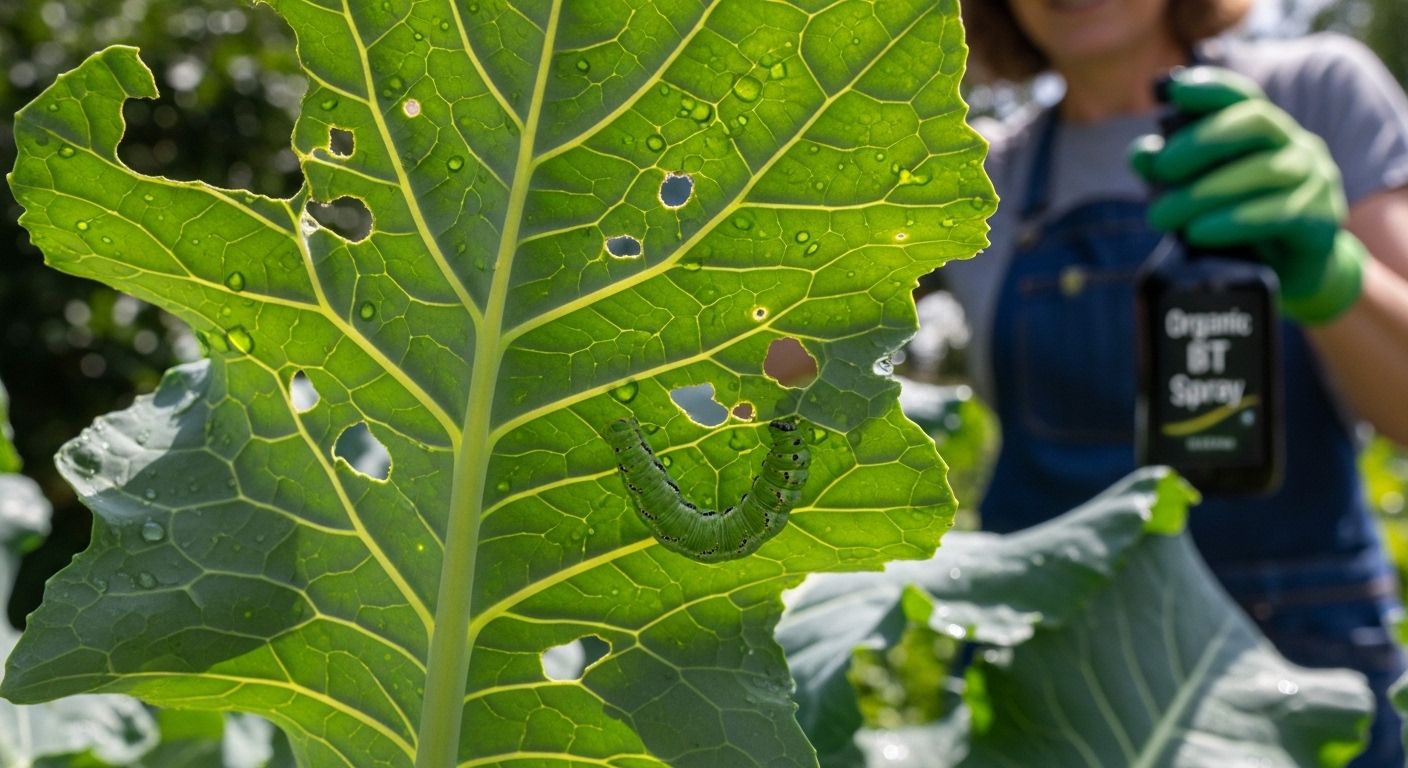
Why do cabbage moths love your late spring broccoli more than life itself?
It’s not personal; it’s chemical. The magnetic pull your prize-winning kale has on that little white butterfly is a fascinating story of co-evolution. Plants in the Brassicaceae family (cabbage, broccoli, cauliflower, kale, collards, Brussels sprouts, etc.) produce a class of sulfur-containing chemical compounds called glucosinolates.
When a plant cell is damaged—say, by a chewing insect—an enzyme called myrosinase is released. This enzyme cleaves the glucosinolates, breaking them down into highly volatile and toxic compounds like isothiocyanates (the stuff that gives mustard and wasabi their pungent kick). For most insects, this chemical bomb is a powerful deterrent. It screams, “Eat somewhere else!”
But the imported cabbage worm is a specialist. Over millennia, it has developed a unique biochemical superpower. A specific protein in its gut, called nitrile-specifier protein (NSP), allows it to defuse the glucosinolate bomb. Instead of the toxic isothiocyanates being formed, the caterpillar redirects the chemical reaction to produce less harmful simple nitriles.
This evolutionary masterstroke turned a potent defense mechanism into a dinner bell. The female Cabbage White butterfly can detect the specific glucosinolates released by brassica plants from a distance. These chemical cues are an unambiguous signal that she has found the perfect nursery for her offspring. She lays her eggs, and when the larvae hatch, the very compounds meant to protect the plant now act as a powerful feeding stimulant, encouraging them to eat more. Your broccoli isn't just food; it's the chemically perfect, five-star restaurant for cabbage worms.
Does the legendary Bacillus thuringiensis (Bt) really work on cabbage worms?
If there’s a silver bullet in the organic gardener’s arsenal against caterpillars, it’s Bacillus thuringiensis, or Bt. This isn’t a chemical pesticide; it’s a naturally occurring soil bacterium that acts as a potent and specific pathogen for certain insects. And for cabbage worms, it’s the stuff of nightmares.
Here’s the scientific breakdown of how it works:
- Specificity is Key: There are many strains of Bt, each targeting a different group of insects. For cabbage worms (and other lepidopteran larvae like tomato hornworms), the specific strain you need is Bacillus thuringiensis* subsp. *kurstaki, commonly abbreviated as Btk.
- Ingestion is Required: Btk is not a contact poison. The caterpillar must eat a leaf that has been sprayed with the bacteria. This is a crucial point—spraying the worm directly does nothing.
- The Alkaline Gut: The magic happens inside the caterpillar's highly alkaline midgut (a pH of 9.5-11.0, vastly different from our acidic stomachs). In this environment, the inactive protein crystals (Cry proteins) produced by the Btk bacteria dissolve.
- Activation and Destruction: Once dissolved, the caterpillar's own gut enzymes cut the proteins into smaller, toxic fragments. These fragments bind to specific receptors on the gut wall, punching holes in the cell membranes. This paralyzes the gut, and the caterpillar stops feeding almost immediately.
- The Final Blow: The gut wall breaks down, allowing the gut contents and the Btk bacteria themselves to spill into the caterpillar's body cavity, causing a fatal septicemia (blood poisoning). The worm dies within 2-3 days.
Why Btk is a Top-Tier Organic Choice:
- Safety: Btk is harmless to humans, pets, birds, fish, and beneficial insects like bees and ladybugs because they lack the alkaline gut and specific gut receptors needed to activate the protein toxin.
- Effectiveness: It works quickly to stop damage, even if the pest takes a couple of days to die fully.
- OMRI Listed: Most Btk products are listed by the Organic Materials Review Institute (OMRI), making them suitable for certified organic gardening.
Application Tips for Maximum Efficacy:
- Spray Thoroughly: Cover all leaf surfaces, especially the undersides where young worms hide.
- Use a Surfactant: Add a drop of natural soap or a commercial sticker-spreader to your sprayer. This helps the Btk solution adhere to the waxy leaves of brassicas.
- Time it Right: Btk degrades in sunlight (UV radiation). Apply it in the late afternoon or on an overcast day for best results.
- Reapply: It doesn't last forever. Reapply every 7-10 days during periods of heavy moth activity or after a heavy rain.
How do you physically exclude the 'White Butterfly' with floating row covers?
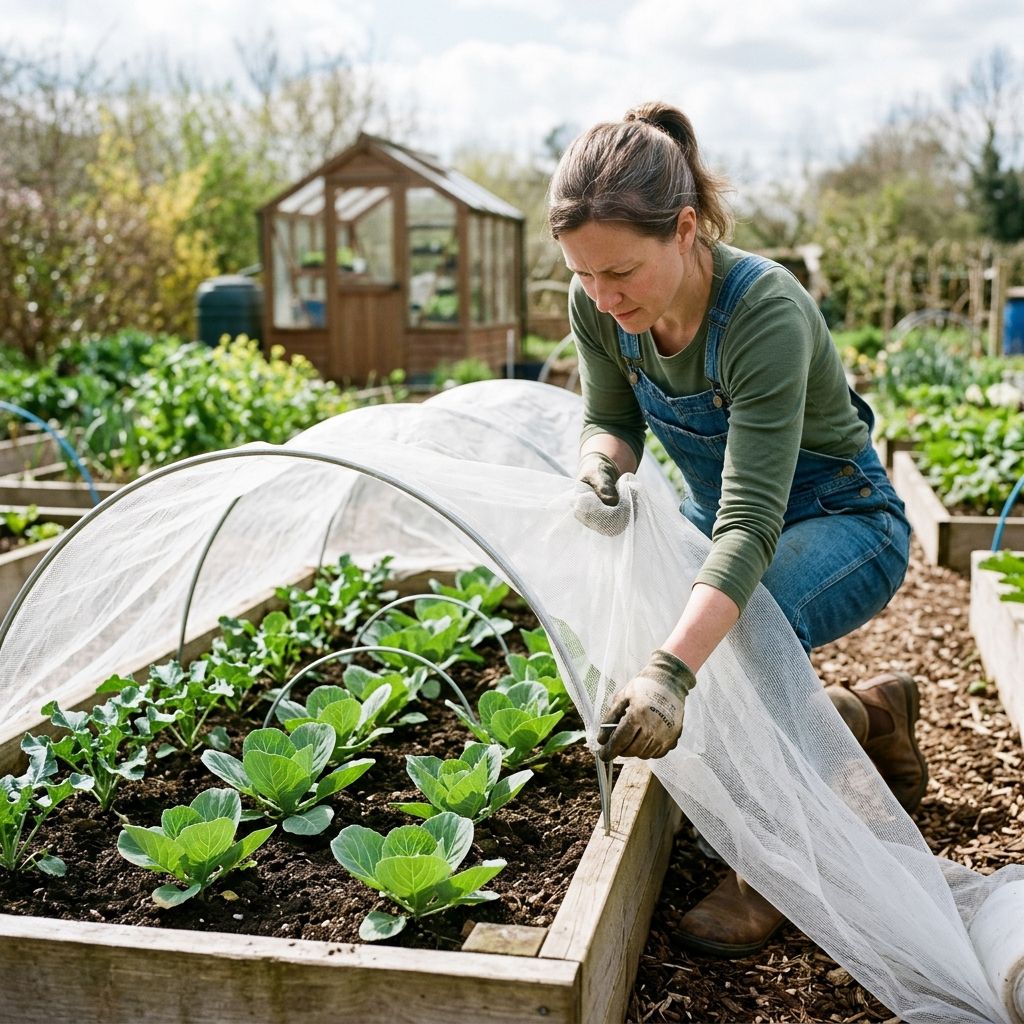
Sometimes the best offense is an impenetrable defense. If the butterfly can't land, she can't lay. This is the simple, brilliant principle behind floating row covers. This method is 100% effective when done correctly and is a cornerstone of organic pest management, especially for those who want to avoid sprays of any kind.
Choosing the Right Material: You're not looking for a heavy frost blanket. You need an insect barrier or lightweight summer row cover. These are typically made of spun-bond polypropylene and are designed to let in maximum light (85-95%) and water while being woven tightly enough to block pests.
- Product Examples: Agribon AG-15 or AG-19, ProtekNet, or similar brands.
- Mesh Size: Ensure the mesh is fine enough to exclude the Cabbage White butterfly. A standard insect barrier is more than sufficient.
The Non-Negotiable Rules of Row Covering:
- Install EARLY: This is the most common mistake. The cover must be in place before the first Cabbage Whites appear in your area. If you cover your plants after they've already been visited, you're just trapping the eggs and larvae inside with their own private buffet. Check your local extension service for flight times or simply install the cover immediately after planting your seedlings. Our guide on how to grow cabbage with no-till methods is a great starting point for timing your planting.
- Use Hoops: Do not drape the fabric directly on the plants. This can abrade the leaves, trap heat, and still allow a determined butterfly to lay eggs through the fabric where it touches a leaf. Use hoops made of PVC, bent electrical conduit, or heavy-gauge wire to create a low tunnel. This keeps the fabric elevated, improves airflow, and allows the plants to grow unhindered.
- Seal the Edges—Completely: Cabbage moths are persistent. A small gap is an open invitation. Bury the edges of the fabric with at least 3-4 inches of soil. Alternatively, use sandbags, rocks, or landscape staples every couple of feet to weigh the edges down securely. Pay special attention to the ends of the row.
Row covers offer additional benefits, too. They can protect plants from harsh sun, driving rain, and even deter other pests like flea beetles. For gardeners in cooler climates, they can function similarly to the structures discussed in our guide to DIY cold frames, providing a slight warming effect.
What are the most effective organic 'home remedies' that actually have scientific backing?
While the internet is awash with dubious claims about everything from garlic spray to cornmeal, only a few so-called “home remedies” have robust scientific evidence supporting their use in a garden setting. Let’s separate the science from the folklore.
Effective, Science-Backed Options:
Neem Oil: This is a powerhouse, but it's often misunderstood. The primary active ingredient is Azadirachtin. It is NOT a contact killer. Instead, it works in several brilliant ways:
- Anti-feedant: It makes the leaves taste bad, deterring further feeding.
- Insect Growth Regulator (IGR): When a young larva ingests it, Azadirachtin interferes with the insect's hormone system, preventing it from molting properly. It gets stuck in its current larval stage and eventually dies.
- Oviposition Deterrent: A coating of neem oil can discourage adult butterflies from laying eggs on the leaves.
- How to Use: Look for cold-pressed neem oil with a stated Azadirachtin percentage. Mix with water and a mild emulsifier (like natural soap) and apply thoroughly. Do not apply in direct sun or when temperatures are above 90°F (32°C) to avoid leaf burn.
Spinosad: Like Bt, this is a product derived from a soil bacterium (Saccharopolyspora spinosa). It’s a neurotoxin that is highly effective against caterpillars. It works via ingestion and contact and is faster-acting than Btk. However, it is toxic to bees when wet, so it's critical to spray only in the late evening when bees are not active, and never spray on open blossoms.
Insecticidal Soap: These are not dish soaps. They are specifically formulated potassium salts of fatty acids. They work on contact by dissolving the waxy outer layer (the cuticle) of soft-bodied insects like very young cabbage worm larvae, causing them to dehydrate and die. This is only effective on the smallest worms and requires direct contact, making it less practical for larger infestations.
What Generally Doesn't Work (or Lacks Evidence):
- Dish Soap Sprays: While a tiny amount of soap is a good surfactant, a strong dish soap solution can strip the waxy cuticle from your plant leaves, causing more harm than good.
- Garlic and Pepper Sprays: These are repellents at best. They may deter some feeding temporarily, but they wash off easily and do not kill the pests. Their effectiveness is highly inconsistent.
- Cornmeal or Flour: The theory is that worms eat it, swell up, and explode. There is no scientific evidence to support this claim. They can digest it just fine.
For a broader look at organic pest strategies, our article on controlling aphids naturally covers many of the same principles of using safe, targeted interventions.
How can you use companion planting to confuse the cabbage moth's visual targeting?
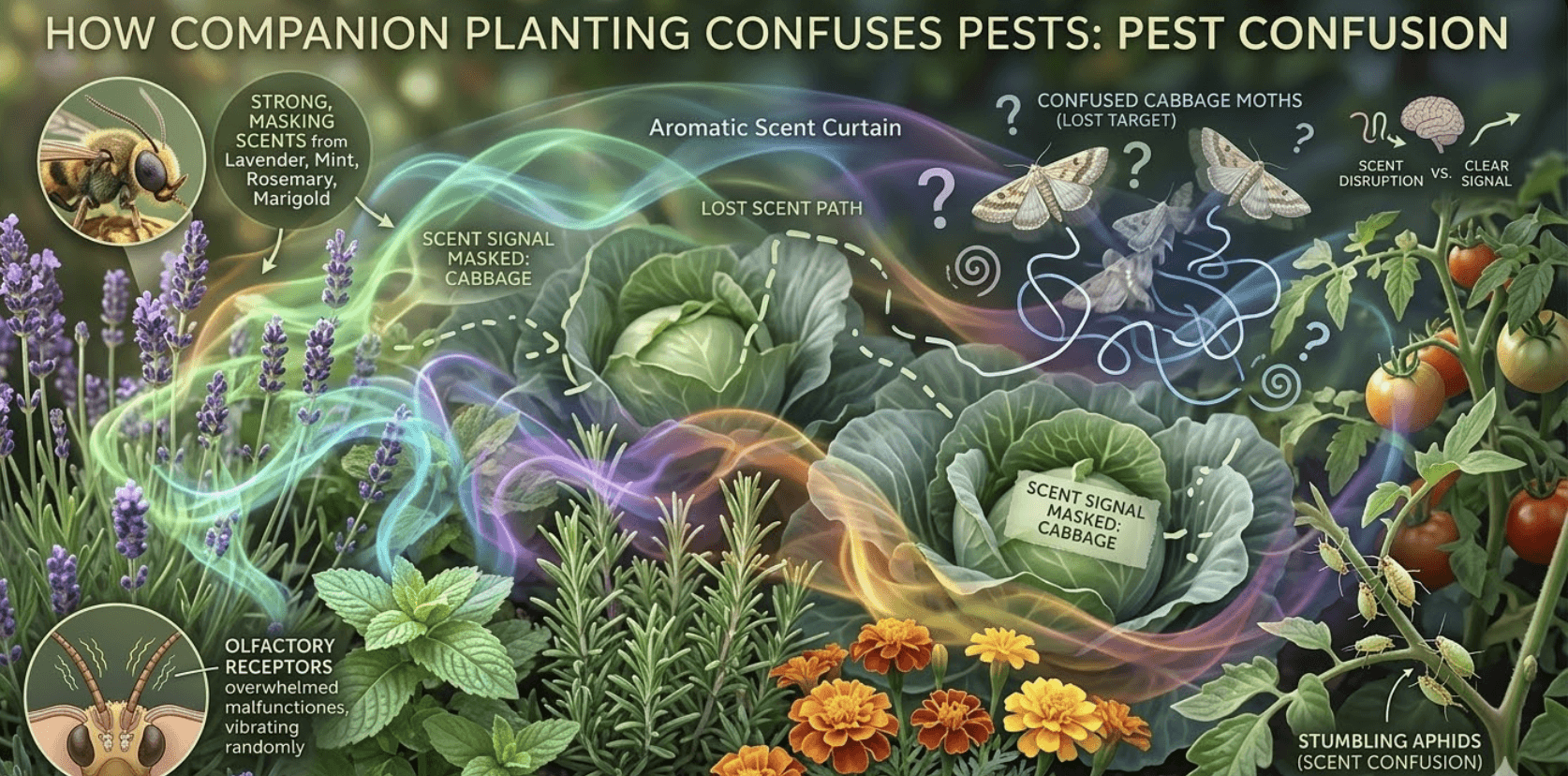
Companion planting is more than just garden folklore; it’s a strategy rooted in the ecological science of pest management. For the Cabbage White butterfly, it's about disrupting the two primary senses it uses to find a host plant: sight and smell. By turning your brassica bed from a monoculture buffet into a diverse polyculture, you create sensory chaos. You can explore many combinations using our interactive Companion Visualizer tool.
Mechanisms of Disruption:
- Visual Camouflage: The butterfly identifies its target by recognizing a large, unbroken patch of the right shape and color. Interplanting your cabbages with plants of a different color, shape, and height—like the reddish leaves of a loose-leaf lettuce or the feathery fronds of carrots—breaks up this silhouette. The brassica essentially becomes hidden in plain sight.
- Olfactory Masking: Strong-smelling herbs like thyme, rosemary, dill, mint, and chamomile release volatile organic compounds (VOCs). These powerful aromas can mask the glucosinolate signals that the brassicas emit, effectively making your garden “smell” wrong to the prospecting butterfly.
Advanced Intercropping Science: Light Competition and Yield
When we intercrop, we must consider how plants compete for resources, especially light. We can model this using the Beer-Lambert Law, which describes light attenuation through a canopy:
I = I_0 * exp(-k * LAI)
Where:
Iis the light intensity at a certain depth in the canopy.I_0is the initial light intensity at the top of the canopy.kis the light extinction coefficient (a value specific to the plant's leaf angle and shape).LAIis the Leaf Area Index (the total leaf area per unit of ground area).
By planting a taller, sparser crop like trellised peas next to a shorter, sun-loving brassica, you can manipulate the LAI and k values to allow sufficient light to reach the brassica while still providing visual disruption. For a deep dive into these concepts, check out the science of companion planting and natural pest deterrence.
| Companion Canopy LAI | % Light Transmission to Brassicas | Potential Effect |
|---|---|---|
| 0.5 (e.g., young dill) | ~85% | Minimal light impact, good olfactory masking. |
| 1.5 (e.g., mature lettuce) | ~50% | Significant visual break-up, may slightly slow growth. |
| 3.0 (e.g., dense bush beans) | ~15% | Too much shade, will likely reduce brassica yield. |
Measuring Success with Land Equivalent Ratio (LER)
How do we know if this is better than just planting two separate blocks? We use the Land Equivalent Ratio (LER). It tells you if the intercropped system is more productive than the monoculture systems.
LER = (Y_inter_cropA / Y_mono_cropA) + (Y_inter_cropB / Y_mono_cropB)
- If LER > 1, the intercropping system is more productive.
- If LER = 1, there is no difference.
- If LER < 1, the monoculture is more productive.
For example, if you get 80% of your normal broccoli yield and 60% of your normal lettuce yield from the same plot, your LER is 0.80 + 0.60 = 1.4. You have achieved 140% of the productivity of the same land area—all while confusing pests! A detailed review of the best plant neighbors for brassicas can provide more specific pairings.
When is the precise biological window to apply organic sprays for maximum impact?
Timing is everything. Spraying a massive, well-fed caterpillar with Btk is far less effective than targeting its younger, more vulnerable siblings. To achieve maximum impact with minimum intervention, you need to think like an entomologist and target the weakest link in the pest’s life cycle.
Target: First & Second Instar Larvae
The most vulnerable stage of the cabbage worm is right after it hatches (first instar) and after its first molt (second instar). During this period, they are tiny, their feeding is minimal, and they are highly susceptible to organic insecticides like Btk and Spinosad.
- Why not older larvae? A large, fifth-instar larva is a voracious eating machine. It can consume many times its own body weight in a day. While a heavy dose of Btk will eventually kill it, it will do a lot of damage in the meantime. Furthermore, its larger size means it can often tolerate a higher dose of toxins.
- Why not eggs? Most organic sprays, including Btk, are not ovicidal, meaning they don't kill the eggs.
Methods for Precision Timing:
Scouting and Biofix: The most reliable method is direct observation. The “biofix” is the first date you consistently see the adult Cabbage White butterflies flitting around your brassicas. Mark this on your calendar. You can expect eggs to hatch and tiny larvae to appear 3-7 days later, depending on the temperature. This is your cue to act. Start scouting the undersides of leaves for the tell-tale yellow, bullet-shaped eggs.
Growing Degree Day (GDD) Models: This is a more advanced technique used by commercial growers but is accessible to dedicated home gardeners. GDD models use daily temperature data to predict insect development stages. The formula is:
GDD = ((Max Temp + Min Temp) / 2) - Base TempThe base temperature for Pieris rapae is around 50°F (10°C). By accumulating the daily GDD values after the biofix, you can predict when egg laying, hatching, and subsequent instars will occur with high accuracy. For example, the first eggs might be laid after accumulating 50-75 GDD. The first hatch might occur around 100 GDD. This data allows you to prepare your sprayer before the damage even starts. It's a key component of the proactive approach you'll find in our comprehensive Garden Planning Tool.
No matter which method you use, the principle is the same: Spray when the worms are small. A proactive spray shortly after observing peak butterfly activity is far more effective than a reactive spray after you find big holes in your kale.
How do you inspect and handpick cabbage worms without losing your mind?
For small gardens, handpicking is a surprisingly effective—and strangely satisfying—method of control. It costs nothing, requires no special equipment, and ensures that you are intimately aware of your plants' health. But it can be tedious. Here’s how to do it like a pro.
Mastering the Art of the Hunt:
Know Your Quarry's Hiding Spots: Cabbage worms are masters of camouflage. Their velvety green bodies blend in perfectly with the leaves they are eating. You need to train your eyes to look for them in their favorite spots:
- The Underside of Leaves: This is their primary hiding place, offering protection from the sun and predators.
- Along the Midrib: They often lie perfectly still along the central vein of a leaf.
- In the Heart: For heading brassicas like cabbage and broccoli, they love to nestle deep down in the new, tender growth at the center of the plant.
Look for the Evidence (The Poop): Often, the easiest thing to spot is not the worm itself, but its frass. These are small, dark green to black pellets that look like dirt specks. If you see a collection of frass on a lower leaf, look directly up. The culprit is almost certainly munching on a leaf above that spot.
Establish a Routine: The best time to hunt is in the cool of the early morning or evening when the worms are more likely to be active. Make it a daily ritual for 5-10 minutes. A frequent, quick inspection is more effective than a long, sporadic one.
The Soapy Bucket of Doom: Don't just flick them onto the ground; they'll often find their way back. Carry a small bucket or jar with an inch or two of soapy water. When you find a worm, pick it off and drop it in. The soap breaks the surface tension of the water, and they sink and drown quickly.
Make it a Game: Challenge yourself to see how many you can find in five minutes. Get the kids involved and offer a bounty for each one found. Listen to a podcast or music. Turning the chore into a mindful or competitive activity can make it far more enjoyable. Remember, every worm you remove is dozens of future holes you've prevented.
Expert Insights & FAQs
Who is this green glutton? Identifying the imported cabbage worm (Pieris rapae).
The imported cabbage worm is the larval stage of the common Cabbage White butterfly (Pieris rapae). These small, velvety green caterpillars have a faint yellow stripe down their back and are notorious for chewing large, irregular holes in the leaves of brassica plants like cabbage, broccoli, kale, and collards.
Why do cabbage moths love your late spring broccoli more than life itself?
Cabbage moths are irresistibly attracted to brassicas due to chemical compounds called glucosinolates. While these sulfur-containing molecules give broccoli and kale their characteristic bitter flavor and act as a defense against generalist pests, the cabbage worm has specifically evolved to use them as a powerful feeding and egg-laying stimulant.
Does the legendary Bacillus thuringiensis (Bt) really work on cabbage worms?
Yes, Bacillus thuringiensis (Bt) is exceptionally effective against cabbage worms. Specifically, the kurstaki strain (Btk) produces protein crystals that, when ingested by the caterpillar, dissolve in its alkaline gut and paralyze its digestive system. The worm stops feeding within hours and dies in a few days.
How do you physically exclude the 'White Butterfly' with floating row covers?
Floating row covers create an impenetrable physical barrier that prevents Cabbage White butterflies from landing on your brassicas to lay eggs. Use a lightweight, insect-barrier fabric, drape it over hoops to keep it off the plants, and securely anchor the edges with soil, rocks, or staples to eliminate any gaps.
What are the most effective organic 'home remedies' that actually have scientific backing?
Beyond Bt, scientifically-backed organic remedies include Neem oil, whose active compound azadirachtin acts as an anti-feedant and growth regulator. Spinosad, another microbial insecticide, is highly effective but can impact pollinators if sprayed on open flowers. Insecticidal soaps work on contact by dissolving the larva's outer cuticle.
How can you use companion planting to confuse the cabbage moth's visual targeting?
Companion planting, or intercropping, confuses cabbage moths by breaking up the solid block of green that they use as a visual cue. Planting aromatic herbs like thyme or dill provides olfactory camouflage, while interplanting with visually distinct plants like lettuce or onions creates a confusing patchwork that makes it harder for the butterfly to find its target.
When is the precise biological window to apply organic sprays for maximum impact?
The most effective window to apply organic sprays like Btk or Neem is when cabbage worm larvae are young and small (first and second instars), typically 3-5 days after you see adult butterflies consistently flying. These young worms are more vulnerable and have not yet caused significant damage. Scout for tiny eggs and worms regularly.
How do you inspect and handpick cabbage worms without losing your mind?
To efficiently handpick cabbage worms, inspect your brassicas in the morning or evening. Systematically check the undersides of leaves, along the central vein, and deep within the new growth at the plant's center. Look for their dark green droppings (frass) as a clue to their location. Drop them into a bucket of soapy water.
Johnnie McCormick
Zone 7b/8a - North Central Alabama
Johnnie McCormick is a gardening hobbyist and the founder of My Garden Spot. Raised in north-central Alabama, his passion for gardening began in his youth. In 2008, he established a large market garden, teaching himself high-yield growing methods. In the years since, he has operated seasonal seedling sales for transplants, specializing in heirloom tomatoes, peppers, eggplants, decorative ground covers like Ajuga (Bugleweed), marigolds, nasturtiums, and fresh kitchen-window herb arrangements (basil, cilantro). Today, he gardens in the hills between Birmingham and Jasper, Alabama (Zone 7b/8a), sharing practical, community-focused gardening resources.
Verified Authoritative Citations & References
In alignment with our strict E-E-A-T research and verification guidelines, this guide cross-references data from the United States Department of Agriculture (USDA) and Cooperative Extension Service programs.
- Cornell Cooperative Extension: Home Vegetable Gardening Guide and vegetable variety recommendations. gardening.cals.cornell.edu
- Penn State Extension: Master Gardener Manual and companion planting matrices. extension.psu.edu
- Alabama Cooperative Extension System (ACES): Raised bed construction plans and regional seed planting calendars. aces.edu
- USDA NRCS: Cover crops and biological soil health guidelines. nrcs.usda.gov
Please log in to view comments.