Corporate CSA Partnerships: Setting up Employer-Sponsored Wellness Shares

How Do You Set Up Corporate CSA Partnerships and Employer-Sponsored Wellness Shares?
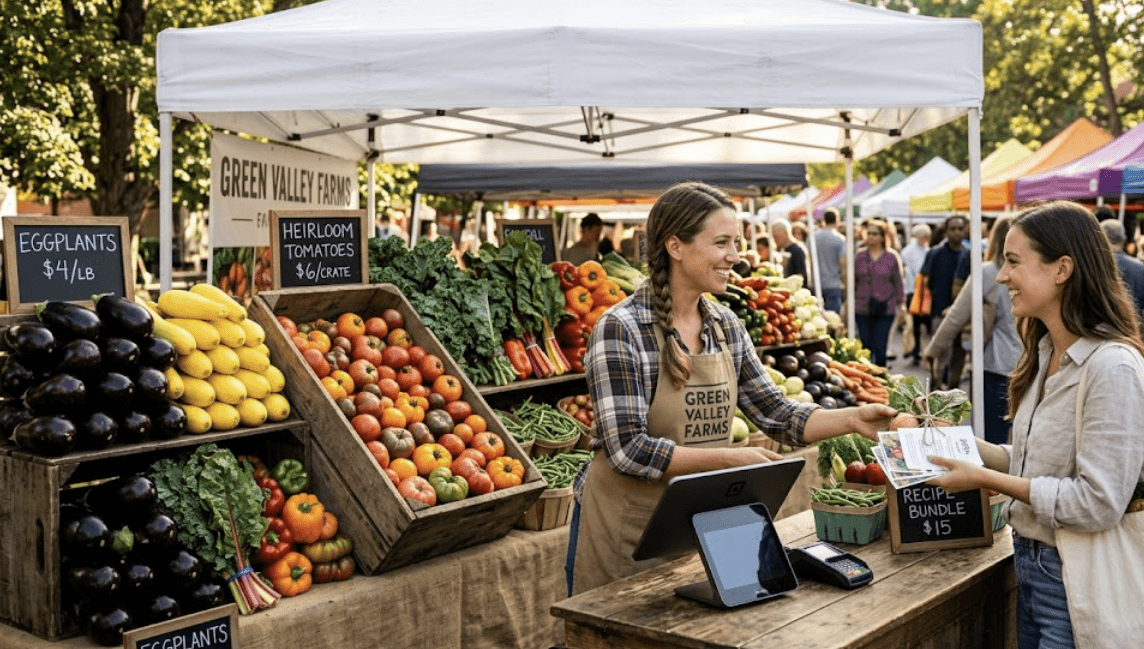
The traditional Community Supported Agriculture (CSA) model and the weekly farmers' market are the historical lifeblood of the small-scale regenerative farm. However, for a farm looking to scale operations, these direct-to-consumer avenues present significant logistical bottlenecks.
Managing 100 individual families in a traditional CSA requires managing 100 different payment plans, fielding 100 different emails about vacation holds, and orchestrating massive, chaotic weekend pickup events. Similarly, standing at a farmers' market for 8 hours on a Saturday requires massive labor hours with absolutely zero guarantee of sales if it rains.
To achieve true financial sustainability and operational efficiency, advanced market farms are evolving into the B2B (Business-to-Business) space through Corporate CSA Partnerships. By tapping into the massive, pre-existing infrastructure of corporate HR wellness programs, a farm can secure guaranteed, upfront capital while streamlining their entire delivery process. This guide details how to structure, pitch, and execute a flawless Employer-Sponsored Wellness Share.
1. The Value Proposition: Why Corporations Care
You are not selling vegetables to a corporation; you are selling a solution to their Human Resources department. To successfully pitch a Corporate CSA, you must understand the metrics that modern HR directors are judged by: employee retention, healthcare costs, and workplace culture.
The Wellness Budget
Medium-to-large corporations (500+ employees) have dedicated annual "Wellness Budgets." Historically, these budgets were spent on discounted gym memberships or bringing a massage therapist into the breakroom once a year. However, corporate wellness is shifting heavily toward nutritional intervention.
- The Pitch: A weekly box of hyper-local, organic vegetables delivered directly to the office is a highly visible, incredibly popular employee perk. It tangibly demonstrates that the company is invested in the long-term health of its workforce.
The Subsidized Share Model
The most successful Corporate CSAs operate on a subsidized model, drastically lowering the barrier to entry for the end consumer (the employee).
- The Split: A typical arrangement involves the corporation subsidizing 30% to 50% of the CSA share cost using their wellness budget, while the employee pays the remainder via an automated payroll deduction.
- The Result: An employee who might hesitate to spend $600 upfront for a traditional CSA will enthusiastically sign up when the company covers half the cost and the rest is deducted invisibly from their paycheck at $15 a week.
2. Logistical Superiority: The Centralized Drop
The primary advantage of the Corporate CSA for the farmer is the total elimination of decentralized logistics.
The Single-Point Delivery
Instead of driving a box truck to 4 different neighborhood drop points or managing a chaotic on-farm pickup event, the farm executes a single, massive delivery.
- The Drop: On Tuesday afternoon at 3:00 PM, the farm truck backs up to the corporate loading dock. 100 pristine, standardized CSA boxes are unloaded directly into the company breakroom or a designated cool lobby space.
- The Handoff: The farm's responsibility ends the moment the boxes hit the tables. The internal distribution (employees coming down from their cubicles to grab their boxes before commuting home) is entirely managed by the company's HR coordinator.

Reusable Infrastructure
Because the delivery location is fixed and secure, the farm can utilize high-quality, reusable infrastructure.
- Instead of using disposable waxed cardboard boxes that cost $3 each and end up in a recycling bin, the farm can invest in durable, stackable plastic agricultural totes.
- The Swap: When the farm delivers Week 2's full totes, they simply collect the empty totes from Week 1 that the employees returned to the breakroom. This closed-loop system saves thousands of dollars in packaging costs over a season.
3. Structuring the Partnership: The Service Level Agreement
A Corporate CSA is a B2B transaction and requires a formal, legally binding Service Level Agreement (SLA). Handshake agreements are insufficient when dealing with corporate accounting departments.
The Corporate Champion
To bypass the bureaucratic red tape of a large company, you must identify a "Corporate Champion." This is an internal employee—often the HR Director, the Sustainability Officer, or simply a highly enthusiastic executive—who loves local agriculture and is willing to advocate for your farm in board meetings. You cannot cold-call a corporate switchboard; you must network your way to the Champion.
Essential Clauses in the SLA
Your contract with the corporation must explicitly outline the responsibilities of both parties.
- Payment Terms: The corporation must agree to remit the total cost of all shares (both the subsidized portion and the employee payroll deductions) to the farm in a single, upfront lump sum before the first seed is planted in the spring. This is non-negotiable.
- Delivery Window: Establish a strict, 1-hour delivery window. (e.g., "Deliveries will occur every Tuesday between 2:00 PM and 3:00 PM").
- The "Abandoned Box" Policy: Employees will inevitably call in sick or go on vacation. The farm is not responsible for uncollected boxes. The SLA must state that any boxes remaining in the breakroom at 6:00 PM on delivery day will be donated to a local food bank by the corporate coordinator, or placed in the communal staff kitchen.
4. Scaling Production to Meet Corporate Demand
Securing a contract for 100 shares is a massive victory, but it completely alters the production scaling of the farm. If you fail to deliver volume and quality to a corporate client, you will lose the contract the following year.
The Need for Standardization
When packing 100 boxes simultaneously, standardization is the difference between profit and chaos.
- You must utilize 30-inch bio-intensive rows to calculate exact yields.
- You cannot rely entirely on a Micro-CSA backyard model to fulfill a 100-member corporate account; you will likely need to lease additional acreage or utilize heavy-duty season extension via a polycarbonate greenhouse to guarantee early spring volume.
Consistency Over Diversity
In a traditional CSA, members are often adventurous foodies who love receiving bizarre heirlooms like Kohlrabi or Celeriac. Corporate CSA members are generally average consumers who just want healthy food for their families.
- The Baseline: Focus your production heavily on highly recognizable, universally loved staples: Carrots, Romaine Lettuce, Cherry Tomatoes, Sweet Peppers, and Broccoli.
- The "One Weird Thing" Rule: Limit unusual vegetables to one item per box. If you include Fennel, do not also include Rutabaga in the same week. Overwhelming a corporate employee with vegetables they don't know how to cook will result in high churn rates the following season.
5. Engaging the Workforce: Farm-to-Corporate Education
The retention rate of a Corporate CSA is directly tied to how connected the employees feel to the farm. If they view you simply as a vegetable delivery service, they will eventually cancel and go back to the grocery store.
The Weekly Digital Newsletter
Every delivery must be accompanied by an engaging, beautifully formatted email newsletter sent to the internal corporate mailing list.
- Field Notes: Include photos of the crew harvesting the exact vegetables they are receiving that day. Discuss the weather, the organic pest management strategies you are employing, and the reality of farm life.
- The Recipe Engine: Provide three simple, 20-minute recipes utilizing the specific ingredients in that week's box. Corporate employees are time-poor; you must teach them how to process the food quickly.
On-Farm Corporate Events
The ultimate retention tool is bringing the corporation to the farm.
- Offer to host the company's summer picnic or a Friday afternoon team-building retreat at the farm.
- Walking through the rows, seeing the soil, and pulling a carrot directly from the earth creates a profound psychological bond between the employee and your business. They are no longer buying vegetables; they are investing in their farm.

---\n
6. Navigating Insurance, Liability, and Legal Protections for B2B Delivery
Entering a B2B arrangement inherently elevates your risk profile compared to residential direct-to-consumer sales. When your farm vehicle enters a corporate loading dock, or when an employee consumes raw agricultural products sourced directly from your fields on company property, the legal dynamics shift considerably. Relying solely on a basic general liability policy is often insufficient for comprehensive protection.
Upgrading Your Commercial Auto and Liability Coverage
Most corporate entities will require proof of insurance before signing a Service Level Agreement (SLA). They typically demand a Certificate of Insurance (COI) that explicitly names their corporation as an "Additional Insured."
- Commercial Auto: If you are using a personal vehicle to deliver 100 boxes to a corporate office park, your personal auto insurance will likely deny coverage if an accident occurs on their premises during business operations. You must upgrade to a commercial auto policy specifically rated for delivery.
- Product Liability: While foodborne illness is incredibly rare in regenerative agriculture compared to industrial factory farming, the risk remains. If a wave of E. coli or Listeria is traced back to your unwashed salad greens and it sickens an entire corporate department, the financial fallout could bankrupt the farm. Product liability insurance is non-negotiable.
Hold Harmless Agreements
Beyond insurance, the SLA must contain a "Hold Harmless" or indemnification clause. This legal language protects the farm if an employee claims they were injured while moving heavy CSA totes or handling the produce. It essentially states that once the farm safely delivers the product to the designated drop zone, the corporation assumes responsibility for internal distribution and any incidents arising from it. Utilizing professional CSA management software platforms can sometimes help track delivery confirmations and digital sign-offs, creating a vital paper trail for liability defense.
7. Customizing the Crop Plan for a Corporate Audience
The demographic profile of a corporate office is vastly different from the demographic of a Saturday morning farmers' market. Market shoppers are typically culinary enthusiasts willing to dedicate hours to food prep. Conversely, corporate employees are often exhausted, time-poor professionals who need dinner on the table in under 30 minutes.
The "No-Prep" Philosophy
To maximize retention rates for employer-sponsored shares, you must pivot your crop planning toward high-convenience, low-prep vegetables.
- Prioritize Snacking Crops: Cherry tomatoes, sugar snap peas, baby carrots, and mini sweet peppers are incredibly popular because they can be eaten raw at a desk during the workday.
- Washed and Ready: If your farm infrastructure allows, providing triple-washed, spun-dry salad greens in biodegradable clamshells is a massive selling point. The perceived value of "ready-to-eat" greens is astronomically higher than a gritty head of lettuce that requires aggressive washing.
Structuring the Seasonal Arc
When starting a CSA farm, farmers often struggle with the "hungry gap" in early spring. Corporate clients are less forgiving of a box that only contains radishes and arugula for three consecutive weeks.
- Aggressive Season Extension: You must utilize high tunnel ventilation and active heating to push early crops like spinach, carrots, and even early greenhouse cucumbers into the May boxes.
- Strategic Storage Crops: In the fall, avoid overwhelming the box with massive winter squashes that require an hour to roast. Instead, focus on easily manageable storage crops like cured garlic, sweet potatoes, and high-quality storage onions that form the flavor base of quick weeknight meals.
8. Integrating Technology: Administrative Efficiency
Managing a corporate account manually is a recipe for administrative burnout. The entire appeal of the B2B model is streamlined logistics, but if you are manually tracking employee payroll deductions on a spreadsheet, you have defeated the purpose.
Choosing the Right Software
Not all CSA software is built to handle subsidized B2B accounts. You need a platform that allows for "split payments" or "corporate subsidies."
- For example, the platform must allow the HR coordinator to input a blanket 50% discount code, while simultaneously capturing the employee's credit card for the remaining 50% on a recurring weekly basis.
- As discussed in our guide on drafting your CSA agreement, the software must also handle vacation holds seamlessly. If an employee is on a business trip, the software should automatically pause their box and potentially divert that produce to a corporate donation bin, rather than forcing the farmer to manually adjust the pack list. \n
9. Measuring Success: Key Performance Indicators (KPIs)
To secure the corporate contract year after year, you must provide the HR department with actionable data that proves the ROI of their wellness budget expenditure. You cannot simply say, "The vegetables were good." You must speak their language.
Utilization and Engagement Metrics
At the end of the season, provide a comprehensive "Impact Report" to your Corporate Champion.
- Participation Rate: Track the percentage of eligible employees who signed up for the share. If the company has 500 employees and 150 signed up, a 30% penetration rate is a phenomenal success story for a wellness initiative.
- Survey Data: Conduct an end-of-season digital survey. Ask simple, quantifiable questions: "Did this CSA help you eat more vegetables weekly?" and "Do you feel this program is a valuable employee benefit?" Presenting the HR director with data showing that 95% of participants felt more valued by the company makes renewing your contract a simple decision for them.
10. Environmental Impact and Corporate Social Responsibility (CSR)
Modern corporations are under intense pressure to demonstrate their commitment to Corporate Social Responsibility (CSR) and environmental sustainability. A partnership with a regenerative, local farm is a massive PR asset for them.
Monetizing Your Ecological Practices
Do not be shy about the ecological benefits of your farming practices. If you utilize deep mulch systems or cover crop termination techniques that sequester carbon and build topsoil, quantify that for the corporation.
- Carbon Offsetting Narratives: Provide the company with marketing materials detailing how their investment in your farm directly supported the sequestration of carbon, the reduction of "food miles," and the preservation of local pollinator habitats.
- The PR Feedback Loop: The corporation will likely use your farm's story in their own annual sustainability reports or recruitment materials. This creates a powerful, symbiotic relationship where your farm's ecological stewardship directly enhances their corporate brand identity.
11. Overcoming the Logistics Hurdle: Final Distribution Mechanics
While delivering pallets of fresh food to a corporate office sounds amazing, the actual internal logistics can be an utter disaster if poorly managed by the corporate client. If employees are expected to rummage through a giant pallet of loose produce to "build their own box" in the lobby, the system will fail.
Pre-Packed vs. Market Style
In a corporate setting, "Market Style" (free choice) CSAs are incredibly difficult to manage because they require a farm staff member to stay on-site for hours, managing the display.
- Pre-Packed Standardization: The only scalable way to run a corporate CSA is with pre-packed, standardized boxes. Every box must be identical. If employee A gets a slightly larger tomato than employee B, it can cause unnecessary friction in an office environment.
- The Grab-and-Go Kiosk: Work with the corporate facilities team to set up a dedicated "Grab-and-Go" area. This could be a section of shelving in the cafeteria. The key is that it requires absolutely zero supervision from the farm staff once the initial delivery is complete.
12. Corporate Subscriptions for Remote Workers
With the rise of hybrid and remote work, many corporations no longer have 100% of their staff in a single centralized office building. How do you integrate these workers into a corporate wellness share?
- Neighborhood Nodes: If a cluster of remote workers lives in the same suburban area, you can establish a localized "Neighborhood Node" drop point, often at a local coffee shop or gym that agrees to host the boxes. The corporation still subsidizes the cost, but the farm routes the delivery to the node.
- Home Delivery Add-on: Some farms charge a premium "Home Delivery" fee, paid directly by the employee, while the corporation still subsidizes the actual cost of the food. This requires sophisticated routing software, but it ensures that remote workers are not excluded from the corporate wellness perk.
13. Securing Long-Term Contracts
The ultimate goal of a Corporate CSA is to secure multi-year commitments.
- The 3-Year Lock: Once you have successfully completed a pilot season and delivered your Impact Report, negotiate for a 3-year contract. Offer the corporation a slight discount on the subsidized portion in exchange for guaranteed volume. This multi-year capital allows the farm to make massive infrastructure investments, such as building new high tunnels or purchasing a larger delivery truck, with complete financial confidence.
\n
14. Scaling Crop Volume: The Transition from Micro-CSA to Enterprise
Once you secure a 3-year lock with a major corporate wellness program, the sheer volume of produce required will fundamentally alter your farm's infrastructure. Supplying 50 families in a suburban neighborhood is drastically different from supplying 300 corporate employees every Tuesday morning. You must aggressively upgrade your cultivation strategies.
Expanding the Footprint
If you are operating on less than an acre, a single corporate contract will likely max out your production capacity.
- Leasing Adjacent Land: Rather than purchasing a new farm, the most capital-efficient way to expand is to lease adjacent pasture from neighbors and immediately deploy silage tarps and occultation to kill the existing pasture grass without tillage. This allows you to rapidly bring new ground into production for bulk staple crops like potatoes and winter squash.
- Standardizing Bed Dimensions: For enterprise-scale production, every single bed must be identical. Moving to standardized 30-inch beds by 100 feet long ensures that your drip irrigation setups and row covers are universally interchangeable, eliminating hours of wasted labor measuring and cutting materials.
Transitioning to Mechanization
Hand-scale tools like the broadfork and the wheel hoe are incredibly efficient for small market gardens, but enterprise scale requires mechanization.
- The BCS Walk-Behind Tractor: The first major capital investment should be a two-wheel walk-behind tractor equipped with a precision rotary plow and a flail mower. This allows a single farmhand to terminate a heavy cover crop and prep 10 beds in the time it would take three people to broadfork them.
- Precision Seeding: Instead of hand-seeding, investing in a multi-row precision seeder ensures perfectly uniform spacing for salad greens, resulting in dense, easily harvestable canopies that choke out weeds and maximize yield per square foot.
15. The Deep Winter Corporate Share: Capitalizing on Season Extension
Most CSAs operate on a 20-week summer model. However, corporate wellness budgets are annualized. If you can provide a "Winter Share," you can capture revenue during the off-season when your cash flow is typically lowest.
Unlocking the Winter Harvest
Corporate employees are accustomed to the abundance of summer tomatoes and peppers, so winter shares require a slight pivot in expectation management.
- Cold-Hardy Greens: By utilizing unheated high tunnels and heavy row covers, you can produce incredibly sweet, frost-kissed spinach, kale, and mache throughout December and January. These deep winter greens often command a premium price because of their exceptional flavor.
- Root Cellar Staples: Integrating long-storing root vegetables like carrots, beets, and turnips provides bulk to the winter boxes. To do this successfully, you must plant these crops in late summer and utilize proper curing and storage techniques so they remain pristine for months.
- Value-Added Partnerships: If your farm cannot produce enough raw vegetable volume in February, partner with other local producers. Including locally milled flour, honey, or ethically sourced eggs (as discussed in value-added add-ons) keeps the corporate boxes full and exciting when field production slows down. \n
Conclusion: The Future of Scalable Agriculture
The Corporate CSA model represents a profound maturation of the local food movement. It acknowledges that while traditional farmers' markets are romantically appealing and excellent for community building, the path to massive ecological impact and true financial viability lies in penetrating the mainstream corporate infrastructure.
By solving a problem for HR directors (employee wellness and retention) and solving a problem for employees (convenient, subsidized access to premium organic food), the regenerative farmer secures the upfront capital and logistical efficiency necessary to build a lasting, generational agricultural enterprise. Through rigorous planning, strategic crop selection, and professional execution, a farm can transform from a struggling weekend venture into a highly profitable, deeply integrated community pillar. \n
Expert Insights & FAQs
What are corporate CSA partnerships and how do employer-sponsored wellness shares function?
Corporate CSA partnerships function as a structured wellness benefit where employers facilitate direct access to farm-fresh food for staff. These programs typically involve a farm delivering shares to a designated workplace area, where the company may subsidize costs to encourage participation, resulting in improved dietary choices and tangible support for local food systems.
What are the direct financial and wellness benefits of corporate CSA partnerships for employers?
Financial benefits include potential tax incentives and reduced insurance premiums through improved employee health metrics. Wellness benefits manifest as increased energy levels, reduced absenteeism, and higher morale. By providing access to nutrient-dense vegetables, companies foster a proactive health culture that reduces long-term healthcare costs and strengthens workplace community bonds.
How do you structure the subsidy and payment models for employer-sponsored farm shares?
Employers can structure subsidies as a flat percentage discount, a fixed dollar amount per share, or a tiered contribution based on salary levels. Payment models often utilize payroll deductions to ensure seamless participation. This financial integration reduces the barrier to entry, making healthy eating a convenient, automated part of the standard compensation package.
What are the logistical requirements for setting up a corporate drop-site at an office location?
Logistical success requires a designated, climate-controlled space for delivery, clear communication channels for distribution, and a streamlined pickup schedule. Ensuring the area is accessible for refrigerated trucks and providing adequate space for sorting boxes prevents bottlenecks. Consistency in delivery times is paramount to maintaining employee satisfaction and produce freshness.
How do you market and promote a corporate CSA program to maximize employee participation?
Maximizing participation requires multi-channel communication including internal newsletters, wellness committee endorsements, and tasting events. Highlight the nutritional benefits of seasonal eating and provide clear guides on what to expect. Using testimonials from participating staff and visual displays of the produce builds excitement and demystifies the farm-to-office connection for new subscribers.
What legal agreements and liability considerations are involved in corporate CSA partnerships?
Legal considerations focus on liability waivers regarding food safety, delivery access agreements, and clearly defined roles between the farm and the employer. Contracts should specify responsibilities for handling potential spoilage, delivery delays, or site-specific accidents. Comprehensive agreements protect both parties and ensure the program runs smoothly throughout the entire growing season.
How do you measure and report the impact of a corporate wellness share program on employee health?
Measuring impact involves tracking participation rates, conducting anonymous health surveys, and monitoring changes in workplace absenteeism. Quantitative data on produce consumption habits compared against pre-program baselines provides a clear ROI. Reporting these findings to stakeholders demonstrates the program's value in fostering a healthier, more engaged, and resilient workforce over time.
What software tools and administrative systems simplify the management of employer-sponsored CSAs?
Management systems should include automated subscription billing, inventory tracking, and delivery scheduling software. Using dedicated CSA management platforms allows for real-time adjustments, automated reminder emails to employees, and detailed reporting for administrators. These tools eliminate manual spreadsheets, reduce human error, and allow for a scalable, efficient program that grows alongside your workforce.
Johnnie McCormick
Zone 7b/8a - North Central Alabama
Johnnie McCormick is a gardening hobbyist and the founder of My Garden Spot. Raised in north-central Alabama, his passion for gardening began in his youth. In 2008, he established a large market garden, teaching himself high-yield growing methods. In the years since, he has operated seasonal seedling sales for transplants, specializing in heirloom tomatoes, peppers, eggplants, decorative ground covers like Ajuga (Bugleweed), marigolds, nasturtiums, and fresh kitchen-window herb arrangements (basil, cilantro). Today, he gardens in the hills between Birmingham and Jasper, Alabama (Zone 7b/8a), sharing practical, community-focused gardening resources.
Verified Authoritative Citations & References
In alignment with our strict E-E-A-T research and verification guidelines, this guide cross-references data from the United States Department of Agriculture (USDA) and Cooperative Extension Service programs.
- USDA Agricultural Marketing Service (AMS): Community Supported Agriculture (CSA) standards and local market surveys. ams.usda.gov
- Penn State Extension: Small Farm Economics, financial planning, and crop pricing research documents. extension.psu.edu
- Cornell Cooperative Extension: Market gardening business planning and local sales guidelines. smallfarms.cornell.edu
- Alabama Cooperative Extension System (ACES): Local food regulations, CSA legal permits, and farm safety standards. aces.edu


Please log in to view comments.