Mastering Succession Planting for Consistent CSA Harvests

How Do You Plan Succession Planting for Consistent Weekly CSA Harvests?
For the professional running a Community Supported Agriculture (CSA) program, consistency is not a goal; it is the fundamental product. Members subscribe with the expectation of a reliable, diverse, and high-quality share of produce each week, regardless of pest pressure, germination failures, or adverse weather. This unwavering demand requires a shift from the passive, hopeful mindset of an amateur gardener to the rigorous, data-driven execution of a logistics manager. The operational backbone of this execution is succession planting. This is not merely the staggered sowing of seeds; it is the calculated, mathematically modeled management of time and space to create a continuous, uninterrupted harvest window that meets precise yield targets. This guide deconstructs the agronomic and logistical complexities of succession planting, providing the exact formulas, scheduling matrices, bed turnover protocols, and variety selection criteria necessary to engineer a flawless and profitable CSA season. We will move beyond anecdotal advice and into the core quantitative principles that separate a struggling operation from a thriving agricultural enterprise, ensuring every CSA box is full and every member is satisfied.
What is succession planting and why is it critical for CSA farm viability?
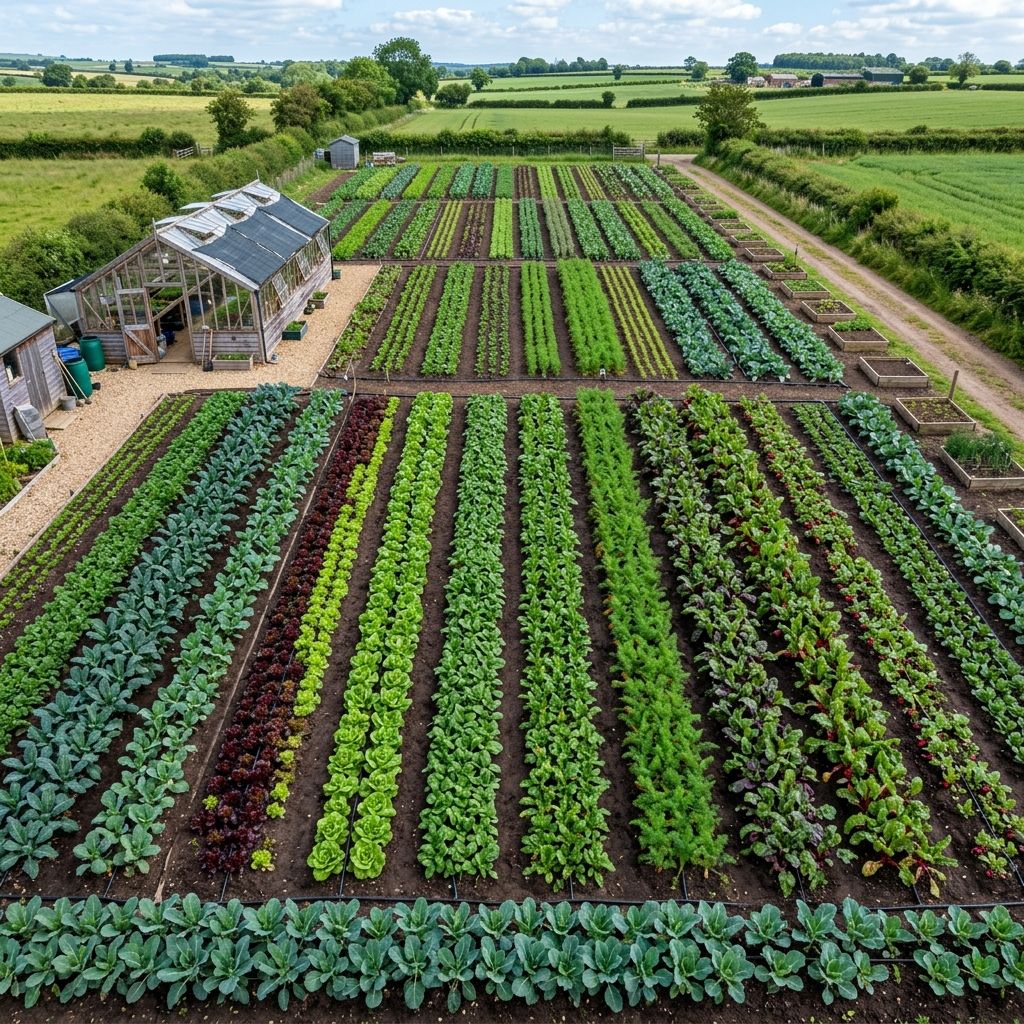
Succession planting is the primary mechanism for maximizing the revenue-generating potential of every square foot of arable land. In a high-intensity market garden or CSA operation, land cannot be viewed as a static resource that produces one crop per season. Instead, it must be managed as a dynamic production line, with each bed foot being a unit of potential weekly income. The viability of a CSA hinges on its ability to deliver a consistent 7-10 item share for a contracted period, typically 18-24 weeks. A single, large planting of lettuce might yield a massive harvest for one week, followed by five weeks of nothing. This "boom and bust" cycle is antithetical to the CSA model.
Succession planting solves this by creating overlapping production cycles. By seeding a new block of carrots every 14-21 days, a farmer ensures that as one block is being harvested, another is sizing up, and a third is just germinating. This creates a steady, predictable flow of product that aligns directly with the weekly fulfillment demands of the CSA. Financially, this is the difference between a single lump-sum payment for a wholesale crop and a steady, reliable cash flow throughout the season. The ultimate goal is to calculate the revenue per bed foot per week, a key performance indicator for farm profitability. A crop that occupies a bed for 12 weeks must generate significantly more revenue than a crop that occupies the same space for four weeks. For a detailed guide on how to calculate this, see our article on how to price CSA shares for profitability.
How do you calculate interval seeding dates using crop maturity metrics?
Calculating your succession schedule is a purely mathematical exercise that must be completed before the first seed is sown. Guesswork leads to gaps in production and unfulfilled CSA shares. The process begins with your target yield and harvest date.
The Core Formula: Backward Planning
- Define Target Harvest Date (THD): The week you need the crop for the CSA box.
- Determine Days to Maturity (DTM): The number of days from transplanting (or seeding for direct-sown crops) to harvest. This is found on the seed packet but must be adjusted for seasonality (see section 4).
- Account for Nursery/Germination Time: For transplants, this is the time spent in the greenhouse (e.g., 28 days for lettuce). For direct-sown crops, it's the germination period (e.g., 7-14 days for carrots).
- Factor in Hardening Off: For transplants, add a 3-7 day period to acclimate seedlings to outdoor conditions. Learn more about preventing transplant shock.
Formula for Transplants:
Seeding Date = THD - (DTM in field + Nursery Time + Hardening Off Period)
Formula for Direct-Sown Crops:
Seeding Date = THD - (DTM from seeding)
The Bed Foot Requirement Formula
Before you can schedule the planting, you must know how much to plant. This is calculated using the bed foot as the standard unit.
Formula: Total Bed Feet = ((Number of CSA Shares x Items per Share) / Yield per Bed Foot) x Safety Factor
- Yield per Bed Foot: This is a critical farm-specific metric you must track. It's the number of marketable units (e.g., bunches of kale, heads of lettuce) harvested from one linear foot of your standard bed width (typically 30 inches).
- Safety Factor: This is a non-negotiable multiplier, typically 1.2 to 1.3 (20-30%). It accounts for inevitable losses from pests, disease, weather events, and germination failure.
Example Calculation: Radishes for a 120-Member CSA
- Target: 120 bunches of radishes for the CSA box in Week 5 (June 1st).
- Yield Data: Your farm data shows you get 2.5 marketable bunches per bed foot.
- Safety Factor: You use 1.25 (25%).
- Bed Feet Calculation:
((120 bunches) / 2.5 bunches per foot) x 1.25 = 60 bed feet - DTM: 'Cherry Belle' radishes are 25 DTM.
- Seeding Date Calculation:
June 1st - 25 days = May 7th. You must direct seed 60 bed feet of radishes on May 7th.
To manage this complexity for dozens of crops over a 24-week season, using a spreadsheet or dedicated software is essential. You can start by building your own schedule with our interactive Garden Planning Tool, which helps automate these calculations.
What are the best crop varieties suited for continuous, sequential plantings?
Variety selection is not about choosing what tastes best; it's about selecting genetic workhorses engineered for performance under intensive cultivation. While heirlooms offer unique flavors, for core succession crops, hybrids often provide the uniformity and reliability that a CSA requires. You can explore the differences in our heirloom vs. hybrid gardening guide.
Key traits to look for in succession varieties:
- Uniformity: Every plant matures at the same time, allowing for a single, efficient harvest of a given block.
- Rapid DTM: Faster turnover means more successions per bed per season, increasing revenue per square foot.
- Bolt Resistance: Critical for summer successions of crops like lettuce, spinach, and cilantro that are prone to premature flowering in heat and long days.
- Disease Resistance: Look for codes on seed packets (e.g., DM for Downy Mildew resistance) to mitigate risks.
Table: Top Crop Varieties for CSA Succession Planting
| Crop | Recommended Varieties | Seeding Method | Avg. DTM | Succession Interval | Key Agronomic Notes |
|---|---|---|---|---|---|
| Head Lettuce | Salanova (Red/Green), 'Coastal Star' (Romaine) | Transplant | 28-35 | 7-10 days | Salanova is a one-cut lettuce, saving significant harvest labor. Extremely uniform. |
| Baby Greens | 'Astro' Arugula, 'Tyee' Spinach | Direct Seed | 21-30 | 7 days | Use a precision seeder like a Jang for high density. Spinach requires careful variety selection for seasonal slots. |
| Carrots | 'Napoli' F1, 'Mokum' F1 | Direct Seed | 55-65 | 14-21 days | Pelleted seed is essential for accurate spacing with a precision seeder. Requires consistent moisture to germinate. |
| Radishes | 'Cherry Belle', 'French Breakfast' | Direct Seed | 22-28 | 7-10 days | Excellent, fast crop to fill gaps. Flea beetle can be an issue; use row cover immediately after seeding. |
| Salad Turnips | 'Hakurei' F1 | Direct Seed | 35-40 | 14 days | Highly uniform, sweet, and reliable. A CSA favorite. Roots and greens are marketable. |
| Beets | 'Boro' F1 (storage), 'Chioggia' (bunching) | Transplant | 50-60 | 21 days | Transplanting via paperpot system significantly reduces weed pressure and ensures a perfect stand. |
| Scallions | 'Evergreen Hardy White', 'Nabechan' F1 | Transplant | 60-70 | 2-3 times/season | Multi-sow 5-7 seeds per cell in a 288-tray. One of the most profitable and in-demand CSA items. |
| Bush Beans | 'Provider', 'Maxibel' (Haricot Vert) | Direct Seed | 50-55 | 21 days | Plant 3-4 successions to ensure a continuous harvest window before plants exhaust themselves. |
How do seasonal temperature changes and day length shift seeding intervals?
Days to Maturity (DTM) is not a fixed number. It is a variable highly dependent on two environmental factors: Growing Degree Days (GDD) and photoperiod. A professional grower must adjust their seeding schedule to account for these predictable seasonal shifts.
The Spring Ramp-Up
In early spring, cool soil temperatures and shorter day lengths mean plant growth is slow. A 28-day radish variety might take 40 days if planted in April. As the days lengthen and solar radiation increases towards the summer solstice (around June 21st in the Northern Hemisphere), plant metabolism accelerates. The DTM for the same radish planted in late May might be exactly 28 days.
The Fall Slide
This is the most critical concept for ensuring a full season of CSA boxes. After the summer solstice, day length begins to decrease. This signals to plants that winter is approaching, and their growth rate slows dramatically. This effect is negligible in July but becomes exponential from late August onward.
If you maintain a consistent 14-day seeding interval for carrots throughout the season, your spring and summer harvests will be two weeks apart. However, two successions seeded 14 days apart in August will be ready for harvest only 5-7 days apart in October. To achieve harvests that are two weeks apart in the fall, you must compress your seeding intervals in late summer.
DTM Adjustment Model (Example for 40°N Latitude):
This rule of thumb helps in adjusting your planned DTM based on the sowing date.
- Sowing Date: July 15 - Aug 1: Add 0-3 days to packet DTM.
- Sowing Date: Aug 1 - Aug 15: Add 5-7 days to packet DTM.
- Sowing Date: Aug 16 - Aug 31: Add 10-14 days to packet DTM.
- Sowing Date: Sept 1 - Sept 15: Add 18-25 days to packet DTM.
- Sowing Date: After Sept 15: Growth slows dramatically. This is the window for planting overwintering crops in high tunnels or with heavy protection. Planning for a winter CSA requires a completely different set of calculations.
To compensate, you must shorten the interval between plantings:
- A carrot succession in June might be seeded every 21 days.
- To get a continuous harvest in the fall, you must seed new successions every 7-10 days in August.
Use our dynamic Planting Calendar to get customized date estimates based on your specific zip code, which automatically accounts for some of these regional environmental factors.
What bed preparation and soil fertility strategies support continuous planting?
Intensive succession planting places immense demands on the soil. Each crop extracts nutrients, and the rapid turnover provides little time for natural recovery. A systematic, efficient approach to bed preparation and fertility is therefore non-negotiable.
The Rapid Bed Flip: A Standard Operating Procedure (SOP)
The goal is to transition a bed from a harvested crop to a newly planted crop in the shortest time possible, often within a few hours. This minimizes weed growth and keeps the production schedule on track.
- Clear Residue (10 min): Immediately after the final harvest, clear the bed. This can be done by flail mowing the residue in place, or by pulling whole plants (e.g., kale stalks) and moving them to the compost pile. Flail mowing is faster and initiates decomposition directly on the bed.
- Occultation (Optional, 24-72 hours): If time permits, cover the bed with a black silage tarp. This warms the soil, encourages the first flush of weeds to germinate and then die from lack of light, and speeds up residue breakdown.
- Aerate (10 min): Use a broadfork to aerate the soil profile. This loosens compaction from the previous crop and foot traffic without inverting soil layers, which preserves soil structure and microbial life.
- Amend (5 min): Apply a balanced amendment based on the needs of the next crop. A standard application might be a 1/2 inch layer of high-quality compost and a balanced, pelleted organic fertilizer (e.g., 4-4-2 or 5-4-3). Heavy feeders like brassicas will require more nitrogen than light feeders like salad greens. Refer to our guide on the science of composting for more detail.
- Prepare Seedbed (10 min): Use a shallow cultivation tool like a power harrow, tilther, or bed rake to incorporate the amendments into the top 1-2 inches of soil, creating a fine, friable tilth perfect for seeding or transplanting.
Nutrient Budgeting for Successions
Do not guess your fertility inputs. A simple nutrient budget can be created by estimating the nutrient removal of each crop.
| Crop Class | Nitrogen (N) Uptake (lbs/acre) | Phosphorus (P2O5) Uptake (lbs/acre) | Potassium (K2O) Uptake (lbs/acre) |
|---|---|---|---|
| Leafy Greens | 80 - 120 | 20 - 40 | 100 - 150 |
| Brassicas | 150 - 250 | 40 - 70 | 200 - 300 |
| Root Crops | 100 - 150 | 50 - 100 | 150 - 250 |
| Fruiting Crops | 120 - 200 | 50 - 80 | 200 - 350 |
Convert these values to your bed size and apply amendments accordingly. For example, a 100-foot bed (250 sq ft) of broccoli will remove a significant amount of nutrients. A maintenance application of 50 lbs of 5-4-3 pelleted fertilizer (2.5 lbs N, 2 lbs P, 1.5 lbs K) plus compost is a reasonable starting point. Regular soil testing every 1-2 years is crucial to calibrate these applications and avoid nutrient imbalances. For a complete overview, check our ultimate guide to spring soil preparation.
How do you structure a crop succession calendar for key CSA staples?
An effective succession calendar is the master blueprint for the entire farm season. It translates your crop plan into a weekly list of actionable tasks. While sophisticated farm management software exists, a well-structured spreadsheet is perfectly capable of managing a complex schedule. The key is to include all relevant data points.
Building Your Succession Calendar Spreadsheet
Create a spreadsheet with the following columns:
Succession ID: A unique code (e.g., LET-01, LET-02)Crop: e.g., LettuceVariety: e.g., Salanova RedTarget Harvest Week: e.g., Week 4 (June 1)Bed Feet Needed: Calculated from your yield formula.Field Location: Which bed(s) will this go into?DTM (Adjusted): Packet DTM adjusted for the season.Nursery Time: Time in greenhouse (for transplants).Calculated Seeding Date: The key output. This column drives your weekly work plan.Seeding Method: Direct Seed (DS) or Transplant (TP).Tray Size: e.g., 128-cell# of Trays: How many trays to seed.Calculated Transplant Date: The date to move it to the field.Notes: Any specific instructions (e.g., "Use pelleted seed").
Example: 3-Succession Plan for Bunching Carrots
| ID | Crop | Variety | Target Harvest Wk | Bed Feet | DTM (Adj) | Seed Date | Notes |
|---|---|---|---|---|---|---|---|
| CAR-01 | Carrots | 'Napoli' | Week 6 (Jun 15) | 100 | 60 | Apr 16 | Cover with row cover until germination. |
| CAR-02 | Carrots | 'Napoli' | Week 8 (Jun 29) | 100 | 58 | May 2 | Flame weed bed day before emergence. |
| CAR-03 | Carrots | 'Napoli' | Week 10 (Jul 13) | 100 | 55 | May 19 | Irrigate daily until emergence. |
This table shows that to have carrots ready every two weeks, the seeding interval is not a static 14 days. It adjusts based on the changing DTM as the season progresses. This level of detail is the foundation of a reliable CSA program. For a more comprehensive planning resource, refer to the ultimate guide to crop planning for market gardeners.
What harvesting and cold storage strategies buffer gaps in crop succession?
Even the most perfectly planned succession schedule can be disrupted by a hail storm, a pest outbreak, or a germination failure. A professional post-harvest handling system is your insurance policy. The ability to properly cool and store crops allows you to create a deliberate oversupply of certain items, building a buffer that can be used to fill gaps.
The Golden Rules of Post-Harvest Handling
- Harvest at Optimal Time: Harvest leafy greens and tender herbs in the coolest part of the day, typically the first two hours after sunrise. This is when the plant cells are most turgid and respiration is at its lowest.
- Remove Field Heat Immediately: The single most important factor in extending shelf life is removing field heat. For most vegetables, this means immediate immersion in 34-36°F (1-2°C) water, a process called hydrocooling. A well-designed wash and pack station is critical farm infrastructure.
- Store at Optimal Temperature and Humidity: Different crops have different needs. A walk-in cooler with precise temperature and humidity control is essential.
Cold Storage Buffer Strategy
| Crop | Optimal Temp (°F) | Optimal Humidity (%) | Storage Potential | Buffer Strategy |
|---|---|---|---|---|
| Leafy Greens | 32 - 34 | 95 - 98 | 5 - 14 days | Harvest succession #2 slightly early and hold in cooler. This gives you a 3-4 day buffer if succession #3 is delayed. |
| Root Crops | 32 - 34 | 98 - 100 | 2 - 6 months | Carrots, beets, and potatoes can be harvested in bulk and stored, serving as reliable box fillers anytime. |
| Broccoli | 32 | 95 - 100 | 10 - 14 days | Can be harvested and held for a full week, easily bridging a gap between successions. |
| Summer Squash | 45 - 50 | 95 | 5 - 7 days | Limited storage potential. Relies heavily on accurate succession planting for consistency. |
| Winter Squash | 50 - 55 | 50 - 70 | 3 - 6 months | The ultimate buffer crop. Can be harvested in the fall and used to add weight and value to boxes through winter. |
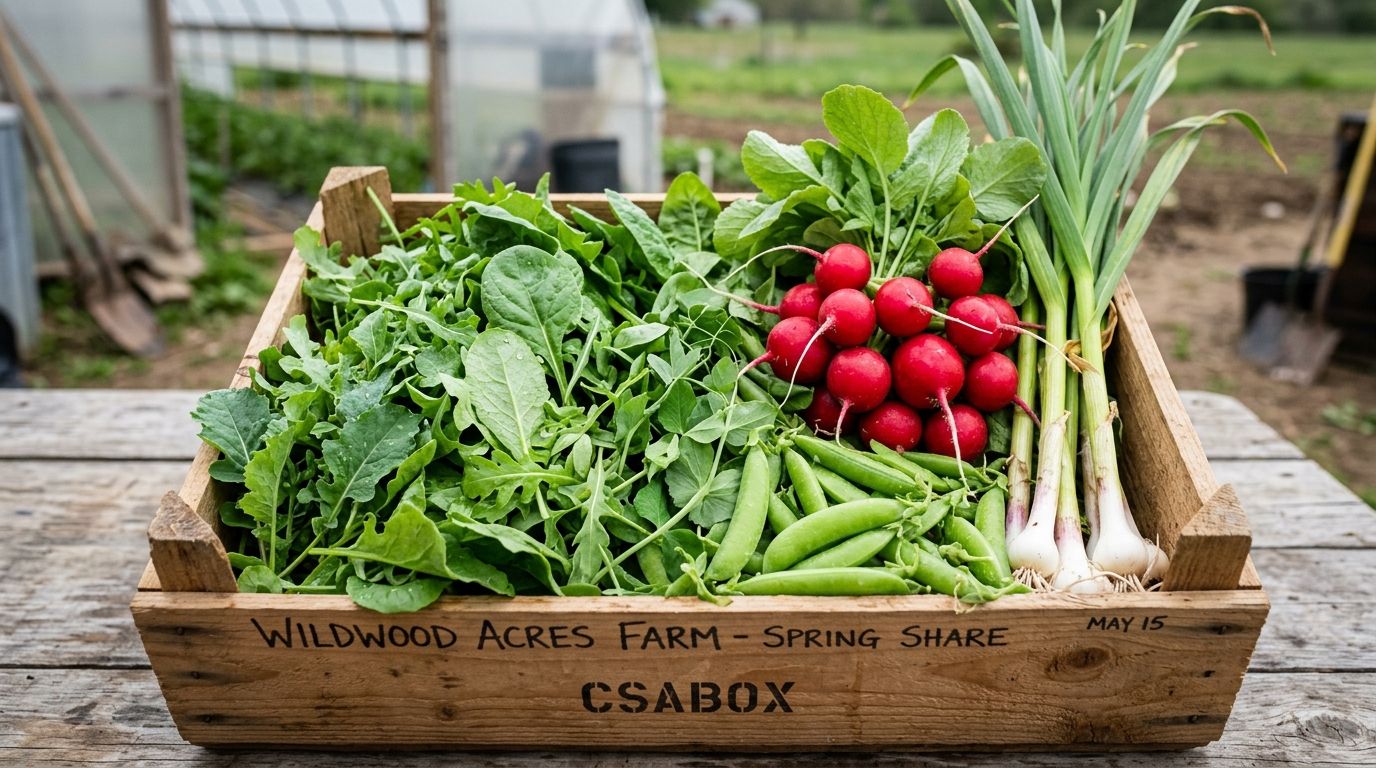
By intentionally planting 10-15% more of highly storable crops like carrots and beets, you create an inventory that can be drawn upon to cover for the inevitable failure of a more perishable crop like summer squash or cilantro. This inventory management is a key aspect of de-risking your CSA fulfillment.
How do you troubleshoot crop failures to prevent gaps in CSA box fulfillment?
Crop failures are an inevitable part of farming. A professional operation does not hope they won't happen; it plans for them. This means having a clear, pre-defined set of actions to take when a specific succession fails.
The Contingency Plan Matrix
Your crop plan should include a contingency matrix that identifies likely failure modes and the appropriate response.
| Failure Mode | Early Indicator | Primary Response | Secondary Response | Member Communication |
|---|---|---|---|---|
| Germination Failure | Empty rows 7-10 days after seeding. | Immediately cultivate and re-seed the bed with a very fast-growing crop (e.g., arugula, radishes) that can mature in 21-28 days. | Pull a storable item from the cooler (e.g., an extra bunch of carrots) to fill the immediate gap in this week's box. | In the newsletter: "The spring soils were a bit cool for our first planting of spinach, so this week we're giving you an extra bunch of our sweet storage carrots while we wait for the next succession!" |
| Pest Wipeout (e.g., Flea Beetle) | Heavy shot-holing on brassica seedlings. | Harvest what is marketable, even if undersized. Immediately plant the next succession in a different field block, covering with insect netting from day one. | Substitute with a crop from a different plant family that is ready, or provide a double portion of another item. Using our Companion Visualizer can help plan pest-deterrent plantings. | "The flea beetles were particularly hungry this spring! We salvaged what we could of the arugula, so this week you'll find a beautiful bunch of Swiss chard in its place." |
| Weather Event (e.g., Hail) | Physical damage to leaves and stems. | Assess damage. Harvest whatever is salvageable. For leafy greens, this may mean a "cut and come again" harvest to allow for regrowth. | Utilize the long-term storage buffer (winter squash, potatoes). Provide a recipe for the substitute item. | "We got some hail this week that was tough on the lettuce, so we're dipping into our delicious supply of butternut squash a bit early this year. Here’s a great recipe for a simple butternut soup." |
| Premature Bolting | Signs of flower stalk development in heat-sensitive crops. | Harvest the entire crop immediately, even if small, before it becomes bitter. | Substitute with a heat-tolerant green like Swiss chard or New Zealand spinach that was planted specifically as a summer backup. | This is a common issue discussed in our article on the CSA summer slump. Be proactive and explain the challenge of growing certain crops in the heat. |
The key is to have both fast-turnaround crops and long-term storage crops available as substitutes. Arugula can be ready in 21 days. Radishes in 25. These are your rapid response tools. Carrots, beets, potatoes, garlic, and winter squash are your strategic reserve. Mastering the art of substitution and communication is what transforms a crop failure from a crisis into a minor logistical adjustment.
Expert Insights & FAQs
What is succession planting and why is it critical for CSA farm viability?
Succession planting is the agricultural practice of staggering crop plantings over time to ensure a continuous, rather than a single, harvest. For a CSA, it is the logistical core of the business model, transforming land from a single-yield asset into a consistently producing factory floor that guarantees weekly product for members and predictable cash flow for the farm.
How do you calculate interval seeding dates using crop maturity metrics?
Interval seeding dates are calculated by working backward from the target harvest week. The core formula is: Seeding Date = Target Harvest Date - (Days to Maturity + Germination Period + Hardening Off Period). This calculation must also be adjusted for seasonal day length changes and desired harvest frequency (e.g., weekly, bi-weekly).
What are the best crop varieties suited for continuous, sequential plantings?
Ideal succession varieties exhibit rapid maturity, uniform growth, bolt resistance, and disease tolerance. Hybrid cultivars like 'Salanova' lettuce, 'Napoli' carrots, and 'Hakurei' turnips are bred for these traits, providing the reliability and predictability necessary for tightly scheduled sequential harvests in a professional farming operation.
How do seasonal temperature changes and day length shift seeding intervals?
As seasons change, shifting day length (photoperiod) and temperature alter a plant's metabolic rate. Approaching the summer solstice, growth accelerates, shortening days-to-maturity (DTM). Post-solstice, decreasing day length, known as the "Fall Slide," exponentially slows growth, requiring farmers to progressively shorten the interval between fall plantings to maintain consistent harvest timing.
What bed preparation and soil fertility strategies support continuous planting?
Continuous planting demands rapid bed turnover and robust soil fertility management. Strategies include using silage tarps for stale seed bedding, broadforking for aeration without inversion, and applying balanced, compost-based amendments between each crop. This ensures the soil remains biologically active, well-structured, and nutrient-rich enough to support multiple, intensive cropping cycles.
How do you structure a crop succession calendar for key CSA staples?
A crop succession calendar is typically structured in a spreadsheet, working backward from desired weekly harvest dates. Each row represents a specific planting (a "succession") of a crop, with columns for target harvest date, calculated seeding date, bed feet required, field location, and key logistical notes like variety and tray size.
What harvesting and cold storage strategies buffer gaps in crop succession?
Proper harvesting and cold storage create a critical buffer against unexpected succession gaps. Harvesting crops at peak maturity and immediately hydrocooling them to remove field heat extends shelf life. Storing produce at optimal temperature and humidity (e.g., 34°F and 95% RH for greens and roots) can add days or even weeks of viability, allowing stored products to fill a box if a planned crop fails.
How do you troubleshoot crop failures to prevent gaps in CSA box fulfillment?
Troubleshooting crop failures requires a pre-planned contingency strategy. This involves maintaining a "backup inventory" of fast-growing crops like radishes or arugula, utilizing stored crops like winter squash, and communicating transparently with CSA members about substitutions. The goal is to always have a substitute crop ready to fill a gap, ensuring the box value remains consistent.
Johnnie McCormick
Zone 7b/8a - North Central Alabama
Johnnie McCormick is a gardening hobbyist and the founder of My Garden Spot. Raised in north-central Alabama, his passion for gardening began in his youth. In 2008, he established a large market garden, teaching himself high-yield growing methods. In the years since, he has operated seasonal seedling sales for transplants, specializing in heirloom tomatoes, peppers, eggplants, decorative ground covers like Ajuga (Bugleweed), marigolds, nasturtiums, and fresh kitchen-window herb arrangements (basil, cilantro). Today, he gardens in the hills between Birmingham and Jasper, Alabama (Zone 7b/8a), sharing practical, community-focused gardening resources.
Verified Authoritative Citations & References
In alignment with our strict E-E-A-T research and verification guidelines, this guide cross-references data from the United States Department of Agriculture (USDA) and Cooperative Extension Service programs.
- USDA Agricultural Marketing Service (AMS): Community Supported Agriculture (CSA) standards and local market surveys. ams.usda.gov
- Penn State Extension: Small Farm Economics, financial planning, and crop pricing research documents. extension.psu.edu
- Cornell Cooperative Extension: Market gardening business planning and local sales guidelines. smallfarms.cornell.edu
- Alabama Cooperative Extension System (ACES): Local food regulations, CSA legal permits, and farm safety standards. aces.edu


Please log in to view comments.