
What Percent Shade Cloth Should You Use for Tomatoes in a High Tunnel?
Welcome, fellow tomato fanatics, to the sweltering, sun-blasted reality of mid-summer high tunnel gardening. You envisioned a paradise, a jungle of lush, fruit-laden vines protected from the elements. Instead, you've created a botanical blast furnace, a solar oven so effective you could probably bake bread on your raised beds. Your poor tomato plants are gasping, their leaves are wilting in protest, and their precious yellow flowers are dropping to the ground like tiny, tragic tears. It’s a heartbreaking scene, and you’re left wondering, “What went wrong?”
Fear not, overheated horticulturist! The problem isn't your ambition; it's the raw, unfiltered power of the sun, amplified by the greenhouse effect of your tunnel's plastic. The solution is beautifully simple yet scientifically complex: shade cloth. But before you rush out and buy the first roll you see, understand that this is not a one-size-fits-all situation. Choosing the wrong percentage is like putting on sunglasses that are too dark or not dark enough—either way, you’re not seeing the world correctly. In this definitive guide, we’re going to dive deep into the science of shade, turning your tomato torture chamber back into the productive paradise you dreamed of. We'll demystify percentages, compare materials, and give you the actionable, expert advice you need to get those blossoms to set fruit, even when the weather outside is sizzling.
Why are your high tunnel tomatoes sweating and dropping their blossoms?
Let's get personal with your plants for a moment. A tomato plant, at its core, is a finely tuned biological machine with one primary goal: reproduction. That means turning flowers into fruit filled with seeds. However, this machine has critical operating temperature limits. When the air inside your high tunnel—which can easily be 20-30°F hotter than the outside air—soars past 90°F (32°C), the plant's internal processes go haywire.
The most immediate victim is the pollen. Tomato pollen is surprisingly delicate. High temperatures cause it to become sterile or non-viable. The pollen grains might not form correctly, or they might burst upon release. Even if the pollen is viable, extreme heat can damage the flower's stigma, making it non-receptive. The result? Pollination fails. From the plant's cold, logical perspective, a flower that cannot be pollinated is a useless energy drain. So, it forms an abscission layer at the base of the flower stem and unceremoniously dumps it. This is blossom drop.
This phenomenon is governed by specific thermal thresholds:
- Daytime Highs: Consistent temperatures above 32°C (90°F) significantly reduce pollen viability and fruit set.
- Nighttime Highs: This is the silent killer. If night temperatures remain above 24°C (75°F), the plant cannot perform its nightly respiration and recovery processes efficiently. It burns through its stored sugars just to stay alive, leaving no energy for developing fruit. For many growers struggling with blossom drop, as we cover in our article Why Is My High Tunnel So Hot In June?, high nighttime temperatures are the primary culprit.
Beyond temperature, high humidity inside a poorly ventilated tunnel can make the pollen sticky and clumpy, preventing it from transferring effectively. The plant is essentially caught in a perfect storm of heat and humidity, forcing it to choose survival over procreation.
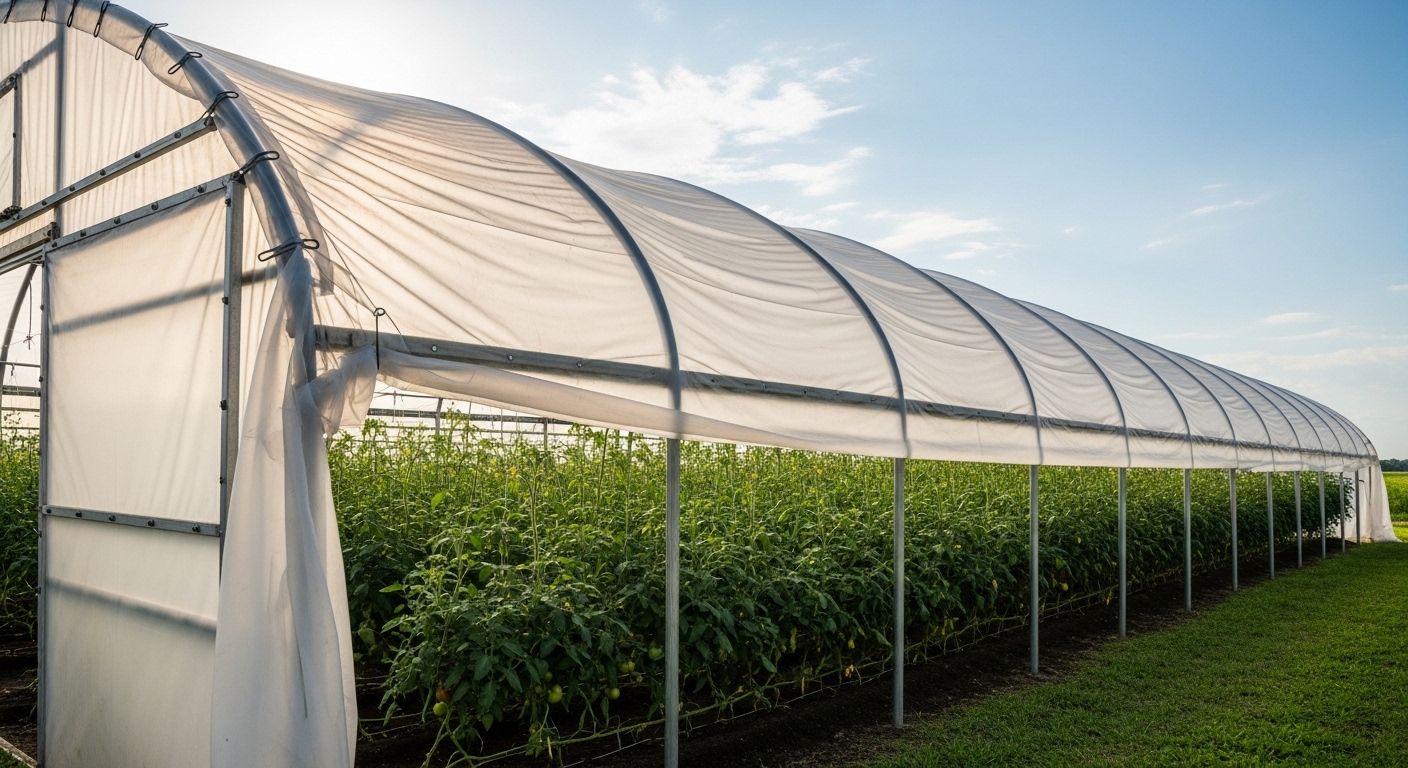
What does the scientific shade cloth percentage rating actually mean?
It's easy to think of the percentage as a simple measure of darkness, but it's more nuanced than that. The rating quantifies the reduction in total solar energy, which includes not just visible light but also ultraviolet (UV) and infrared (IR) radiation—the component that brings the heat. When we talk about light for plants, we're primarily concerned with Photosynthetically Active Radiation (PAR), the spectrum of light from 400 to 700 nanometers that plants use for photosynthesis.
A common misconception is that more light is always better. In reality, every plant has a Light Saturation Point, beyond which additional light provides no extra benefit for photosynthesis and can even cause damage through photo-oxidation (think of it as a plant getting a sunburn on a cellular level). For tomatoes, this point is around 800-1000 µmol/m²/s (micromoles per square meter per second). On a clear summer day, the light intensity inside a high tunnel can easily exceed 2000 µmol/m²/s. That's more than double what the plant can use!
This is where shade cloth becomes your best friend. By blocking, say, 40% of the incoming radiation, you can bring that intense 2000 µmol/m²/s down to a much more manageable 1200 µmol/m²/s. This is still well above the saturation point, meaning your plants have all the light they need for maximum photosynthesis, but you've eliminated the damaging excess and significantly reduced the heat load. The choice of shade cloth color can also influence photomorphogenesis, the process by which light quality affects plant development. Different colors filter the light spectrum differently, potentially influencing everything from stem length to leaf size.
Why is 30% to 50% shade cloth the absolute sweet spot for tomatoes?
Choosing your percentage is a critical balancing act. You need to block enough energy to keep temperatures below the dreaded blossom-drop threshold, but not so much that you starve your plants of the light they need to produce sugars and grow fruit. This is why the 30% to 50% range is the goldilocks zone for most tomato growers.
Here’s how to pick your perfect percentage:
- 30% Shade: This is the entry-level choice, perfect for growers in northern latitudes (like USDA zones 4-6) or coastal areas with moderate summers. It will take the edge off the harshest midday sun and can drop the internal tunnel temperature by a crucial 5-8°F without risking light deprivation.
- 40% Shade: This is the workhorse, the all-around best choice for the majority of growers in temperate climates (zones 6-8). It provides a substantial temperature drop of 8-12°F and offers excellent protection against sunscald while leaving plenty of PAR for vigorous growth. If you're unsure where to start, start with 40%.
- 50% Shade: This is for the growers in the hot-and-hostile zones—the deep South, the desert Southwest, or high-altitude locations where the sun's radiation is brutally intense (zones 8+). It can lower temperatures by 12-15°F or more, making the difference between a dead tunnel and a productive one. Be aware that this level of shade can sometimes lead to slightly leggier plants as they reach for light, a classic example of etiolation.
When planning your high tunnel setup, including which shade cloth to buy, our interactive Garden Planning Tool can help you visualize the layout and keep track of your material needs. And remember to consult our Planting Calendar to understand the peak heat periods for your specific region, which will inform when you need that shade cloth the most.
Advanced Sidebar: Intercropping and Light Competition
When you use shade cloth, you're not just changing the environment for your tomatoes; you're also affecting any companion plants you might be growing beneath them. The amount of light reaching a smaller intercropped plant (like basil or lettuce) is determined by both the shade cloth and the tomato canopy itself. We can model this using the Beer-Lambert Law for canopy light extinction:
I = I₀ * e^(-k * LAI)
Where:
Iis the light intensity beneath the canopy.I₀is the light intensity above the canopy (after passing through the shade cloth).kis the light extinction coefficient (a value around 0.5-0.8 for tomatoes).LAIis the Leaf Area Index (the ratio of total leaf area to ground area).
Here’s how it plays out:
| Tomato LAI | Light Transmission % (approx.) |
|---|---|
| 1.0 (Young Plant) | 61% |
| 2.0 (Developing) | 37% |
| 3.0 (Mature) | 22% |
| 4.0 (Dense) | 13% |
If you have a 40% shade cloth (letting 60% of light through) over a mature tomato canopy with an LAI of 3.0, the light reaching the ground is 0.60 * 0.22 = 0.132, or just 13.2% of full sun. This is why shade-tolerant companions like lettuce work, but sun-lovers like peppers would fail. You can explore these relationships with our Companion Visualizer to plan effective intercropping strategies.
Should you choose black, white, or aluminized shade cloth for thermal control?
Now that you've picked a percentage, you have to choose a material. The color and composition of your shade cloth dramatically affect its performance. It's not just about aesthetics; it's about physics.
Black Shade Cloth: This is the most common and generally the most affordable option. It works primarily by absorbing solar radiation. While it effectively blocks light, it also absorbs heat, which then radiates down onto the plants and plastic below. It's extremely durable and UV-resistant, but it creates a hotter environment directly under the cloth compared to reflective options.
White Shade Cloth: This material works by reflecting sunlight back into the atmosphere. This is a huge advantage for temperature control. By reflecting a significant portion of the infrared spectrum, it keeps the area beneath it cooler than black shade cloth of the same percentage. It also diffuses the light that passes through, scattering it more evenly throughout the canopy and reducing harsh shadows.
Aluminized (Aluminet) Shade Cloth: This is the high-tech, premium option. It's a knitted fabric made of metallized high-density polyethylene fibers. It functions like a mirror, reflecting unwanted radiation away from the tunnel while allowing a high degree of diffused PAR light to pass through. It offers the best of both worlds: superior temperature control and excellent light quality for your plants. It's particularly effective at reducing leaf surface temperature.
Here is a direct performance comparison:
| Feature | Black Knitted/Woven | White Knitted/Woven | Aluminized (Reflective) |
|---|---|---|---|
| Mechanism | Absorbs & blocks radiation | Reflects & scatters radiation | Reflects & scatters radiation |
| Air Temp Reduction | Moderate (5-10°F) | Good (8-12°F) | Excellent (10-15°F+) |
| Leaf Surface Temp Reduction | Moderate | Good | Excellent |
| Light Quality | More direct light | Highly diffused light | Highly diffused light |
| Durability | Excellent (High UV resistance) | Good (Lower UV resistance) | Good (Can be less tear-resistant) |
| Cost | $ | $$ | $$$ |
| Best For | General purpose, high-UV areas, budget-conscious growers. | Hot climates where maximum cooling and light diffusion are key. | Extreme heat environments (deserts, south) for maximum performance. |
How does reducing solar radiation prevent physiological disorders like sunscald?
Sunscald is the botanical equivalent of a severe sunburn. It occurs when a developing tomato, particularly one that was previously shaded by leaves, is suddenly exposed to intense, direct sunlight. The surface temperature of the fruit can skyrocket to over 120°F (49°C), far exceeding what the cells in the skin (epidermis and hypodermis) can tolerate. This intense heat and UV radiation cause the cells to die, resulting in a tell-tale lesion that is initially watery and light-colored, then becomes white, papery, and sunken. These damaged areas are prime entry points for secondary infections like anthracnose or other fungal rots.
Shade cloth is the most effective preventative measure because it tackles both causes simultaneously:
- Reduces Light Intensity: It lowers the overall energy hitting the fruit's surface.
- Lowers Surface Temperature: By reducing the radiation, it directly lowers the temperature of the tomato's skin, keeping it within a safe range.
This is especially important for indeterminate tomato varieties that you prune heavily. While pruning improves airflow and can increase fruit size, it also removes leaves that naturally shade the fruit clusters. If you practice heavy pruning, using shade cloth is not just recommended; it's practically mandatory to protect your beautiful harvest. Many heirloom varieties, which you can learn more about in our Heirloom Vs. Hybrid Gardening Guide, have less foliage cover and are more susceptible to sunscald, making shade cloth a crucial tool for success.
What is the ideal high tunnel temperature and VPD for tomato fruit set?
We've hammered home the ideal temperature range, but let's introduce its equally important partner: Vapor Pressure Deficit (VPD). If you want to graduate from a good grower to a great one, you need to understand VPD.
In simple terms, VPD is the difference between the amount of moisture the air is holding and the amount it could be holding at its current temperature. It's a measure of the drying potential of the air, or its "thirst." It's measured in kilopascals (kPa).
- Low VPD (below 0.5 kPa): The air is very humid, close to saturation. This is bad because plants cool themselves and transport nutrients through transpiration (releasing water vapor from their leaves). If the air is already full of water, transpiration slows to a crawl. This can lead to nutrient deficiencies (like blossom end rot) and creates a perfect environment for fungal diseases like powdery mildew and late blight.
- High VPD (above 1.5 kPa): The air is very dry. The plant gets desperate to conserve water and closes the stomata (pores) on its leaves. While this saves water, it also stops the plant from taking in CO₂ for photosynthesis. Growth grinds to a halt. In extreme cases, the plant can't draw water from the roots fast enough to keep up with evaporation, leading to severe wilting and stress.
The Ideal VPD for tomatoes is 0.5 - 1.5 kPa. This is the sweet spot where the plant is transpiring comfortably, pulling a steady stream of water and nutrients from the roots, and actively photosynthesizing.
How does shade cloth help? By lowering the air temperature, it directly lowers the air's capacity to hold water (its Saturation Vapor Pressure). This means that for the same amount of actual moisture in the air (relative humidity), a cooler temperature will result in a lower, less stressful VPD. It helps you stay out of that dangerous high-VPD zone where your plants shut down.
How do you physically install and secure shade cloth on a high tunnel structure?
Putting up shade cloth can feel like wrestling a giant, unruly beast, but with the right technique, it's a manageable task. The cardinal rule is to create an air gap of at least 4-6 inches between the greenhouse plastic and the shade cloth. This gap allows air to flow between the layers, carrying away the heat that the cloth absorbs or reflects. Laying the cloth directly on the plastic will transfer much of that heat directly to your tunnel via conduction, reducing its effectiveness.
Here are the most common installation methods:
Grommets and Lashing Rope: Most shade cloths come with reinforced edges and brass grommets every 12-24 inches. This is a reliable method. Drape the cloth over the structure and use a UV-resistant rope, weaving it back and forth between the grommets and the tunnel's baseboard or a dedicated anchor point. Pull it taut to prevent it from flapping in the wind, which can abrade both the cloth and your plastic.
Shade Cloth Clips: These are plastic clips that snap onto the edge of the fabric, providing a secure anchor point anywhere you need one. They are fantastic for quickly securing the cloth and are less likely to tear the fabric than poking a hole in it.
Wiggle Wire and Lock Channel (The Pro Method): This is the most secure and professional system. An aluminum lock channel is permanently attached to the hip and baseboards of your high tunnel. The edge of the shade cloth is placed in the channel, and a PVC-coated spring wire (the "wiggle wire") is pressed in on top of it, locking it firmly in place. This provides a continuous, secure connection that is unmatched in high-wind areas.
No matter which method you choose, always install on a calm day. A 5 mph breeze can turn a 50-foot sheet of shade cloth into a dangerous sail. And always get a friend to help—this is not a solo job!
Legal Sidebar: Risk Management for Agritourism
While you're working on making your tunnel safe for plants, consider making your farm safe for people. If you ever plan to have a U-Pick operation or farm tours, you're entering the world of agritourism and its associated liabilities. Getting this wrong can be financially devastating.
- Premises Liability: Visitors to your farm are typically classified as Invitees. You owe them the highest duty of care, which means you must actively inspect your property for dangers and either fix them or clearly warn visitors about them. A simple "Enter at Your Own Risk" sign is often not enough.
- Warning Signs: Your signage should be specific. For example: "WARNING: Uneven ground and agricultural equipment in use. Please watch your step and supervise children at all times." Consult local regulations, as some states have specific agritourism liability statutes. You can learn more about the legal side of farming by reading about drafting your first CSA agreement.
- Insurance: A standard homeowner's policy will not cover you. You need a specific farm liability or commercial agritourism policy. This is non-negotiable.
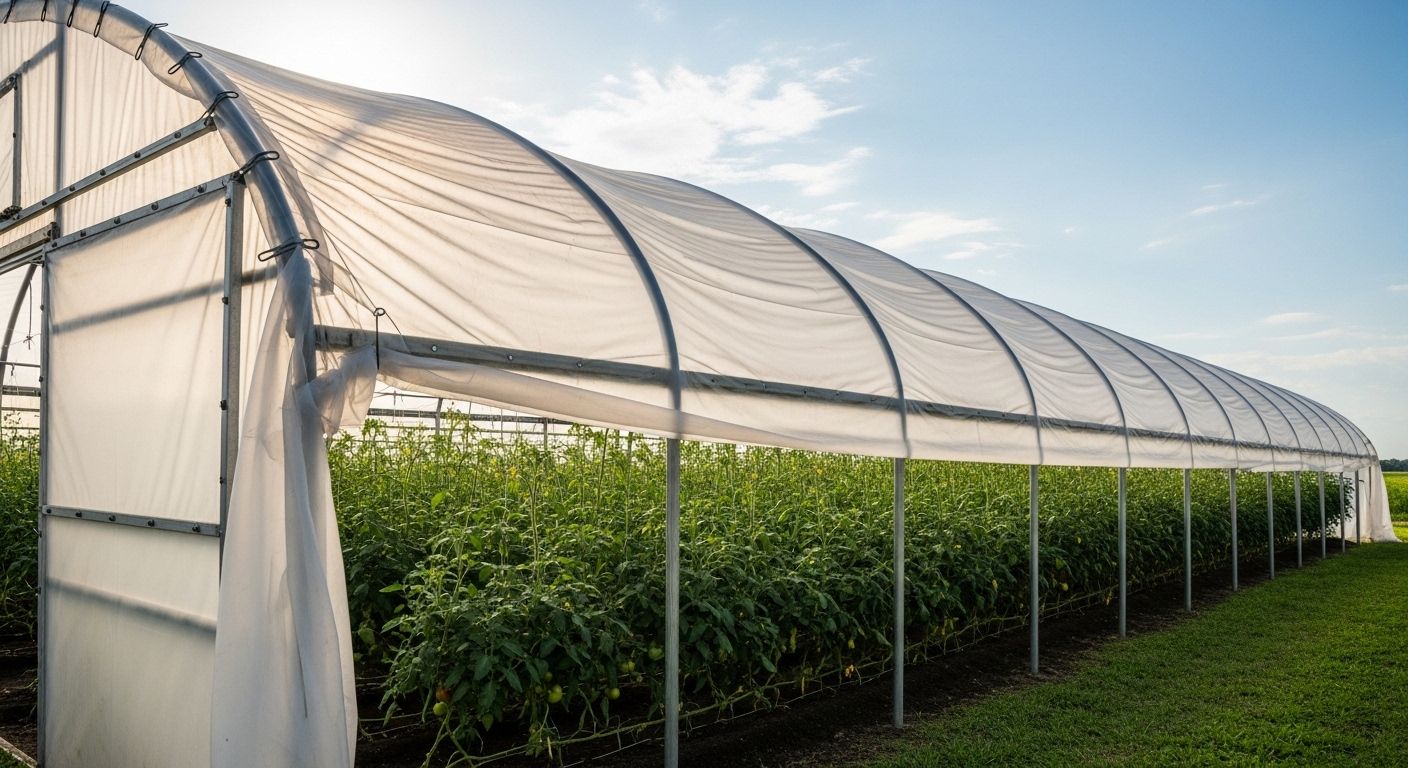
When is the exact right time of day and season to deploy and remove your shade cloth?
Timing is everything. Deploying your shade cloth too early can slow down early-season growth, while leaving it on too late in the fall can hinder the ripening of your final fruit. Forget the calendar; let the thermometer be your guide.
Seasonal Timing:
- Deployment: The trigger for putting on the shade cloth is temperature. Once you see a consistent pattern of daytime highs inside your tunnel (with the sides rolled up for ventilation!) climbing above 85°F, it's time. This usually happens in late May or early June in most temperate climates. Don't wait for blossom drop to start—be proactive. The process of hardening off transplants to prevent shock is a good indicator that intense heat is on its way.
- Removal: The trigger for removal is a combination of falling temperatures and decreasing day length. When your daytime highs inside the tunnel are consistently staying below 80°F and nights are getting cool, it's time to take the cloth off. This is typically in early to mid-September. At this point in the season, light, not heat, becomes the primary limiting factor for fruit ripening. You want to capture every last ray of autumn sun to finish off that green fruit.
Daily Timing (for retractable systems): If you have a more advanced, retractable shade system, you can fine-tune your control. A good rule of thumb is to deploy the shade around 10:00 AM, as the sun's intensity and ambient temperatures begin to peak. Then, retract it around 4:00 PM or 5:00 PM. This shields the plants during the most stressful part of the day while still allowing them to benefit from the gentler morning and late afternoon sun, maximizing their total daily light integral (DLI) without the associated heat stress. This dynamic approach is the pinnacle of high tunnel climate management, second only to fully automated environmental controls.
Expert Insights & FAQs
Why are your high tunnel tomatoes sweating and dropping their blossoms?
High tunnel tomatoes drop blossoms when temperatures exceed 90°F (32°C) during the day or 75°F (24°C) at night. This extreme heat stress denatures pollen, disrupts pollination, and forces the plant into survival mode, sacrificing fruit production to conserve energy and water.
What does the scientific shade cloth percentage rating actually mean?
A shade cloth's percentage rating indicates the amount of solar radiation it blocks. For example, a 40% shade cloth blocks 40% of the light and heat, allowing the remaining 60% to pass through to the plants. This reduction in light intensity is crucial for managing temperature.
Why is 30% to 50% shade cloth the absolute sweet spot for tomatoes?
The 30% to 50% shade range is ideal for tomatoes because it significantly reduces heat stress and prevents sunscald without limiting the light needed for photosynthesis and fruit development. Less than 30% offers insufficient cooling, while more than 50% can lead to leggy plants and reduced yields.
Should you choose black, white, or aluminized shade cloth for thermal control?
Choose black for maximum shade and durability, as it absorbs light. Select white to reflect heat and diffuse light, creating a cooler environment with less direct radiation. Opt for aluminized (Aluminet) for the best thermal control, as it reflects heat away while still allowing for good light diffusion.
How does reducing solar radiation prevent physiological disorders like sunscald?
Shade cloth prevents sunscald by blocking the intense, direct solar radiation that literally cooks the surface of the tomato fruit. This reduction in both light intensity and surface temperature keeps the fruit's "skin" below the critical threshold where cell damage and tissue death occur, preventing those ugly white or yellow patches.
What is the ideal high tunnel temperature and VPD for tomato fruit set?
The ideal temperature for tomato fruit set is 70-85°F (21-29°C) with a Vapor Pressure Deficit (VPD) between 0.5 and 1.5 kPa. Outside this range, high temperatures cause pollen sterility, while incorrect VPD (too high or too low) hinders pollination and nutrient uptake.
How do you physically install and secure shade cloth on a high tunnel structure?
Secure shade cloth over the high tunnel using specialized clips, lashing rope woven through the grommets, or a wire-lock channel system for a professional fit. Ensure it's taut to prevent wind damage but allow for a small air gap between the cloth and the plastic for optimal cooling.
When is the exact right time of day and season to deploy and remove your shade cloth?
Deploy shade cloth seasonally when consistent daily high temperatures inside the tunnel exceed 85-90°F (29-32°C), typically late spring or early summer. Remove it in early fall when temperatures consistently drop, ensuring maximum light for fruit ripening during cooler, shorter days.
Johnnie McCormick
Zone 7b/8a - North Central Alabama
Johnnie McCormick is a gardening hobbyist and the founder of My Garden Spot. Raised in north-central Alabama, his passion for gardening began in his youth. In 2008, he established a large market garden, teaching himself high-yield growing methods. In the years since, he has operated seasonal seedling sales for transplants, specializing in heirloom tomatoes, peppers, eggplants, decorative ground covers like Ajuga (Bugleweed), marigolds, nasturtiums, and fresh kitchen-window herb arrangements (basil, cilantro). Today, he gardens in the hills between Birmingham and Jasper, Alabama (Zone 7b/8a), sharing practical, community-focused gardening resources.
Verified Authoritative Citations & References
In alignment with our strict E-E-A-T research and verification guidelines, this guide cross-references data from the United States Department of Agriculture (USDA) and Cooperative Extension Service programs.
- Rutgers NJAES Cooperative Extension: Greenhouse energy conservation and climate management sheets. horteng.envsci.rutgers.edu
- Cornell Cooperative Extension: High-Yield Greenhouse management and passive climate control resources. cea.cals.cornell.edu
- Penn State Extension: High tunnel design, construction, and microclimate optimization. extension.psu.edu
- Iowa State University Extension: High tunnel production and ventilation guidelines. store.extension.iastate.edu


Please log in to view comments.