How Do You Operate a Small Greenhouse for Season Extension and Starter Plants?

The Evolution of the Controlled Growing Environment
The quest to manipulate the climate for agricultural benefit is not a strictly modern endeavor. The professionalization of horticulture and the drive to conquer the constraints of seasonality can be traced back to the detailed garden manuals of the eighteenth century. During this era, the distinction between the amateur enthusiast and the commercial operator became well-defined, and the foundation of professions such as market gardeners, nursery men, botanists, and florists was established.
Richard Bradley, a Professor of Botany at the University of Cambridge, was instrumental in defining early greenhouse parameters. He recognized that to break the bounds of local weather, one had to artificially recreate the optimal conditions of spring. Today, modern homesteaders and small-scale market gardeners inherit this legacy. We utilize advanced polymers, thermodynamics, and biological heating systems to turn a small footprint—often no larger than a standard suburban garage—into an immensely profitable, year-round production engine.
For the modern small-scale farmer, a greenhouse is not just a luxury; it is an economic necessity. Whether you are aiming to push the boundaries of winter CSA shares or you are scaling a spring seedling business, the ability to control temperature, humidity, and airflow dictates the margin between a bountiful early harvest and devastating frost loss. This comprehensive guide details the advanced, practical mechanics of operating a small greenhouse, moving far beyond basic hobby structures into the realm of professional, high-yield environmental control.
1. Greenhouse Physics: Solar Gain, Thermal Mass, and Insulation
To operate a greenhouse efficiently—especially when operating on a tight budget without the luxury of massive propane heaters—one must deeply understand the fundamental physics governing its microclimate. A greenhouse is, at its core, a passive solar energy collector and a highly efficient thermal trap.
The Mechanics of Solar Gain
The basic principle of greenhouse warming relies on the interaction between solar radiation and the glazing material (the clear plastic or glass covering). Shortwave solar radiation passes relatively unimpeded through polycarbonate panels or polyethylene film. Once inside, this shortwave energy strikes the interior surfaces—the soil, the planting benches, the pots, and the structural framing—where it is absorbed and converted into longwave thermal radiation, which we feel as heat.
The critical function of the greenhouse glazing is that while it is transparent to shortwave radiation, it is largely opaque to longwave infrared heat. The heat becomes trapped, causing the internal ambient temperature to rise significantly higher than the outside air.
To maximize this solar capture during the darkest, coldest months of winter and early spring, the physical orientation of a free-standing greenhouse is paramount. Aligning the structure on an East-West axis ensures that the broad, long southern face of the greenhouse is positioned to intercept the low-angle winter sun. If you align it North-South, the sun will only strike the narrow gable end, drastically reducing your total passive solar gain.
Understanding R-Values and U-Values
When discussing greenhouse efficiency, you must familiarise yourself with R-values and U-values. The R-value measures a material's resistance to conductive heat flow; the higher the R-value, the better the insulation. The U-value is the inverse of the R-value (U = 1/R) and measures the rate of heat loss.
- Single-Layer Polyethylene (6-mil): Has an R-value of roughly 0.83. This provides excellent light transmission but offers very little resistance to heat loss at night. If the outside temperature drops to 25°F, a single-layer house will quickly drop to 25°F shortly after sunset without active heating.
- Twin-Wall Polycarbonate (8mm): Offers an R-value of approximately 1.60. It traps heat much better but is significantly more expensive to install.
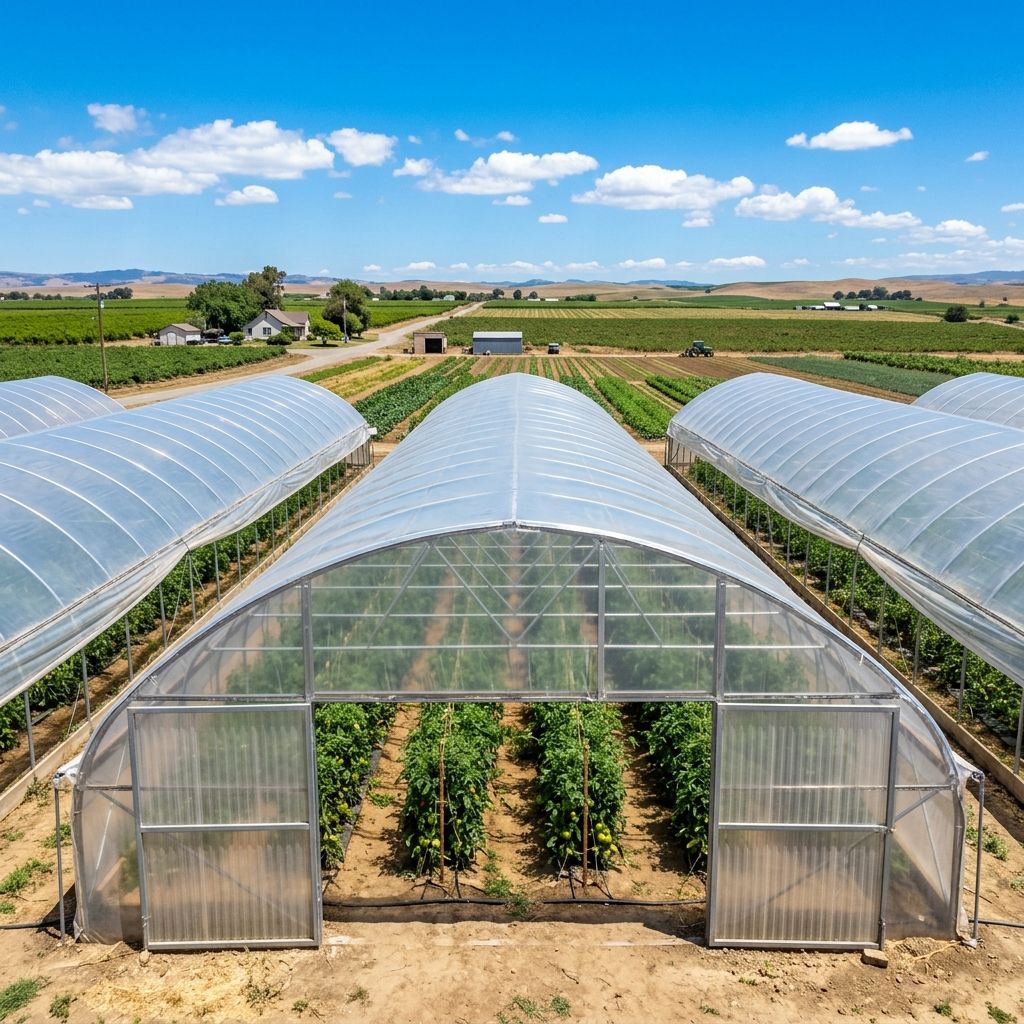
- Double-Layer Polyethylene with Inflation: This is the gold standard for small commercial operations. By installing two layers of 6-mil plastic and using a small squirrel-cage blower to constantly push air between them, you create an inflated, dead-air space. This trapped air is an exceptional insulator, effectively doubling your R-value to ~1.50 at a fraction of the cost of rigid polycarbonate panels.
The inflation blower uses minimal electricity (often less than 50 watts) but provides the critical thermal barrier necessary to keep your early spring cool-weather brassicas and solanaceous starter plants alive during unexpected late-season hard freezes.
2. Passive and Active Heating: Defeating the Frost
Maintaining heat through freezing nights without relying on exorbitant, fossil-fuel-dependent commercial heaters requires smart, layered thermodynamic design. By combining thermal mass with biological heating, a small farm can achieve remarkable temperature stabilization.
Thermal Mass: The Water Barrel Battery
Water possesses an exceptionally high specific heat capacity, meaning it can absorb and store a massive amount of thermal energy before its own temperature rises significantly. It also releases this energy very slowly as the surrounding air cools.
A classic, highly effective technique for passive greenhouse heating involves creating a "water wall." By stacking 55-gallon steel or heavy-duty plastic drums along the solid north wall of the greenhouse, filling them with water, and painting them matte black, you create a massive thermal battery.
During a sunny day, the black barrels absorb incoming solar radiation. A single 55-gallon drum holds about 450 pounds of water. If you have ten barrels, that is 4,500 pounds of thermal mass. If the water temperature in those barrels rises by just 15 degrees during the day, they will have captured nearly 70,000 BTUs of heat energy. As the sun sets and the greenhouse air begins to cool, the water barrels slowly radiate this stored heat back into the structure, acting as a gentle, continuous radiator that can easily keep the internal temperature 10 to 15 degrees above the outdoor ambient temperature.
Compost Heating and Biological Thermodynamics (The Hotbed)
Before the advent of cheap electricity and natural gas, market gardeners relied on active biological heating via compost hotbeds. This is a time-tested technique that leverages the extreme thermophilic heat generated by microbial decomposition.
To build a traditional hotbed inside your greenhouse:
- Excavation: Dig a trench approximately 24 to 30 inches deep down the center or along the benches of your greenhouse.
- Layering: Pack the trench with heavily carbon-laced, nitrogen-rich fresh manure (horse or poultry manure mixed heavily with straw works best).
- Moisture and Compaction: Moisten the pile so it feels like a wrung-out sponge, and trample it down firmly to remove excess air pockets, which controls the rate of combustion.
- Capping: Cover the fermenting mass with 4 to 6 inches of high-quality, sterile potting soil or fine compost.
Within 48 to 72 hours, the microbial activity will cause the internal temperature of the manure pile to spike, often reaching 140°F. The heat gently radiates up through the top layer of soil, providing a steady, continuous bottom heat of 70°F to 90°F for up to two months. This creates the absolute perfect microclimate for seed germination trays. You can place your propagation flats directly on top of the soil cap, bypassing the need for expensive electric seedling heat mats.
Understanding how to manage the carbon-to-nitrogen ratio is critical here; if the pile gets too hot, it will cook your seedlings. For a deeper understanding of these biological processes and how to scale them for broader farm fertility, you can review our guide on understanding the C:N ratio in your compost pile.
3. Active Cooling: Ventilation and Thermodynamics in Summer
While winter heating is the primary concern for season extension, a small, sealed greenhouse can quickly become a death trap in late spring and early summer. On a sunny day in May, an unventilated greenhouse can easily reach lethal temperatures exceeding 120°F, instantly cooking delicate starter plants and inducing severe tomato blossom drop.
Chimney Effect Ventilation and Automated Louvers
Relying solely on manually rolling up the sides of your hoop house is risky; if you forget to open them before leaving for an off-farm job, you will lose your entire crop. Automated ventilation is arguably the most critical upgrade for a serious starter plant business.
Effective cooling relies on creating cross-breeze ventilation and utilizing the "chimney effect" (hot air rises).
- Intake Louvers: Install automated, louvered intake vents low to the ground on the prevailing windward side of the greenhouse.
- Exhaust Fans: Install high-CFM (Cubic Feet per Minute) motorized exhaust fans high up on the opposite gable end.
When the internal temperature hits a pre-set threshold (usually 80°F to 85°F), a thermostat triggers the system. The louvers open, the exhaust fan kicks on, and the system actively pulls cool, fresh air from the ground level, sweeping it across the plant canopy and pulling the accumulated hot air out through the roof peak. This rapid air exchange is vital not just for cooling, but for replenishing depleted carbon dioxide levels inside the structure. For more advanced thermodynamic analysis of arch versus peaked roof ventilation, see our study on why high tunnels get so hot in June.
The Integration of Shade Cloth
By late spring, active ventilation alone may not be enough to combat the intense solar load. Integrating shade cloth becomes necessary.
Traditional black shade cloth absorbs solar radiation and actually radiates secondary heat down onto your plants. While it reduces light intensity, it can exacerbate heat stress. Instead, serious growers utilize Aluminet—a highly reflective, metalized shade fabric. Aluminet reflects the shortwave solar radiation back into the atmosphere before it ever enters the greenhouse, significantly dropping internal temperatures.
For early summer operations holding over mature starter plants, deploying a 30% to 50% Aluminet shade cloth over the exterior of the glazing provides the precise reduction in solar load necessary to keep plants vegetative and stress-free without inducing etiolation (leggy, stretched stems). We cover the deep physics of this in our article on reflective vs. traditional shade cloth thermodynamics.
4. Relative Humidity Management and VPD (Vapor Pressure Deficit) Control
The most frequent mistake novice greenhouse operators make is hyper-focusing on temperature while entirely ignoring humidity. In a closed environment, the relationship between heat and moisture dictates plant transpiration rates, nutrient uptake, and fungal disease pressure. The most accurate metric for measuring this relationship is Vapor Pressure Deficit (VPD).
VPD measures the "drying power" of the air. It calculates the difference between how much moisture the air currently holds and how much moisture it could hold at its current temperature. It is measured in kilopascals (kPa).
Mastering the VPD Stages
Plants act like hydraulic pumps. As water evaporates from the stomata in their leaves, it creates a negative pressure that pulls water and dissolved nutrients up from the root zone. If the air is too humid (low VPD), the plant cannot transpire, and nutrient uptake stalls, leading to deficiencies (like calcium-driven tip burn). If the air is too dry (high VPD), the plant transpires too rapidly, closes its stomata to survive, and halts photosynthesis.
- Propagation and Germination Stage (0.4 – 0.8 kPa): When seeds are just sprouting or when you are rooting delicate cuttings, they have no established root system. You must maintain a very low VPD (high humidity). This prevents the fragile tissue from desiccating before roots can form to replace lost moisture.
- Early Vegetative Stage (0.8 – 1.1 kPa): As the seedlings develop true leaves and a robust root mass in their plug trays, you must gradually increase the VPD. A moderate "drying power" in the air encourages the roots to actively forage in the potting mix, driving rigorous, stocky vegetative growth.
- Hardening-Off Stage (1.1 – 1.4 kPa): Before starter plants can be moved out to the harsh field conditions or sold to retail customers, they must be "hardened off." Exposing them to mild moisture stress and slightly drier air (higher VPD) forces the plants to thicken their cuticles and build sturdy, wind-resistant stems. You must carefully synchronize this final stage with your target planting dates, utilizing our master timeline for spring seed starting to avoid stunting the crop.
Horizontal Airflow (HAF) and Fungal Prevention
A byproduct of managing a humid greenhouse is the constant threat of fungal pathogens like Botrytis (gray mold) and Pythium (damping-off). Fungal spores require stagnant air and standing moisture on the leaf surface to germinate.
To combat this, you must install Horizontal Airflow (HAF) fans. These are small, continuous-duty circulation fans suspended above the plant canopy, pushing air in a circular pattern around the greenhouse interior. HAF fans ensure that there are no stagnant micro-climates in the corners of the house, maintaining a uniform temperature and VPD across every bench. The constant gentle breeze shakes the seedlings, further strengthening their cellular structure, and actively evaporates standing water droplets from the foliage, effectively stripping fungal spores of their required germination environment.
5. Biological Pest Control and Botanical Defense
In the highly controlled, humid, and warm environment of a greenhouse, pest populations can explode exponentially. A single aphid can rapidly multiply into thousands within a week due to parthenogenesis (asexual reproduction). Because small farms are often operating under organic principles, dousing a sealed greenhouse with harsh synthetic neurotoxins is not an option.
Instead, a robust Integrated Pest Management (IPM) strategy relying on biological controls and botanical defenses is mandatory.
Companion Planting as Trap Crops and Repellents
Strategic companion planting within the greenhouse footprint acts as your primary line of defense.
- Whiteflies: These tiny, sap-sucking insects are a notorious greenhouse pest. They can be effectively managed by planting nasturtiums in hanging baskets above your benches. Nasturtiums act as a "trap crop," highly attractive to whiteflies. The pests will congregate on the nasturtiums, which can then be safely removed from the greenhouse and destroyed, leaving your primary crops untouched. Additionally, the Peruvian ground cherry (Nicandra physalodes), also known as the "shoo-fly plant," contains compounds that repel various flying insects.
- Aphids and Spider Mites: These pests despise strong aromatic compounds. Interplanting garlic, chives, and pungent herbs among your starter trays provides a baseline repellent. In severe outbreaks, traditional botanical remedies, such as smudging with oak-leaf smoke or applying diluted garlic and neem-based horticultural oils, can knock down populations without leaving toxic residues.
- Fungal Mildews: While HAF fans are your primary defense against powdery and downy mildews, applying prophylactic botanical sprays can boost plant immunity. Sprays formulated from horsetail (Equisetum arvense), which is incredibly high in cellular-strengthening silica, or chive tea, which possesses natural fungicidal properties, provide an excellent organic shield.
Before firing up the greenhouse for the spring seed-starting season, it is also highly recommended to practice rigorous sanitation. Removing all old plant debris, scrubbing benches with a mild bleach or hydrogen peroxide solution, and sterilizing any reused pots ensures you are not incubating overwintered pest eggs. For dealing with severe soil-borne pathogens in ground beds, you can adapt the outdoor strategies outlined in our guide to organic pest management and integrated strategies.
6. Production Scheduling for Season Extension
A greenhouse is a significant capital expenditure. To maximize your Return on Investment (ROI), the structure cannot sit idle. It must be viewed as a continuous, high-velocity production line, with crops rotating in and out in tightly scheduled succession.
The Seasonal Rotation Strategy
- Late Winter (January - February): The season begins. The compost hotbeds are built and fired up. The first seeds sown are the slow-growing, cold-hardy alliums (onions, leeks) and challenging crops like celery and celeriac. Because the days are short, these crops rely heavily on the gentle bottom heat of the hotbeds to germinate.
- Early Spring (March - April): The greenhouse is operating at peak capacity. Solanaceous crops (heirloom tomatoes, sweet peppers, eggplants) are sown and placed on dedicated electric propagation mats to maintain the strict 75°F-80°F soil temperatures they require. The cooler perimeters of the greenhouse, furthest from the heaters, are utilized for successions of fast-growing brassicas (broccoli, cabbage, kale) and cold-hardy lettuces.
- Mid-Spring (Late April - May): The primary starter plants are "bumped up" from 72-cell trays into 4-inch retail pots to build robust root systems before they are sold to the public or transplanted into the field. As bench space opens up, the final, fast-growing, heat-loving cucurbits (cucumbers, zucchini, summer squash) are sown.
- Summer (June - August): The greenhouse is cleared of all starter plants. Because the interior is now incredibly hot, it is utilized for high-value, heat-loving crops like ginger, turmeric, or specialized hot peppers, heavily shaded by Aluminet. Alternatively, it is left empty and completely sealed to solarize and sterilize the interior soil and benches, killing off lingering pests.
- Autumn & Deep Winter (September - December): As the outdoor weather cools, the greenhouse transitions back to cold-weather production. Cold-hardy salad greens (spinach, claytonia, mache) and winter carrots are directly sown into the greenhouse floor beds. These crops do not actively grow during the darkest days of December, but the greenhouse protects them from severe freezing, allowing for continuous, high-value harvests for your winter CSA shares long after the outdoor fields are buried in snow.
Managing the Hardening-Off Process
Perhaps the most critical phase of production scheduling is the hardening-off process. Moving a pampered, greenhouse-grown tomato plant directly into a windy, 50°F field will induce massive physiological shock, stunting the plant for weeks or killing it outright.
Seven to ten days before your target transplant date, you must begin the acclimation process.
- Day 1-3: Move the trays to a sheltered location outside (like a covered porch) for just 2-3 hours of dappled morning sunlight, then return them to the greenhouse.
- Day 4-6: Gradually increase their exposure to direct sunlight and wind, leaving them outside for 6-8 hours. Decrease watering frequency to allow mild wilting, forcing the roots to toughen.
- Day 7-10: Leave the plants outside 24 hours a day, provided no hard frosts are forecasted.
This meticulous process ensures that when the roots finally hit the field soil, the plant immediately resumes vigorous growth. For a deeper dive into the biology of transplant shock and perfect timing, consult our seed starting and transplanting guide.
7. Economic Cost-Benefit Analysis and Starter Plant ROI
When deciding to invest in a small greenhouse, many growers hesitate at the initial capital expenditure. However, when properly managed as a high-velocity starter plant nursery, the Return on Investment is staggering.
Consider a standard, small-scale commercial high-tunnel hoop house measuring 14x50 feet. This footprint provides roughly 700 square feet of internal growing space. Once you account for walkways and heating infrastructure, you are left with approximately 500 square feet of usable bench space.
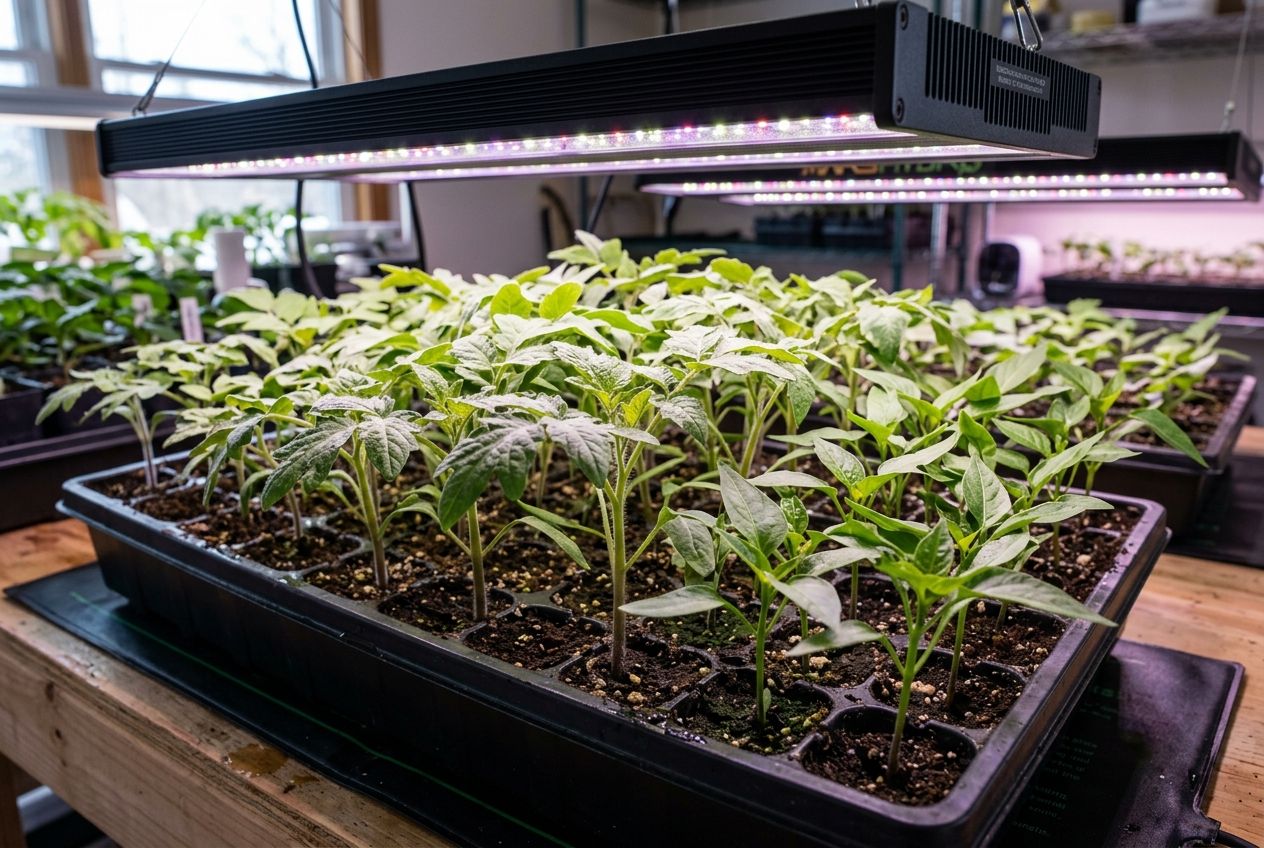
A standard 1020 seedling propagation tray measures 10 inches by 20 inches (roughly 1.4 square feet). Therefore, a 500-square-foot bench layout can hold approximately 350 standard trays simultaneously.
If you are utilizing 72-cell plug flats to grow heirloom tomato and pepper starter plants, a single, fully stocked greenhouse run holds 25,200 individual plants. Even factoring in a conservative 15% loss rate due to poor germination or culling weak seedlings, you are left with over 21,000 viable, high-quality starter plants.
The Profit Margin of the Spring Plant Sale
In the current market, locally grown, robust, organically managed heirloom starter plants retail easily for $3.00 to $5.00 per 4-inch pot at spring farmers markets and on-farm stand sales.
If you transition just half of your 21,000 plugs (10,500 plants) into 4-inch pots for direct retail sale at $4.00 each, that represents $42,000 in gross revenue generated in a highly compressed 4-week sales window in late spring. The remaining 10,500 plugs are then utilized to plant out your own farm's field production for the summer CSA and wholesale accounts, saving you the massive expense of purchasing commercial plugs.
The physical materials to construct a heavy-duty, double-poly inflated 14x50 greenhouse—including the steel hoops, ground posts, baseboards, inflation blowers, and automated exhaust louvers—typically range from $4,000 to $6,000 depending on your supplier and DIY labor equity.
The economics are undeniable. By mastering the thermodynamic management of the microclimate, utilizing biological compost heating to slash utility bills, and executing a rigid production schedule, a single spring starter plant cycle will easily repay the entire capital cost of the greenhouse structure in its very first season of operation. From that point forward, the structure serves as a pure profit engine, anchoring the financial stability of the micro-farm and providing unparalleled resilience against the unpredictability of outdoor agriculture.
Related Guides & Agronomic References
- To explore connected soil and crop strategies, see our deep-dive on climate control in greenhouses.
- For complete infrastructure setup and management, consult our guide on seed starting protocols.
- To maintain season-long health and pest suppression, explore our analysis of high tunnel ventilation.
Expert Insights & FAQs
What is the most effective way to heat a small greenhouse without using expensive propane or electricity?
The most effective low-cost method is combining passive thermal mass (black-painted 55-gallon water barrels) with an active biological hotbed, which relies on the intense metabolic heat generated by fermenting horse manure and straw layered deeply beneath the growing beds.
How can I control whiteflies on my greenhouse tomatoes without using chemical pesticides?
Whiteflies are often drawn to plants deficient in phosphorus or magnesium. You can biologically control them by planting nasturtiums alongside the tomatoes, or by utilizing Peruvian ground cherry, which is highly effective at repelling both whiteflies and common flies.
What causes my seedlings to randomly collapse and die at the soil line, and how do I stop it?
This is damping-off, a disease caused by fungi present in unsterilized soil that kills young plants, characterized by the stems collapsing. Prevent it by using sterile soilless media, or sterilize your own soil by baking it in a 200°F oven until a buried potato is cooked through. Maintain good horizontal airflow to keep the soil surface dry.
Why is managing the Vapor Pressure Deficit (VPD) more important than just monitoring relative humidity?
VPD accurately measures the 'drying power' of the air. It dictates whether a plant can actively transpire and uptake nutrients. Simple relative humidity doesn't account for temperature, whereas VPD provides an exact metric to ensure the air isn't so dry that it wilts the plant, nor so wet that it stalls growth and invites fungal pathogens.
How do I protect my greenhouse plants from powdery mildew during humid spring weather?
Ensure rigorous horizontal airflow and vent the greenhouse at sunset to purge moist air. Botanically, a tea made from horsetail (Equisetum arvense) or chives is highly effective when sprayed on the foliage, acting as a gentle, natural fungicide against powdery and downy mildews without harming soil life.
Can I start seeds in the greenhouse in mid-winter if I don't have heat mats?
Yes, by constructing a traditional hotbed. Dig a pit and pack it with 24 to 30 inches of layered, fermenting horse manure and straw. Cap it with leafmold and garden loam. When the extreme initial heat subsides below 90°F, you can sow warm-weather crops directly into the bed for excellent bottom heat.
How do I clear the greenhouse of a severe aphid infestation using historical organic methods?
An old German method involves burning oak leaves inside the tightly closed greenhouse for about half an hour; the resulting smoke controls aphids, ants, and mites without leaving toxic residues or harming beneficial soil bacteria.
What role did early 18th-century garden manuals play in the development of greenhouse growing?
18th-century garden manuals, like those by Richard Bradley, revolutionized horticulture by elevating it to a scientific study. They provided the first systematic, published directions for constructing greenhouses, propagating exotic plants, and managing climate-controlled environments for profit rather than just aristocratic pleasure.
Johnnie McCormick
Zone 7b/8a - North Central Alabama
Johnnie McCormick is a gardening hobbyist and the founder of My Garden Spot. Raised in north-central Alabama, his passion for gardening began in his youth. In 2008, he established a large market garden, teaching himself high-yield growing methods. In the years since, he has operated seasonal seedling sales for transplants, specializing in heirloom tomatoes, peppers, eggplants, decorative ground covers like Ajuga (Bugleweed), marigolds, nasturtiums, and fresh kitchen-window herb arrangements (basil, cilantro). Today, he gardens in the hills between Birmingham and Jasper, Alabama (Zone 7b/8a), sharing practical, community-focused gardening resources.
Verified Authoritative Citations & References
In alignment with our strict E-E-A-T research and verification guidelines, this guide cross-references data from the United States Department of Agriculture (USDA) and Cooperative Extension Service programs.
- Rutgers NJAES Cooperative Extension: Greenhouse energy conservation and climate management sheets. horteng.envsci.rutgers.edu
- Cornell Cooperative Extension: High-Yield Greenhouse management and passive climate control resources. cea.cals.cornell.edu
- Penn State Extension: High tunnel design, construction, and microclimate optimization. extension.psu.edu
- Iowa State University Extension: High tunnel production and ventilation guidelines. store.extension.iastate.edu


Please log in to view comments.