How Do You Start a Non-Profit Community Farm?


1. The Resurgence of Community Agriculture
The modern agricultural landscape is witnessing a profound renaissance of community-centric growing models. For the intermediate to advanced market gardener or urban grower, the transition from a private, for-profit plot to a formalized community farm represents a massive shift: a move from solitary cultivation to community mobilization. To succeed in this arena, you must marry an intricate, technical knowledge of soil health, crop rotation, and harvest schedules with the rigorous bureaucratic demands of non-profit legal structures, board governance, and diversified grant funding.
This dual nature of the garden—as both a space for aesthetic community pleasure and a site for intense, productive yield—has deep historical roots. As early as the eighteenth century, published garden manuals helped shape the cultural meaning of English gardens, demonstrating how the cultivation of land could be simultaneously a delightful pastime and a highly profitable enterprise. Today, the non-profit community farm embodies that same dual legacy in a new institutional form. It serves as a green oasis in dense urban environments, fulfilling aesthetic, recreational, and educational needs, while simultaneously functioning as a working farm that confronts food apartheid, builds ecological resilience, and provides vital vocational training to marginalized populations.
Whether you are envisioning a bootstrapped neighborhood garden on a reclaimed vacant lot in a post-industrial city or an investor-backed urban agriculture project utilizing expansive high tunnels and advanced hydroponics, structuring your farm as a non-profit organization unlocks unique avenues for growth, funding, and community integration. This comprehensive guide is your operational blueprint: we will walk through the legal, organizational, horticultural, and financial decisions required to build an enduring agricultural institution—one that is as resilient as the perennial crops you cultivate.
2. Choosing the Right Legal Structure for Your Community Farm
The legal framework you select serves as the root system of your organization. It dictates how you can raise funds, how decisions are made, who owns the physical assets, and how financial surpluses are handled at the end of the fiscal year. While the 501(c)(3) business model for urban agriculture is the most common choice for community farms, it is not the only option. Understanding the nuances between a traditional non-profit, a Limited Liability Company (LLC), a Benefit Corporation, a Low-Profit Limited Liability Company (L3C), and a Cooperative is essential before you file a single form.
Comparison of Agricultural Business Structures
| Feature | 501(c)(3) Non-Profit | LLC | Benefit Corporation (B-Corp) | L3C | Community Cooperative |
|---|---|---|---|---|---|
| Primary Purpose | Charitable, educational, or scientific benefit | Profit for owners/members | Profit with legally defined positive social and environmental impact | Social mission with secondary profit motive | Member benefit and mutual economic success |
| Tax Status | Exempt from federal income tax; donations tax-deductible | Pass-through taxation | Taxed as standard C-Corp or S-Corp | Pass-through; not tax-exempt | Taxed on corporate income; patronage dividends deductible |
| Ownership | Owned by the public; governed by a Board of Directors | Owned by members or a single individual | Owned by shareholders | Owned by members | Democratic member control (one member, one vote) |
| Funding Sources | Grants, donations, sponsorships, mission-related sales | Private capital, commercial loans, sales | Private investment, loans, sales | Program-Related Investments (PRIs) from foundations, private equity | Member equity, shares, community loans |
| Asset Distribution on Dissolution | Must transfer to another 501(c)(3) | Liquidated and distributed to members | Distributed to shareholders | Can be distributed to members | Distributed per bylaws, often to members |
| Best For | Community gardens, educational farms, food justice initiatives | Small family farms, profitable market gardens | Social enterprises seeking private investment | Mission-driven ventures blending capital types | Grower-owned marketing and supply cooperatives |
The Value Proposition of the 501(c)(3) Model
For community farms aiming to secure land through municipal partnerships or seeking substantial grant funding from entities like the USDA Farm Service Agency or SARE (Sustainable Agriculture Research and Education), the 501(c)(3) model is unparalleled. It instills public trust, allows for tax-deductible philanthropic contributions, and aligns perfectly with educational missions—such as teaching urban youth about heirloom seed collection, raised-bed intensive gardening, or culinary arts.
If your long-term vision includes a commercial revenue engine alongside the mission work, study our definitive guide to starting and scaling a profitable CSA farm to understand how earned income can complement a charitable structure. For growers working at a smaller residential scale, the micro-CSA backyard market garden model demonstrates how the same community-supported principles operate on a fraction of an acre.
(Note: While this guide focuses heavily on the United States IRS code, international equivalents exist. In the UK, you would register as a charity with the Charity Commission or form a Community Interest Company (CIC). Across Europe, non-governmental organization structures vary by country but generally require a founding charter and an independent board of trustees.)
3. Step-by-Step: Establishing Your 501(c)(3) Farm
Achieving tax-exempt status is a sequential legal process. Each step builds the documentary foundation for the next, and shortcuts taken here will surface later as massive compliance crises.
Step 1: Define Your Mission and Vision
A non-profit must exist for a specific charitable, educational, or scientific purpose. Your mission statement will dictate your programming and determine your eligibility for grants. Will you focus on teaching heirloom seed collection and nutrition to inner-city youth? Will your primary goal be distributing fresh produce to local food banks in a designated food desert? Or will you operate as a vocational training ground for the next generation of urban farmers, teaching them soil biology and business planning? Write the mission narrowly enough to be actionable and measurable, but broadly enough to accommodate five years of strategic growth.
Step 2: Form a Board of Directors
The IRS requires a non-profit to be governed by a Board of Directors. A common, fatal pitfall for passionate horticulturists is assembling a board composed entirely of fellow growers. While enthusiasm is high, administrative capacity is low. Recruit individuals with diverse, complementary skill sets: an attorney for legal compliance and lease negotiation, an accountant for financial oversight, a horticulturist for farm management, a development professional for fundraising, and community leaders who genuinely understand local demographics and needs.
Step 3: Incorporate in Your State
Before applying for federal tax exemption, you must establish your organization as a non-profit corporation at the state level. This involves drafting and filing Articles of Incorporation with your Secretary of State office. Your articles must include specific IRS-required language regarding the organization's exempt purpose and the distribution of assets upon dissolution—namely, that all remaining assets will transfer to another qualified 501(c)(3) organization if the farm closes.
Step 4: Draft Bylaws and a Conflict of Interest Policy
Bylaws are the internal operating rules of your organization. They dictate how board meetings are called and run, how directors are elected and removed, what constitutes a voting quorum, and how decisions are made. A written Conflict of Interest policy is also mandatory: it ensures that board members do not financially benefit from the farm's operations in an unethical manner (e.g., a board member who owns a landscaping company awarding the farm's compost contract to themselves without competitive bidding). This policy is specifically requested in the IRS application.
Step 5: File IRS Form 1023
Filing IRS Form 1023 (or the simplified Form 1023-EZ for organizations projecting less than $50,000 in annual gross receipts) is the final legal hurdle. This comprehensive application demands detailed three-year budgets, narrative descriptions of your agricultural and educational activities, your bylaws, your conflict of interest policy, and proof of charitable purpose. The 1023-EZ can be approved in two to four weeks; the full Form 1023 commonly takes three to nine months. Once approved, you will receive a Letter of Determination recognizing your tax-exempt status—guard this document, as funders, banks, and land partners will request it constantly.
4. Securing Land: Tenure Options for Community Farms
A farm cannot exist without soil, but in urban and peri-urban environments, land access is the single most significant barrier to entry. Developing a sound land tenure strategy ensures that the massive investments you make in soil amendments, perennial fruit tree cultivation, and permanent infrastructure—high tunnels, wash stations, irrigation mains—are protected for the long haul. There are four principal avenues, and many thriving farms combine several of them.
Option A: Short-Term to Long-Term Leasing
Leasing is the most accessible entry point. Many municipal governments operate vacant-lot programs that lease city-owned land to non-profits for a nominal fee—often as little as one dollar per year—when the farm provides a clear public benefit. Churches, hospitals, and universities frequently hold expansive lawns and unused acreage as well, and partnering with these institutions can provide free or nearly free land while fulfilling their own community-outreach goals.
Advantages:
- Low initial capital requirement.
- Flexibility to test a site's viability—soil toxicity, sunlight hours, water access, community engagement—before committing long-term.
- Municipal leases can often be negotiated for nominal fees when the public benefit is well documented.
Disadvantages:
- Vulnerability to displacement if the landowner decides to develop or sell the property.
- Reluctance to invest in permanent infrastructure or long-term soil building, such as establishing an orchard.
- Many federal grants require a minimum five-to-ten-year lease, which short agreements will not satisfy.
Strategic directive: When leasing, negotiate the longest term possible (ideally five to ten years with renewal options) and include explicit clauses covering infrastructure removal. Designing with mobility in mind—raised beds, mobile high tunnels, containerized plantings—means your soil and structures can relocate with you if the worst happens.
Option B: Agricultural Land Trusts
Partnering with a land trust is the most secure tenure method short of ownership. Land trusts acquire and hold land specifically for conservation or agricultural use, keeping it in the public trust in perpetuity.
Advantages:
- Permanent protection against urban development and real-estate speculation.
- The non-profit can focus its capital on operations rather than mortgage payments.
- Strong alignment with the 501(c)(3) mission, which often opens doors to collaborative funding between the farm and the trust.
Disadvantages:
- Transferring land into a trust is legally complex and time-consuming.
- The farm does not hold the ultimate deed, so certain structural modifications may require trust approval.
Option C: Direct Ownership
Purchasing land outright gives the non-profit complete control over its agricultural destiny.
Advantages:
- Absolute security of tenure.
- The property can be leveraged as equity for expansion or emergency loans.
- Total freedom to build permanent structures, plant long-lived perennials, and design the landscape around sound horticultural principles.
Disadvantages:
- Significant upfront capital or the assumption of debt.
- Property maintenance, liability, and zoning disputes fall entirely on the organization.
Option D: Private Land Donation
Wealthy landowners may donate parcels to a 501(c)(3) in exchange for a significant charitable tax deduction. This route requires a qualified appraisal and careful legal handling, but it can instantly solve the tenure question while giving the donor a meaningful legacy.
Zoning Laws and Soil Safety: Non-Negotiable Due Diligence
Before finalizing any land agreement, investigate municipal zoning codes. Many urban areas restrict agricultural activities outright, regulate or prohibit livestock such as chickens and goats, or forbid on-site produce sales. If your model includes a working-share labor component, review the legal framework in our guide to working share agreements for exchanging labor for weekly produce, and understand the labeling rules covered in Small Farm Organic Certification Exemption before you market anything as organic.
In urban settings, soil contamination—especially lead and other heavy metals from historical industrial use, demolished buildings, and decades of leaded-gasoline deposition—is a severe risk. Always conduct a comprehensive soil test through your local University Extension office, which frequently provides low-cost testing and can advise on historical land use. If contamination is found, wholesale remediation is usually cost-prohibitive; the standard, safest response is to build raised beds lined with semi-permeable landscape fabric and fill them with imported, tested topsoil and compost, creating a physical barrier between crops and native soil. Where even raised beds are impractical, soilless systems such as the drip systems covered in our beginner's guide to hydroponics for leafy greens eliminate soil-contact risk entirely.
5. Board Governance for Agricultural Non-Profits
The Board of Directors is the steering wheel of the 501(c)(3). Its composition will determine whether your farm thrives as an institution or struggles as an overextended hobby.
Structuring the Board
A well-rounded agricultural non-profit board consists of seven to eleven individuals who bring distinct, non-overlapping competencies:
- The Agronomist/Horticulturist — ensures farming practices remain scientifically sound, ecologically regenerative, and compliant with organic standards if applicable.
- The Legal Counsel — navigates zoning law, land leases, liability waivers for volunteers, and employment questions.
- The Financial Officer (CPA) — manages budgets, oversees audits, and guarantees IRS compliance and tax filings.
- The Community Organizer — a respected local leader who ensures the farm's programs genuinely serve the surrounding neighborhood rather than an imagined version of it.
- The Development/Fundraising Expert — spearheads grant writing, donor relations, and corporate sponsorship campaigns.
Governance Blueprints and Bylaws
Your bylaws must clearly outline term limits, conflict-of-interest policies, and—critically—the distinction between governance and operations. The board's role is strategic planning, financial oversight, executive hiring, and fundraising. The farm manager—often the visionary who founded the project—must have the autonomy to manage crop rotations, supervise volunteers, and direct daily horticultural operations without board micromanagement. Many promising farms have collapsed because a well-meaning board began voting on seed orders. Codify the boundary early.

6. Operational Blueprint: Farm Design and Horticultural Planning
Once legal and governance structures are in place, the physical design of the farm demands equal rigor. Proper landscape architecture and crop planning maximize yield, streamline workflow, and create an inviting community space.
Landscape Design Principles
Classic landscape principles hold that every yard or open space should be treated as a cohesive picture in which all features contribute to one strong, homogeneous effect. Rather than scattering individual plants or raised beds randomly across a lot, mass them to create a deliberate framework that defines the area. For a community farm, this translates into three practical rules:
- The Open Center: Keep central areas open and flexible—for community gatherings, workshops, or broad-acre row crops—while massing perennial plantings, orchards, and heavy infrastructure along the borders.
- Continuous Borders: Use unbroken lines of native shrubs, pollinator hedgerows, or berry brambles to define the farm's edges. This creates an attractive boundary and simultaneously provides critical habitat for beneficial insects.
- Functional Zoning: Clearly delineate areas for composting, wash-and-pack stations, tool storage, and propagation space so that workflow moves logically from bed to harvest to packing. When you are ready to build out the post-harvest side, our guide to designing an efficient wash and pack station for small farms walks through layout, drainage, and food-safety placement in detail.
Soil Preparation and Improvement
The permanence and productivity of the farm will depend largely on the fertility and preparation of the soil at the very beginning. Hard, compacted urban land sheds rainfall—particularly when bare of vegetation—so invest early in improving its physical condition through deep tillage and generous additions of organic matter. In small garden areas, deep preparation is traditionally done by trenching with a spade: breaking up the earth two spades deep, incorporating finished compost as you go. The addition of humus renders land mellow, friable, and moisture-retentive, and it fuels the general chemical and biological activity of the soil.
Many community farms choose to go further and adopt no-till management from day one, building soil biology instead of disturbing it. Our guide to regenerative agriculture with no-till, deep mulch, and bed prep covers the transition, and the comparison in deep mulch gardening: wood chips vs. straw will help you choose the right mulching material for your climate. Feeding that system requires serious composting capacity; understanding the carbon-to-nitrogen ratio in your compost pile is foundational, and farms processing municipal green waste should study vermicomposting at scale with a continuous flow worm bin as a value-added soil amendment enterprise in its own right.
Advanced Companion Planting for Maximum Yield
In urban environments where every square foot is precious, intensive planting techniques are essential. Companion planting maximizes output, confuses and deters pests, and improves soil health—an ancient practice now backed by generations of market-garden experience.

Classic pairings worth designing into your beds include:
- Tomatoes and Asparagus: Tomatoes contain solanine, which protects asparagus from the asparagus beetle, while asparagus promotes vigor in tomatoes—a genuinely mutual defense pact.
- Carrots and the Onion Family: Leeks repel the carrot fly, making them an excellent intercrop for carrot beds; onions and herbs such as rosemary and sage act as additional repellents. Carrots, in turn, produce an exudate beneficial to pea growth.
- Beans with Celery, Cucumbers, and Cabbage: Bush beans are mutually beneficial with celery and aid cucumbers and cabbages. Note, however, that beans are inhibited by every member of the onion family—garlic, shallots, and chives—so keep those beds apart.
- Basil and Tomatoes: Basil planted parallel to tomato rows helps overcome insects and disease, and has the welcome side effect of repelling mosquitoes and flies around harvest crews.
Incorporating strong aromatic herbs throughout the vegetable rows functions as a proven organic pest deterrent, reducing reliance on external inputs and helping maintain organic standards. For a deeper design treatment, see our guide to strategic companion planting for boosting yields and deterring pests naturally and the broader science of companion planting for natural pest deterrence. Used well, these pairings turn the farm itself into a living classroom for sustainable agriculture.
Season Extension for Year-Round Impact
To maximize both educational value and food production, a community farm must push beyond the frost-free window. Two classic, low-cost tools deserve a place in every plan:
- Coldframes: Used for starting plants early in spring, for receiving partially hardened seedlings started earlier under protection, and for wintering young cabbages, lettuce, and other hardy crops sown in fall. Our DIY cold frames guide shows how to build them on a non-profit budget.
- Hotbeds: A hotbed differs from a coldframe in having bottom heat—traditionally supplied by the fermentation of fresh horse manure layered beneath the soil. Hotbeds allow very early starting of tender crops weeks before outdoor conditions would permit.
Paired with high tunnels and row cover, these techniques support the kind of year-round production that makes programs like winter CSA shares for extending the season and stabilizing farm income possible even in cold climates.
7. Tax-Exempt Filing Strategy and Ongoing Compliance
Achieving 501(c)(3) status requires meticulous preparation, and maintaining it requires permanent discipline.
The Narrative of Public Benefit
To qualify as a tax-exempt entity, your farm must demonstrate that it exists for the public good rather than private benefit. Your Form 1023 narrative should rest on three pillars:
- Education: Hosting workshops on market gardening, heirloom seed saving, composting, and nutrition; offering vocational training for beginning farmers; providing school field-trip programming.
- Food Security: Distributing a defined percentage of each harvest to local food banks, operating a subsidized or sliding-scale farm stand for low-income residents, and accepting SNAP/EBT where feasible.
- Environmental Conservation: Demonstrating regenerative practice—composting municipal green waste, managing stormwater through bioswales, increasing urban biodiversity, and remediating vacant land.
Compliance Maintenance
Once status is granted, keeping it is paramount. File the annual Form 990 (or 990-EZ/990-N depending on gross receipts), maintain meticulous financial records, and ensure no substantial part of your activities involves political lobbying or campaign intervention. State-level obligations—including charitable solicitation registration, sales-tax exemption certificates, and annual corporate reports—must be renewed on schedule. Note that property-tax exemption on owned land is not automatic in most jurisdictions: you must apply affirmatively through your county assessor, and the land generally must be used exclusively for exempt purposes. Finally, founder and staff compensation is permitted, but salaries must be reasonable, benchmarked to industry standards, and approved by the independent board to avoid private inurement.
8. Sustainable Funding: Building a Resilient Portfolio
Relying solely on grant funding is a precarious strategy; grant cycles shift, and competition intensifies every year. A resilient community farm runs a hybrid model that pairs earned income with philanthropic support, insulating the mission against economic downturns and changing funder priorities.
Earned Income Streams
- Community Supported Agriculture (CSA): Selling upfront shares of the season's harvest delivers critical working capital in spring, precisely when seed and supply costs peak. Non-profits frequently operate a sliding-scale CSA in which higher-income members subsidize shares for low-income families—an earned-revenue stream that directly advances the charitable mission. The operational details of retention and communication are covered in the social capital of CSAs: boosting retention through newsletters and farm tours, and as membership grows, the best CSA management software platforms for small farms will save your staff dozens of administrative hours per week.
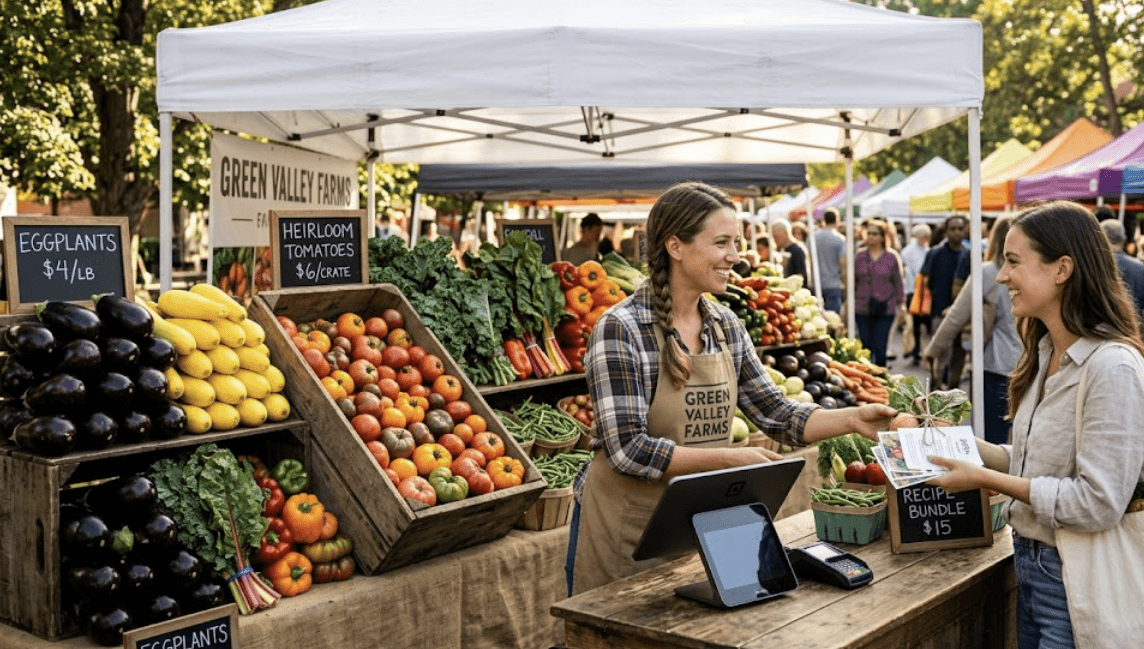
- Farmers Markets and Farm Stands: Direct-to-consumer sales of high-margin crops—salad greens, heirloom tomatoes, microgreens—convert surplus into program funding.
- Value-Added Products: Processing surplus into jams, hot sauces, dried herbs, or pesto extends shelf life and dramatically increases per-pound revenue.
- Educational Programming: Sliding-scale fees for intensive workshops on beekeeping, fruit-tree pruning, seed starting, or composting serve the mission and the budget simultaneously. Community events such as a local seed swap double as low-cost fundraisers and powerful outreach.
Remember: a 501(c)(3) absolutely may sell produce and products. The legal test is not whether revenue exists, but where it goes—all net revenue must be reinvested into the organization's exempt purpose rather than distributed to individuals. Revenue substantially unrelated to the mission may be subject to Unrelated Business Income Tax (UBIT), so keep program-related sales clearly documented.
Philanthropic and Institutional Support
- Federal and State Grants: The USDA's Urban Agriculture and Innovative Production (UAIP) competitive grants, the Specialty Crop Block Grant Program, and SARE grants are all well suited to non-profit urban farms. Obtain a USDA farm number from the Farm Service Agency early—it is free and required for most federal agricultural programs, microloans, and disaster assistance.
- Private Foundations: Local community foundations frequently fund initiatives addressing food access, youth development, and public health; national environmental funders support the conservation dimension.
- Corporate Sponsorships: Local businesses will sponsor infrastructure—a greenhouse, a wash station, a delivery van—in exchange for recognition, and corporate volunteer days bring both labor and relationship capital.
- Individual Giving: Tax-deductible donations, monthly sustaining memberships, and legacy gifts form the steadiest philanthropic base once cultivated.
9. Community Engagement and Volunteer Management
The "community" in community farm is the organization's greatest asset and its most complex management challenge. Volunteers provide essential labor, but they require training, supervision, and genuine appreciation to return week after week.
Structuring Volunteer Programs
Develop clear, written protocols for volunteer engagement. Create a standardized onboarding session covering farm safety, tool usage, and basic horticultural technique, and require it before anyone picks up a hoe. Organize regular, predictable volunteer days—"Weeding Wednesdays" or "Second Saturday Plantings"—to build a reliable cadence that members can plan around.
Match tasks to skill levels deliberately. Designate specific, forgiving tasks for inexperienced volunteers: turning compost piles, moving mulch, harvesting sturdy root crops. Reserve precision work—greenhouse propagation, succession sowing, grafting, spray decisions—for experienced staff or vetted core volunteers. And while volunteer labor is the cornerstone of the model, relying on it entirely for daily operations is risky: agricultural work punishes inconsistency. Prioritize funding for at least one paid farm manager whose job is to keep production on schedule and to direct the volunteer workforce. The retention techniques that keep CSA members loyal—newsletters, farm tours, harvest festivals—apply with equal force to your volunteer corps.
10. Pros and Cons of the Non-Profit Farm Model
Weigh the trade-offs honestly before filing your incorporation papers.
Advantages
- Access to exclusive public and private grant funding unavailable to for-profits.
- Ability to receive tax-deductible donations of land, equipment, and cash.
- Exemption from federal—and usually state—income tax, so every dollar of surplus is reinvested in the mission.
- Stronger community buy-in: the public volunteers for, donates to, and defends organizations it perceives as its own.
- Eligibility of full-time employees for Public Service Loan Forgiveness, a meaningful recruiting advantage.
Disadvantages
- Rigorous, ongoing IRS reporting, including annual Form 990 filings and public disclosure.
- No personal ownership: the founder does not own the farm and can, in principle, be voted out by the board.
- Heavy dependence on fundraising and grant writing, which can pull leadership away from actual farming.
- Slower decision-making, because major operational shifts require board approval.
- Profits can never be distributed to individuals, capping the financial upside for founders.
Conclusion: Cultivating More Than Crops
Creating a non-profit community farm is a monumental undertaking that blends the hard realities of agricultural science with the nuanced bureaucracy of non-profit management. Yet the model's rewards are equally monumental. By choosing the right legal structure, establishing a genuinely skilled board, securing land through creative tenure arrangements, and designing the site around sound horticultural principles—from deep soil preparation and companion planting to season extension—you build far more than a farm. You build a resilient, tax-exempt institution that feeds neighbors, trains growers, remediates land, and anchors its community. Start with the mission, respect the compliance work, diversify the funding, and plant for the long term: the harvests, in every sense, will follow.
Related Guides & Agronomic References
- To explore connected soil and crop strategies, see our deep-dive on sole proprietorship or LLC for small farms.
- For complete infrastructure setup and management, consult our guide on legal and permitting considerations for community farms.
- To maintain season-long health and pest suppression, explore our analysis of organizing community seed swaps.
Expert Insights & FAQs
What is the main advantage of choosing a 501(c)(3) structure over an LLC or cooperative for a community farm?
The 501(c)(3) structure allows the farm to receive tax-deductible donations from individuals and grants from private foundations and government programs—funding streams that are largely closed to LLCs and cooperatives. It also exempts the organization from federal income tax, so every dollar of surplus is reinvested into the charitable mission rather than distributed to owners.
Can a non-profit farm sell its produce at a farmers market or through a CSA?
Yes. A 501(c)(3) can generate earned income by selling produce, CSA shares, and value-added products, provided the revenue is reinvested directly into the organization to support its charitable or educational mission. Many non-profit farms operate sliding-scale CSAs where higher-income members subsidize shares for low-income families, aligning earned revenue directly with the mission.
How do we protect our urban farm investment if we are only leasing the land?
Negotiate the longest lease possible—ideally five to ten years with renewal options—and include explicit clauses covering infrastructure removal. Designing with mobility in mind, using raised beds, mobile high tunnels, and containerized plantings, ensures that soil and structures can be relocated if the lease is terminated.
Who should serve on the board of directors for an agricultural non-profit?
A strong board has seven to eleven members with distinct expertise: a horticulturist or agronomist, a CPA for financial oversight, an attorney for zoning and liability, a respected community organizer, and a development professional for fundraising. This diversity keeps the organization legally compliant, financially sound, and horticulturally viable.
What is a land trust, and how does it help community farms?
An agricultural land trust is an organization that acquires and holds land to preserve it for agricultural use in perpetuity. Partnering with a land trust removes the threat of real-estate development, giving the farm permanent, secure tenure while allowing it to focus capital on operations rather than mortgage payments.
Can a founder receive a salary from a non-profit community farm?
Yes. Founders and staff can receive reasonable compensation for work performed. The IRS requires that salaries be benchmarked to industry standards and approved by the independent board of directors to prevent private inurement or unethical financial benefit.
How long does it take to get 501(c)(3) status for a farm?
Timelines vary with IRS backlog. The simplified Form 1023-EZ—for organizations projecting under $50,000 in annual gross receipts—can be approved in two to four weeks. The full Form 1023 commonly takes three to nine months. Approval is confirmed with a Letter of Determination, which funders and land partners will request frequently.
What is the safest way to handle contaminated urban soil on community farm land?
Always begin with a comprehensive soil test through your local University Extension office. If heavy metals such as lead are present, full remediation is usually cost-prohibitive, so the standard approach is building raised beds lined with semi-permeable landscape fabric and filling them with imported, tested topsoil and compost. Hydroponic systems are another soil-free alternative for leafy greens.
Johnnie McCormick
Zone 7b/8a - North Central Alabama
Johnnie McCormick is a gardening hobbyist and the founder of My Garden Spot. Raised in north-central Alabama, his passion for gardening began in his youth. In 2008, he established a large market garden, teaching himself high-yield growing methods. In the years since, he has operated seasonal seedling sales for transplants, specializing in heirloom tomatoes, peppers, eggplants, decorative ground covers like Ajuga (Bugleweed), marigolds, nasturtiums, and fresh kitchen-window herb arrangements (basil, cilantro). Today, he gardens in the hills between Birmingham and Jasper, Alabama (Zone 7b/8a), sharing practical, community-focused gardening resources.
Verified Authoritative Citations & References
In alignment with our strict E-E-A-T research and verification guidelines, this guide cross-references data from the United States Department of Agriculture (USDA) and Cooperative Extension Service programs.
- USDA Agricultural Marketing Service (AMS): Community Supported Agriculture (CSA) standards and local market surveys. ams.usda.gov
- Penn State Extension: Small Farm Economics, financial planning, and crop pricing research documents. extension.psu.edu
- Cornell Cooperative Extension: Market gardening business planning and local sales guidelines. smallfarms.cornell.edu
- Alabama Cooperative Extension System (ACES): Local food regulations, CSA legal permits, and farm safety standards. aces.edu

Please log in to view comments.